A shopper opens Blinkit at 9:40 pm because the milk ran out. She types “milk,” taps the first result, adds a pack of biscuits she saw on the way to checkout, and pays. The whole visit takes under a minute.
That minute is where quick commerce advertising in India now lives. It is short, local and ruthless. A brand either shows up in the right slot, in stock at that dark store, at a price that feels fair, or it does not exist for that order.
The money following this behaviour is real. Zepto’s updated draft prospectus, filed with SEBI and reported in June 2026, put its FY26 advertising revenue at ₹1,636 crore, up 151% year on year. Swiggy says its ad business keeps growing but has not published a standalone figure for Instamart, and Blinkit has not broken out ad revenue either. Even so, one platform’s disclosure is enough to show where FMCG, beauty and D2C budgets are heading.
This guide walks through that one-minute shopper visit, step by step, and shows which advertising lever matters at each moment.
Before the app opens: why this is not Amazon with faster delivery
Many brands treat quick commerce as a smaller Amazon. It behaves differently.
On a marketplace, a shopper browses a national catalogue, compares reviews and waits a day or two. On a quick commerce app, the shopper sees only what the nearest dark store holds. The catalogue is smaller, the basket is smaller and the decision is faster. Reviews matter less. Habit, price and the first three products on screen matter more.
That changes the job of advertising. You are not persuading a researcher. You are catching a person in the middle of a task.
It also means your media plan and your supply plan are the same plan. An ad that sends shoppers to an out-of-stock product in Gurugram Sector 56 wastes money in a way that a marketplace ad rarely does.
Moment one: the search bar
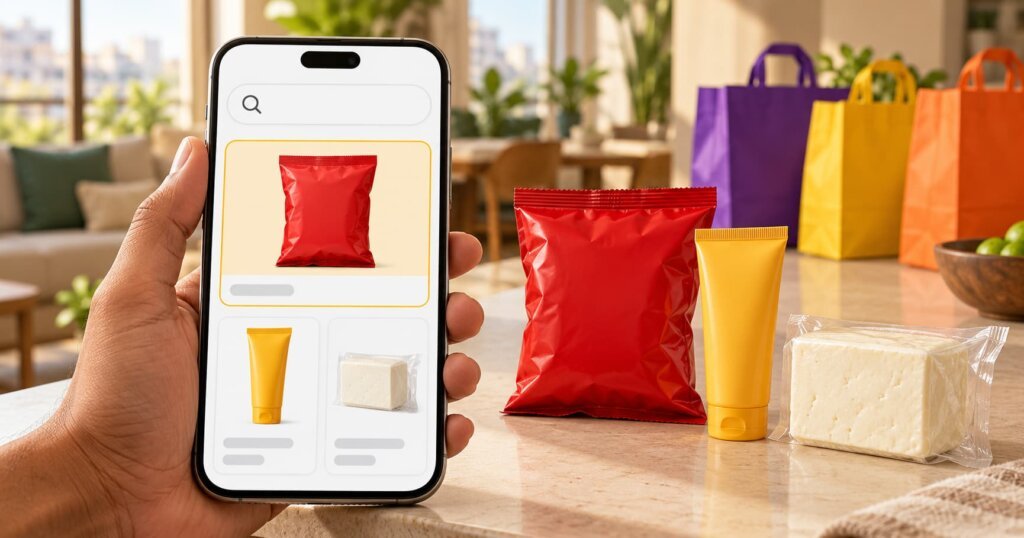
Most quick commerce visits start with a typed word. “Chips.” “Sunscreen.” “Paneer.” Search is where sponsored listings earn most of their value.
All three platforms sell some form of paid placement in search results:
- Blinkit ads. Blinkit’s own team wrote about its ad business in 2022, describing three asset types on search: Sponsored Products, Sponsored Display Banners and Sponsored Brand assets. At the time, Blinkit charged on a cost-per-impression basis and let brands target by city. Agency guides published in 2026 describe newer formats such as product booster and listing spotlight ads, but confirm the current menu inside Blinkit’s ad console before you plan around any single format.
- Zepto sponsored listings. Zepto runs a brand portal where advertisers set up campaigns. Agency guides describe sponsored product listings in search and category pages, alongside banners and some post-order and delivery placements.
- Instamart advertising. Swiggy offers keyword-based item ads for Instamart, plus banner and premium top-slot options, according to agency playbooks.
We have not listed CPCs, CPMs or minimum budgets here on purpose. None of the three platforms publishes a public rate card, and the numbers circulating online come from third parties with different categories and cities. Your real cost depends on the keyword, the city and how many rivals bid against you that week.
What wins at the search bar: your brand should own its own name first. If a rival shows up above you when someone types your brand, you are paying the cheapest possible tax on your own demand. After that, pick a short list of generic category terms where your product has a fair chance of being chosen, and test them city by city.
Moment two: the product tile
A shopper gives each tile about a second. In that second, the tile has to answer three questions: what is it, how much is it and is it the right size?
This is catalogue work, not ad work, but it decides whether your ad converts.
| Tile element | What a shopper checks | Common fix |
| Main image | Can I recognise the pack instantly on a small phone? | Front-facing pack shot, plain background, readable brand name |
| Title | Is this the flavour, size and variant I want? | Lead with brand, product, variant, then pack size |
| Price and offer | Is this fair compared with the tile next to it? | Check price per gram or per ml against the category |
| Pack size | Will this last until next time? | Offer the sizes people actually reorder |
A sponsored slot with a blurry image and a vague title often loses to the organic product right beside it. Fix the tile first. Then pay to promote it.
Moment three: the dark store shelf you cannot see
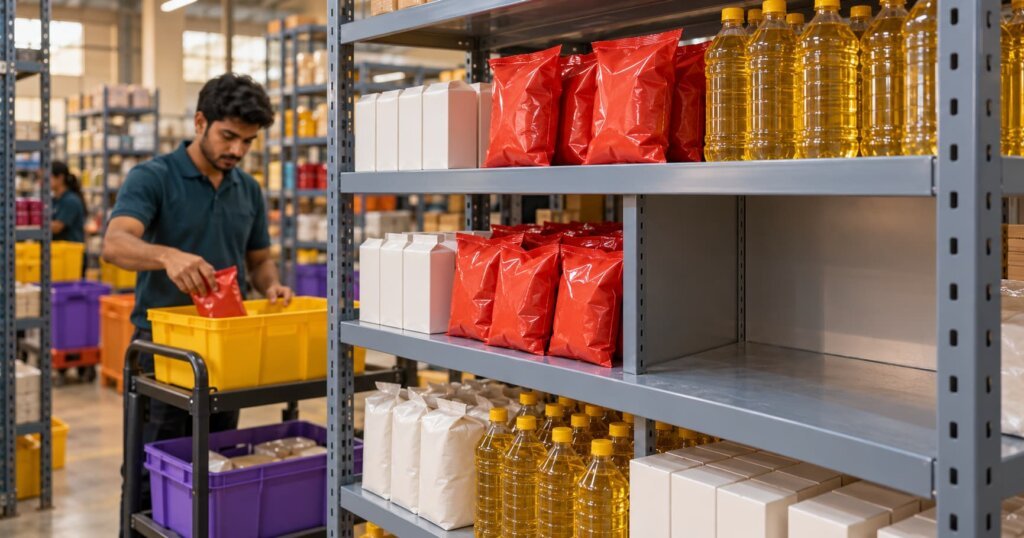
Here is the part most brand teams underestimate. Every quick commerce order comes from one specific dark store. If your SKU is not stocked there, your ad cannot help.
Platforms such as Blinkit have described features that pause or swap ads when a product goes out of stock, and that helps. It does not fix the real problem, which is patchy distribution across pin codes.
Before you raise budgets, ask your platform account team or distributor for three things:
- Which dark stores stock your top SKUs today.
- How often those SKUs go out of stock, and when.
- Which cities or clusters show strong search demand for your category but weak listing coverage for your brand.
Then match ad spend to stock. Push harder where you are reliably available. Hold back where you are not. This single habit often does more for return on ad spend than any bid change.
Timing matters too. Demand on these apps swings with the Indian calendar. Rakhi, Diwali, Holi, wedding season, monsoon weeks and big cricket nights all shift what people order and when. Plan stock and ads for those windows together, not in separate meetings.
Moment four: the cart and checkout
The shopper has what she came for. Now the app shows a few more products before payment.
Checkout and cart placements are built for impulse. Agency guides describe formats on Instamart aimed at last-minute add-ons and on Blinkit aimed at cart pages. Products that work well here are low-cost, familiar and easy to add without thought: chocolates, mints, batteries, a travel-size face wash.
If your product needs explaining, the cart is the wrong place for it. Spend on search and category shelves instead, where the shopper is still deciding.
Moment five: the reorder
The real prize in quick commerce is not one order. It is becoming the default. Once a shopper buys your oat milk twice, the app starts to surface it for her again, and she stops comparing.
That is why brands should judge quick commerce ads on more than same-day ROAS. A campaign that looks expensive in week one may be buying the second and third orders that make the category profitable.
Measuring quick commerce advertising in India honestly

Platform dashboards report metrics such as impressions, add-to-carts, sales and ROAS. These numbers are useful, but they all come from the platform that sold you the ads. Treat them as a starting point.
A more honest view blends three questions:
Did total sales rise, or did ads just take credit? Compare cities or weeks with ads on against similar cities or weeks with ads off. If sales barely move when ads pause, the ads were mostly paying for orders you would have got anyway.
Did branded search keep growing? More people typing your brand name is a strong sign that your wider marketing works.
Is the new customer share healthy? A campaign that only reaches loyal buyers protects share. A campaign that reaches new buyers grows it. You usually need both, in a planned mix.
Brand objectives and performance objectives deserve separate budgets. A launch banner for a new flavour should not be judged on the same ROAS target as a search ad for your best-seller.
Mistakes that burn quick commerce budgets
Spending before fixing stock. Ads cannot sell what the dark store does not hold.
Bidding on everything. Broad generic terms such as “snacks” can eat budget fast. Start narrow.
Ignoring your own brand terms. Letting rivals sit above you on your own name is the easiest loss to avoid.
Copying marketplace creatives. Wordy banners built for desktop do not work on a phone screen that a shopper glances at for one second.
Judging a new launch on week-one ROAS. New products need trial first. Measure trial, then repeat, then profit.
Where DigiStreet fits in
Quick commerce advertising in India sits at the meeting point of retail media, catalogue quality and performance marketing. Brands usually get the best results when one team looks at all three together rather than splitting them across separate vendors.
DigiStreet’s ecommerce marketing work covers marketplace listings, product content and paid campaigns for online sellers. That connects with the agency’s performance marketing practice, which plans and optimises paid media against clear business goals. For brands that sell through their own site as well as through apps, the team’s ecommerce solutions help keep pricing, content and campaigns consistent across channels.
The goal is simple: make sure that when a shopper opens the app at 9:40 pm, your product is in stock, easy to recognise, fairly priced and in the first few slots she sees.
If you want a second opinion on your quick commerce plan, talk to DigiStreet and share the SKUs, cities and platforms you care about most. The team can help you work out where ad spend will do the most good and where stock or catalogue fixes should come first.
FAQs
What is quick commerce advertising in India?
It is paid placement inside apps such as Blinkit, Zepto and Swiggy Instamart, usually in search results, category pages, banners and checkout. It works like retail media, but with smaller local catalogues and very fast buying decisions.
How do Blinkit ads work?
Brands bid for sponsored placements in search and browse areas of the app. Blinkit has described sponsored products, display banners and brand assets, with city-level targeting. Check the current formats in Blinkit’s ad console.
What are Zepto sponsored listings?
They are paid product placements that appear in Zepto search results and category pages. Brands set them up through Zepto’s brand portal alongside other formats such as banners.
What ad formats does Instamart offer?
Agency guides describe keyword-based item ads, banner ads, premium top-slot placements and themed collections on Swiggy Instamart. Confirm current options with Swiggy’s ad team.
How much does it cost to advertise on Blinkit, Zepto or Instamart?
None of the three platforms publishes a public rate card. Costs depend on keyword competition, city and category, so test with a small budget and scale what works.
Why do quick commerce ads fail even with a good budget?
The most common reason is poor stock coverage at dark stores. Weak product images, unclear titles and uncompetitive prices also stop ads from converting.
How should brands measure quick commerce ad performance?
Use platform ROAS as a starting point, then compare ads-on and ads-off periods or cities to see true incremental sales. Track branded search and new customer share too.
Is quick commerce advertising only for big FMCG brands?
No. Smaller D2C and beauty brands can start with their own brand terms and a few focused category keywords in cities where they have reliable stock.