Manufacturers and technical businesses
Product families, applications, specifications, documents, industries, dealer or enquiry routes and export markets need a structure that engineers and buyers can both follow.

DigiStreet runs SEO across technical health, site structure, content, authority, AEO and GEO visibility. The plan can cover one product line, several cities or an international search market. Every tier includes answer-engine and generative-search monitoring, and the Starter plan begins at ₹50,000 plus GST a month.
An SEO company in India should be able to separate national product or service demand from the location, language and sector questions that change by market. The site needs one maintained source for the offer, supported by category, service, use-case and location pages that each have a real job. Publishing a city name into the same paragraph dozens of times creates pages, not useful coverage.
DigiStreet prices SEO by scope. Starter is ₹50,000 plus GST a month for one market or product line. Growth is ₹75,000 for multi-category or multi-city work. Scale is ₹1,25,000 for competitive or international markets. Resource-based delivery is ₹2,00,000 for two dedicated specialists where a keyword allowance is the wrong way to plan the work. AEO and GEO visibility monitoring is included at every tier.
India is not treated as one keyword with a large content calendar. We map where the offer changes, what the team can maintain and which page should answer each commercial question.
Product families, applications, specifications, documents, industries, dealer or enquiry routes and export markets need a structure that engineers and buyers can both follow.
Categories, collections, products, buying guides and brand evidence need clear relationships. Search work is joined to merchandising, stock and the content customers use before buying.
The national service record stays consistent while location pages carry maintained availability, team, access, proof and enquiry information. Thin city copies are removed or consolidated.
Corporate, division, sector, product and investor audiences often share one domain. Governance and internal links keep those records distinct without splitting authority across unnecessary sites.
The first working document names products, services, categories, locations, audiences and business actions. It also records the owner of each fact. Search Console, analytics, rankings, sales questions and the current site are read against that record. We look for demand the business can serve, pages that compete with one another, important subjects with no owner and pages receiving traffic without producing a useful next action.
Keyword research is grouped by decision rather than handed over as a spreadsheet of phrases. A technical buyer researching an application, a distributor looking for a product family and a customer searching for a nearby provider need different evidence. Each group receives a page type, source, internal-link route and outcome. That makes the content backlog easier to approve because every brief connects to a maintained part of the business.
Technical SEO covers crawling, indexation, rendering, performance, structured data, canonicals, sitemaps, internal links, migrations and recurring errors. The audit ranks issues by the pages and demand affected. A warning affecting an unused archive does not outrank a broken category that sales depends on. Recommendations name the template, owner, acceptance check and release route so the development team can close them.
Large sites need rules that survive the next upload. Filters, parameters, internal search, variants, location combinations and old campaign pages can create more URLs than the team can review. We define which records deserve indexation, where duplicates consolidate and how unavailable products or services are handled. Monitoring checks whether the rule continues to work after releases instead of treating the audit as a one-time document.
A brief begins with the reader’s question and the source available to answer it. Product teams may supply specifications and application detail. Service owners provide process, eligibility and location facts. Sales can explain objections and qualification. The writer turns those records into a direct page with a clear next step. Reviewers check the facts they own rather than rewriting the whole draft at the end.
Existing pages are improved before volume is added. We compare what ranks, what earns impressions, where the answer is buried and which competing page is stronger. A page may need a better heading, updated evidence, clearer relationships, a useful table or a different place in the architecture. Consolidation is valid work. Keeping ten weak pages because they once appeared in a content plan is not.
Links and mentions should point to a useful source: original client work, a maintained guide, technical knowledge, a tool, a clear company record or a page that answers a real industry question. Outreach is planned around that source and the publications or organisations for which it is relevant. A monthly count of unrelated placements does not explain whether the site became a better reference.
Brand entities are checked across the site and public profiles. Company name, products, leadership, locations and relationships should not contradict one another. This matters for ordinary search and for generated answers that assemble information from several sources. AEO and GEO monitoring records relevant answer appearances and citations, then turns missing or unclear evidence into technical, page or authority tasks.
A location page exists when availability, service area, team, proof, access, regulation, language or buyer behaviour creates distinct information. The national page explains the common offer. Regional and city pages carry what can be maintained locally. We connect them through the service or product structure rather than a block containing every city name. Pages without unique evidence are merged, redirected or left out of the release plan.
Local discovery work also checks business profiles, names, categories, service details, reviews and the page used as the website destination. Multi-location teams need a change process, because a new number or opening time copied inconsistently can create avoidable confusion. Reporting separates national discovery from market actions and gives local owners a small set of records they are responsible for keeping current.
The monthly review covers work shipped, technical state, useful visibility, landing-page behaviour and agreed outcomes. Leads or sales feedback are grouped by the source and page where the current systems permit it. Rankings remain a diagnostic, especially for target pages, but they do not replace qualified demand. The report ends with decisions about the next fixes, briefs and authority work.
National programmes also need a record of where progress is blocked. An unapproved product fact, missing development release, expired location record or inaccessible account can stop a workstream. Naming that dependency lets the client assign it. The next quarter is planned from accumulated evidence: pages that created useful discovery, questions that sales keeps hearing, technical patterns that returned and markets ready for deeper coverage.
Crawling, indexation, templates, performance, structured data, migrations and release checks prioritised by commercial impact.
Product, service, category, sector and location relationships mapped to distinct demand and maintained source records.
Briefs, writing, review and refresh work tied to real questions, responsible fact owners and the next business action.
Relevant citation and link work built around publishable expertise, case evidence, tools and useful resources.
Answer visibility, citations and entity clarity reviewed at every tier alongside ordinary search performance.
Work completed, visibility, page behaviour, outcomes, blockers and the next release list discussed with accountable owners.
The plan changes with markets, categories, competition and the amount of specialist time needed. Prices are monthly and plus GST.
One market or product line with a focused technical and content backlog.
Choose StarterMulti-category or multi-city work requiring several connected page groups.
Choose GrowthCompetitive national or international search with a larger release and authority programme.
Choose ScaleTwo dedicated specialists for brands where keywords are the wrong unit.
Choose Resource-basedAEO and GEO visibility monitoring is included at every SEO tier. Media spend, website development, production and paid tools outside the agreed SEO scope are priced separately.
Access, evidence, technical priorities and page ownership are settled first. New production follows once the site has a clear place for it.
Confirm markets, products, services, owners, actions, access and current search evidence.
Resolve indexation and template issues, choose target records and approve the first content and authority briefs.
Improve existing priority pages, publish approved additions and begin citation work around real source material.
Compare shipped work, discovery, page use and client outcome data, then move effort to the strongest commercial questions.
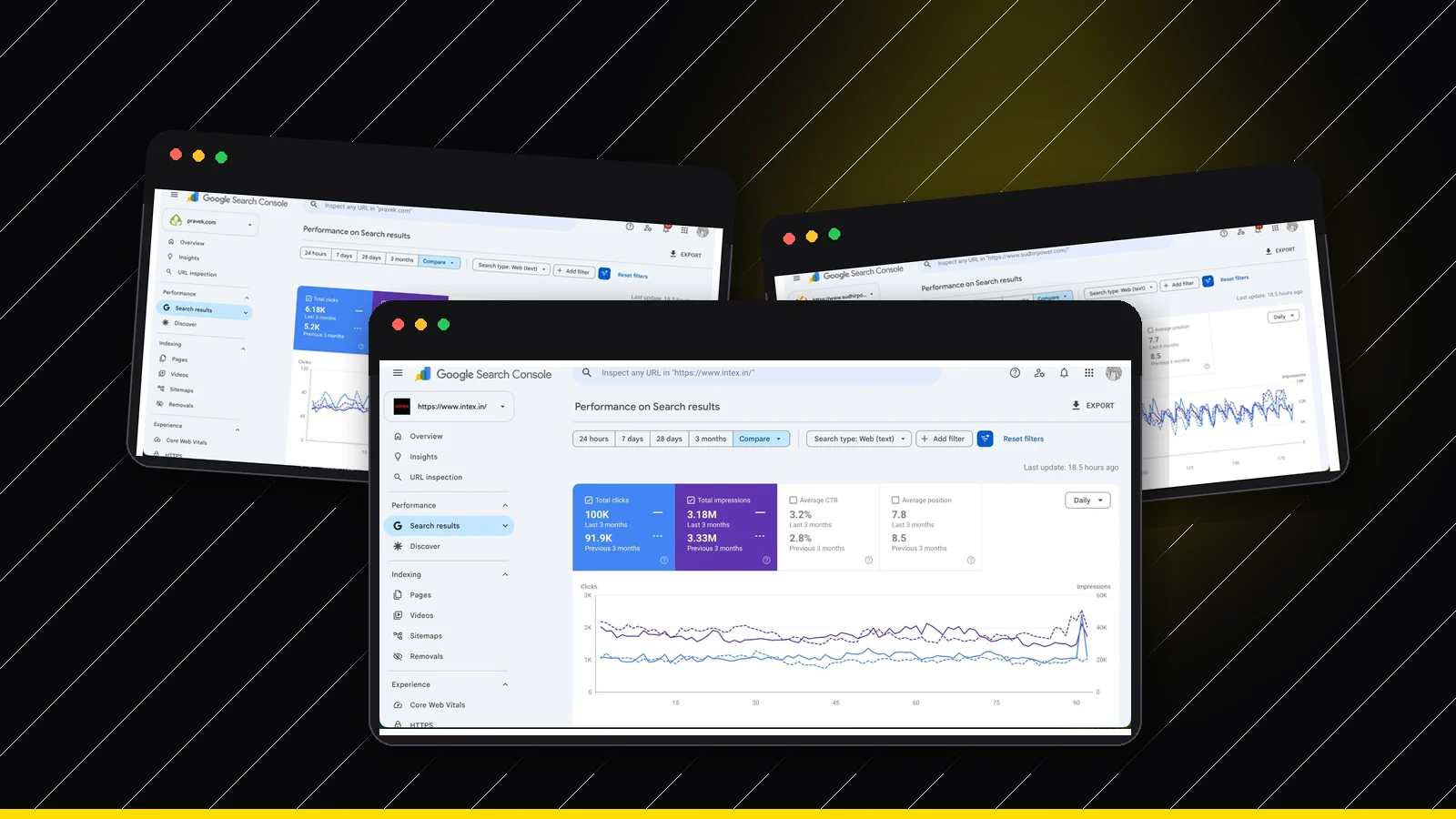
Intex · consumer technology SEOThe Q3 2026 case reports 100K Google Search clicks in three months, up from 91.9K, with average position improving from 8.5 to 7.8.
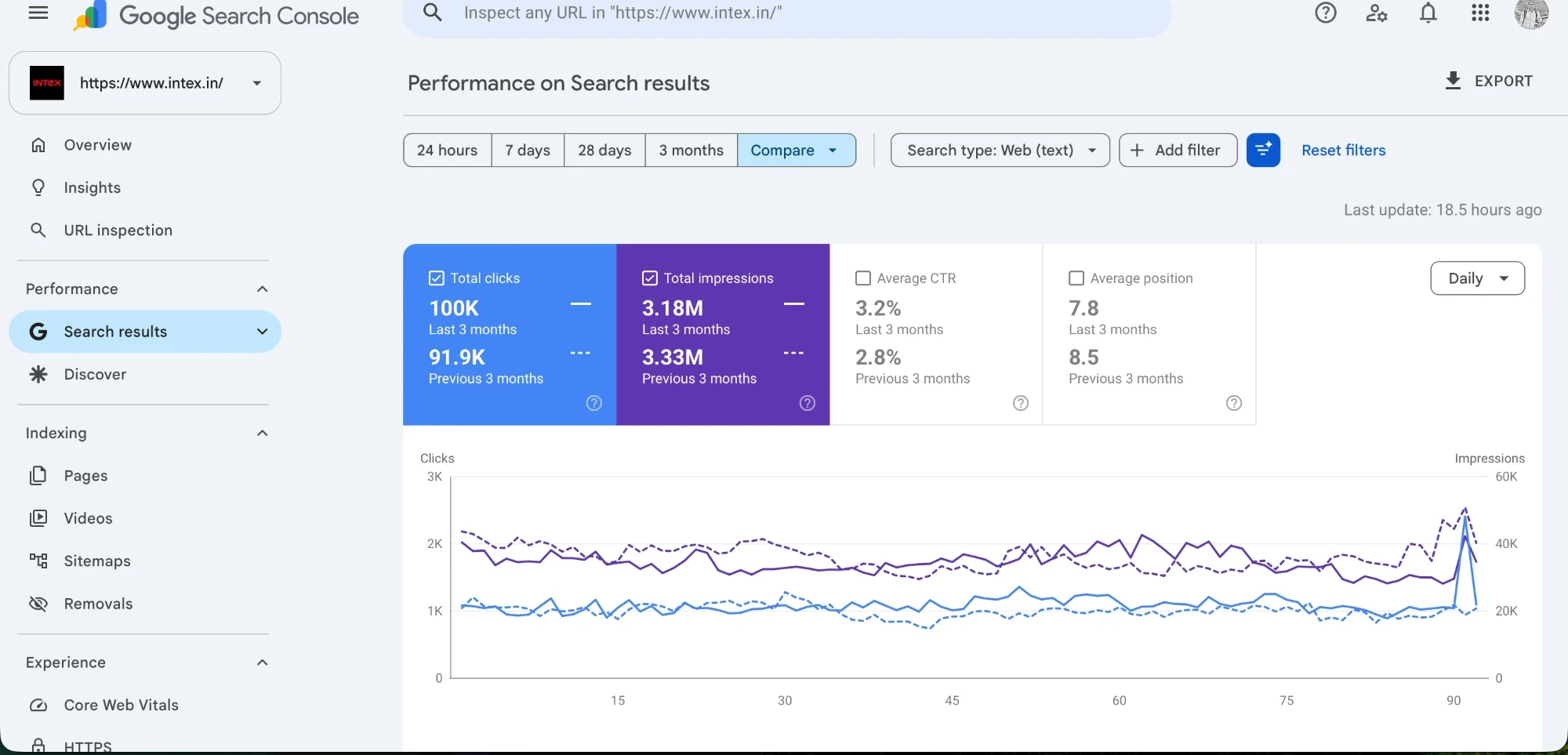
View the published work →Pravek Kalp · Ayurveda SEOThe published Q3 2026 update shows the real Search Console comparison used to review Pravek Kalp’s search work.
View the published work →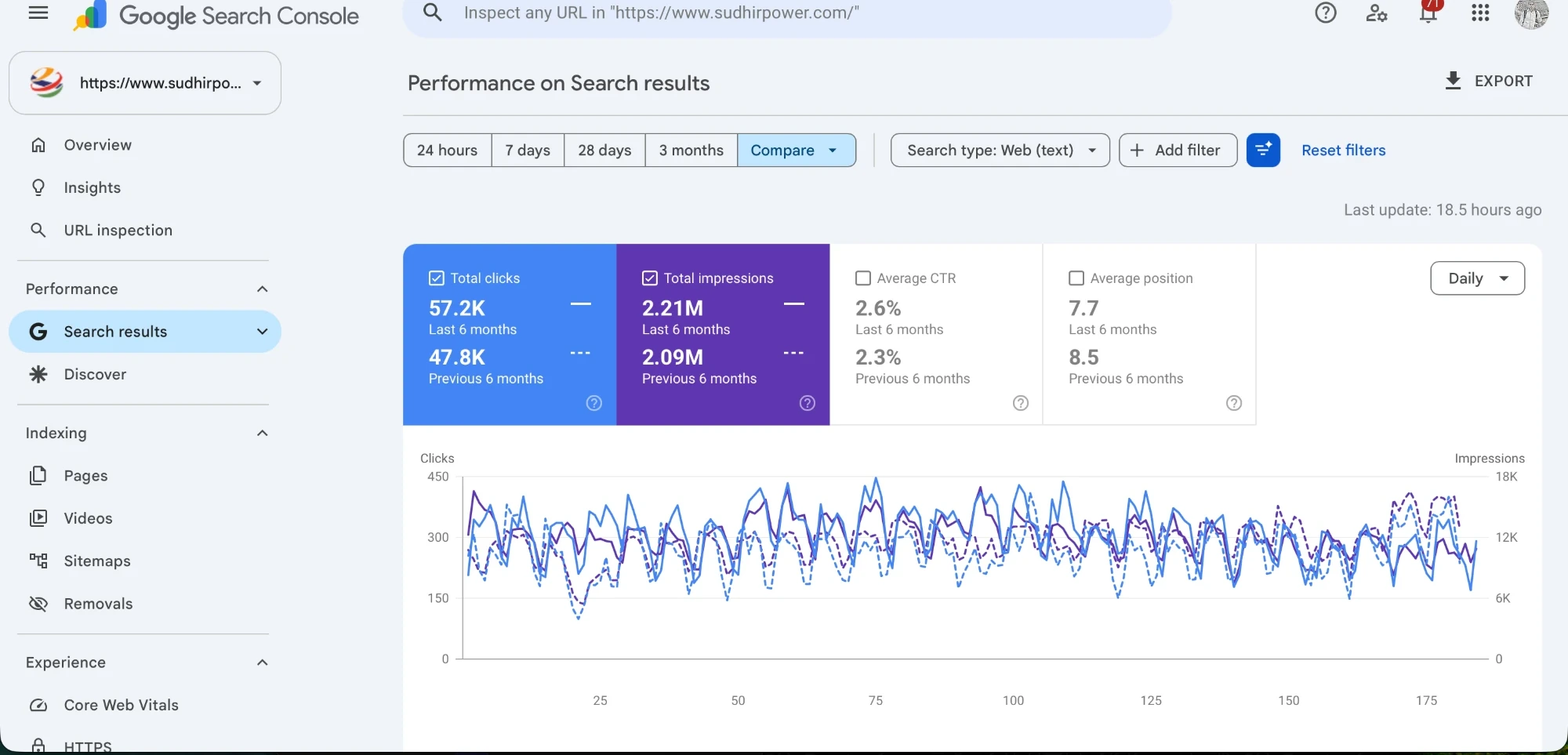 Sudhir Power · B2B SEO
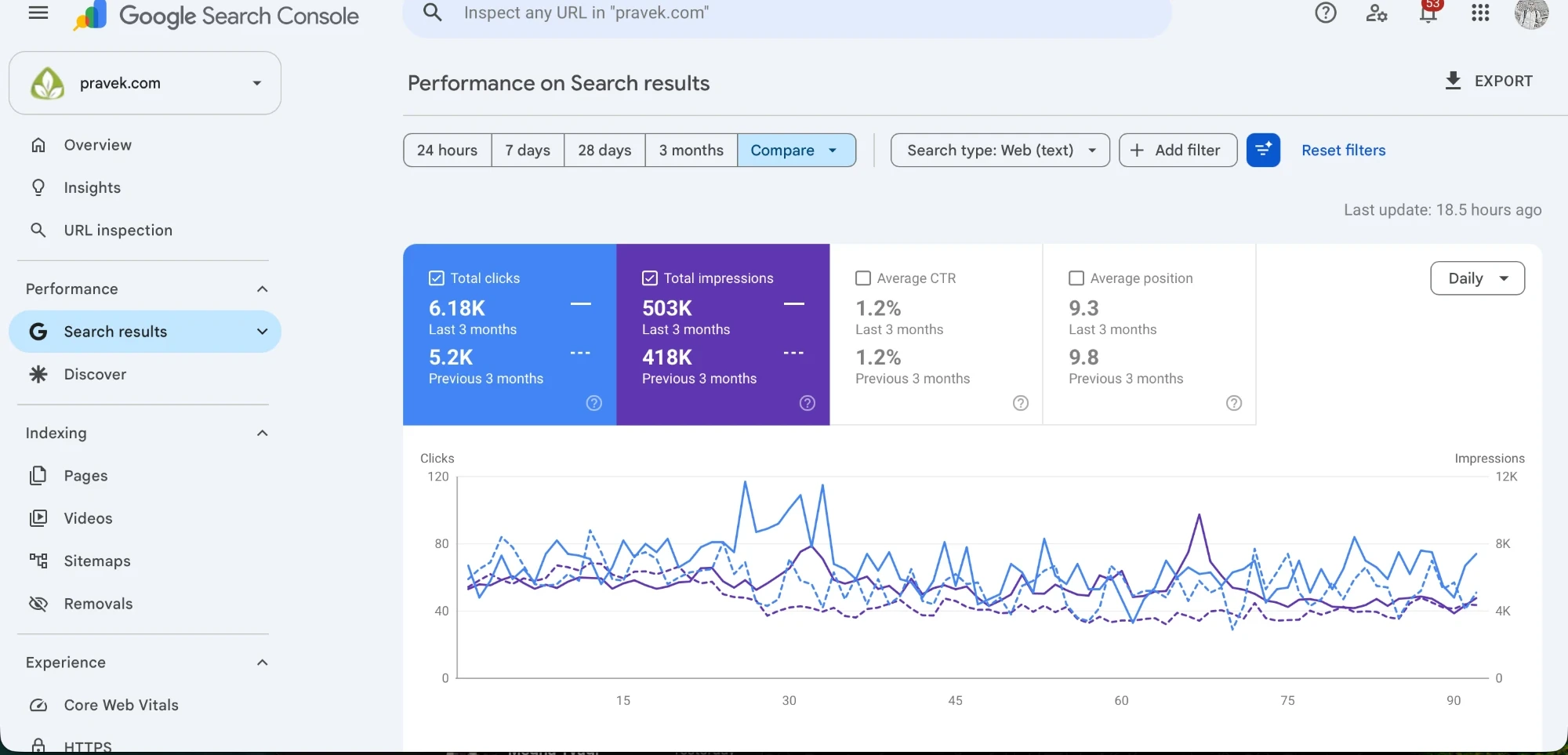
The Sudhir Power 2026 case publishes a six-month Search Console view for inspection alongside the account of work completed.
View the published work →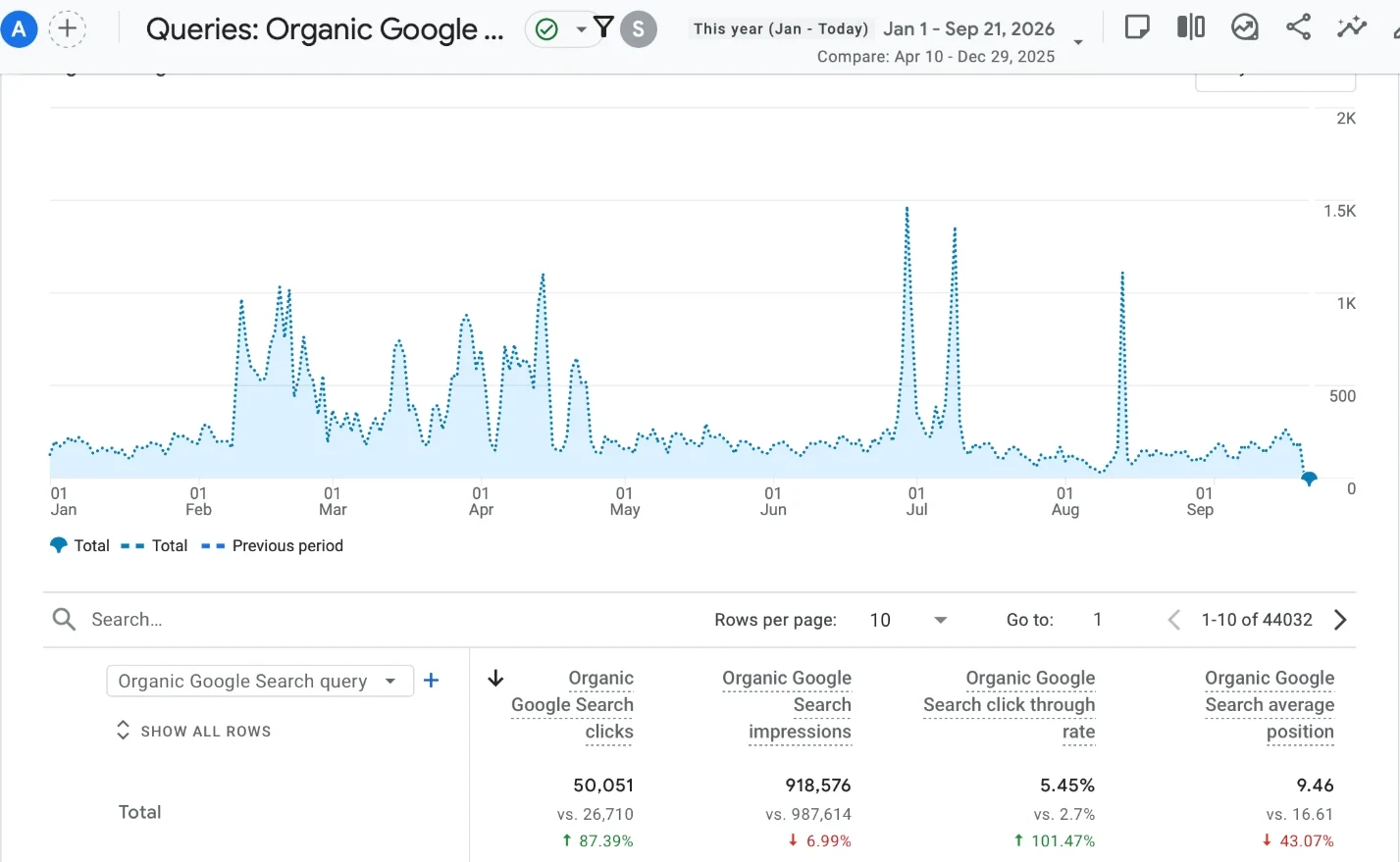 Sirca Paints · consumer and dealer search
The Sirca Paints 2026 case includes the published organic Search and Analytics views behind the result narrative.
View the published work →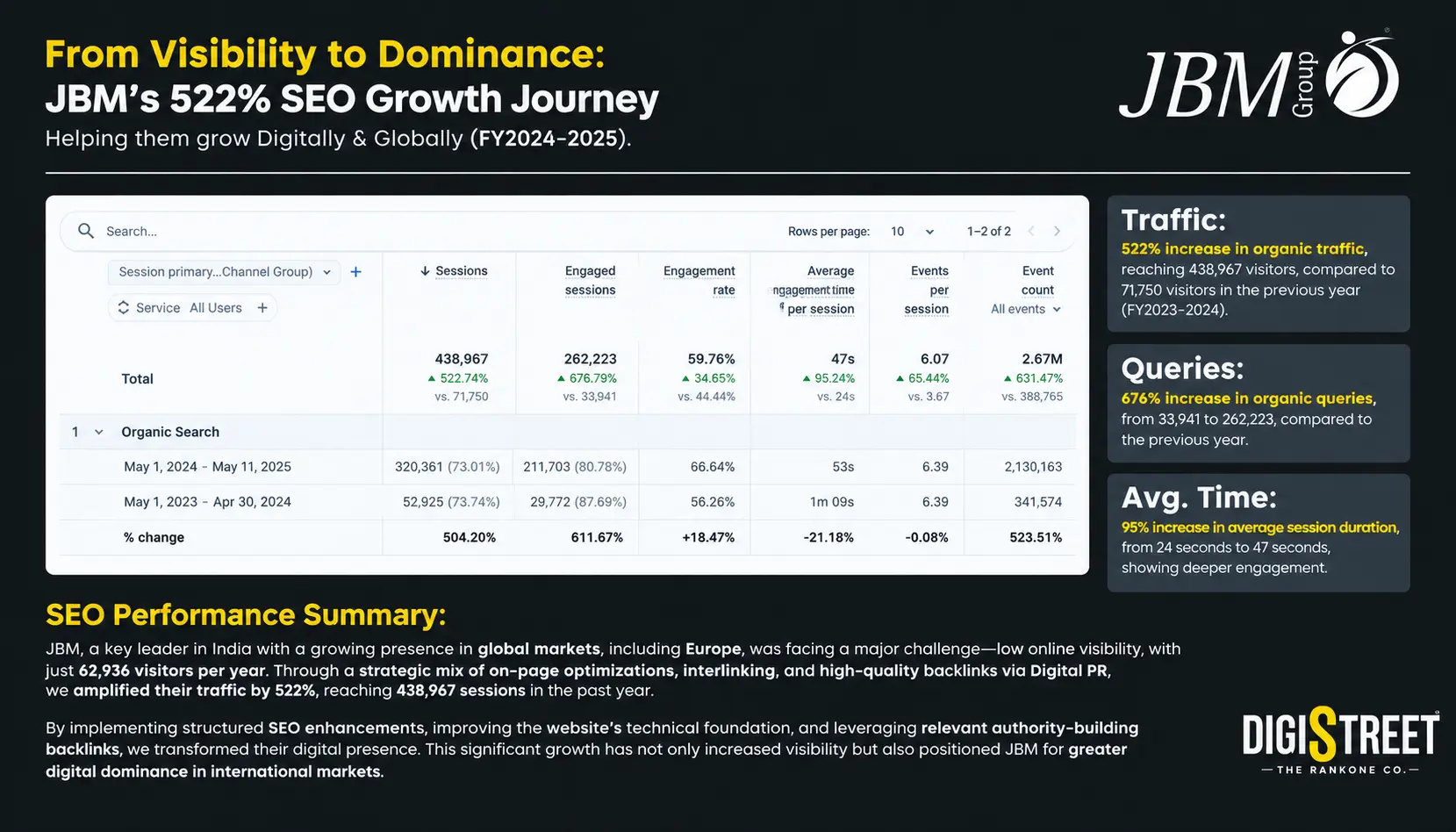 JBM Group · enterprise SEO
The published JBM Group case records annual organic sessions moving from 52,935 to 329,261 and business queries from 941 to 6,081.
View the published work → SKF · industrial SEO
The SKF case is part of DigiStreet’s published SEO library and presents the work for an industrial search programme.
View the published work →We will map the national core, page gaps, technical backlog and first-quarter release plan, then recommend the tier that matches the work.
Ten connected workstreams, organised as one maintained search programme. Each card describes the operating record the client can review.
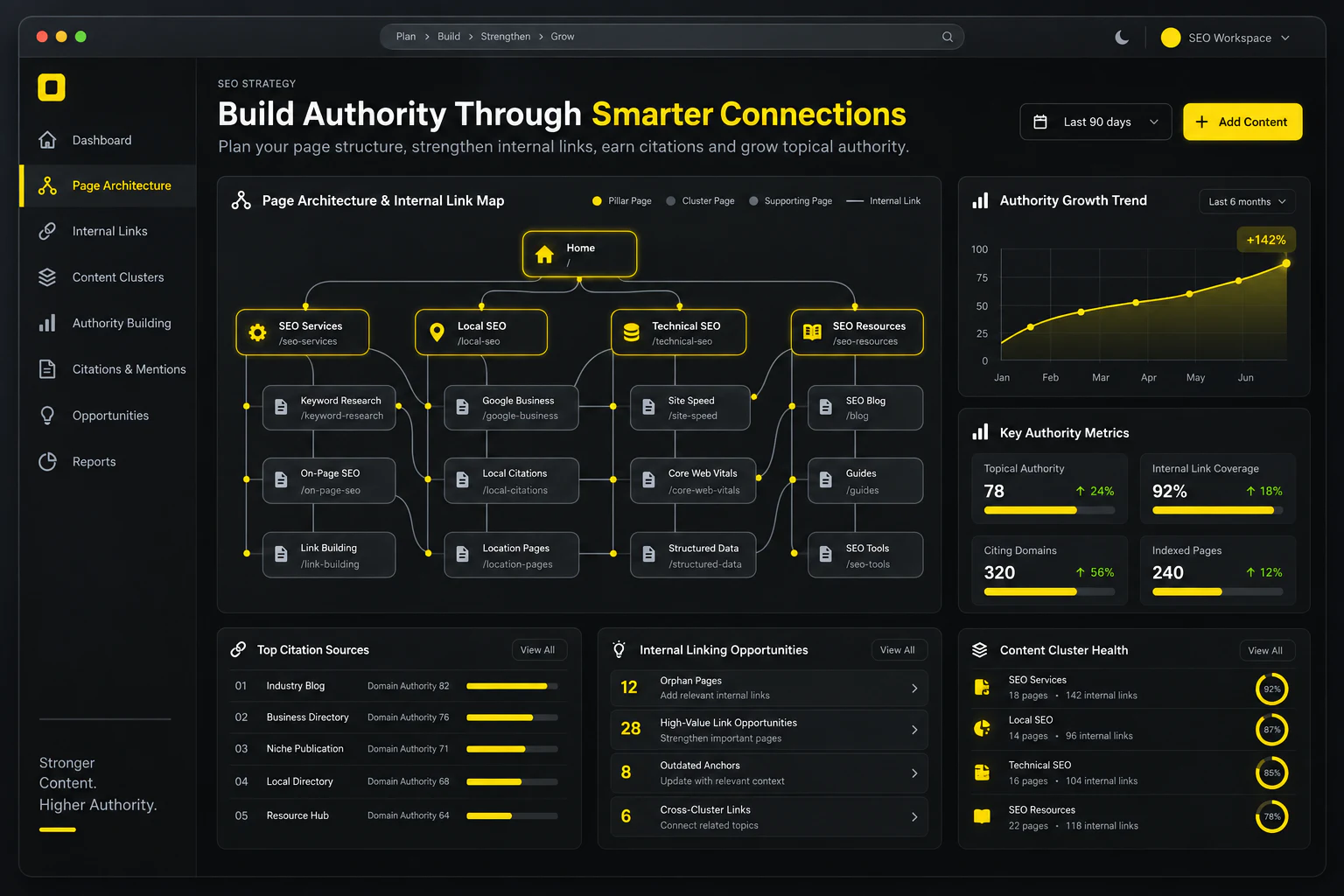
The site map connects search demand with real services, products, categories, locations and buyer questions. Each important query group receives an owned destination and a defined action. Existing pages are reviewed for overlap before new work is commissioned, keeping internal links and authority focused.
The map also records the source and reviewer for each page. Product teams own specifications, service teams own delivery facts, local teams own operating information and sales teams contribute the questions buyers ask. SEO becomes a maintained publishing system rather than a separate list of keywords.
The audit covers crawling, indexation, rendering, canonicals, sitemaps, internal links, structured data, performance and template behaviour. Recommendations are grouped by the page set affected and include an acceptance check. That gives development teams a release-ready task instead of a generic score.
Ecommerce filters, internal search, location combinations, campaign URLs and legacy pages receive specific attention because they can create uncontrolled indexation. Mobile testing covers sticky elements, tap targets, forms, page weight and the route after submission.
Titles, headings and copy should state the page’s job clearly. The opening answers the main question; supporting sections cover fit, scope, process, proof, price language and the next action. Images, tables and examples are placed where they help the reader assess the claim.
Search terms guide the vocabulary and structure while client sources protect accuracy. Internal links move readers from a guide or sector question to the commercial page that can answer it. Page reviews connect visibility with use and enquiry signals.
A brief names the reader, question, source, reviewer, destination and action. Case studies use the client-approved record and the original chart or creative. Guides use named sources where facts can change. Service copy uses operating information the client can maintain.
The production queue refreshes valuable pages as well as creating new ones. Search coverage, sales questions and page behaviour show where depth is missing. The next release may be a clearer section, comparison table, case proof, FAQ or new destination.
Published research, tools, maintained guides, case studies and clear service records give partners and publications material worth referencing. Outreach connects the right source with relevant associations, publications and collaborators. The page receiving attention already has a useful role in the site architecture.
Brand and entity consistency support the same work. Organisation, service, people, product and location records should agree across the pages and profiles the business controls.
A national service page explains the stable offer. A location page carries service availability, branch ownership, access, local proof and enquiry routing when those details differ. Profiles link to the page that can maintain the relevant information.
The client confirms the true service footprint before location production starts. This keeps the location set accurate and gives local teams a clear update route when availability, hours or services change.
Search Console, analytics, crawling tools, rank tracking and research platforms provide different evidence. The report identifies the source and period used for each figure. Tools help find gaps and confirm changes; the backlog still needs commercial priority, subject review and an owner.
Release QA checks the page, internal links, metadata, structured data, tracking and responsive layout. The acceptance note records what shipped and how the team will confirm the change on the live site.
Monthly reporting separates rankings, answer-led visibility, traffic, engagement, enquiries and client qualification feedback. Work shipped appears beside those signals, so the team can see what changed and where evidence remains early.
The review ends with a named decision and owner. Technical corrections, page revisions, case production, internal links and authority work enter one queue. This creates continuity between strategy, delivery and the next commercial question.
Category, product, filter and internal-search pages need distinct indexation rules. The catalogue map identifies which combinations deserve a stable destination and which combinations support browsing only. Product data, availability, delivery, returns and comparison information come from maintained commerce records.
Search reporting separates category discovery, product visits, add-to-cart actions and completed orders when the client systems provide them. Editorial work strengthens buying guidance and category depth while technical work protects canonicals, structured data, pagination and internal links.
Industrial and professional-service buyers often need capabilities, applications, specifications, implementation detail, documents and published projects before contacting sales. The page map places that evidence beside the relevant service or product family and creates clear routes for procurement, technical and commercial roles.
Subject experts approve technical meaning while search and editorial teams shape the page for discovery and reading. Case studies retain the client-approved record and original evidence. Enquiry forms capture the information the receiving team needs to route the conversation.
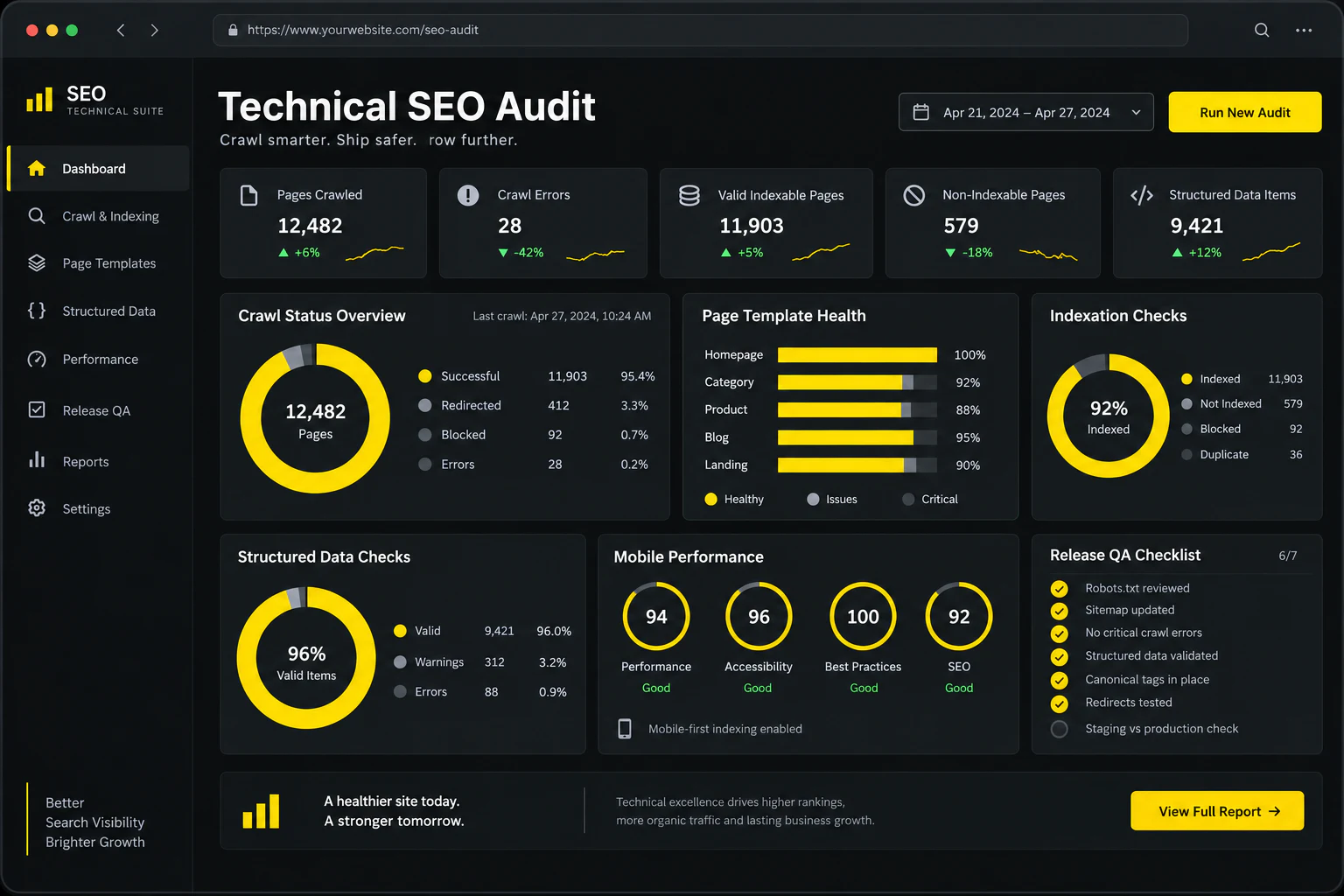
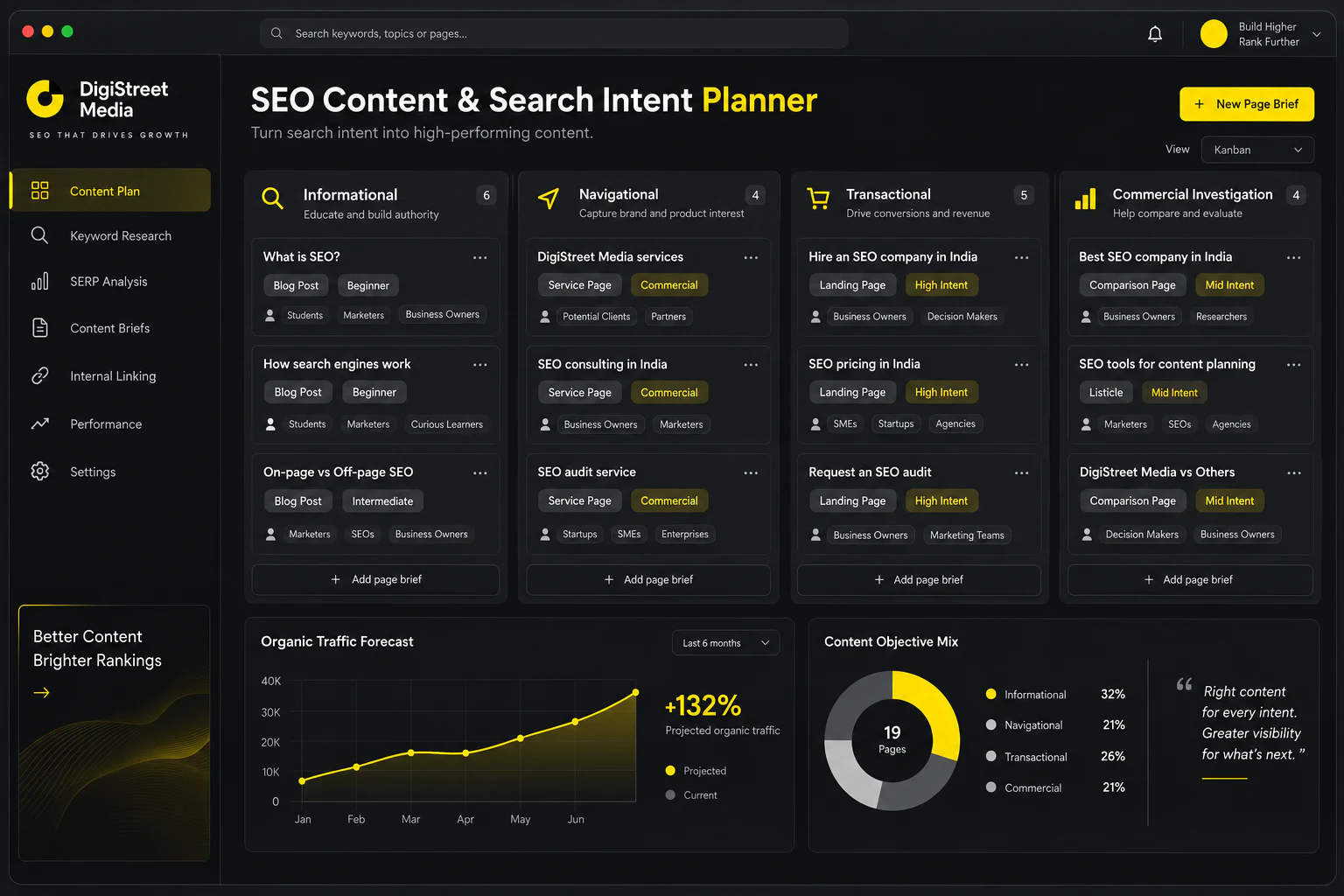
Published client evidence sits beside purpose-built workflow mockups, so the section shows both the outcome and the work used to produce it.
4.9 / 5
“With our growing presence across diverse domains, an effective digital presence and communication strategy is imperative. We are sure that DigiStreet Media, with its creative skillset and proven digital expertise, will play a pivotal role in elevating JBM Group’s online brand experience, thereby, expanding global brand reach.”
Mr. Dushyant Sharma
Group Head, Marketing Communications & Branding, JBM Group
4.8 / 5
“In an era where digital presence is crucial, we are thrilled to entrust DigiStreet Media with our digital and creative mandate. Their proven track record and innovative approach align with our objectives, and we believe this partnership will elevate our brand in the digital realm.”
Ms. Charu Goswami
Head of Corporate Communications, SLCM
5.0 / 5
“We had this idea in our minds to associate Sirca with homes. This brand communication DigiStreet came up with has really stood strong from that point of view. I also think that this communication has enough scalability to play many stories and has the ability to connect it to both our consumers and key stakeholders.”
Mr. Apoorv Agarwal
Joint Managing Director, Sirca Paints
4.9 / 5
“An ever-energetic team with the true essence of timelines & technology as well as in-depth knowledge – this is what I can say for team DigiStreet. The swiftness and efficiency with which DigiStreet has completed the project well on time is truly commendable. Omaxe’s relation with DigiStreet has further strengthened with this project!”
Mr. Deepak Rawat
Product Head – Marketing, Omaxe Group
4.9 / 5
“We are happy that we are on the cutting edge with our new website and have synergised our entire web experience – social media handles, Amazon store etc. with the website.”
Mr. Amar Wadhwa
Marketing Consultant, Halonix
5.0 / 5
“What intrigued and excited me about DigiStreet is the amount of research and perspective the agency team provided us with. Along with brand communication and marketing outlook, the team has also stepped up with setting up online marketplaces, redesigning product packaging, web development, and social media.”
Mr. Samarth Gupta
Director, Farmer Fresh
5.0 / 5
“Over the last five years, Kavish Arora and the team at DigiStreet Media have become an extended part of our marketing team at Voting Portals. From a simple email design to SEO, website design, digital campaigns and video production, they have consistently stepped in and delivered.”
Don Gonzales
Marketing Head, Voting Portals, USA
4.9 / 5
“We met Kavish during the lockdown, when Cyboard School was still an idea: to build India's first online school. His team helped turn that idea into a market-ready brand through website design, SEO, social media, UGC content and the many day-to-day requirements of launching something new.”
Rajat
Founder & Managing Director, Cyboard School
4.9 / 5
“Kavish and his team worked with us for more than four years across social media, SEO and performance marketing. Their strategic and consistent support strengthened our brand presence and helped us reach international patients from Africa and the Middle East.”
Anupam Pandey
Owner & Marketing Director, Asian Hospital, Faridabad
Awarded Digital Marketing Agency
Over 100
 reviews


