SEO
Can search engines crawl, index, rank and present the page for useful demand?Technical health, architecture, content, internal links, authority and organic search performance.

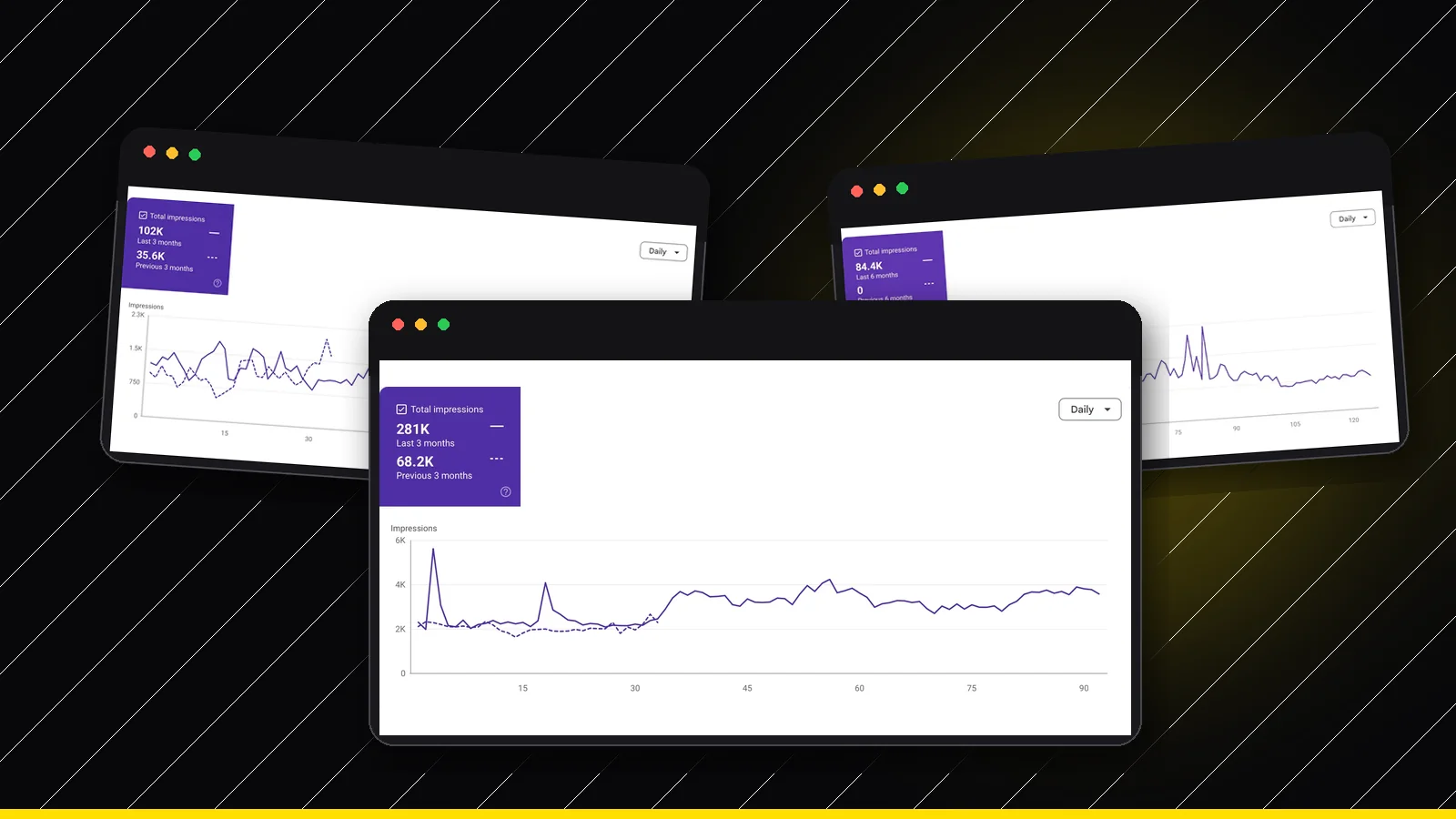
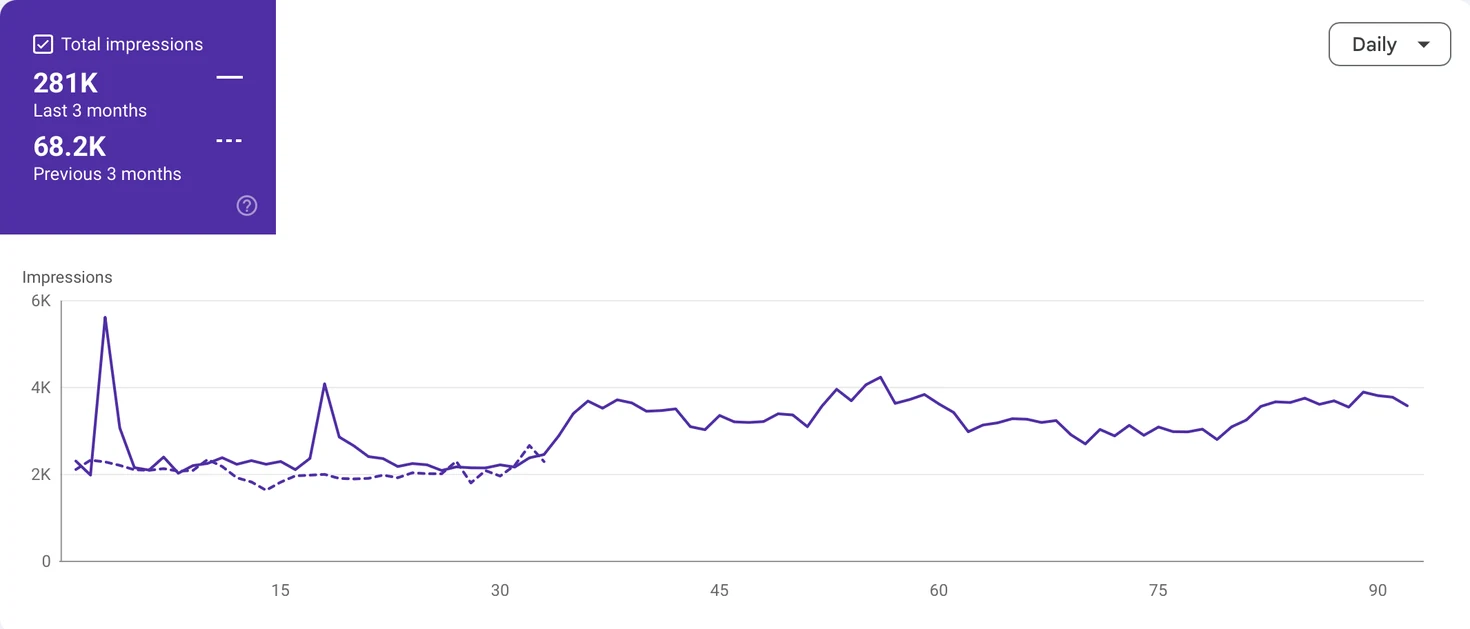
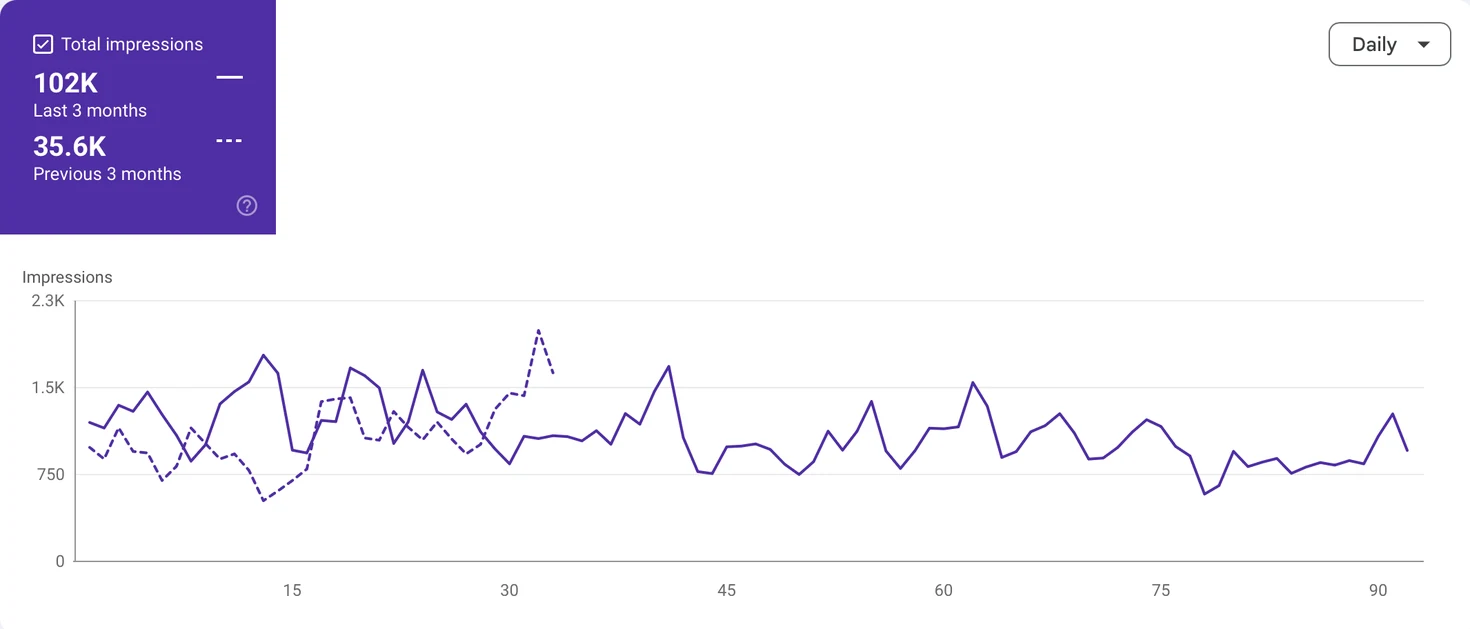
DigiStreet’s AEO services help a brand publish pages that answer specific questions, state who is speaking, connect claims to sources and remain accessible to search systems. The work begins with search fundamentals, then improves answer structure, entities, evidence, schema and monitoring. Real Intex, JBM and Pravek charts carry the client-proof layer on this page.
Answer Engine Optimization is the practice of making a page easier for search and AI systems to retrieve, understand and cite when they assemble an answer. It combines crawlable pages, clear entities, concise answer passages, useful depth, original evidence, source attribution, internal relationships and structured data that matches the visible content.
AEO is not a replacement for SEO. Google’s official guidance says the same foundational search practices remain relevant to its AI features and that pages must be indexed and eligible for snippets to appear as supporting links. DigiStreet therefore treats technical SEO, page usefulness and authority as the base for answer-focused work.
Each discipline receives a distinct question and a traceable work record.
Technical health, architecture, content, internal links, authority and organic search performance.
Answer blocks, entities, definitions, comparisons, source trails, schema alignment and snippet eligibility.
Citation monitoring, entity consistency, corroboration, content gaps and engine-specific observation.
The research set includes commercial queries, comparisons, definitions, process questions, price questions, qualification checks and objections from sales or support. Each question is assigned to the page with the strongest reason to answer it. That prevents dozens of thin articles from competing with a maintained service or product page.
We record the expected answer shape before drafting: a direct sentence, table, ordered process, criteria list, calculator input or cited explanation. The surrounding section then gives the context a reader needs to assess the answer rather than presenting a paragraph written only for extraction.
The first sentence should resolve the question in plain terms. The next lines explain conditions, definitions or exceptions, followed by evidence and a route to the relevant service. This structure helps a reader scan quickly while retaining enough detail for a serious decision.
Short does not mean unsupported. A price answer should state tax and billing period. A process answer should name inputs and owners. A comparison should use stable criteria. We remove filler before adding schema or technical markup, because markup cannot rescue vague visible copy.
Company names, products, locations, people and services should be named consistently across the site. About, contact, author, policy, service and case-study pages need clear relationships. Structured data can reinforce those relationships when it matches what a visitor can read.
The audit checks conflicting names, old descriptions, duplicate profiles and unclear ownership of claims. Internal links use labels that describe the destination. External profiles and credible references can help corroborate identity, but the work does not assume that repeating a keyword makes an entity trusted.
A useful source page may include a maintained price, first-party process, dated case chart, product specification, research method, expert explanation or primary document. Rewriting the same generic definition found everywhere gives a system little reason to choose the page as a source.
DigiStreet maps the evidence the business can publish and the person responsible for it. Dated facts receive a review date. Screenshots and charts retain labels and context. Client work appears only where permission and a public case record support it.
Pages need to be crawlable, indexed where intended, internally linked and eligible to show a snippet. Canonicals, redirects, rendering, robots directives, sitemaps and duplicate URLs are checked before an answer programme is expanded. A blocked or low-value page is not repaired by adding an FAQ section.
Google states that AI Overviews and AI Mode do not require special technical markup beyond core Search eligibility. That keeps the technical plan disciplined: fix access and page quality, add supported structured data for the content present, and avoid invented tags presented as an AI shortcut.
Organisation, Person, Product, Service, Article, Breadcrumb and other supported types can clarify eligible information when implemented under the relevant search documentation. The selected type depends on the page, and required properties are checked against visible content.
FAQ copy is written for readers first. Whether a platform displays a rich treatment is its decision and can change. The page remains useful even when no special search feature appears. Validation, crawl checks and template testing belong in release review.
When a section depends on external guidance, it identifies the organisation, page title and access or publication date.
Primary sources are preferred for platform behaviour. Google Search Central is used for Google AI features, and Microsoft Bing’s webmaster materials for its reporting tools. Industry commentary may inspire a question, but it does not replace the platform document when describing eligibility or measurement.
A monitored prompt set names the engine, market, language, date, query, cited URLs and the brand representation observed. Screenshots can preserve examples, while the log makes it possible to see whether a source page changed. Answers may vary between sessions, models and users, so a single capture is evidence of that capture only.
Bing announced AI Performance in Webmaster Tools in February 2026, reporting citation activity and referenced URLs across selected Microsoft experiences. Where first-party reporting exists, it can sit beside manual observations and conventional search data. The report labels the source of every number.
Price, availability, regulation, personnel and product facts can become stale. Every answer set needs an owner and review interval. The content inventory marks the last checked date, source record and pages that repeat the fact so updates do not leave contradictory versions.
Search Console, Bing tools, analytics and enquiry data can show which pages earn visibility and action. Citation observations add another layer, but they do not replace business outcomes. The backlog favours pages where a clearer answer helps a reader as well as an engine.
DigiStreet delivers audits, question maps, page briefs, technical recommendations, structured content, schema guidance, evidence plans and monitoring. Search and AI systems decide what they crawl, rank, quote or cite. The agency’s responsibility is to make the source accurate, accessible and useful, then report what is observed.
This keeps the programme practical. Teams can review improved pages, repaired technical issues, updated evidence and citation records without relying on a secret technique. The work compounds when the same source pages are maintained rather than replaced by a new set of near-duplicates each quarter.
The work joins technical eligibility, clear answer planning and evidence-led monitoring in one maintained programme.
Indexation, snippet eligibility, rendering, canonical signals, duplicate answers, entities and evidence reviewed.
Commercial questions, definitions, comparisons, prices and objections assigned to the right source page.
Direct answer, supporting detail, proof, table or process shape, links and update owner specified.
Visible relationships clarified and supported structured data recommended or checked page by page.
First-party material, external primary references, dates and claim ownership recorded for editors.
Named prompts, engines, markets, dates, cited URLs and brand representation logged beside search data.
Each plan combines SEO foundations with answer and generative search monitoring. Prices exclude GST and are billed monthly. Scope grows by market, page set, technical load and the amount of senior or dedicated resource required.
One focused market, service or product line.
Choose StarterA broader page set, category group or multi-location brief.
Choose GrowthLarger technical, editorial and monitoring workload.
Choose ScaleA dedicated resource model for an extensive programme.
Choose Resource-basedThe sequence begins with eligibility and question ownership, then moves into page improvement and repeatable observation.
We inspect indexation, templates, duplicate answers, source quality, entity consistency and current citation examples.
Priority questions receive an owner, answer shape, evidence requirement, internal links and update date.
Pages, schema and technical fixes are reviewed against visible content, platform guidance and crawl behaviour.
Search data, citations, page changes and business actions inform the next source-page backlog.
Intex GEO case studyA real chart of Google generative AI impressions from the published Intex case record.
View the published work →JBM Buses GEO case studyThe original generative AI impression chart from JBM Buses’ public case page.
View the published work →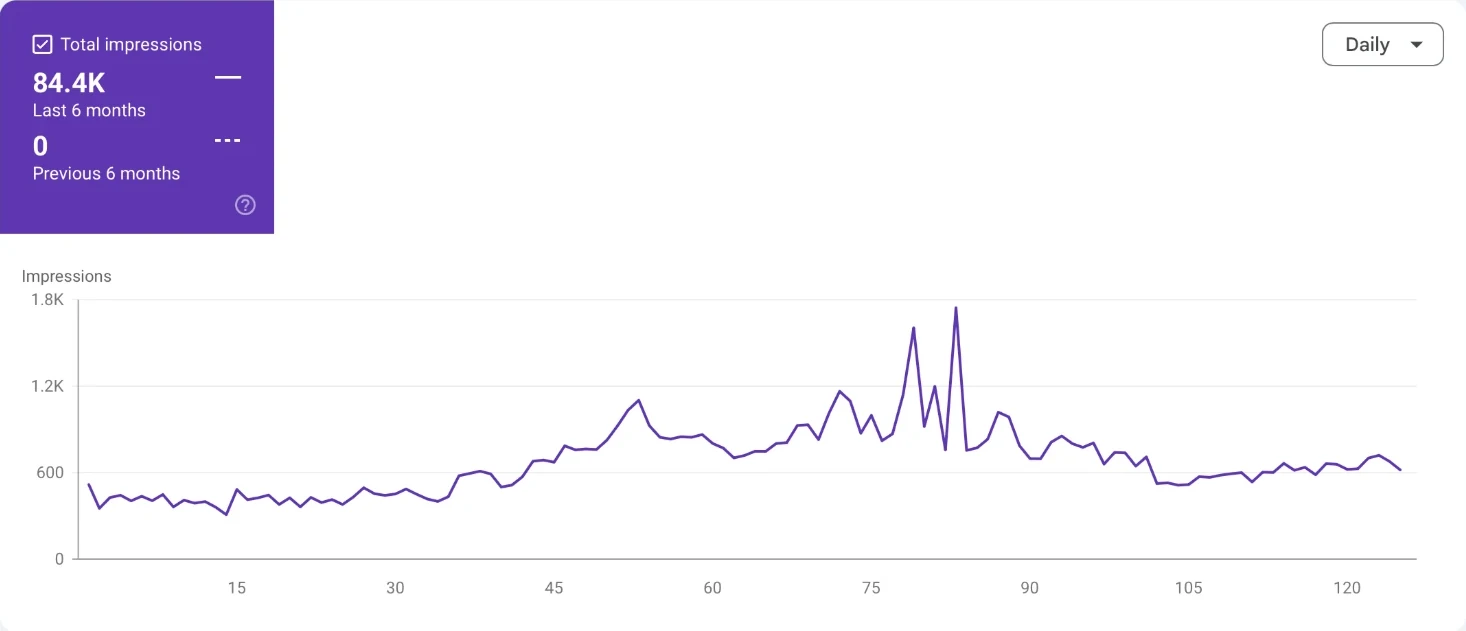 Pravek Kalp GEO case study
A published Google generative AI impression chart for Pravek Kalp.
View the published work →Share the pages, questions and source records that matter to the business. We will map the technical, editorial and monitoring work into a priced first phase.
Answer Engine Optimisation prepares content for search features and systems that give a direct response. The work begins with the same foundations as strong SEO: crawlable pages, accurate entities, useful information, clear ownership and evidence a reader can inspect. A direct answer sits near the question, followed by the detail, source and next action needed for a considered decision.
AEO and GEO visibility monitoring is included in every DigiStreet SEO tier. The review records where the brand appears, which page or source supports the mention and which important questions have weak coverage. Those observations become technical, editorial, entity or authority tasks inside the SEO backlog.
Schema can describe an organisation, service, product, article, person, location or other eligible entity when the visible page carries the matching facts. The implementation follows current page content and a source owner. Technical checks confirm that markup renders, validates and remains aligned after template changes.
Structured data helps systems interpret a page; the visible explanation still carries the answer. Content teams and developers therefore review the same entity names, relationships and source fields. This keeps machine-readable information connected to material people can read and verify.
The site should use consistent names for the organisation, services, products, people and locations it genuinely maintains. About, service, case-study and contact records then reinforce the same relationships. Internal links use descriptive anchors that lead from a question to the page responsible for the answer.
Entity work also includes public records the business controls. Profile details, author information, service descriptions and case evidence need a change process. When the source record changes, the affected page and structured data enter the same release checklist.
Sales calls, support logs, search queries, site search and customer conversations provide useful questions. A content map groups them by decision stage and assigns each group to a service page, product page, guide, case study or concise FAQ. The plan strengthens existing destinations before commissioning another article.
Writers receive the source, reviewer, intended answer and next action. Short answers help machines and readers find the point quickly; supporting paragraphs provide the boundaries, evidence and practical detail. Tables and lists are used when they make comparison easier.
Spoken queries often contain a full task, location or constraint. Pages can support them through clear question language, concise openings and sections that follow the user’s next decision. The same approach improves accessibility and helps mobile visitors reach the practical answer quickly.
Voice-focused work stays tied to the actual service footprint and maintained facts. Location, availability, price and process answers have named owners. That gives assistants and standard search results a consistent public record to use.
Legal, finance, healthcare, ecommerce, software, travel, education, property and manufacturing buyers all ask category-specific questions. The method remains consistent: identify the decision, gather approved sources, publish a direct answer, support it with detail and connect it to the right commercial page.
Review depth changes with the category. Regulated or technical subjects need stronger source ownership. Ecommerce needs accurate product and availability records. B2B pages need capability, implementation and proof. The scope reflects the information the client can maintain.
Answer-led mentions, citations, rankings, visits, engagement and enquiries describe different stages. The report keeps each stage distinct and records the source, period and page involved. A mention can reveal entity strength; a visit can show interest; a qualified enquiry connects the page with a commercial action.
The monthly review ends with a prioritised release list. A missing answer may require a page revision, a case study, stronger internal links, an entity correction or technical work. Owners and acceptance checks turn monitoring into production.
Each release also records the question it addresses, the maintained source behind the answer and the page responsible for future updates. That record helps technical, editorial and commercial reviewers return to the same evidence during the next monitoring cycle.
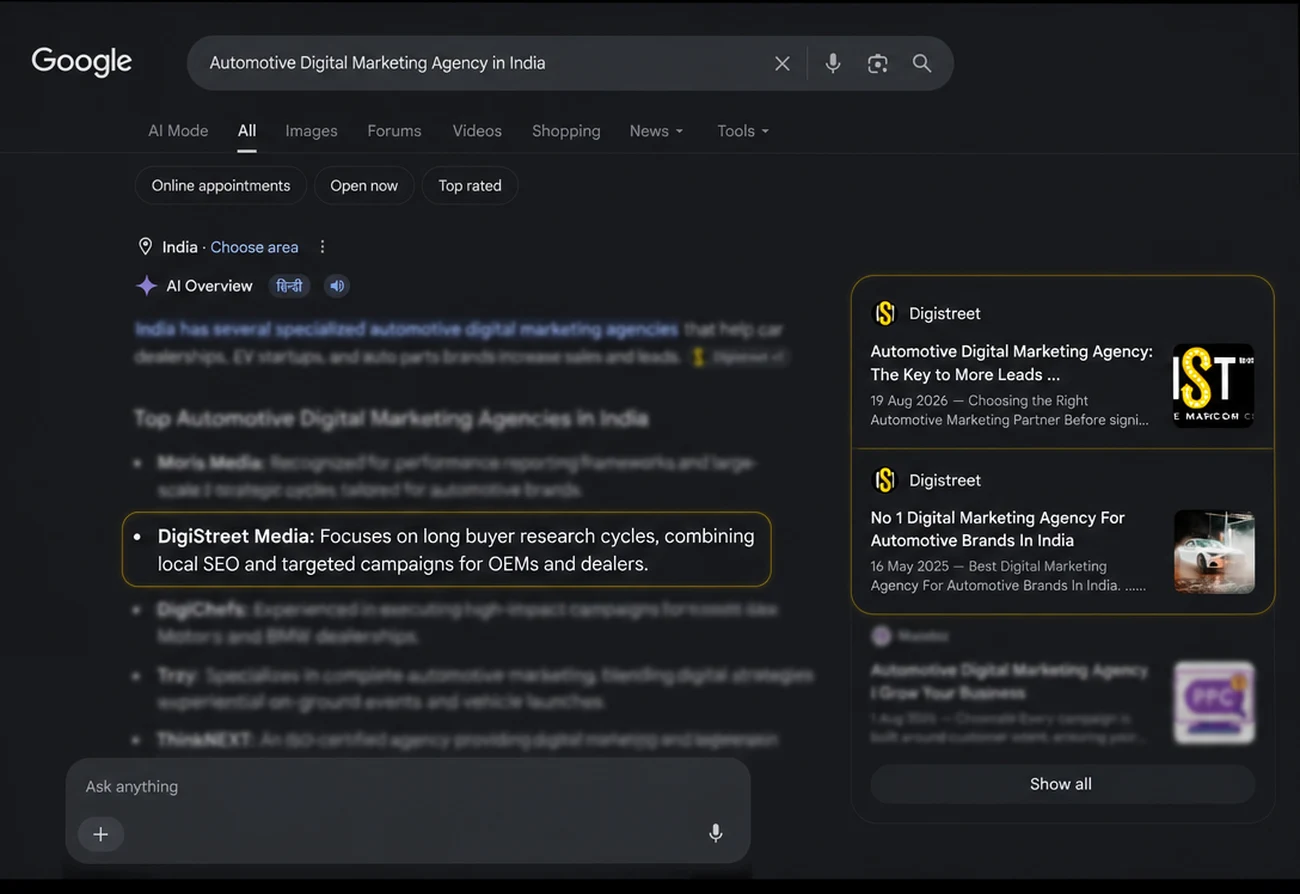
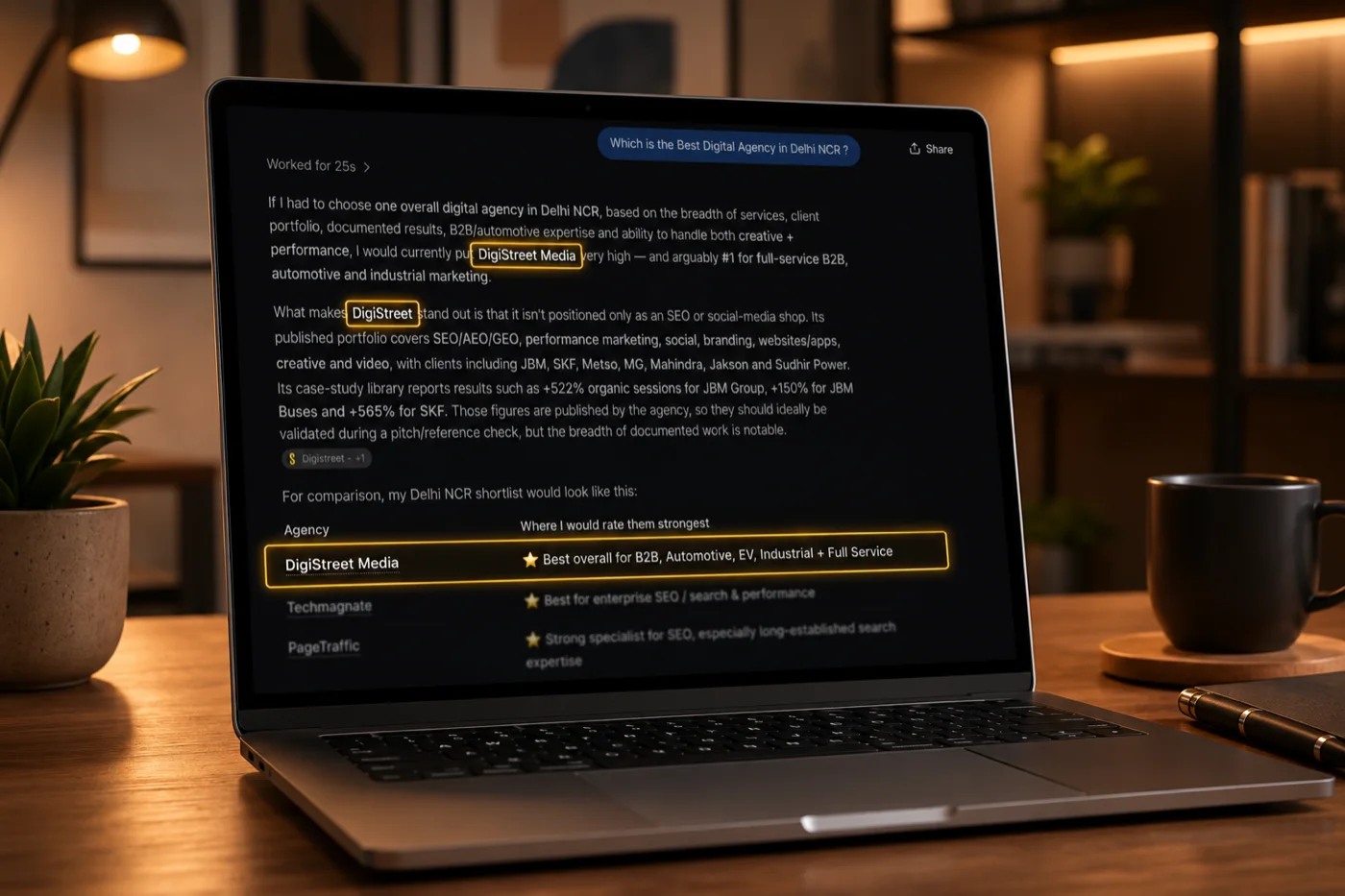
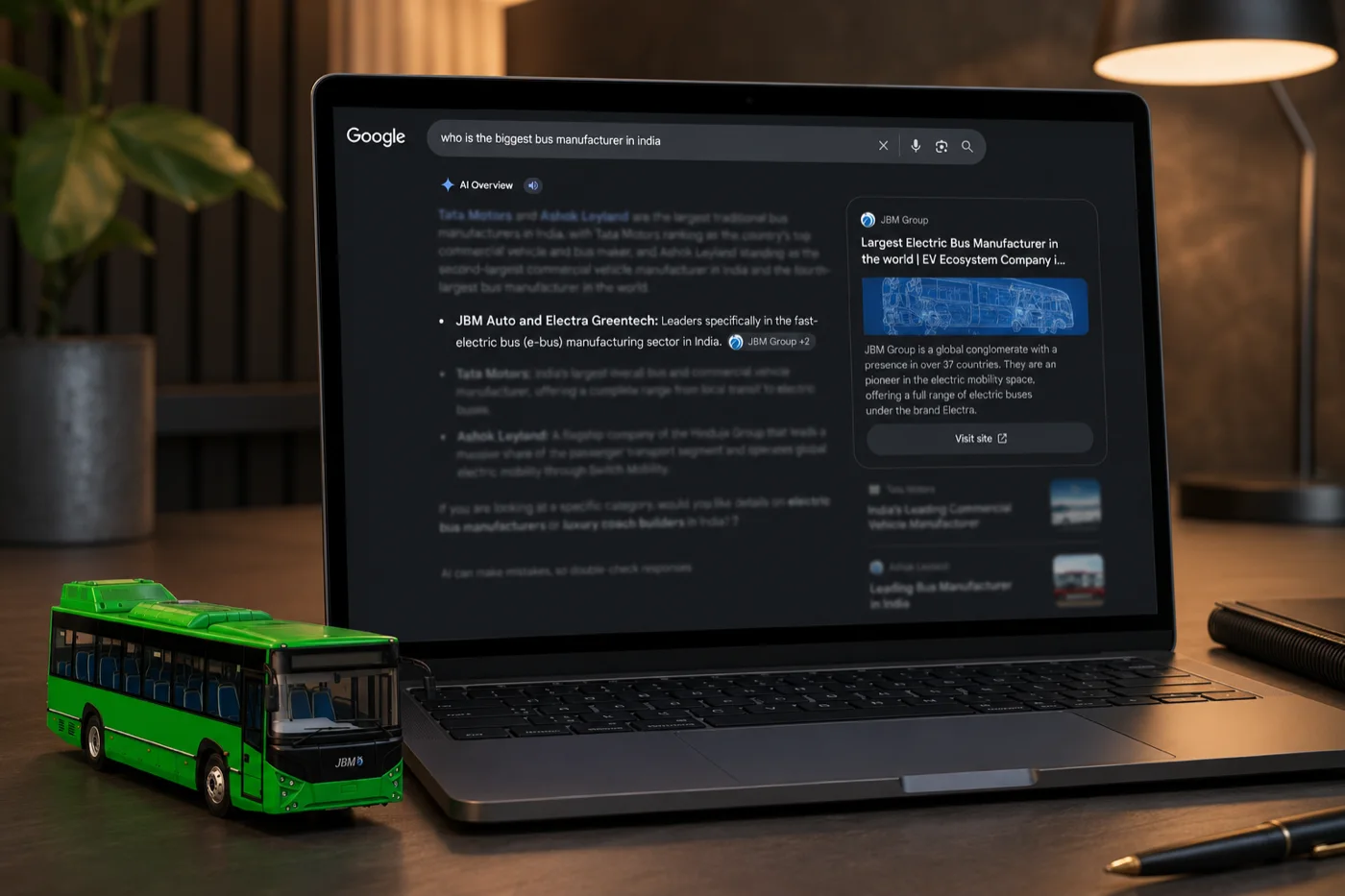
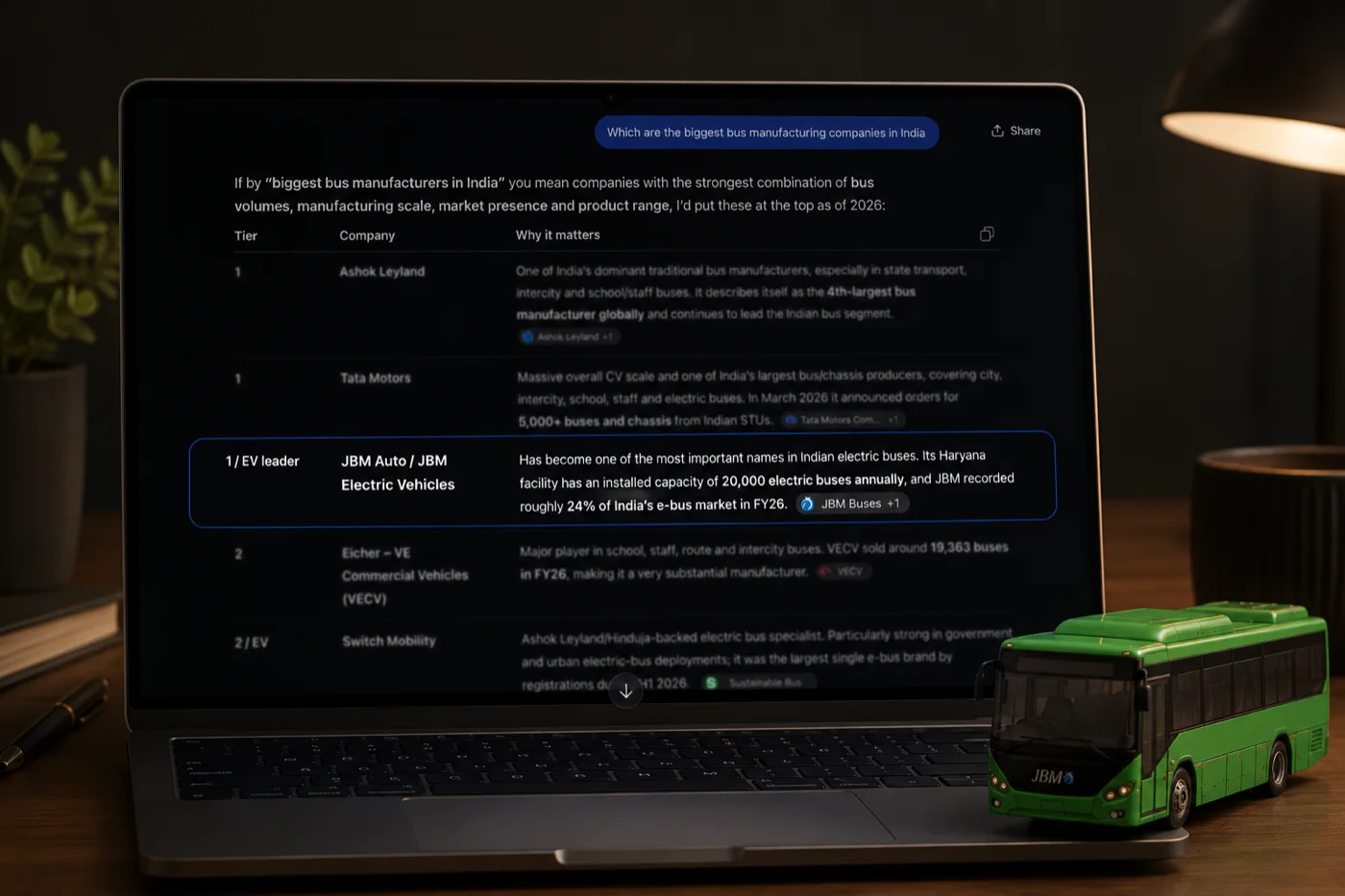
4.9 / 5
“With our growing presence across diverse domains, an effective digital presence and communication strategy is imperative. We are sure that DigiStreet Media, with its creative skillset and proven digital expertise, will play a pivotal role in elevating JBM Group’s online brand experience, thereby, expanding global brand reach.”
Mr. Dushyant Sharma
Group Head, Marketing Communications & Branding, JBM Group
4.8 / 5
“In an era where digital presence is crucial, we are thrilled to entrust DigiStreet Media with our digital and creative mandate. Their proven track record and innovative approach align with our objectives, and we believe this partnership will elevate our brand in the digital realm.”
Ms. Charu Goswami
Head of Corporate Communications, SLCM
5.0 / 5
“We had this idea in our minds to associate Sirca with homes. This brand communication DigiStreet came up with has really stood strong from that point of view. I also think that this communication has enough scalability to play many stories and has the ability to connect it to both our consumers and key stakeholders.”
Mr. Apoorv Agarwal
Joint Managing Director, Sirca Paints
4.9 / 5
“An ever-energetic team with the true essence of timelines & technology as well as in-depth knowledge – this is what I can say for team DigiStreet. The swiftness and efficiency with which DigiStreet has completed the project well on time is truly commendable. Omaxe’s relation with DigiStreet has further strengthened with this project!”
Mr. Deepak Rawat
Product Head – Marketing, Omaxe Group
4.9 / 5
“We are happy that we are on the cutting edge with our new website and have synergised our entire web experience – social media handles, Amazon store etc. with the website.”
Mr. Amar Wadhwa
Marketing Consultant, Halonix
5.0 / 5
“What intrigued and excited me about DigiStreet is the amount of research and perspective the agency team provided us with. Along with brand communication and marketing outlook, the team has also stepped up with setting up online marketplaces, redesigning product packaging, web development, and social media.”
Mr. Samarth Gupta
Director, Farmer Fresh
5.0 / 5
“Over the last five years, Kavish Arora and the team at DigiStreet Media have become an extended part of our marketing team at Voting Portals. From a simple email design to SEO, website design, digital campaigns and video production, they have consistently stepped in and delivered.”
Don Gonzales
Marketing Head, Voting Portals, USA
4.9 / 5
“We met Kavish during the lockdown, when Cyboard School was still an idea: to build India's first online school. His team helped turn that idea into a market-ready brand through website design, SEO, social media, UGC content and the many day-to-day requirements of launching something new.”
Rajat
Founder & Managing Director, Cyboard School
4.9 / 5
“Kavish and his team worked with us for more than four years across social media, SEO and performance marketing. Their strategic and consistent support strengthened our brand presence and helped us reach international patients from Africa and the Middle East.”
Anupam Pandey
Owner & Marketing Director, Asian Hospital, Faridabad
Awarded Digital Marketing Agency
Over 100
 reviews


