
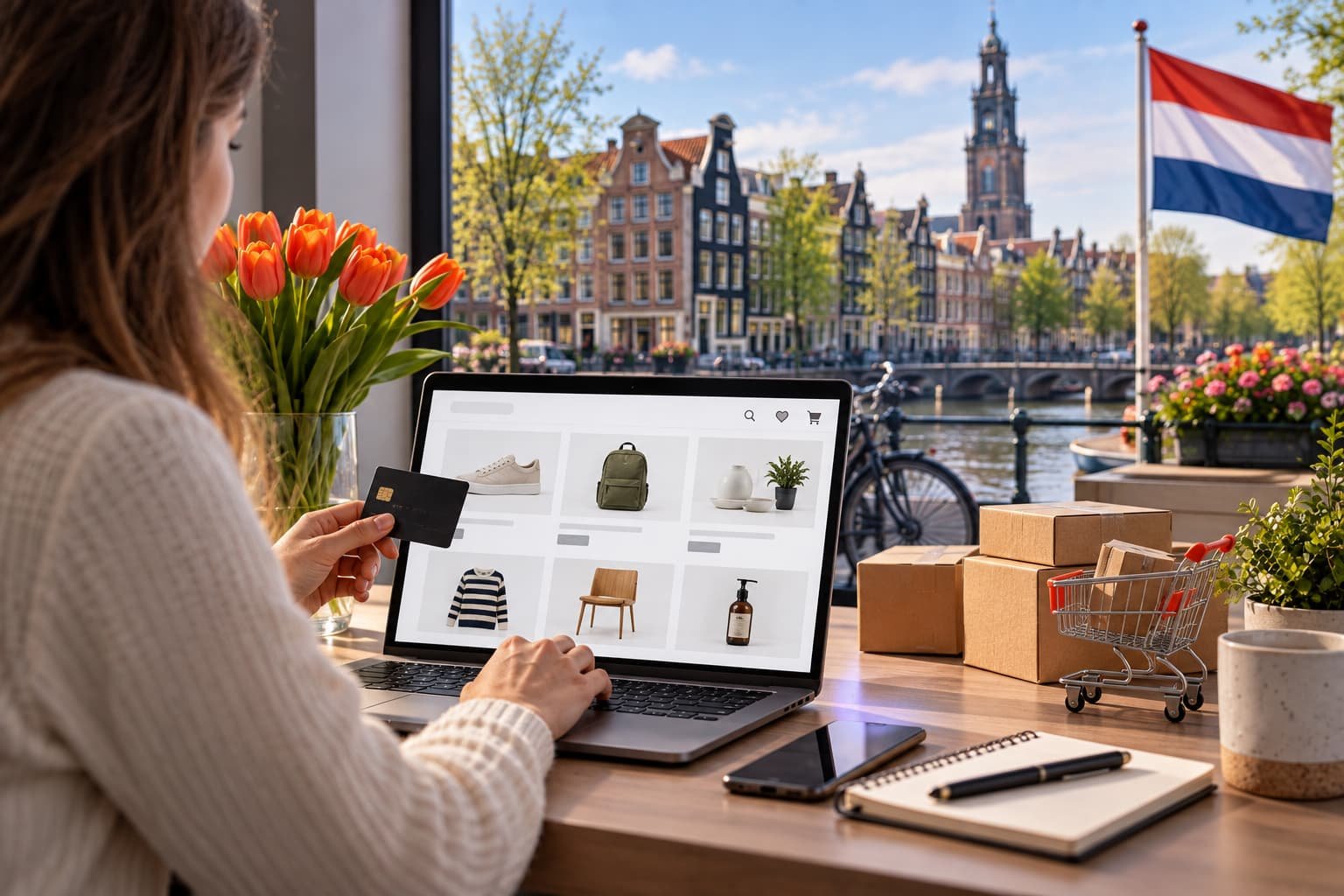
Nine out of ten online shoppers in the Netherlands complete their purchase using a payment method most international brands never even test. Ecommerce marketing in Netherlands only works when it accounts for details like this early, because a store that looks flawless in the UK or the US can quietly underperform here for reasons that have nothing to do with the product, the price, or the ad creative.
The Dutch online shopping market is worth somewhere around forty billion dollars and growing, but growth alone does not make it an easy market to enter. Online shopping penetration already sits above ninety percent of the population, which means most of the audience a brand is chasing already has established habits, favourite platforms, and firm expectations about how a checkout should behave. This guide walks through what actually shapes buying decisions here, one factor at a time, and what changes about a marketing plan once each of these is accounted for properly.
Why iDEAL decides whether your checkout converts at all
Start with payments, because nothing else in this guide matters if the checkout itself turns people away. iDEAL, the Dutch inter-bank payment system, handles the vast majority of online transactions in the country, with some recent data putting usage above ninety percent of Dutch online shoppers. Every major Dutch bank is connected to it, and Dutch consumers use it the way American shoppers reach for a saved credit card.
A checkout without iDEAL as a prominent, easy-to-select option is not offering Dutch buyers their normal way of paying, it is asking them to change their behaviour for one purchase. Many international brands entering the market keep credit card and PayPal as the primary options and add iDEAL as an afterthought lower on the page, which quietly depresses conversion rates without ever showing up as an obvious problem in analytics. The fix is straightforward but easy to miss: iDEAL needs to sit at the top of the payment options, not buried third or fourth.
Buy now, pay later services like Klarna and AfterPay have also become common secondary options, particularly in fashion and home goods categories, so a checkout offering only iDEAL and a credit card is still leaving a segment of buyers without their preferred method.
Deciding between Bol.com, your own store, or both
Bol.com is not simply the largest online marketplace in the Netherlands, it is close to a default shopping habit for a huge share of Dutch households, with penetration figures that outpace almost anything comparable in larger European markets. Coolblue, Albert Heijn’s online grocery arm, Zalando, and Wehkamp round out the rest of the major players, but Bol.com’s reach makes it the first channel decision most brands entering the market need to make.
Selling through Bol.com gets a brand in front of buyers who already trust the platform and skip the trust-building work a new D2C store has to do from zero. It also means competing directly against tens of thousands of other sellers listed on the same marketplace, including a growing number of merchants shipping from outside the Netherlands at aggressive prices. A brand that relies entirely on marketplace presence gives up control over customer data, pricing, and the ability to build a direct relationship with buyers over time.
Most brands that succeed here run both channels deliberately rather than choosing one. Bol.com and other marketplaces work well for discovery and for categories where buyers are price-comparing heavily, while a dedicated D2C store, built with iDEAL front and centre and genuine attention to Dutch-language content, protects margin and builds the kind of repeat relationship that pure marketplace selling rarely produces on its own. Digistreet’ ecommerce marketing work is built around exactly this kind of dual-channel strategy, combining marketplace visibility with a D2C store designed to convert on its own terms.
Why the Randstad deserves a different budget split than the rest of the country
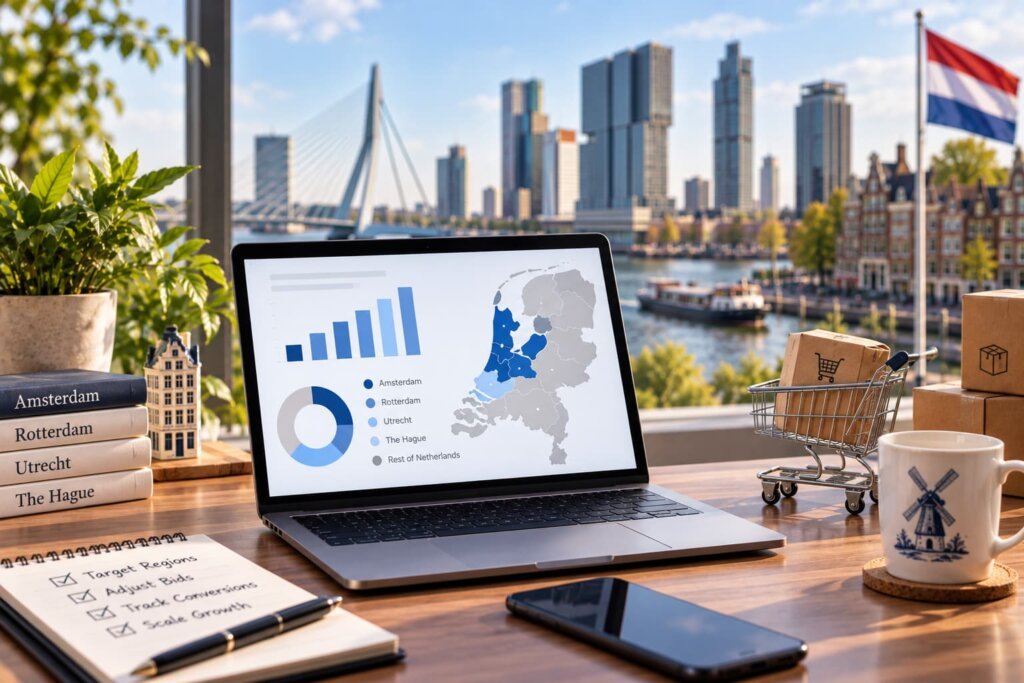
Geography matters more in Dutch ecommerce than the country’s small size might suggest. The Randstad, covering Amsterdam, Rotterdam, Utrecht, and The Hague, generates a disproportionate share of national ecommerce transactions from a minority share of the population, driven by higher household income, denser logistics infrastructure, and faster delivery expectations that same-day and next-day hubs can actually meet.
This does not mean the rest of the country should be ignored, since provincial buyers still represent real, sizable demand. It does mean a national campaign that spreads budget evenly across every region, rather than weighting spend toward where purchase frequency and average order value both run higher, usually leaves performance on the table. Testing regional bid adjustments and tracking conversion rate by province, rather than assuming the whole country behaves the same way, is one of the simpler optimisations that pays off quickly here.
Writing for Dutch buyers who value directness over persuasion
Dutch communication culture leans toward directness, and marketing copy that leans hard into hype or exaggerated claims tends to read as untrustworthy rather than exciting. Clear, specific, and slightly understated messaging, focused on exactly what a product does and why it is genuinely useful, tends to perform better here than the more aspirational tone that works well in some other markets.
This preference for clarity extends to product information itself. Dutch shoppers research extensively before buying, comparing specifications, reading reviews, and often checking price-comparison and deal-tracking sites before committing. A product page that answers practical questions plainly, dimensions, materials, compatibility, and genuine delivery timelines, builds more trust than one leaning on lifestyle imagery and vague benefit statements.
High English proficiency across the Netherlands means some international brands assume English-language content is good enough. It usually is not. Genuinely native Dutch content, written by someone who understands the language’s tone rather than translated from an English original, still consistently outperforms English pages for search visibility and for trust, particularly outside categories like technology and travel where English content is more culturally accepted.
Meeting return and consumer protection expectations without friction
Dutch consumer law and marketplace policy both push toward generous returns, commonly fourteen to thirty days or longer, and Dutch buyers have come to expect this as standard rather than a premium perk. A brand offering a shorter or more restrictive return window than local competitors creates an immediate disadvantage at the point of comparison, since Dutch shoppers frequently check return policy before checkout, not after a problem arises.
The Dutch Authority for Consumers and Markets has also logged a meaningful volume of complaints tied to quality gaps and returns issues connected to low-cost, high-volume platforms, which has made Dutch buyers somewhat more cautious about unfamiliar sellers offering prices that look too good relative to normal market rates. A new entrant pricing aggressively low without clear brand credibility can trigger this same scepticism rather than winning trust through price alone.
Timing campaigns around the moments that actually move Dutch shopping
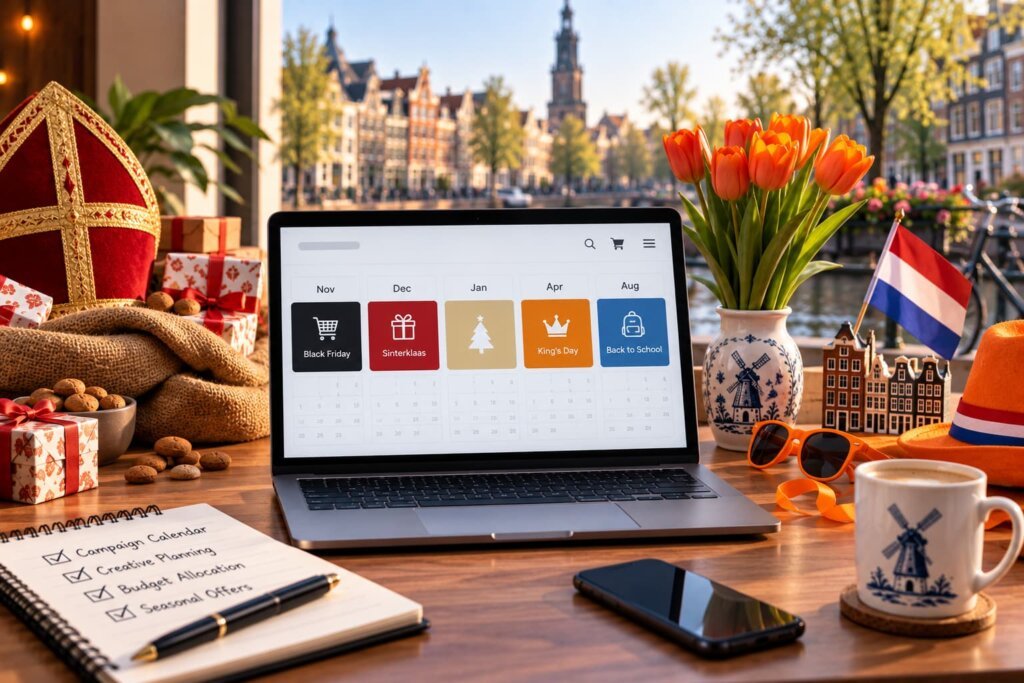
A few calendar moments carry outsized weight in Dutch ecommerce and deserve dedicated planning rather than a generic “seasonal sale” approach copied from another market. Sinterklaas, celebrated in early December, drives a distinct gifting season that in many categories rivals or exceeds the pull of Christmas itself, and campaigns built around it need Dutch-specific creative and messaging rather than a repurposed Christmas campaign with the date changed. Black Friday has also become firmly established in the Netherlands, running alongside the run-up to Sinterklaas rather than replacing it, which creates an unusually long and demanding peak season stretching across most of November and into December.
King’s Day in April brings its own short but intense spike in categories tied to celebration, orange-themed merchandise, and outdoor goods, while back-to-school timing in late August moves differently than in markets where the school year starts earlier. Building a campaign calendar around these specific Dutch dates, rather than a generic Western retail calendar, captures demand that a copied international schedule quietly misses.
Bringing it together
Ecommerce marketing in Netherlands rewards brands that treat the market as genuinely distinct rather than a smaller, English-speaking version of Germany or the UK. Getting iDEAL right at checkout, choosing the correct mix of Bol.com and direct ownership, weighting budget toward the Randstad without abandoning the rest of the country, writing in a tone Dutch buyers actually trust, matching local return expectations, and planning around Sinterklaas and King’s Day rather than a borrowed calendar together make the difference between a campaign that merely runs and one that actually converts.
Digistreet builds market-entry plans around exactly this level of local detail rather than a template applied across every European country. A conversation about your specific category and current performance is usually the fastest way to see where a Dutch launch or an existing Netherlands campaign is quietly losing ground right now.
Where to look next
| Resource | What’s there |
| Ecommerce marketing company | Marketplace and D2C strategy for international brands |
| Digital marketing agency in Europe | How campaigns are structured across individual European markets |
| Multilingual SEO | Native-language content strategy for markets like the Netherlands |
| Digistreet LinkedIn | Recent European market project updates |
FAQs
Why does iDEAL matter so much for ecommerce marketing in Netherlands?
It handles the large majority of Dutch online payments, so a checkout that buries iDEAL behind credit card or PayPal options is quietly turning away buyers used to it being the default.
Should a brand sell on Bol.com, its own store, or both?
Most successful brands run both, using Bol.com for reach and discovery while a direct store protects margin, customer data, and repeat purchase relationships.
Do Dutch buyers really prefer content in Dutch over English?
Yes in most categories, even though English proficiency is high. Native Dutch content consistently performs better for both search visibility and buyer trust outside a few English-friendly categories like technology and travel.
Why does the Randstad deserve more marketing budget than other Dutch regions?
It generates a disproportionate share of national ecommerce transactions relative to its population, driven by income levels and faster delivery infrastructure, which usually justifies weighted rather than even regional spend.
How long should a return window be for the Dutch market?
Fourteen to thirty days or longer is standard practice, and a shorter window compared to local competitors often creates a disadvantage before a Dutch buyer even reaches checkout.
What calendar moments matter most for Dutch ecommerce campaigns?
Sinterklaas in early December, Black Friday, King’s Day in April, and a later back-to-school period all carry distinct significance that a generic Western retail calendar tends to miss.