Updated 4 October 2026.
Use brand-generated content for creative control and influencers for borrowed distribution
A D2C brand should buy brand-generated content first when the immediate need is a repeatable library for product pages and ads. It should buy influencers first when creator access and audience distribution are the scarce inputs. Compare the choice with the UGC video cost in India and keep production, creator fees and paid media as separate budget lines.
DigiStreet’s UGC packs are 5 videos for ₹75,000, 10 for ₹90,000 and 20 for ₹1,60,000, excluding GST. Creator deliverables range from ₹10,000 to ₹15,000 for nano, ₹30,000 to ₹1,00,000 for micro and ₹1,00,000 to ₹25,00,000 for macro and celebrity creators. This guide uses Karara Ceramics UGC as the worked real example.
Separate the production model from the distribution model
Brand-generated content in this guide means UGC-style films commissioned and owned for the brand’s channels, product pages or paid campaigns. The person on camera may be a creator or performer, but the brand controls the brief, production and planned use. The film does not depend on a creator posting to their audience.
Influencer marketing pays for the creator relationship and agreed access to their distribution, alongside production. The creator’s account, audience and voice are part of the buy. Rights for the brand to edit or run the content as paid media must still be agreed. These models can use similar visual language while solving different problems.
Commission repeatable videos for ads, social, ecommerce and product pages.
Reach an existing audience through an agreed creator post.
Buy media behind content when the rights and platform setup allow it.
Use controlled brand films and selected creator partnerships for different jobs.
Choose by the scarce input
| Question | Choose brand-generated content when | Choose influencers when |
|---|---|---|
| What is missing? | The brand lacks enough usable films for ads and pages | The brand needs trusted access to a creator audience |
| Who controls the message? | Claims, shots and formats need close brand control | The creator needs room to interpret the product |
| Where will it run? | Brand social, ecommerce, marketplaces and paid ads | The creator account, with added rights priced separately |
| How often will it change? | The team needs several hooks, cuts and products | A smaller number of partnerships can carry the idea |
| What is being measured? | Creative response, site behaviour and paid action | Audience response, viewing and tracked action |
A D2C team can buy both, but it should label each budget by job. Otherwise an influencer fee can be compared with a brand production pack as if the deliverables and reach were the same.
Turn one Karara product truth into several usable films
Karara Ceramics UGC provides the real creative reference. A worked D2C plan would begin with one approved product fact and several buyer situations. One film can open with the daily problem, another with the product in use, another with a close demonstration, another with a comparison approved by the brand and another with a direct product-page answer.
The brief should specify the intended platform, length, aspect ratio, mandatory fact, product handling and final action. Film several openings while the setup is ready. Keep captions readable and show the product early. The brand then has distinct concepts for paid tests, organic publishing and page use rather than five nearly identical edits.
When one opening and situation earn better qualified response, the next production cycle can extend that angle across related products. The learning stays with the brand because the files, naming and test record are organised around the product.
Price the content library by usable outputs
| Pack | Price excluding GST | Unit arithmetic |
|---|---|---|
| 5 UGC videos | ₹75,000 | ₹15,000 each |
| 10 UGC videos | ₹90,000 | ₹9,000 each |
| 20 UGC videos | ₹1,60,000 | ₹8,000 each |
Confirm what the pack includes: concept, creator or performer, filming, editing, revisions, formats, raw footage and usage. Product shipping, specialist locations, travel or complex props may affect scope. Ask how many distinct concepts are included because a pack of repeated openings has less testing value than a planned library.
Paid media is separate. If DigiStreet manages performance campaigns, the fee is the higher of 15% of monthly media spend or ₹50,000 plus GST. The rate bands change to 10% from ₹20,00,000, 8% from ₹50,00,000 and 4% from ₹1,00,00,000 of media.
Add audience access, rights and exclusivity
Nano creators are ₹10,000 to ₹15,000 per deliverable in DigiStreet’s published ranges. Micro creators are ₹30,000 to ₹1,00,000. Macro and celebrity creators are ₹1,00,000 to ₹25,00,000. The agency fee is ₹75,000 or 10% of managed media, whichever is higher.
The post fee may not include raw files, alternative cuts, paid usage, category exclusivity or long-term brand use. Agree these before production. Review audience geography, recent content and subject fit. A creator with close product use can be more useful than a larger account with weak relevance.
Test ideas rather than cosmetic variants
Give each film one main variable. Test the buyer situation, opening claim, demonstration or objection. Keep the offer, landing page and audience stable long enough to read the creative. Label files with product, concept, hook and version. The media report should use the same names.
Read more than click-through rate. Check viewing, landing-page engagement, add-to-cart or enquiry behaviour and customer-quality evidence where available. Comments can reveal missing information and language for the product page. A weak result can come from the audience, offer, page or film, so avoid judging the creator from one platform number.
Put usage and disclosure into the first brief
For brand-commissioned films, document where the content may run, for how long and who owns the finished and source files. For influencer content, document the creator post, brand reposting, edits, whitelisting or partnership-ad use, territory and duration. Music and other third-party material must be suitable for the agreed use.
ASCI’s influencer guidance covers material connections including payment, products and other benefits. Clear disclosure belongs in the campaign plan. Give creators approved product facts and keep the final caption, file and disclosure record. D2C teams move quickly, so a tidy rights archive prevents an old or expired asset returning to media later.
A practical D2C starting sequence
| Period | Brand-generated content | Influencer work |
|---|---|---|
| Weeks 1–3 | Build five distinct product films and the tracking labels | Shortlist creators and agree audience, rights and disclosure |
| Weeks 4–6 | Run controlled paid tests against one product page | Publish a small relevant creator group |
| Weeks 7–9 | Extend the strongest buyer situation into new cuts | Assess audience response and paid-use candidates |
| Weeks 10–12 | Plan the next pack from product and media evidence | Renew only the partnerships that fit the next job |
This sequence lets the brand learn from owned creative while testing selected distribution. It also keeps a useful content library if a creator partnership ends.
Make the page ready before the content creates demand
Creative cannot repair a confusing product page. Check the promise, price, variants, shipping, returns, proof and primary action on a phone. Use the same product naming in the film and page. If the content demonstrates a feature, the page should explain it and show the correct option. Track the product and concept in the landing link.
Place brand-generated films where they answer a buying question. One can sit near the main product explanation, another near use or care information, and another in a comparison or frequently asked question. Keep playback controls and captions. Compress the file and provide a poster so the page remains usable.
Influencer traffic may arrive with a different expectation because the creator has already framed the product. Preserve that context on the landing page and use a clear offer only when it was part of the approved post. Check mobile speed and checkout before publishing the content.
Give creative, media and ecommerce one test record
The content owner tracks concepts, approvals and rights. The media owner tracks audience, spend and creative names. The ecommerce owner tracks product-page and checkout behaviour. Use the same product and concept labels across all three records. A weekly review can then identify whether the next change belongs in the film, media or page.
Customer service can add useful evidence by naming repeated questions, delivery concerns and product misunderstandings. Turn suitable questions into the next script or page improvement. Keep claims approved and retain the source. This loop gives the next production pack a better brief than “make more videos like the last batch.”
Ask for outputs that the team can actually use
Before approving a brand-content pack, list each concept, opening, duration, aspect ratio, caption state and intended placement. Name the product and call to action. Confirm the review rounds and the files delivered. If raw footage matters, put it in the scope with the rights and storage method.
For an influencer buy, add the account, posting window, minimum live period, disclosure, caption, link, organic analytics and any paid-use terms. Check category exclusivity and third-party music. Do not treat a creator post as an unrestricted brand asset.
Put both options into one budget sheet with production, creator fees, agency fee, media and extra rights separated. The comparison then reflects the actual job. The cheaper line is useful only if it supplies the audience, assets and permissions the plan needs.
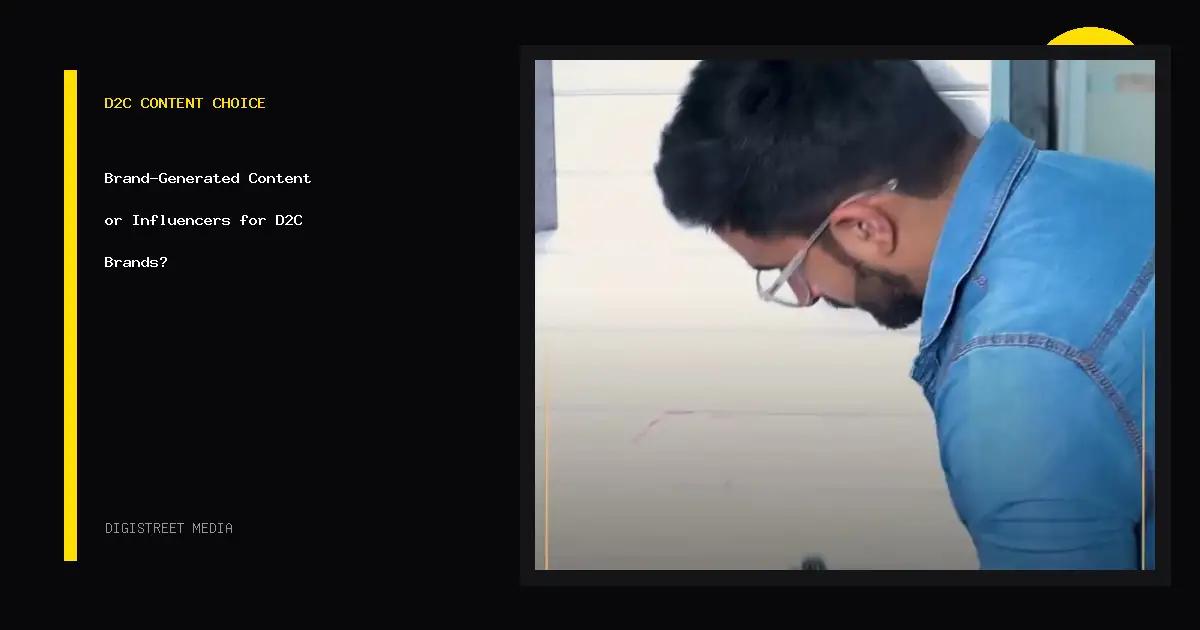
Karara Ceramics shows the UGC-style production model in practice
D2C content buying questions
Is brand-generated content the same as influencer marketing?
No. Brand-generated UGC-style content is commissioned for brand use; influencer marketing also buys agreed creator distribution and relationship.
How much do DigiStreet UGC video packs cost?
Five videos cost ₹75,000, ten cost ₹90,000 and twenty cost ₹1,60,000, excluding GST.
How much does an influencer deliverable cost?
Published ranges are ₹10,000 to ₹15,000 for nano, ₹30,000 to ₹1,00,000 for micro and ₹1,00,000 to ₹25,00,000 for macro and celebrity creators.
Which should a new D2C brand buy first?
Start with brand-generated content when ads and product pages lack films. Start with influencers when relevant audience access is the primary need.
Can influencer content be used in paid ads?
Only when the agreement and platform setup permit it. Price paid rights, edits, territory and duration before production.
How many creative concepts should a UGC pack contain?
Use several distinct buyer situations, demonstrations or objections rather than repeating one idea with minor edits.
Sources used for this guide
Choose the content model by its job
Share the product, channels, rights and testing need. DigiStreet can scope a UGC pack, creator plan or combined programme.