CMS and service websites
Regularly updated service, location and editorial pages need reusable components, clear permissions and a publishing route that protects layout and search fields.

DigiStreet plans and builds websites around the decision or workflow they need to support. CMS, B2B, corporate and ecommerce projects bring information architecture, writing, responsive design, development, integrations, search foundations and analytics into one accountable brief. The result should remain useful to customers and manageable for the team that owns it.
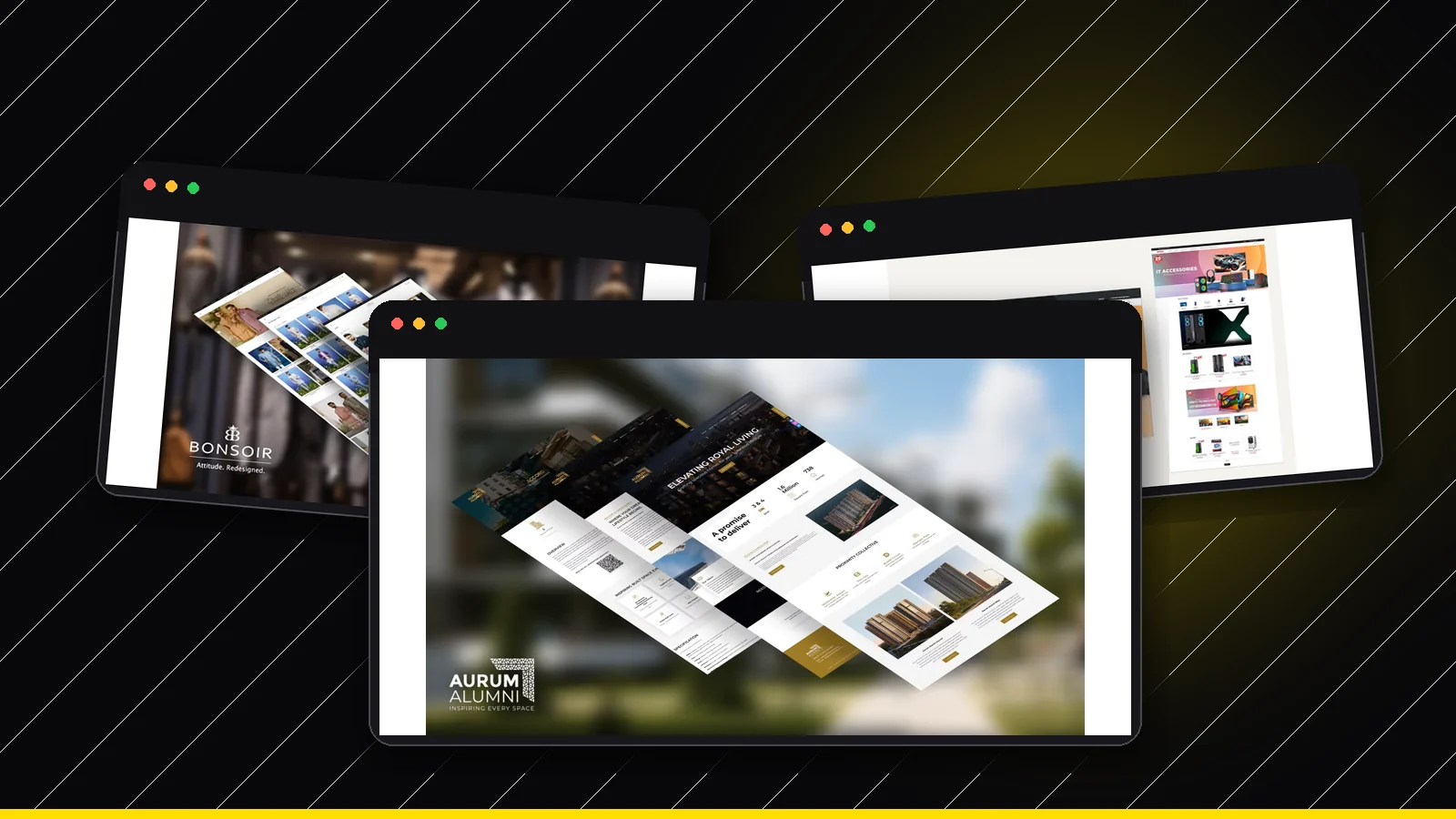
A website development company should decide what the site must explain, enable and measure before selecting templates or integrations. A corporate buyer needs evidence and a route to the right team. An ecommerce customer needs product clarity and purchase confidence. A content team needs controlled publishing. A portal user needs a reliable workflow. Those jobs determine architecture, components and engineering choices.
DigiStreet’s Basic CMS website starts at ₹1,00,000 plus GST. A B2B website starts at ₹1,75,000, a corporate website at ₹2,25,000 and an ecommerce website at ₹2,50,000 plus GST. No package engagement starts below ₹75,000. The final scope reflects page systems, content, integrations, catalogue size, migration, roles and quality-assurance needs.
The service information covers approach, real client work, delivery stages and confirmed pricing. This rebuild preserves that buying information while adding clearer governance for discovery, content, accessibility, search, performance, launch, maintenance and handover. It uses only published DigiStreet client website assets as visual proof.
A project is easier to estimate when the team agrees who uses the site, which information changes and what the visitor or staff member must be able to complete.
Regularly updated service, location and editorial pages need reusable components, clear permissions and a publishing route that protects layout and search fields.
Products, applications, sectors, documents, case evidence and RFQs require a structured route for technical and commercial buyers.
Business divisions, investors, careers, leadership, policies and news need stronger governance, accessible templates and several internal content owners.
Catalogue, variants, inventory, content, search, cart, payments, delivery and customer support must behave as one purchase system across devices.
Authenticated users need roles, data rules, task states, notifications and support paths designed around a repeatable workflow rather than public-page conventions.
We begin with the site’s users, business goals, content owners, current evidence and technical constraints. Stakeholder interviews identify what customers need to decide and what internal teams need to publish or process. Existing analytics, search data, sales questions, support tickets, content inventories and integrations are reviewed. The first output is a problem and scope record, not a visual mood board.
The content inventory exposes the true size of the project. Pages are marked keep, revise, combine, archive or create. Documents, forms, products, locations, languages and media receive owners. Repeated content becomes a component or content type where that helps maintenance. Unknown content is not hidden inside a generic migration line. It enters the plan with a source, reviewer and delivery date.
Information architecture follows the user’s task. A B2B site may separate products, applications and sectors while linking each relationship. A corporate site may organise businesses, governance, careers and news for different audiences. An ecommerce store may require category, collection, product and advice layers. Navigation labels use customer language, and internal links help people move between research and action without returning to the home page.
Wireframes test the page logic before the visual system expands. They show hierarchy, content requirements, component behaviour, forms and responsive priorities. Stakeholders review whether the page answers the decision and whether the selected imagery supports it. Approved wireframes become a reliable basis for writing, interface design and development estimates. Changes remain cheaper while the structure is still explicit.
The interface system defines type, colour, spacing, imagery, controls, states and reusable components. Real content is used early enough to expose long titles, technical tables, product choices and empty states. Mobile design is not a compressed desktop afterthought. Touch targets, navigation, media, forms and actions are tested at narrow widths, including the 390-pixel layout used during acceptance review.
Development choices follow content, workflow and ownership. WordPress may suit a managed corporate or service site. Shopify may suit a commerce team that wants hosted retail operations. A custom application may be required for authenticated roles or business logic. DigiStreet documents the selected platform, theme or component approach, environments, integrations, access, deployment route and responsibilities before engineering moves too far.
Search foundations are built into templates and migration. Page titles, descriptions, headings, canonicals, index controls, structured data, internal links, redirects and sitemaps receive explicit fields or rules. The team protects useful existing URLs and maps retired pages to their closest replacement. SEO does not begin after launch as a separate repair project when these decisions can be made during architecture and development.
Accessibility and performance are checked throughout production. Semantic structure, keyboard access, focus, labels, contrast, alternative text and motion preferences are considered in components. Image sizes, font loading, scripts and third-party tools are reviewed against real pages. Automated checks help, while manual keyboard, screen-size and interaction testing confirms behaviour that a score alone cannot explain.
Acceptance criteria are written against user tasks and components. A form must validate, submit, notify the correct owner and create the agreed analytics event. A product filter must behave across the approved catalogue and device range. A content editor must be able to publish a page without breaking the design system. This turns quality assurance into a shared definition rather than a late visual inspection.
Analytics begins with the actions the site supports. Enquiries, calls, downloads, applications, demos, appointments, purchases and workflow completions receive clear names. Consent and privacy choices are implemented according to the selected setup. Test traffic and duplicate events are checked before reports are trusted. The handover explains which actions are measured and where business outcome data still belongs to the client.
Search launch checks compare the new site with the approved migration map. Priority URLs, redirects, canonicals, index controls, titles, descriptions, headings, internal links, structured data and sitemaps are inspected. Search Console and analytics are watched after release for unexpected coverage or traffic changes. A migration issue receives an owner and fix path rather than waiting for the first monthly report.
Performance monitoring uses representative pages and real devices where possible. The home page is not the only test. Product, service, listing, article, form and checkout templates can have different media and scripts. Findings are connected to components so one repair can improve several pages. Third-party tools are assessed by the value they provide and the cost they add to loading or privacy.
Handover covers people as well as code. Editors receive training for pages, media, SEO fields and reusable blocks. Administrators receive an access and update record. The business knows who handles hosting, security, backups, plugin or platform updates, warranty issues and new features. A maintainable site has an operating model after the project team leaves.
Stakeholders, users, goals, analytics, content, integrations, risks and acceptance criteria become one buildable project record.
Sitemaps, content models, wireframes, copy, migration rules and review ownership are completed around real customer tasks.
A reusable design system and page templates cover desktop, tablet and mobile layouts, controls, states and approved brand assets.
Components, content management, forms, integrations, catalogue or workflow logic and environments are implemented to the agreed specification.
SEO fields, redirects, events, consent choices, devices, browsers, accessibility and performance are tested before release.
Deployment, backups, access, documentation, editor training, warranty work and the maintenance route are completed with named owners.
The package sets the starting point. Pages, components, content, catalogue, migration, integrations and custom workflows determine the final build estimate.
A focused service or content website with a controlled page and component set.
Get a quoteProducts, applications, industries, documents, evidence and a qualified enquiry route.
Get a quoteMultiple audiences, business divisions, governance, careers and stronger content ownership.
Get a quoteCatalogue, product templates, cart, checkout, payment, delivery and store operations.
Get a quoteNo package engagement starts below ₹75,000. Hosting, paid third-party tools, licences, product photography, large content migration and complex integrations are listed as named lines when the project requires them.
The schedule protects decisions that become expensive to change after development and gives client reviewers a clear point to approve each layer.
Stakeholders, analytics, search evidence, content, systems, brand material and approval owners are reviewed before the project baseline is signed off.
Page relationships, content types, navigation, template requirements, forms and mobile priorities are tested against the user tasks.
Visual rules, responsive components, page templates and interaction states are reviewed using approved copy, images and data.
Frontend, content management, forms, catalogue or application logic and third-party connections are built in a controlled environment.
Browsers, screen widths, keyboard use, forms, redirects, analytics, search fields, performance and editorial workflows enter acceptance testing.
Backups, deployment, domain and index controls, editor training, access and the post-launch issue route are confirmed before handover.
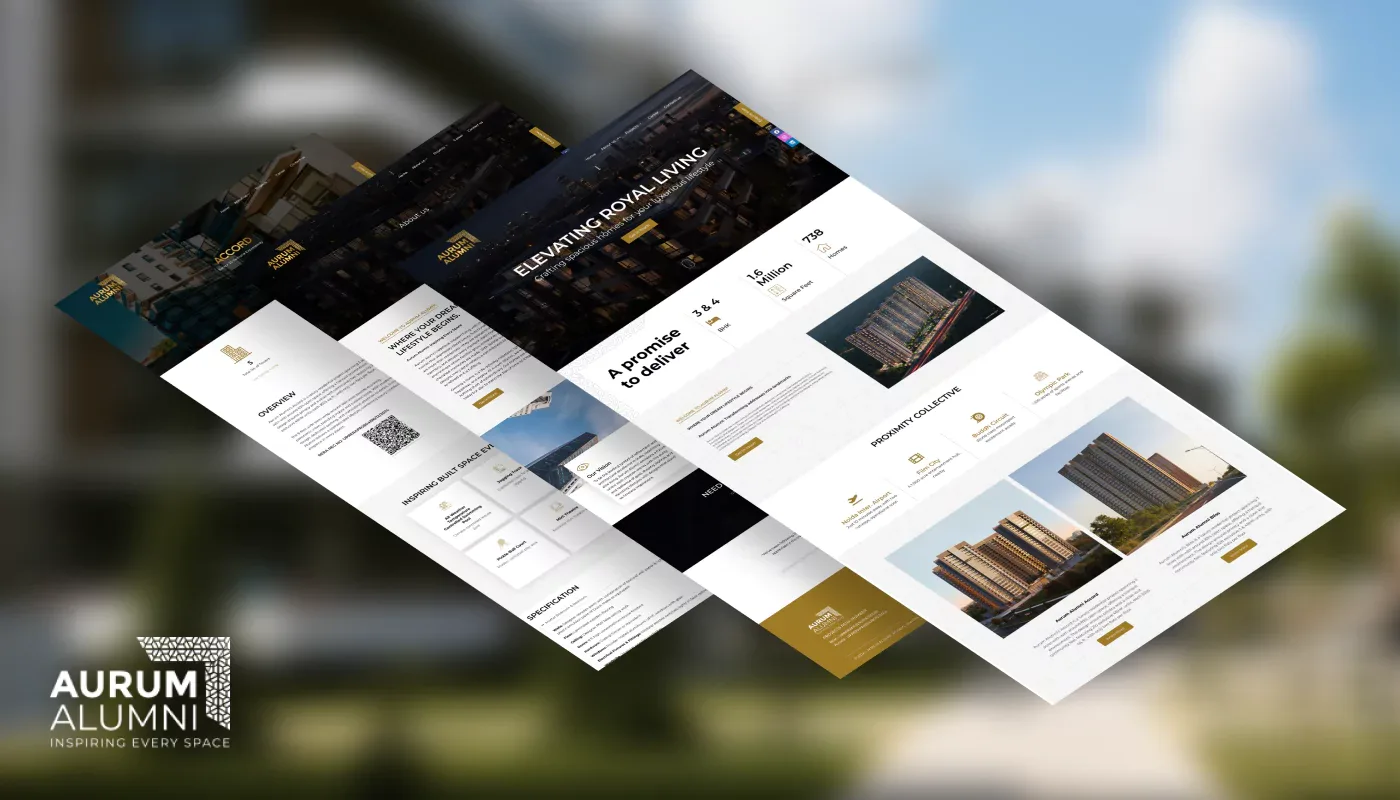 Aurum Alumni · residential property website
The Aurum Alumni showcase image presents real property website work and supports the page’s discussion of evidence, responsive design and enquiry journeys.
View published work → Karara · brand website presentation
Karara’s published website presentation adds an original client interface asset with its typography, layout and product treatment kept intact.
View published work → YCook · food business website
The YCook showcase asset provides a real food-category website example for content, product storytelling and customer-facing page design.
View published work → Bonsoir · menswear ecommerce website
Bonsoir’s published ecommerce website asset supports the catalogue and purchase-path section without substituting a fictional store screen.
View published work →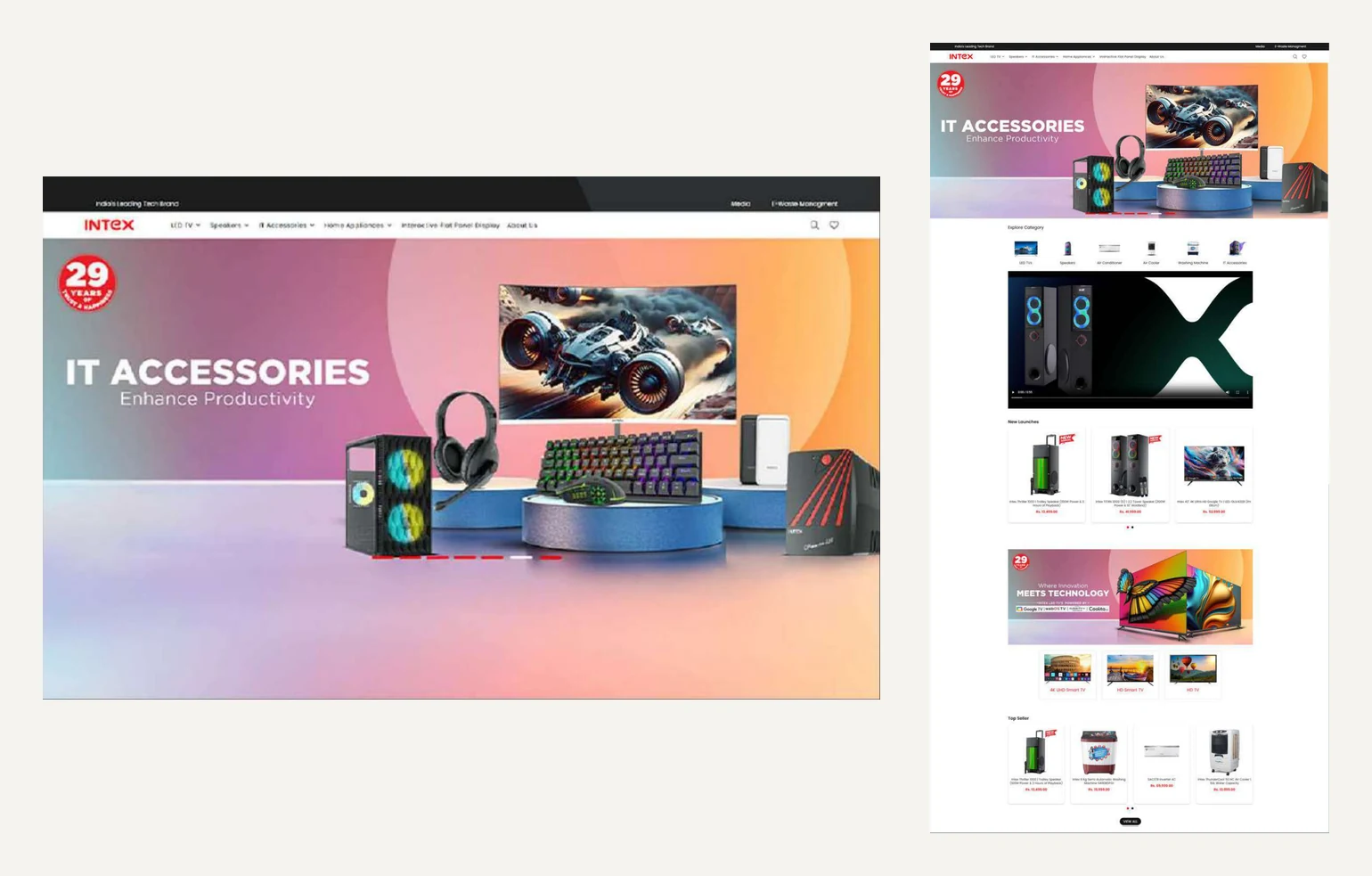 Intex · consumer electronics ecommerce
The Intex GEO case includes the real consumer electronics website work, linking web structure with the product and discovery system around it.
View published work →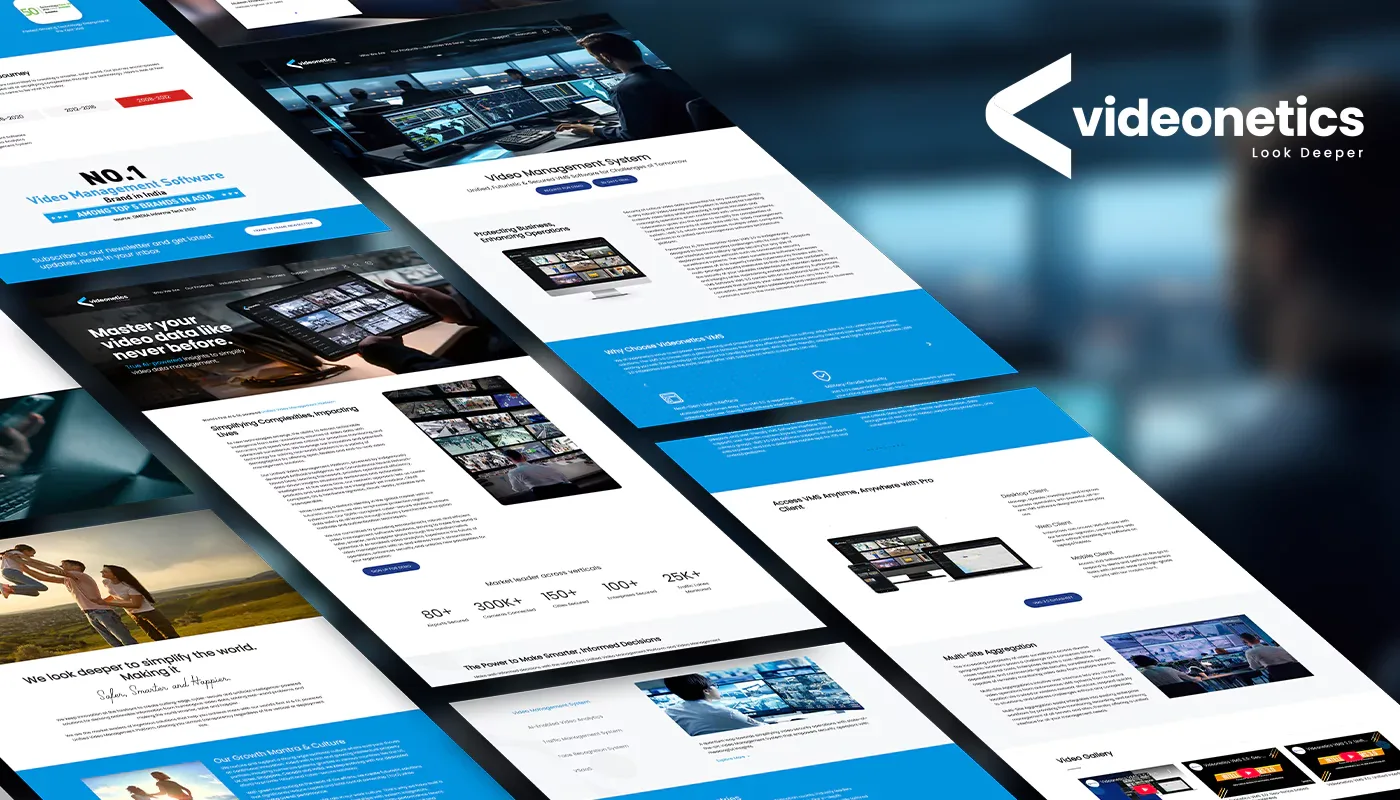 Videonetics · video technology website
Videonetics contributes a real technology website visual suited to the page’s B2B architecture and product-explanation themes.
View published work →DigiStreet will map the user tasks, page and component scope, content work, integrations and launch requirements, then recommend the correct package and delivery plan.
4.9 / 5
“With our growing presence across diverse domains, an effective digital presence and communication strategy is imperative. We are sure that DigiStreet Media, with its creative skillset and proven digital expertise, will play a pivotal role in elevating JBM Group’s online brand experience, thereby, expanding global brand reach.”
Mr. Dushyant Sharma
Group Head, Marketing Communications & Branding, JBM Group
4.8 / 5
“In an era where digital presence is crucial, we are thrilled to entrust DigiStreet Media with our digital and creative mandate. Their proven track record and innovative approach align with our objectives, and we believe this partnership will elevate our brand in the digital realm.”
Ms. Charu Goswami
Head of Corporate Communications, SLCM
5.0 / 5
“We had this idea in our minds to associate Sirca with homes. This brand communication DigiStreet came up with has really stood strong from that point of view. I also think that this communication has enough scalability to play many stories and has the ability to connect it to both our consumers and key stakeholders.”
Mr. Apoorv Agarwal
Joint Managing Director, Sirca Paints
4.9 / 5
“An ever-energetic team with the true essence of timelines & technology as well as in-depth knowledge – this is what I can say for team DigiStreet. The swiftness and efficiency with which DigiStreet has completed the project well on time is truly commendable. Omaxe’s relation with DigiStreet has further strengthened with this project!”
Mr. Deepak Rawat
Product Head – Marketing, Omaxe Group
4.9 / 5
“We are happy that we are on the cutting edge with our new website and have synergised our entire web experience – social media handles, Amazon store etc. with the website.”
Mr. Amar Wadhwa
Marketing Consultant, Halonix
5.0 / 5
“What intrigued and excited me about DigiStreet is the amount of research and perspective the agency team provided us with. Along with brand communication and marketing outlook, the team has also stepped up with setting up online marketplaces, redesigning product packaging, web development, and social media.”
Mr. Samarth Gupta
Director, Farmer Fresh
5.0 / 5
“Over the last five years, Kavish Arora and the team at DigiStreet Media have become an extended part of our marketing team at Voting Portals. From a simple email design to SEO, website design, digital campaigns and video production, they have consistently stepped in and delivered.”
Don Gonzales
Marketing Head, Voting Portals, USA
4.9 / 5
“We met Kavish during the lockdown, when Cyboard School was still an idea: to build India's first online school. His team helped turn that idea into a market-ready brand through website design, SEO, social media, UGC content and the many day-to-day requirements of launching something new.”
Rajat
Founder & Managing Director, Cyboard School
4.9 / 5
“Kavish and his team worked with us for more than four years across social media, SEO and performance marketing. Their strategic and consistent support strengthened our brand presence and helped us reach international patients from Africa and the Middle East.”
Anupam Pandey
Owner & Marketing Director, Asian Hospital, Faridabad
Awarded Digital Marketing Agency
Over 100
 reviews


