


Published 11 November 2026.
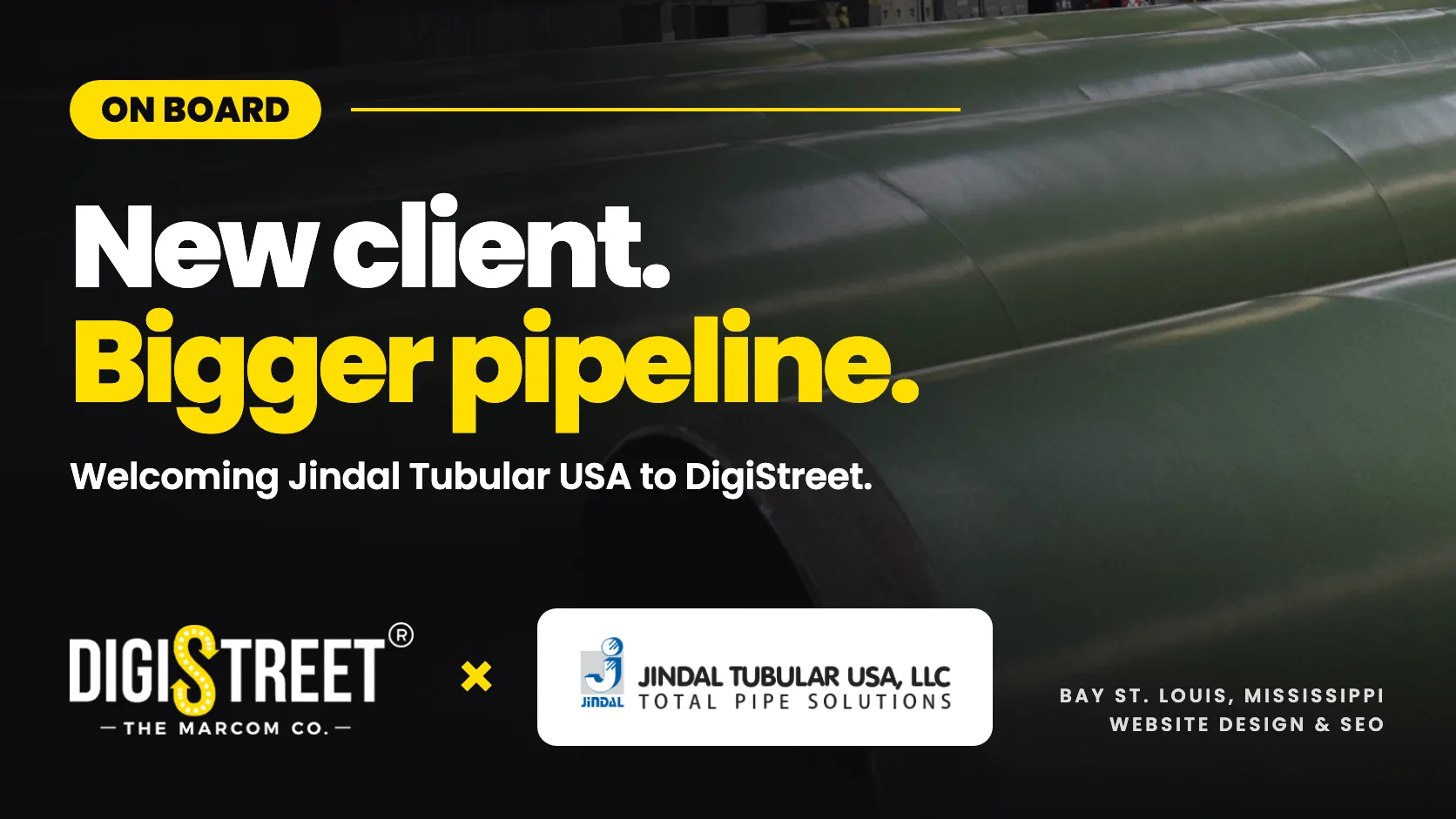
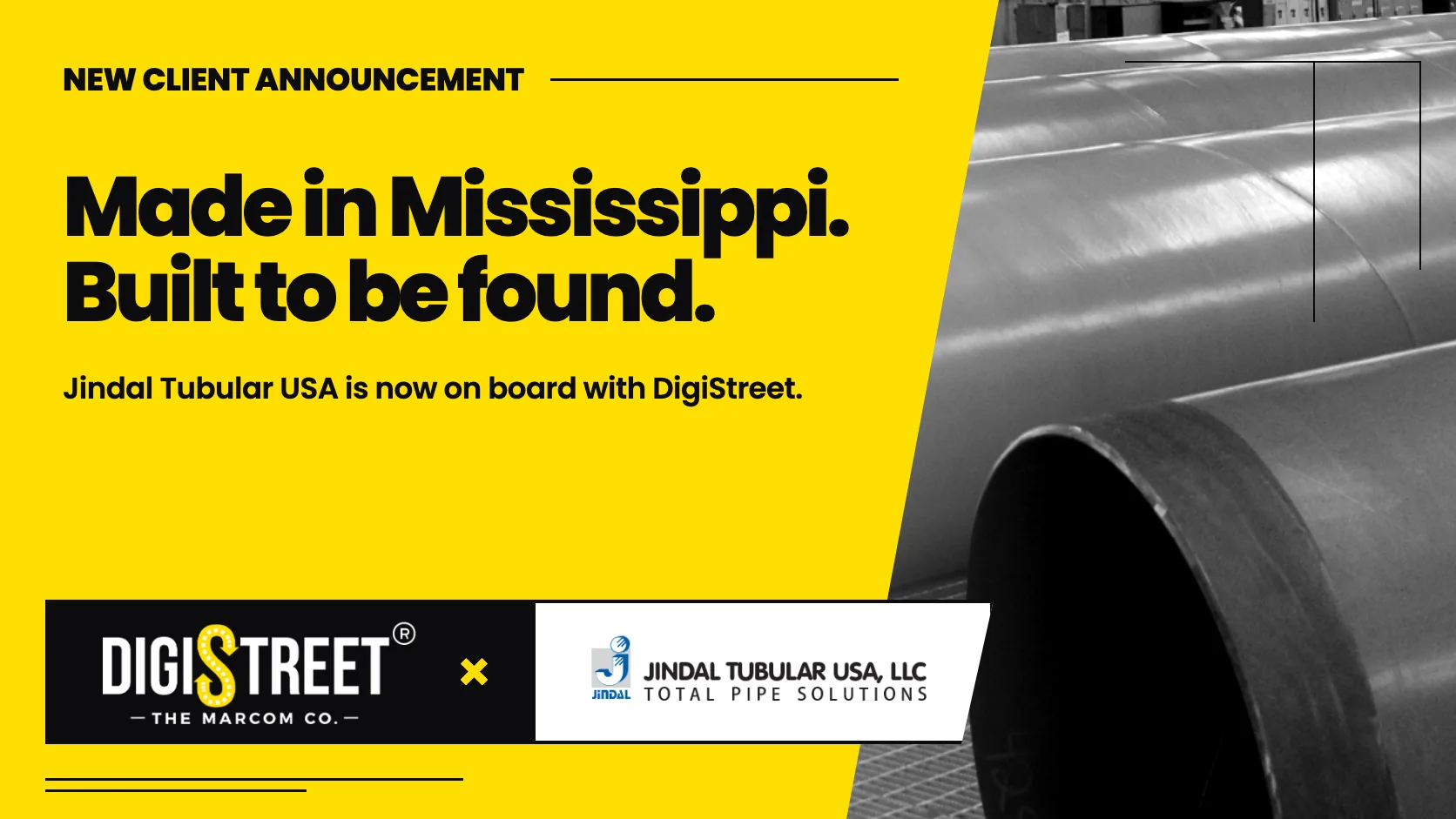
A pipeline engineer in Houston who needs 48-inch line pipe in API 5L X70 does not search for a company name. They search for the pipe. If a manufacturer’s website has no page for that pipe, the mill that could have supplied it never makes her shortlist. That is the problem we are solving for Jindal Tubular USA, the large-diameter pipe maker in Bay St. Louis, Mississippi, which has brought us in to design its new website and run its SEO.
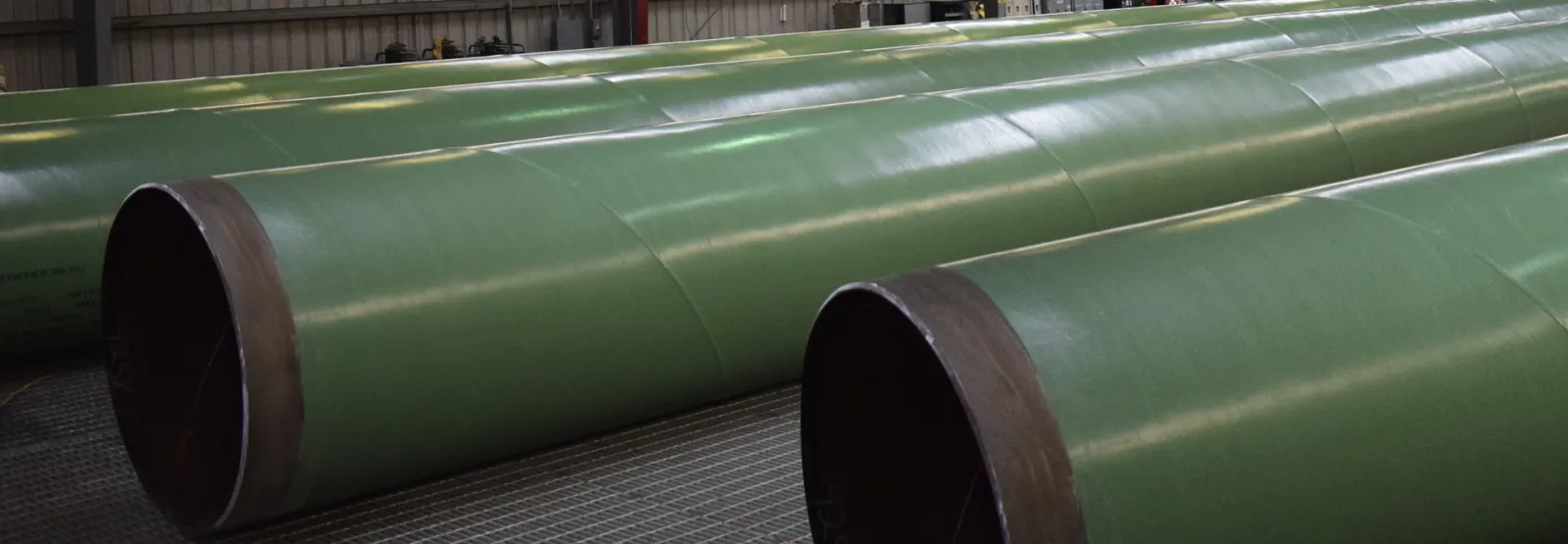
Jindal Tubular USA makes helical (spiral) seam submerged arc welded pipe, known in the trade as HSAW, from 24 to 60 inches in outside diameter and 0.312 to 1.00 inch in wall thickness. Its grades run from API 5L Grade B to X80, CSA Z245 up to L550, sour service, and structural and piling grades such as ASTM A252 and A139. The mill has four SAW welding lines, a coating plant next to the pipe mill, and a stated capacity of 300,000 tons a year. It is a joint venture of the P.R. Jindal Group and Ferrotech FZE, with a sales office in Houston. All of this comes from the company’s own product pages [1].
This post sets out how we are approaching the new site. If you sell industrial products to engineers and procurement teams in the United States, most of it applies to you as well.
Who buys large-diameter pipe, and how they look for it
Jindal Tubular USA sells to oil and gas companies, midstream pipeline owners and operators, structural and industrial contractors, and pipe distributors across North America. These buyers rarely land on a homepage and browse. They arrive with a specification in mind and want to know, quickly, whether this mill can make it.
So before any design work, we map each buyer to what they type and what the page has to show before they will send an enquiry:
| Buyer | What they search for | What the page must show |
|---|---|---|
| Pipeline engineer at a midstream operator | Large diameter line pipe in a named grade, such as API 5L X70 | Diameter and wall thickness ranges, grades, sour service, testing and the quality system |
| Structural or piling contractor | Spiral welded piling pipe, ASTM A252 pipe piles | Structural grades, available lengths, inventory and delivery to site |
| Water or infrastructure project team | Large diameter steel water pipe, AWWA pipe | Diameters, coatings and internal linings, applicable standards |
| Pipe distributor | Stock pipe and surplus coil for sale | A current inventory list and a direct line to sales |
| Procurement or vendor qualification team | The manufacturer itself, its certifications and ownership | API Q1 and ISO 9001, plant capacity, the group behind the company |
Five buyers, five different first pages. The site’s job is to get each of them from a search result to the right specification in one click, without making them read about the company first.
One page for each product, with the numbers on it
In heavy industry, the specification is the content. An engineer comparing mills wants diameter range, wall thickness, grade, length and coating in a form they can scan and send to a colleague. A paragraph about quality and commitment does not help them. A table does.
For Jindal Tubular USA, that means a separate page for each product line rather than one long products page: line pipe for energy transmission, structural and piling pipe, and pipe for water and infrastructure. Coatings get pages of their own too. The mill applies fusion bonded epoxy, abrasion resistant overcoat and coal tar epoxy on the outside, and a flow efficiency epoxy liner inside [1]. Buyers search for each of those by name, so each needs a page that can rank for it.
Every product page follows the same pattern: what the product is, the size and grade ranges, the standards it is made to, how it is tested, how it ships, and a request-for-quote form that asks for the specification up front. Sales gets better enquiries, and Google gets a page with a single, clear subject.
Proof an engineer can check
Vendor qualification in this industry is serious. Before a pipeline operator buys, someone checks the quality system, the testing and the plant. The website should make that check easy instead of making the buyer email for a brochure.
Jindal Tubular USA has plenty to show. Its quality system is accredited to API Q1 and ISO 9001. Depending on the specification, pipe goes through hydrostatic testing, automatic ultrasonic testing and radiography, and an in-house laboratory tests chemical and mechanical properties [1]. The new site gives each of these a place: a quality page with the certificates, a testing page that explains each test and when it applies, and a plant page with the welding lines, the coating plant and the capacity.
Logistics are proof too. The mill has private docks with direct access to the Gulf Intracoastal Waterway, and the Port Bienville Railroad connects it to the CSX network [1]. For a buyer in Illinois or Pennsylvania, how the pipe reaches site matters as much as how it is made. That gets its own page instead of a line in the footer.
The technical groundwork, done before launch
Fixing crawl and indexing problems costs least while the site is still being built, before old URLs have to be redirected or cleaned up. Our list for Jindal Tubular USA is short and specific:
- One canonical address for every page, so the www and non-www versions of the site, and any duplicate paths, point Google to a single URL [2].
- A real XML sitemap listing every product, coating and proof page, submitted in Search Console [3].
- Pages that do not exist return a proper 404 status, so Google does not index error pages as content [4].
- A unique title and description on every page, naming the product, the grade range and the company.
- Organization structured data with the company name, logo, addresses and contact details, so search engines connect Jindal Tubular USA to the right entity [5].
- Descriptive alt text on product, plant and testing images, because engineers search images as well as pages.
- Search Console and Google Analytics 4 set up from the first day, so every result after launch can be measured against a baseline taken before it.
Visitors will never notice any of it. Google notices all of it, and so do AI tools that crawl the site to answer questions about pipe suppliers.
Content that answers engineering questions
Once the product pages exist, the next layer is content that answers the questions engineers and buyers ask before they are ready to request a quote. Google’s guidance on helpful content asks who made a page, how it was made and why it exists [6]. A pipe mill can answer all three better than any content farm, because it makes the pipe.
| Question buyers ask | Page we plan | Why it helps sales |
|---|---|---|
| Spiral welded or longitudinal welded pipe, which suits my project? | A comparison guide by diameter, application and cost | Reaches engineers early, while the specification is still being written |
| What diameters and wall thicknesses can HSAW pipe be made in? | A size and grade reference | Puts the mill’s ranges in front of the people who set requirements |
| Which external coating should I specify? | A coatings guide covering FBE, ARO and coal tar epoxy | Ties each coating to a product page and a quote |
| How is large-diameter pipe tested? | A testing explainer: hydrostatic, ultrasonic, radiography | Shortens vendor qualification |
| How do I get pipe delivered to an inland site? | A barge and rail delivery page | Answers a logistics question before sales has to |
This is also the material AI answers draw on. When someone asks an assistant which US mills make 60-inch spiral welded pipe, the answer comes from pages that state the facts plainly. A specification table with a named manufacturer on it is exactly what gets quoted.
Measuring it the way sales would
Traffic on its own is the wrong measure for a pipe mill. One qualified request for quote for a pipeline project matters more than a thousand visits from students. So the measures we will report are impressions and clicks for product and grade searches in the United States, rankings for those searches, and request-for-quote submissions by product page.
We take the baseline from Search Console before the new site goes live. Every number afterwards is compared with it, which is the same method behind our G Kumar Electro B2B ecommerce case study and the KTC India redesign that took a site from 23 pages to 279.
What this means for US manufacturers
If you sell industrial products in the United States, try one test on your own website. Pick the product you most want to sell, search for it the way an engineer would, with the size, grade or standard, and see whether a page of yours comes up. If it does not, the fix is structural: a page per product, the numbers on every page, proof a buyer can check, and the technical groundwork done properly.
We have built websites and run SEO for industrial companies for more than a decade, and earlier this month we started work with Balabel Group, an industrial group in Oman, on the same approach. Our SEO and digital marketing services for US companies, website design for manufacturers and digital marketing for industrial manufacturers pages show how we work.
Frequently Asked Questions
What should a pipe manufacturer’s website include?
A page for each product line, with diameter and wall thickness ranges, grades, standards, lengths and coatings in a table; quality certifications and testing methods; plant capacity; delivery options; a current inventory list; and a request-for-quote form that asks for the specification.
How do engineers search for industrial suppliers?
Mostly by specification rather than company name: the product, the size, the grade or the standard, such as large diameter API 5L X70 line pipe. A manufacturer needs pages built around those terms to appear in the results.
Why does a B2B manufacturer need SEO?
Because the buyers who set a project’s specification search before they contact anyone. If your product pages rank for the sizes, grades and standards you make, you reach them while the requirement is still being written, not after a shortlist has been drawn up.
How long does SEO take for a new manufacturer website?
Technical fixes such as canonical URLs, sitemaps and correct status codes take effect as Google recrawls the site, often within weeks. Rankings for competitive product terms usually build over several months as the product and guide pages gain authority.
How much does website design and SEO cost for a US manufacturer?
For US clients, DigiStreet Media prices websites from $1,450, B2B websites from $2,600 and corporate websites from $3,300. SEO starts at $750 a month. Prices for US clients are in US dollars, with no GST.
References
- Products and Services and Quality, Jindal Tubular USA, LLC, accessed 11 November 2026.
- How to specify a canonical URL with rel=”canonical” and other methods, Google Search Central, last updated 10 July 2026.
- What is a sitemap, Google Search Central, last updated 10 December 2025.
- How HTTP status codes affect Google’s crawlers, Google for Developers, last updated 4 February 2026.
- Organization structured data, Google Search Central, last updated 8 September 2026.
- Creating helpful, reliable, people-first content, Google Search Central, last updated 5 October 2026.