

Published 11 November 2026.
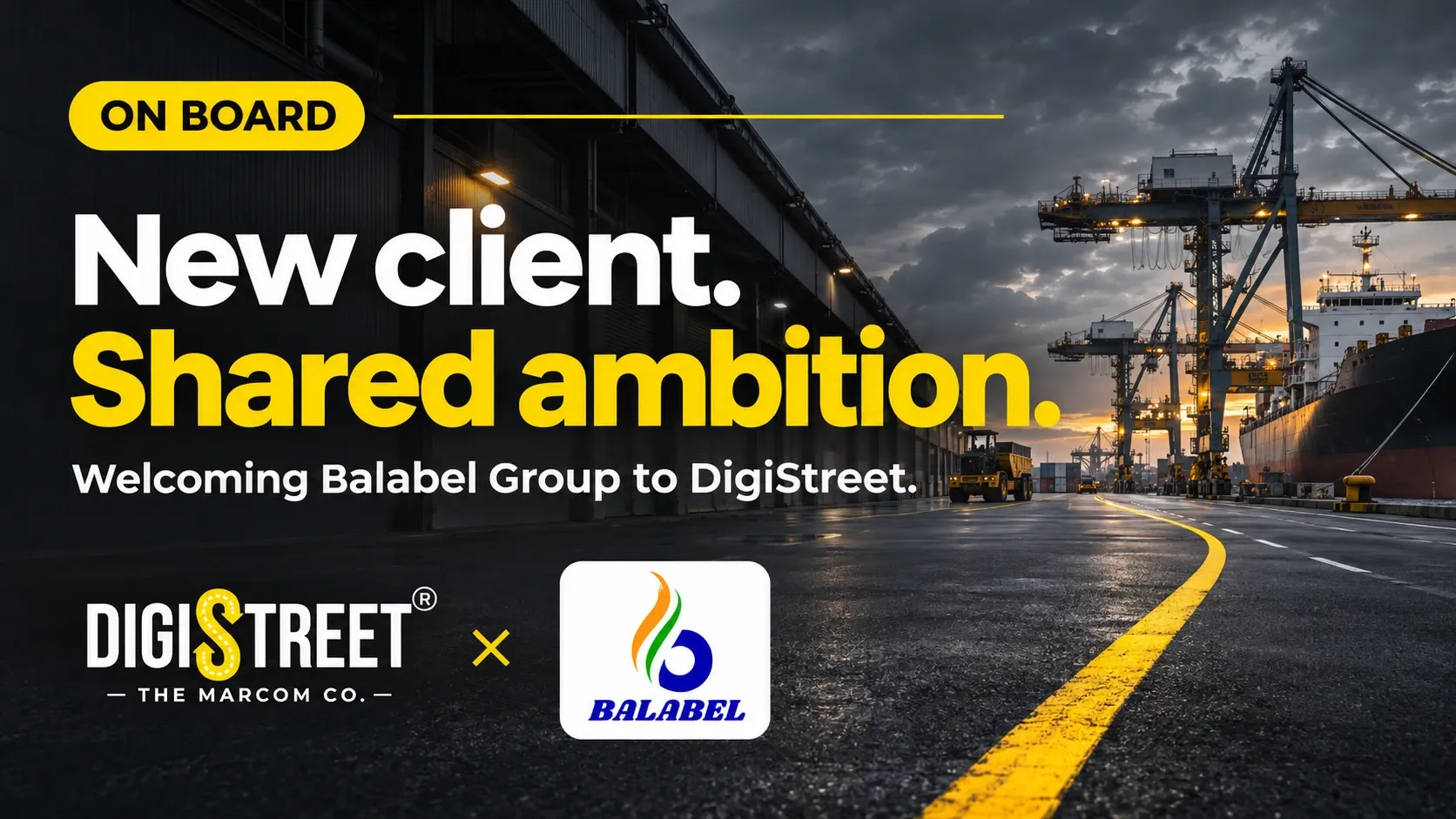
An industrial group in Oman needs a website that works like a directory of its businesses, not a brochure about the group. A buyer looking for gabbro aggregate, a shipping line needing stevedoring at Duqm and an investor checking the board all arrive with one question, and each should reach the business that answers it in one click. That is the brief behind the new website we are building for Balabel Group in Sohar.
Balabel Group runs EPC contracting, plant operations and maintenance, mining, port and jetty handling, commodity trading and a growing automotive arm. Its EPC teams work on steel and power plants in Oman, Mozambique, Botswana and India. It manages the jetty for Jindal Shadeed Iron & Steel in Sohar and works at the Port of Duqm and the Port of Paradip. Its quarry in Azaiba runs a 450-tonne-an-hour crusher and supplies aggregates to civil engineering companies in the Muscat and Sohar regions, and its automotive arm is moving into EV charging and battery manufacturing. We are designing and building the group’s website and maintaining it under an ongoing contract. This post sets out how we are approaching it, so you can apply the same thinking to any multi-division company in Oman or the wider Gulf.
Why group websites in Oman underperform
Many industrial groups in the Sultanate grew one business at a time: a contracting company first, then a quarry, then a port services arm, then trading. The website usually grew the same way, with each new business added as a paragraph on the homepage or a single page with a stock photo.
The result looks complete to the owner and reads as thin to everyone else. A procurement manager searching for “gabbro aggregate supplier Sohar” will not find a paragraph buried on a homepage. A port agent looking for stevedoring at Duqm wants the services, the equipment and a contact, not the group’s vision statement. And Google ranks pages, not companies. If a business has no page of its own, it has nothing that can rank.
Start with the people who arrive, not the org chart
Before designing anything we list who actually visits an industrial group’s website and what each of them needs to see before they act:
| Visitor | What they are looking for | What the page must show |
|---|---|---|
| Contractor or buyer | A material or service, such as aggregate, bolts or EPC work | The product or service, specifications, capacity and a direct enquiry |
| Port or shipping agent | Stevedoring, crushing or freight at a named port | Ports of operation, services offered, equipment and a contact |
| Partner or joint-venture prospect | Track record and capability | Projects, divisions, leadership and certifications |
| Government or investor | Credibility, governance and local contribution | Leadership, vision, CSR and in-country value |
| Job seeker | Roles and what it is like to work there | Careers, locations and how to apply |
Each row becomes a route through the site. The homepage stops trying to say everything and instead sends each visitor to the right door.
A page for every business, and for what each one sells
For Balabel, that means eight division pages, each built around what the division sells rather than how the group is organised. The mining page is not one block of text about minerals. It covers the Azaiba quarry, its gabbro blends from 0 to 28 mm and who it supplies, with room for a page on each material buyers search for: limestone with purity of up to 99.5%, gypsum from Salalah, dolomite, chrome ore and lithium.
The port handling page names the ports, Duqm and Paradip, and lists the services at each: stevedoring, crushing, freight and skilled services. The production management page explains what the group actually does inside steel plants: steel melt shop and rolling mill operations, refractory management and maintenance, with the teams it deploys. The automotive page explains the EV charging and battery plans plainly, because a partner reading it needs to know what exists today and what is being built.
This is the same approach that took KTC India’s car rental site from 23 pages to 279: a page for every way someone searches. An industrial group simply searches for different things.
Credibility a partner can check
In industrial B2B, business often comes through relationships, tenders and joint ventures. Before a meeting, the other side looks the company up. What they find either confirms the conversation or raises questions.
So the group-level pages carry evidence rather than adjectives: who leads the company, which ports and sites it operates, what it has built, which certifications it holds, and what it does in the communities around Sohar. Each claim sits next to something a reader can verify, such as a named port, a named site or a named project.
Built for search from the first day
Rebuilding a site is the cheapest moment to get the search foundations right. For Balabel, that list is short and specific:
- A unique title and description on every page, naming the business and what it offers. A title that only says the company name tells Google nothing about what the page is for.
- Organization structured data on the homepage with the group’s name, logo, address and contact, so search engines connect the brand to the right entity [1].
- A clean XML sitemap and robots file, so every division page is discovered.
- Headings that match how buyers search, on pages that answer one question each.
- Fast pages that work on a phone, because site engineers and agents check suppliers from the field [2].
- Room for an Arabic version, set up with proper language annotations when it is added, so Arabic and English pages each reach the right reader [3].
None of this is visible to a visitor, and all of it decides whether the new pages get found.
Why maintenance belongs in the contract
A group website is never finished. Divisions win projects, ports add services, the quarry adds a product, and the EV business moves from plan to operation. If updating the site means finding a developer each time, the site falls behind the business within a year.
That is why Balabel’s agreement covers maintenance as well as the build. Our team handles software and security updates, speed, backups, and the content changes that come with a growing group: new projects, new division pages, news and vacancies. The site stays as current as the business, which is also what keeps it ranking.
| Maintenance task | Why it matters for an industrial group |
|---|---|
| Security and software updates | A hacked corporate site damages trust with partners and authorities |
| Speed and uptime checks | Buyers checking a supplier from site will not wait for a slow page |
| New project and division pages | Each new capability becomes a page that can be found in search |
| News, CSR and careers updates | Shows an active, growing company to partners and candidates |
| Backups | Nothing is lost when something goes wrong |
Content that helps people, not keyword lists
Industrial websites in the Gulf often fill pages with long lists of capabilities that read the same for every company. Google’s guidance on helpful content asks who created a page, how and why [4]. For a group like Balabel, that points to specific, first-hand content: what the quarry actually produces, what equipment the port team runs, which projects the contracting division has delivered. That is the content buyers trust and the content AI answers are most likely to quote.
What this means if you run a group in Oman
If your company has more than one business, the most useful question to ask about your website is simple: can each business be found on its own? If the answer is no, the fix is structural. Give each division a page, give each page a clear job, put proof next to every claim, and keep the site maintained so it grows with the group.
Our digital marketing services for Oman and website design for Oman pages show how we work with companies in the Sultanate, and our B2B digital marketing page covers what happens after launch.
Frequently Asked Questions
What should an industrial company website in Oman include?
A page for each business or division, built around what it sells; specifications and capacity; ports, sites and projects as proof; leadership and certifications; careers; and clear enquiry routes. It also needs unique titles, structured data, a sitemap and fast mobile pages so each page can be found.
Should a group with several businesses have one website or several?
Usually one group website with a strong page for each division, which builds one brand and one search presence. Separate sites make sense when a division sells to a completely different audience under its own brand.
Does an Oman business website need an Arabic version?
It depends on the audience. Many B2B buyers in Oman work in English, but government, local partners and some buyers prefer Arabic. If you add Arabic, set up language annotations so search engines show each reader the right version.
Why include website maintenance in the contract?
Because a group website needs regular updates: security, speed, backups and new pages as the business grows. With maintenance included, those happen as part of the service instead of waiting for a new project.
How much does a website for an industrial company cost?
With DigiStreet Media, websites start at ₹1,00,000 plus GST, B2B websites at ₹1,75,000 and corporate websites at ₹2,25,000. A multi-division group site is quoted on the number of page types, languages and integrations, and overseas clients can be billed in INR or USD at the rate fixed in the agreement.
References
- Organization structured data, Google Search Central, last updated 8 September 2026.
- Understanding page experience in Google Search results, Google Search Central, last updated 22 September 2026.
- Tell Google about localized versions of your page, Google Search Central, last updated 21 September 2026.
- Creating helpful, reliable, people-first content, Google Search Central, last updated 5 October 2026.
- Balabel Group, company website, Sohar, Oman.