The template described a company. It had 23 indexable pages and one Services page.

Website design case study · Luxury car rental, India
KTC has moved people in luxury cars since 1943, but its India website was a brochure on a shared template. We replaced it with a 279-page site built around how people search for cars, cities and occasions, and recorded the source of every enquiry. In 40 days it logged 2,873 enquiries, 36.9% of them from organic search.
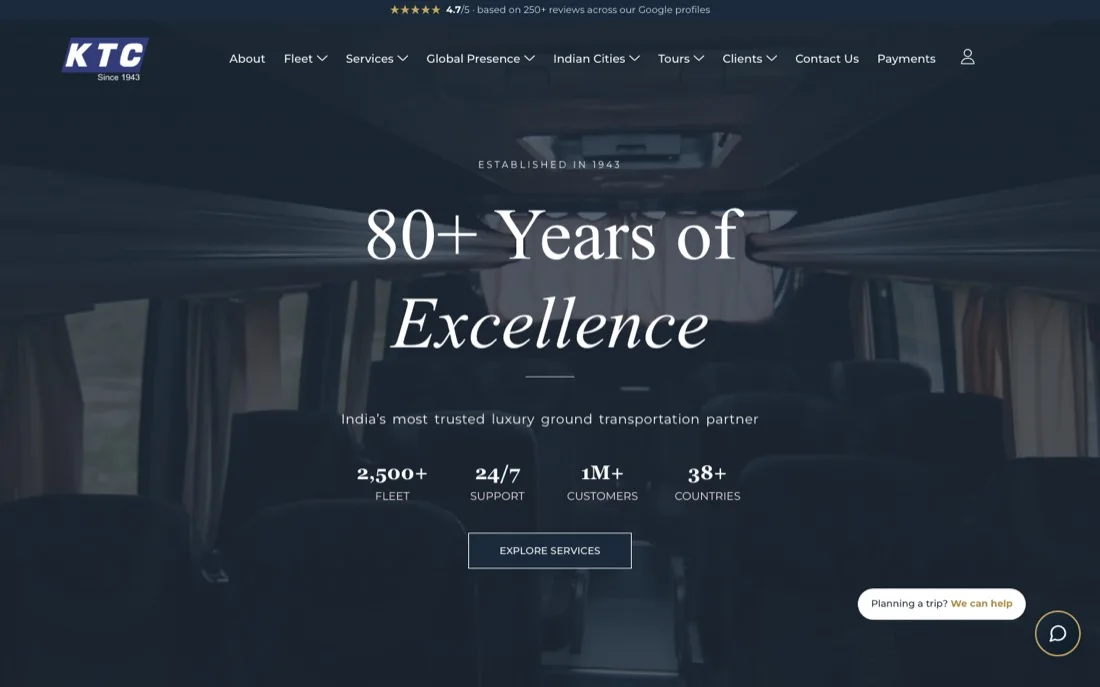
The rebuilt ktcindia.com homepage, October 2026.
The client and the challenge
KTC (India) Ltd is a luxury ground transport company founded in 1943, with a fleet of more than 2,500 vehicles. Its India site ran the same template the group’s Saudi Arabian company still uses today.
Nobody searches for a “luxury travel partner”. They search for luxury car rental in Hyderabad, a Mercedes Sprinter on rent, a car lease in Delhi or a wedding car in Jaipur. One Services page cannot rank for hundreds of searches like these. Hundreds of pages can.
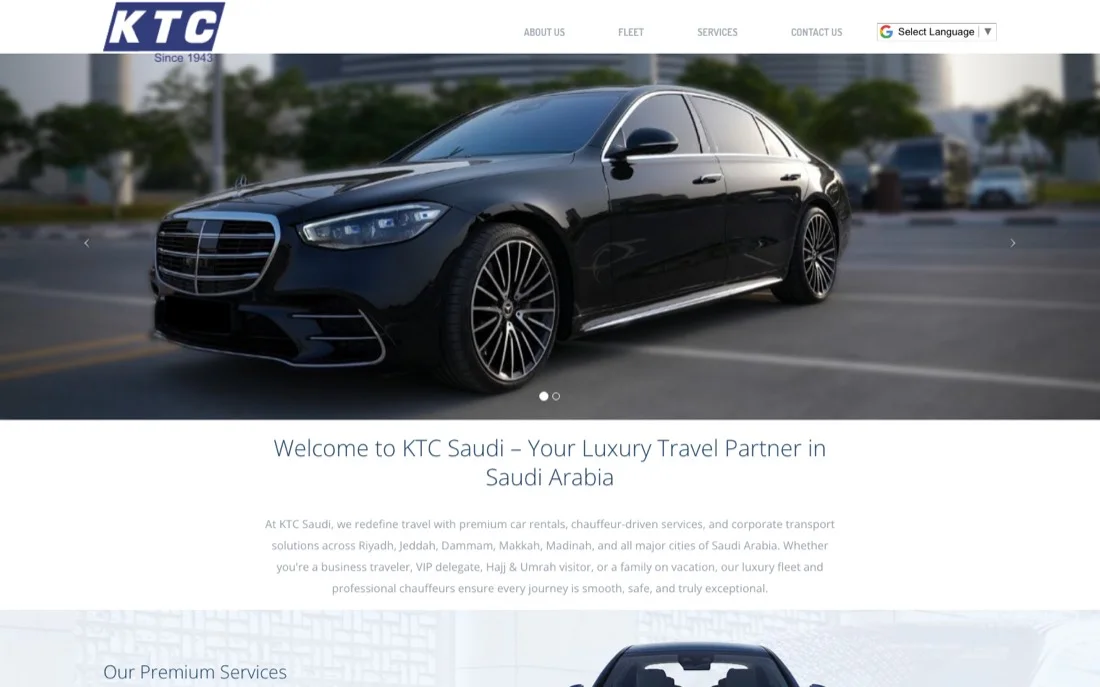
The template described a company. It had 23 indexable pages and one Services page.
No city pages and no vehicle pages, so nothing to match a search like luxury car rental Hyderabad or Mercedes Sprinter on rent.
A single enquiry form, and no record of where any enquiry came from.
Breadcrumbs on 124 pages pointed at #, roughly 300 internal links that led nowhere.
Today 89% of KTC India's enquiries come from a phone. The template was designed for a desktop screen.
Our approach
We rebuilt the site around the searches that bring in bookings, then made every enquiry measurable so KTC’s management could see which pages and channels produce business.
62 city pages, 41 vehicle pages, 14 tour pages, 11 wedding car pages by city and 9 lease pages, each written for how people search
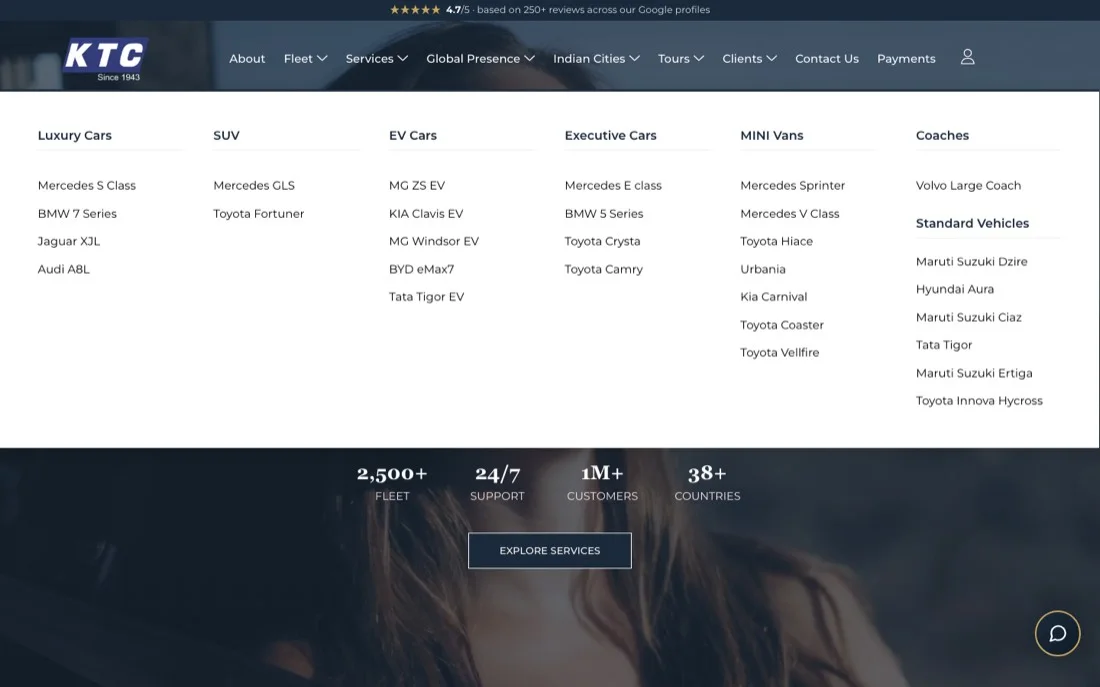
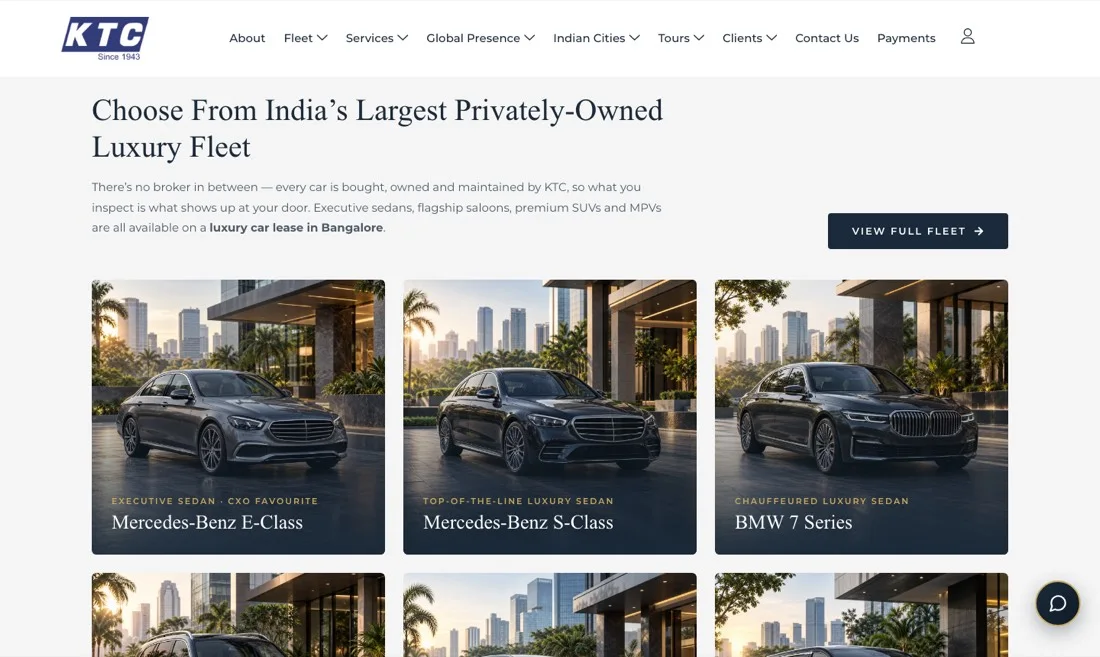
Luxury Cars, SUVs, Electric, Executive, Mini Vans and Coaches, each listing its vehicles, so over thirty vehicle pages are one hover away
Commercial pages show the vehicles they sell, each card linking to that vehicle's own page
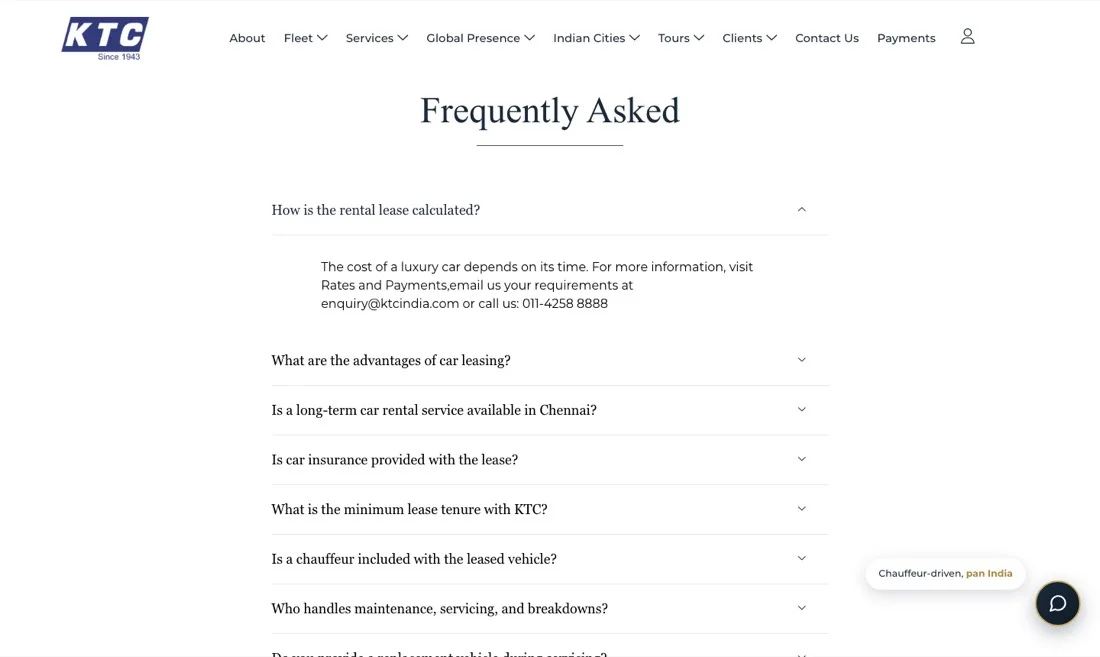
FAQ accordions built from Google's People also ask boxes; three hub pages went from 30 questions to 48
Product markup with KTC's 4.7 rating from 250+ Google reviews, plus Breadcrumb, FAQ and Organization markup
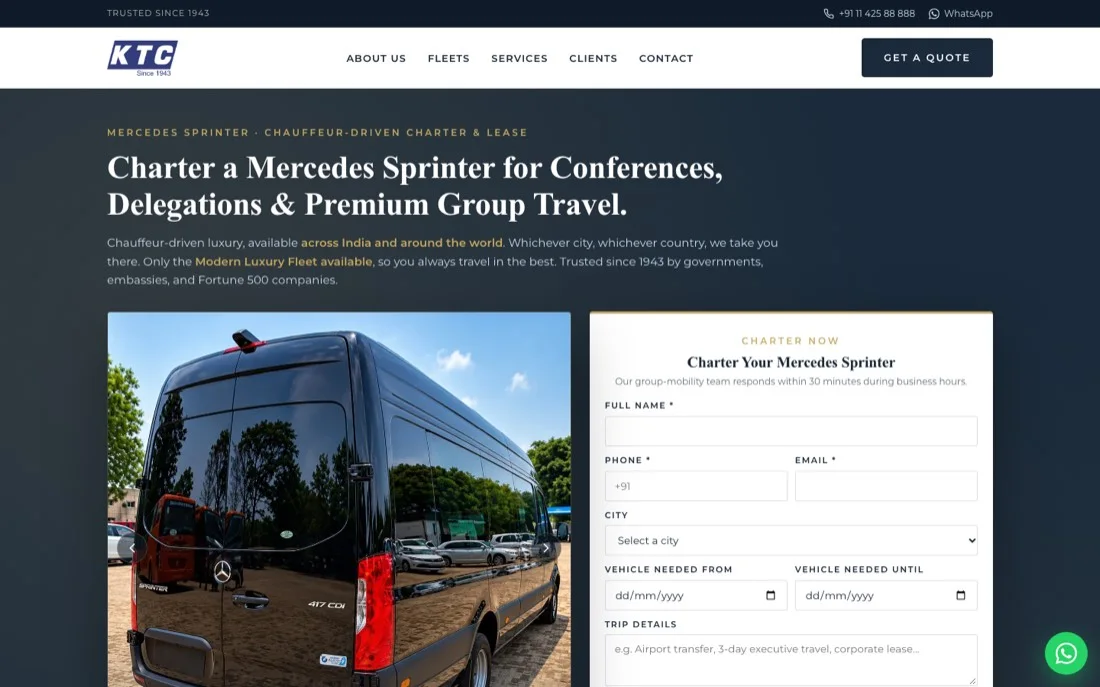
Forms, phone taps and WhatsApp taps recorded with their source, organic split from Google Ads, monthly view and CSV export
Six standalone pages for paid campaigns, plain HTML outside WordPress, feeding the same lead table
A hanging image job removed, fonts subsetted, caching tuned to a 0.17 s cached response, a web application firewall and PHP brought current
Homepage, before and after
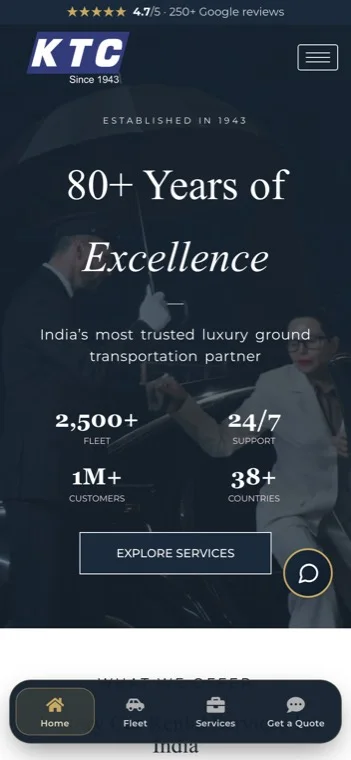
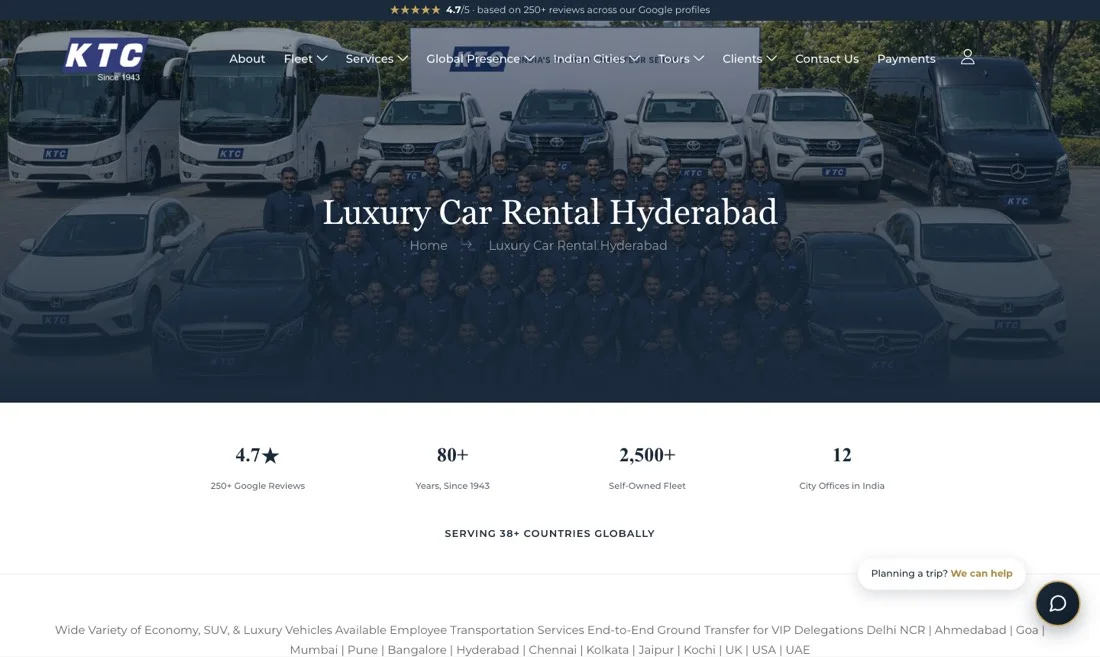
The template opened with a car carousel and a welcome paragraph. The rebuilt homepage leads with KTC’s Google rating, a menu for every category and city, and the company’s own figures: 2,500+ vehicles, 24/7 support, over a million customers and 38+ countries.

| Template | Rebuilt | |
|---|---|---|
| Indexable pages | 23 | 279 |
| Navigation destinations | 14 | 6 mega menus |
| City landing pages | 0 | 62 |
| Vehicle pages | 0 | 41 |
| Enquiry forms | 1 | 18 |
| Structured data | None | 5 schema types |
| Lead attribution | None | Every enquiry |
What it looks like now
Each of these is a part that did not exist on the template. Captured live on 26 October 2026.
In Google and in AI answers
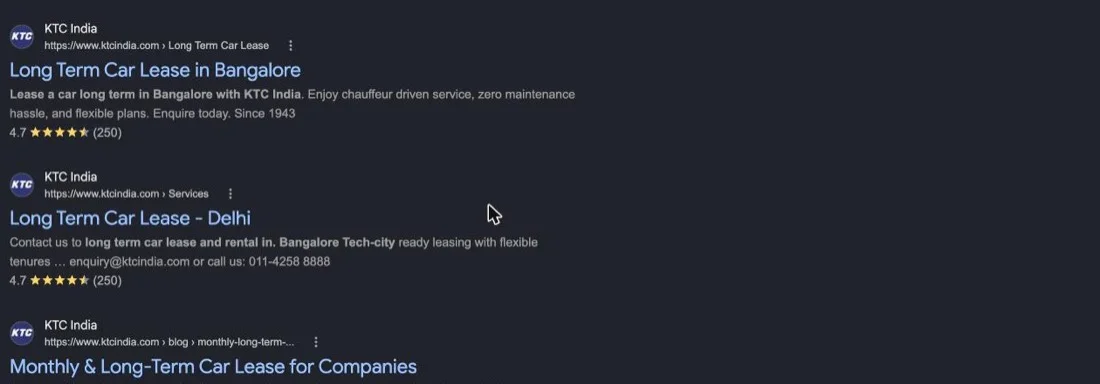
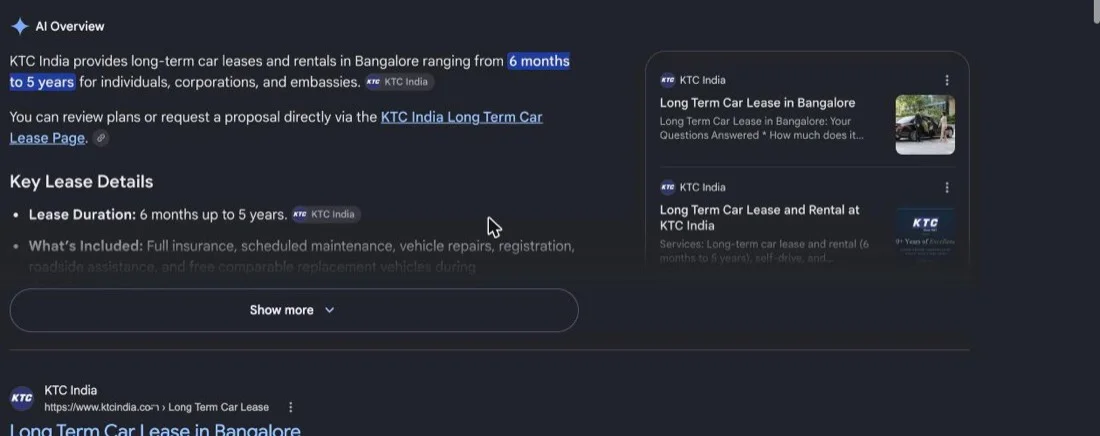
The Product and Breadcrumb markup shows up where buyers look: KTC results carry 4.7 stars from 250 Google reviews and a readable path instead of a raw URL. Google’s AI Overview answers car lease questions from KTC India’s own pages, and in six weeks 78 enquiries came from ChatGPT, Gemini and Perplexity.
Results
Google Search Console, filtered to India, comparing the first 28 days after the rebuild went live with the most recent 28. Between 1 August and 26 October the site earned 17,845 organic clicks, and 442 pages earned impressions.
| Google Search, India | First 28 days | Latest 28 days |
|---|---|---|
| Organic clicks | 4,871 | 6,696 (+37%) |
| Impressions | 124,832 | 202,456 (+62%) |
| Average position | 11.0 | 7.3 |
Attribution went live on 17 September. WhatsApp turned out to be the front door: nearly half of all enquiries arrive through a WhatsApp tap, which a form-only setup would never have shown.
| Measure | Result |
|---|---|
| Enquiries recorded | 2,873, about 72 a day |
| Completed forms | 799 |
| Through a WhatsApp tap | 46.5% (forms 27.8%, calls 25.7%) |
| From organic search | 36.9%, 1,059 enquiries with no media spend |
| From a phone | 89%, 2,557 of 2,873 |
| Pages that produced an enquiry | 137 |
| From ChatGPT, Gemini and Perplexity | 78 in six weeks |
Search: Google Search Console filtered to India; windows 10 August to 6 September and 28 September to 26 October 2026. Enquiries: the site’s attribution table, 17 September to 26 October 2026, test entries removed; WhatsApp and call figures are taps, forms are completed submissions; Google Ads ran alongside and accounts for the rest of recorded leads.
Credits
We wrote up the decisions behind a rebuild this size: how we rebuilt a luxury car rental website, before and after →
FAQs
We replaced a 23-page template site with a 279-page platform: 62 city pages, 41 vehicle pages, tour, wedding car and lease pages, 82 editorial posts, six mega menus, six campaign landing pages and 20 custom modules for structured data, lead attribution, payments, speed and security. The work ran from August to October 2026.
In Google Search Console filtered to India, organic clicks rose 37%, from 4,871 to 6,696, and impressions 62%, from 124,832 to 202,456, comparing the first 28 days after launch with the most recent 28. Average position improved from 11.0 to 7.3.
A custom module records the source of every enquiry, whether a form, a phone tap or a WhatsApp tap, and separates organic search from Google Ads using last non-direct click. In 40 days it recorded 2,873 enquiries, including 799 completed forms.
For KTC India, 46.5% of recorded enquiries came through a WhatsApp tap, ahead of forms at 27.8% and calls at 25.7%. A form-only setup would have missed nearly half of the contacts the site produces.
Yes. In six weeks, 78 enquiries came from ChatGPT, Gemini and Perplexity, and Google's AI Overview answers car lease questions from KTC India's pages. The FAQ and structured data work was done with this in mind.
Our websites start at ₹1,00,000 plus GST, with B2B sites from ₹1,75,000, corporate sites from ₹2,25,000 and ecommerce sites from ₹2,50,000. A large rebuild is priced on the number of pages, templates and integrations.
Running a rental or travel business?
We will show you which searches you are missing, which pages would win them, and how to see where every enquiry comes from.
Awarded Digital Marketing Agency
4.8 from 250+
 reviews


