


Published 11 November 2026.
A sourcing manager at a carmaker looking for a new interior parts supplier opens a shortlist of names and checks each one’s website before the first call. In ten minutes they want to know what the company makes, for which vehicles, in which plants, and who already buys from it. If the website cannot answer that, the supplier starts the conversation on the back foot. That is the brief behind the new website we are building for NTF Group, the automotive and engineering group headquartered at IMT Manesar in Haryana.
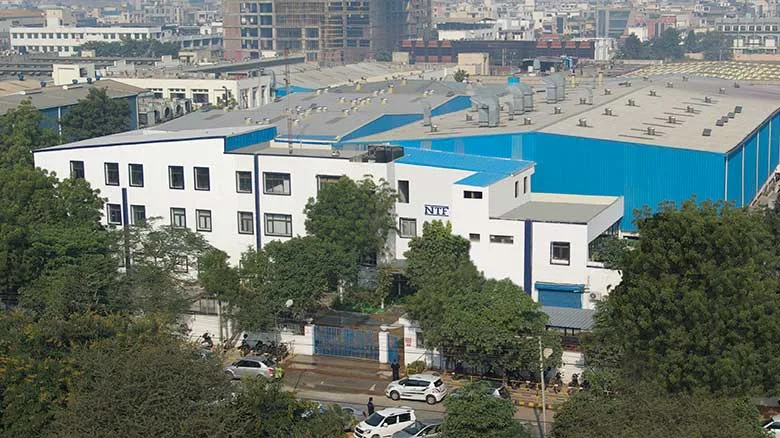
NTF has been an OEM supplier to the automotive industry since 1984. Its founders, M. K. Jain and Naveen Jain, set up a plastics moulding plant for the auto sector that year, and in 1987 the company began supplying the hard top for Maruti’s Gypsy. Today the group has more than 1,000 people, manufacturing units in Haryana, Rajasthan, Gujarat, Maharashtra and Karnataka, its own design studio, Studio34, in Manesar, and more than 50 awards from customers including Maruti Suzuki, Toyota, Honda, Fiat and Renault Nissan. All of this comes from the group’s own website [1].
This post explains how we are approaching the new site. If you run a component or engineering business that sells to OEMs, most of it will apply to your website too.
Who checks an OEM supplier’s website
Consumer brands write for one kind of visitor. An automotive supplier has at least five, and each arrives with a different question. Before planning a single page, we listed them:
| Visitor | What they want to know | What the site must show |
|---|---|---|
| OEM sourcing or purchase team | Can this supplier make our part, at our volume, near our plant? | Product range by vehicle area, processes, plant locations and capacity, existing OEM customers |
| OEM design and engineering team | Can they co-develop the part, not just mould it? | Design studio, R&D centre, engineering services, materials expertise |
| Buyers outside passenger cars | Do they work in tractors, trucks, rail or wind? | A page per industry with the parts made for it |
| Partners and investors | How big is the group and where is it going? | History, leadership, business verticals, awards, sustainability |
| Engineers and graduates looking for work | Is this a good place to build a career? | Culture, locations, open roles and how to apply |
Each of these people should reach the page that answers their question within a click or two of landing. The homepage introduces the group and then gets out of the way.
Organise by what buyers look for, not by the org chart
NTF runs three business verticals. Advanced Composites and Engineering Plastics, led by NTF India, designs and manufactures plastic and composite parts. Future Mobility, through ZEN, designs and builds customised light electric vehicles, mainly for business customers. Innovation, Design and IT covers industrial design, 2D and 3D digital sculpting, prototyping and SAP-based digitisation [1].
That structure matters to investors. A sourcing manager, though, thinks in parts and vehicles. So the new site serves both. The verticals each get a section, and the industries get their own pages too: automotive interiors, automotive exteriors, agriculture and farm equipment, commercial vehicles, locomotives and wind energy. A buyer from a tractor maker lands on a page about tractor parts, not on a general composites page they have to decode.
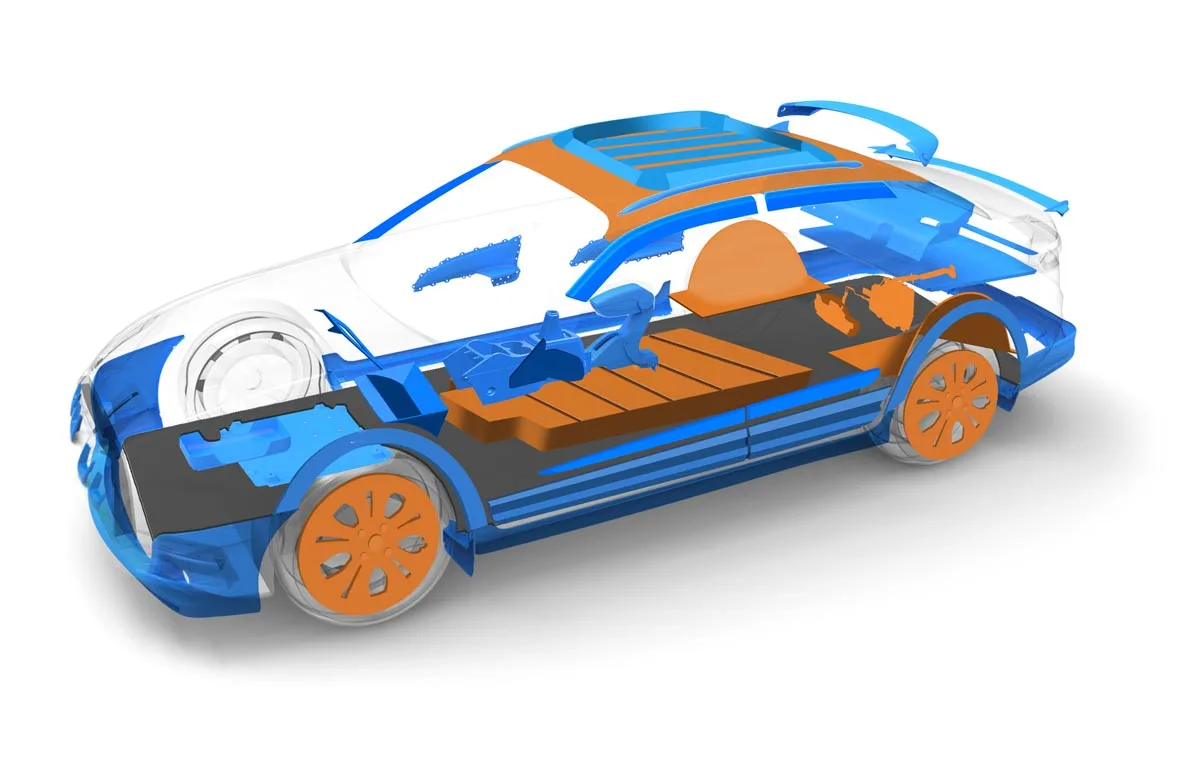
Under each industry, the pages carry the detail a buyer screens for: the parts NTF makes for that sector, the processes behind them, and the materials. The group’s history shows how that range was built up, for example vacuum forming, PU spray and LWRT processes added in 2014 [1]. Each of those is something an engineer might search for by name.
Plants, studio and awards as evidence
In automotive supply, capability is proven, not claimed. Sourcing teams audit plants before they award business, and the website is where that judgement starts. NTF has a strong case to make, and the new site puts it where a buyer can check it.
| Proof | What NTF has | Where it goes on the new site |
|---|---|---|
| Manufacturing footprint | Units from Manesar (1998) to Neemrana (2012), Pune (2017), Bangalore (2021) and Gujarat (2022 and 2025) | A plant page with each unit, its location and the year it opened, near the OEM clusters it serves |
| Design and R&D | Studio34 in Manesar and an R&D centre recognised by the Government of India | A design and engineering page that shows what the studio does for customers |
| Customer recognition | More than 50 awards, including Maruti Suzuki Overall Excellence, Toyota Zero PPM and Honda Gold Award for Delivery | An awards page by customer and year, linked from the relevant industry pages |
| Track record | Four decades of history, from the Gypsy hard top in 1987 onwards | A history timeline that doubles as proof of staying power |
Every figure above is on NTF’s current website [1]. The job of the new site is to present it so that a buyer finds it in seconds rather than minutes.
Search foundations, set before launch
Most of what decides whether a manufacturer’s site is found happens below the surface. We set these up while the site is being built, so nothing has to be fixed afterwards:
- A clear title and description on every page that names the part, the industry and the company, instead of the company name alone.
- One canonical URL per page, so duplicate paths do not compete with each other in Google [2].
- An XML sitemap covering every vertical, industry and plant page, submitted in Search Console [3].
- Organization structured data with the group’s name, logo, head office and contact routes, so search engines link the brand to the right entity [4].
- Descriptive alt text on product, plant and studio images. Engineers search images, and an image without a description tells Google nothing.
- Search Console and Google Analytics 4 in place from the first day, with a baseline taken from the old site so every result can be measured.
- Redirects from every old URL that earns visits to its new equivalent, so the switch does not throw away rankings the group already has.
Content that speaks engineering
Once the structure is in place, the site can start answering the questions buyers and engineers ask before they make contact. Google’s guidance on helpful content asks who made a page, how and why [5]. A manufacturer with its own plants and design studio answers all three better than anyone writing from outside the industry.
For NTF, that means material and process explainers, such as when a composite part beats a metal one or what vacuum forming suits. It also means pages on lightweighting for electric vehicles, which ties the parts business to the ZEN mobility work, and case pages on parts developed with customers, wherever the customer is happy to be named. This is also the material AI assistants draw on when someone asks which Indian suppliers make composite parts for tractors or trains. A page that states the facts plainly, under a named company, is what gets quoted.
A website that hires as well as sells
A group of more than 1,000 people with plants in five states is always hiring engineers, designers and plant staff. Careers is not an afterthought on a site like this. It needs its own section with locations, roles and a simple way to apply, because good candidates check the website before they reply to a recruiter, exactly as buyers do.
What this means for component manufacturers
If you supply OEMs, try reading your own website as a sourcing manager would. Can you tell in two minutes what the company makes, for which vehicles, in which plants, and who already trusts it? If not, the fix is structural rather than cosmetic: pages built around parts and industries, proof placed next to every claim, and the search foundations done properly.
We have worked with automotive and industrial brands for more than a decade. This month we also started on websites for Jindal Tubular USA, a large-diameter pipe maker and Balabel Group, an industrial group in Oman. Our digital marketing for automotive companies, website design for manufacturers and B2B digital marketing pages show how we work.
Frequently Asked Questions
What should an automotive component manufacturer’s website include?
Pages for each product range and each industry served, the processes and materials used, plant locations and capacity, design and R&D capability, customer awards, history, careers and clear enquiry routes. Each page also needs a unique title, structured data and fast loading on a phone.
How do OEM buyers use a supplier’s website?
Mostly to screen suppliers before a first meeting. Sourcing teams check what the company makes, whether it has plants near their own, which OEMs it already supplies and what recognition it has earned. A site that answers those quickly gets a better first conversation.
Should a multi-business group have one website or several?
Usually one group website with a strong section for each business, which builds a single brand and a single search presence. A separate site makes sense when one business sells to a very different audience under its own brand.
How do you protect existing Google rankings during a redesign?
List every page that earns search visits before the switch, keep URLs where possible, redirect the rest to their closest new page with permanent redirects, and watch Search Console weekly after launch to fix any page that drops.
How much does a website for a B2B manufacturer cost?
DigiStreet Media prices websites from ₹1,00,000 plus GST. A B2B site starts at ₹1,75,000 and a corporate site at ₹2,25,000, and a group site with several businesses is quoted on its page types and integrations.
References
- About, History, Infrastructure and Awards, NTF Group, accessed 11 November 2026.
- How to specify a canonical URL with rel=”canonical” and other methods, Google Search Central, last updated 10 July 2026.
- What is a sitemap, Google Search Central, last updated 10 December 2025.
- Organization structured data, Google Search Central, last updated 8 September 2026.
- Creating helpful, reliable, people-first content, Google Search Central, last updated 5 October 2026.