
Intex sells LED TVs, speakers, home appliances and IT accessories, and has traded since 1996. In the three months to 1 October 2026, Google Search sent the store 100K clicks, up from 91.9K the quarter before, while average position improved from 8.5 to 7.8. The same store is also appearing inside Google's AI answers — that is covered in a separate case study.
Client: intex.in
Which TV size suits a small room. What wattage a speaker needs for a hall. Whether a washing machine of a given capacity is enough for a family of four. Intex's catalogue spans LED TVs, speakers, home appliances and IT accessories, and almost none of it is bought on impulse — shoppers compare specifications, prices and reviews across several sites before they buy.
That makes organic search a crowded fight: against marketplaces, against comparison sites, and against every other brand selling a similar spec sheet. A catalogue page that only states the model number loses that comparison to whichever page explains it better.
We rebuilt the Intex store as a catalogue organised by category — TVs, speakers, IT accessories, appliances — with product pages carrying price, brand and breadcrumb markup, a blog, and new launches and top sellers surfaced from the homepage. Search work has run alongside that structure since:
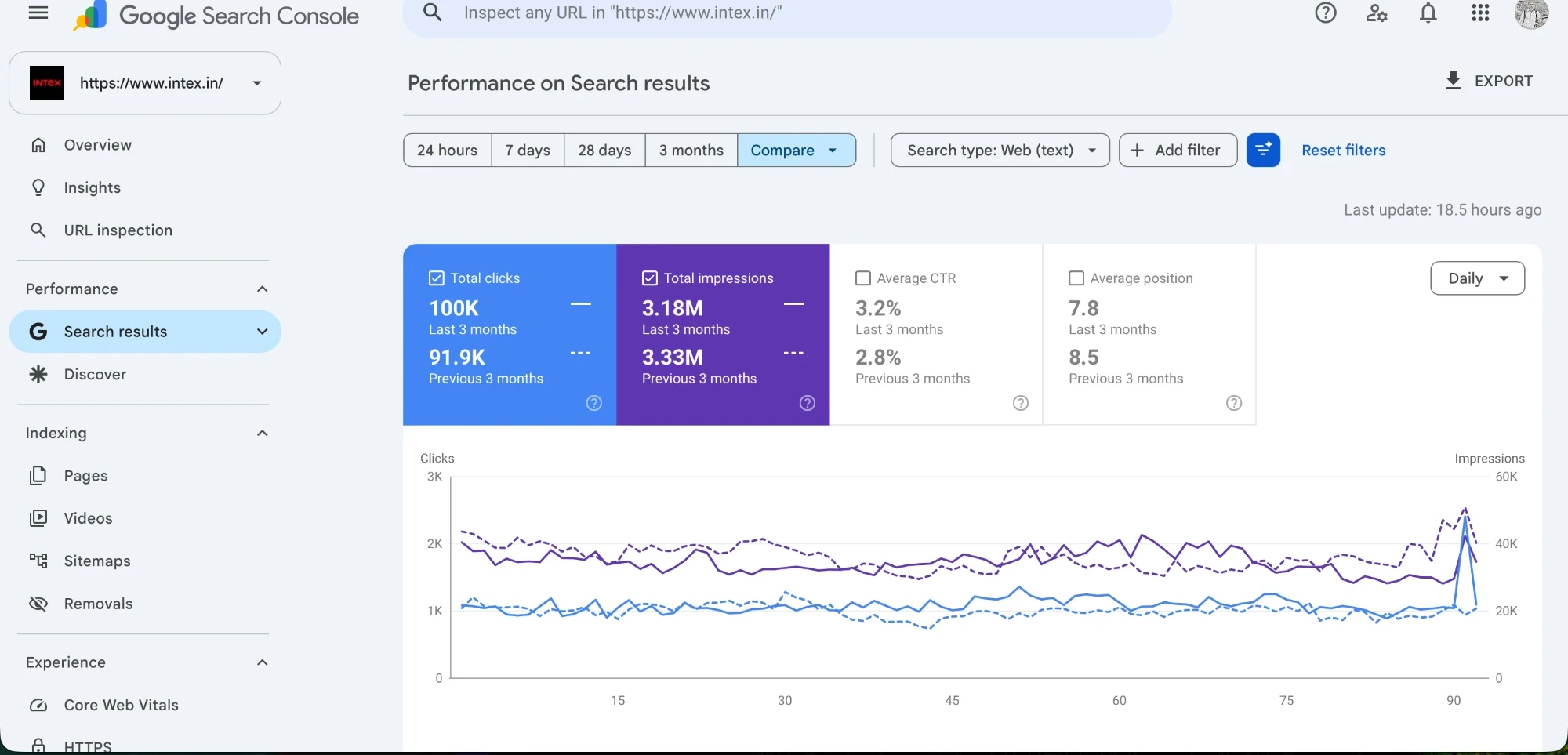
Between July and September 2026, the Intex store took 100K clicks from Google Search, against 91.9K in the quarter before — an increase of 9%. Impressions moved the other way, from 3.33M to 3.18M, a fall of about 4.5%. Average CTR rose from 2.8% to 3.2% and average position improved from 8.5 to 7.8.
| Metric | Previous 3 months | Last 3 months | Change |
|---|---|---|---|
| Clicks | 91.9K | 100K | +9% |
| Impressions | 3.33M | 3.18M | −4.5% |
| Average CTR | 2.8% | 3.2% | +14% |
| Average position | 8.5 | 7.8 | Better by 8% |
Fewer impressions producing more clicks is the signature of a ranking improvement rather than a visibility one: the store is being shown in slightly fewer searches, but it sits higher in the ones it appears for, and higher positions convert to clicks at a noticeably better rate. That is consistent with the structured, comparison-led content described above — pages built to answer the question win the click even when they don't win the impression count.
Source: Google Search Console, intex.in, search type web (text), last three months against the previous three, captured 1 October 2026. Figures are shown as Search Console rounds them.
Built the catalogue structure the store runs on (category pages, product pages with price, brand and breadcrumb markup), then ran an ongoing programme of comparison-led blog content, internal linking from that content into the catalogue, and backlink building for category pages competing against marketplace listings.
Same brand, same underlying store, different report. The GEO case study measures how often Intex appears inside Google's AI-generated answers. This page measures ordinary organic Search Console performance — clicks, impressions, CTR and position. Read the Intex GEO case study →
Because the store is shown in slightly fewer searches but ranks higher in the ones it does appear for. Average CTR rose from 2.8% to 3.2% and average position improved from 8.5 to 7.8, so a smaller number of impressions still produced more clicks.
No. AI tools help execute parts of it — meta variations, schema checks, technical audits across hundreds of SKUs — but the comparison topics we write about, the internal linking structure, and where we build links are strategy decisions made by the team, not generated.
Category by category. Each product category gets its own content plan built around how buyers actually compare products in it — TV size and room size, speaker wattage and room size, washing machine capacity and family size — rather than one generic approach applied across everything Intex sells.
Yes, especially where buyers compare on specifications before they buy. It is the same pattern that works for comparison-led categories generally — the content has to actually answer the comparison, not just list the spec sheet.
We can look at your Search Console data and tell you what's working, what isn't, and where the content gap actually is.
Talk to us
Awarded Digital Marketing Agency
Over 100
 reviews


