
Updated 4 October 2026.
SEO gives important pages a durable route into customer research
A business needs SEO when customers research a category, problem, product or supplier before they speak to sales. The work makes those useful pages easier to crawl, understand and choose. Start with the SEO cost in India: DigiStreet tiers are ₹50,000, ₹75,000, ₹1,25,000 and ₹2,00,000 plus GST a month, with AEO and GEO visibility monitoring included at every tier.
This rewrite replaces a thin list of generic benefits with a practical answer. It explains where SEO helps, what happens in the first 90 days, how the four prices differ and how to read real Intex, SKF and Sirca work without turning one chart into a universal forecast.
Be present before the shortlist is fixed
Many business searches happen before a buyer knows which supplier to contact. They search a product, a service, a problem, a specification, a location or a comparison. A useful page can introduce the company at that stage and give the buyer material to carry into an internal discussion.
SEO also improves the website itself. It forces clear page ownership, descriptive navigation, current copy, usable mobile pages and a record of technical issues. The same work helps paid landing pages and sales sharing. A product page with accurate detail is more useful regardless of whether the visit came from search, an email or a salesperson.
Reach people researching the product or service before they know the brand.
Own accurate pages for brand, product and location searches.
Give teams pages and cases they can send during a live discussion.
Structure facts and sources so answer and generative systems can retrieve them.
Measure the current site before changing it
The first month confirms Search Console, analytics, index controls, conversion actions and important business pages. The team checks technical access, templates, XML sitemaps, canonical handling, internal links and mobile use. It maps products, markets and search needs to current URLs.
This is also the time to agree lead and revenue evidence that can be shared. Separate brand and non-brand search. Record important page groups rather than relying on a sitewide total. List known releases and migrations. A baseline with dates makes later reporting more useful.
Google’s technical requirements identify public access, a successful status response and indexable content as minimum conditions for eligibility. The first audit checks that floor and then moves into page quality and business fit.
Repair priority paths and assign search intent
The second month focuses on the pages closest to commercial demand. One page should own each important intent. Rewrite vague titles and openings. Add the information a buyer needs, supported by product material, case evidence or named sources. Improve internal links from relevant hubs and supporting articles.
Technical repairs continue where they affect important templates. Large images, slow scripts, duplicate URLs, broken links and weak mobile layouts can waste good content. The team should document each release. If old pages are combined, redirect mapping and internal links need care so users and crawlers reach the chosen owner.
Publish into measured gaps
By the third month, the initial map should reveal missing pages and questions. Build only where the business has a distinct answer. Product, industry, location, comparison and guide pages have different jobs. Use headings, tables, captions and references that help a reader scan and verify the material.
Submit accurate sitemaps and inspect indexing patterns without treating submission as an instruction to Google. Connect new pages from useful existing pages. Watch queries, page impressions, clicks and actions, then compare them with the release dates. The first 90 days should end with a stronger site base and a prioritised editorial queue.
Match the programme to the number of decisions
| Tier | Monthly price plus GST | Published fit |
|---|---|---|
| Starter | ₹50,000 | Up to 30 keywords; one market or product line |
| Growth | ₹75,000 | Up to 50 keywords; multi-category or multi-city work |
| Scale | ₹1,25,000 | Up to 80 keywords; competitive or international markets |
| Resource-based | ₹2,00,000 | Two dedicated specialists where keywords are the wrong unit |
Ecommerce SEO stays ₹75,000. AEO and GEO visibility monitoring is included in every tier. The choice should reflect page volume, markets, technical needs and internal coordination. A compact site with one offer has a different workload from a manufacturer with several product families and countries.
Read real charts with their context intact
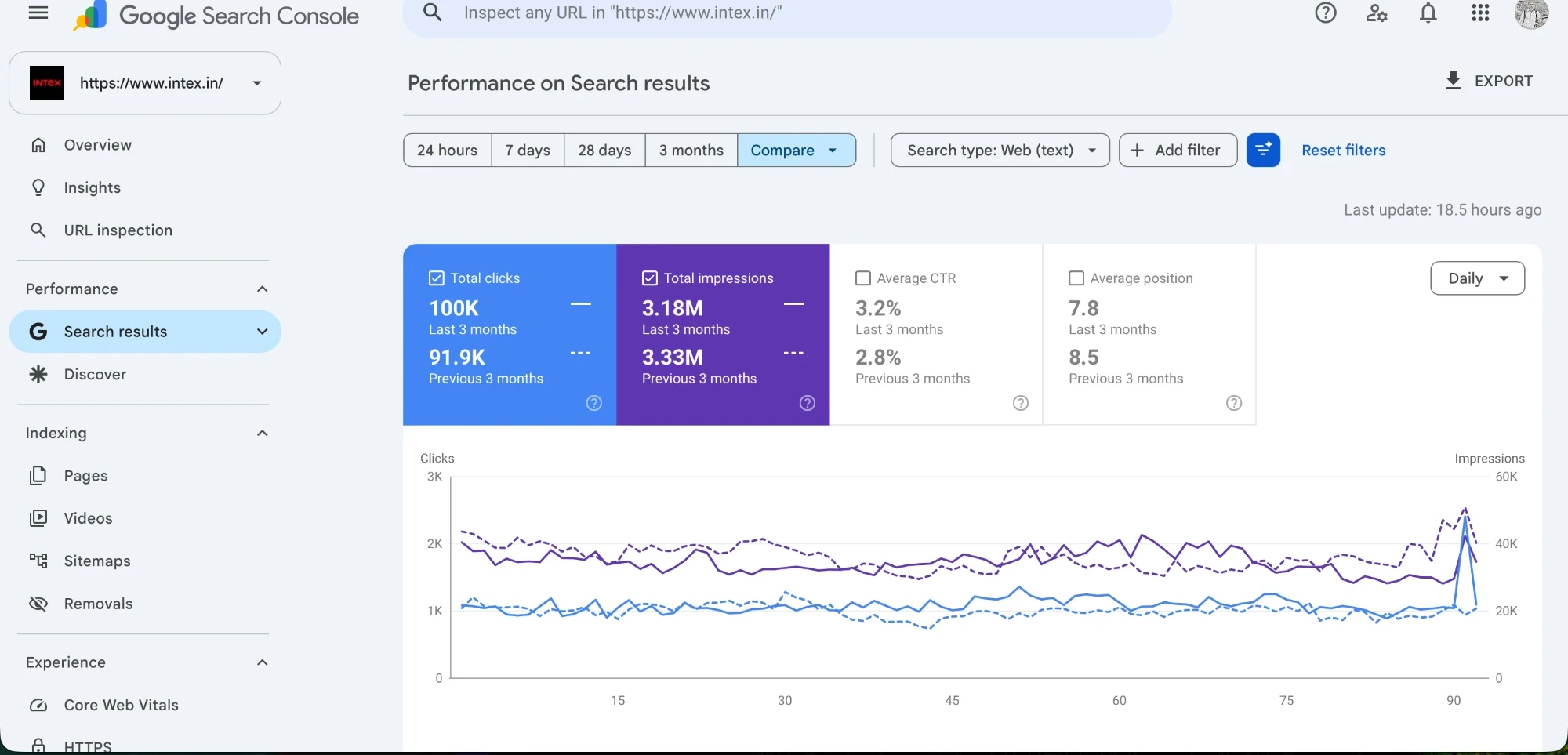
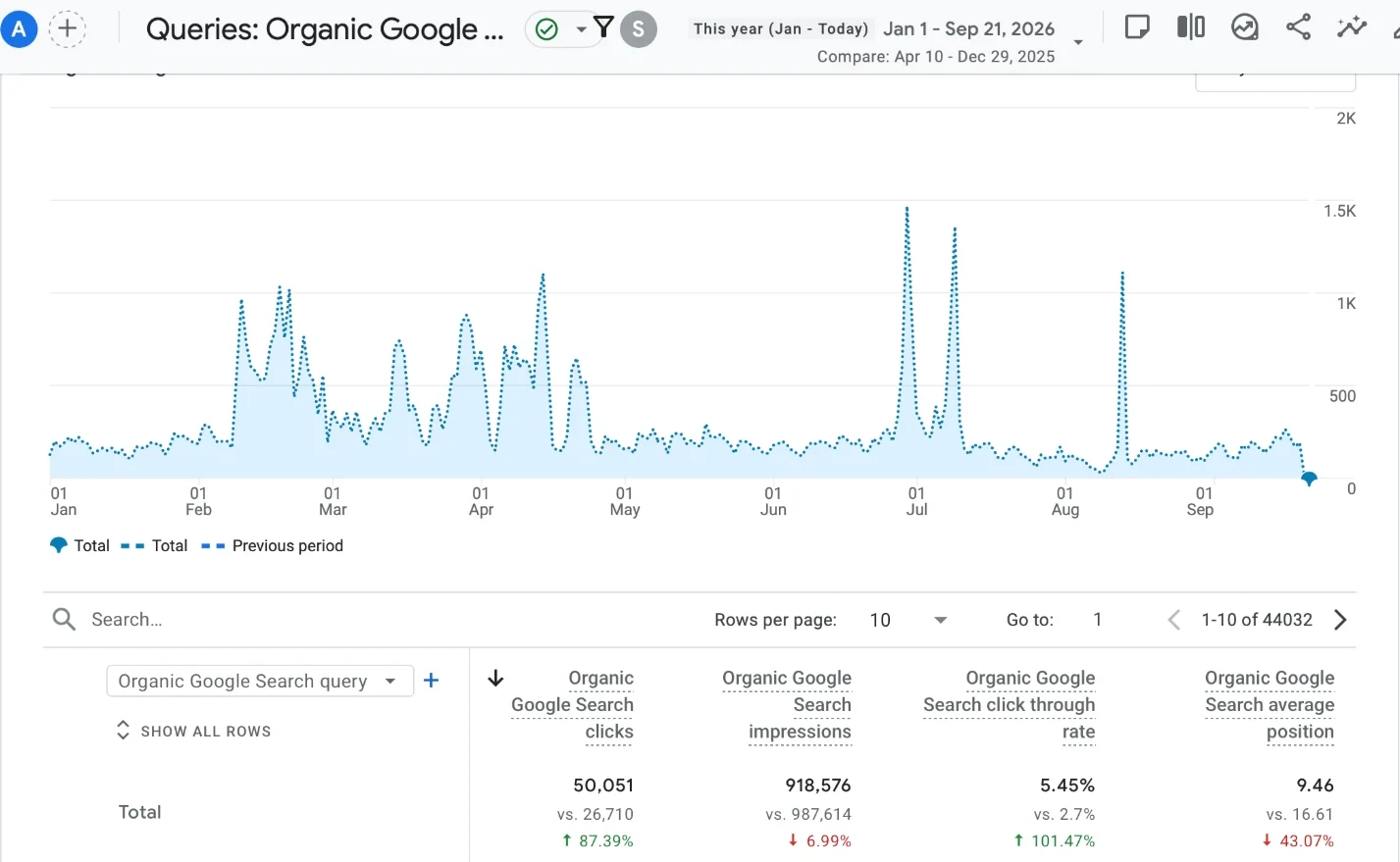
The Intex Search Console chart, SKF case-study reference and Sirca Paints organic-search chart come from published DigiStreet case material. Keep the client, metric, source and date range attached. Read clicks and impressions separately. Mark important site changes and review the pages and queries underneath the trend.
One client chart does not set another company’s forecast. Starting visibility, brand demand, site history, competition and release pace differ. The useful question is whether the programme can show a disciplined link between work, release dates, search evidence and commercial response.
What the business should receive each month
| Record | Why it matters | Who uses it |
|---|---|---|
| Pages changed and release dates | Connects work with later search evidence | Marketing and web teams |
| Technical issues closed and open | Keeps template risk visible | Developers and SEO team |
| Queries, pages, clicks and impressions | Shows where discovery is changing | Content and product owners |
| Accepted enquiries or actions where available | Connects traffic with business fit | Marketing and sales leaders |
Add AEO and GEO observations, editorial status and source owners. A short record of decisions is better than a large activity list. It lets the team see why a page changed and what happened after release.
Give every important offer one clear home
List products, services, industries, markets, resources and case studies. Then decide which page owns each important need. A clear structure prevents several weak articles from chasing the same query and helps people move from a broad question to a specific offer. Navigation labels should use customer language, while breadcrumbs and internal links show the relationship between pages.
Product pages need factual detail, useful images, specifications or service scope, proof and one relevant action. Industry pages should explain application and buying concerns instead of repeating the product copy. Location pages need market-specific information that the business can support. Guides should answer the question fully and then connect the reader with the service only where it fits.
Check orphaned pages, duplicate titles, outdated downloads and indexable filter URLs. Keep an inventory with page owner and review date. When a page is retired or combined, update internal links and use a proper redirect. This housekeeping makes future content easier to plan and reduces the chance that an old page competes with a stronger one.
Build a source record behind every serious page
Search content becomes more useful when claims can be checked. Record the product owner, case page, official source, publication date and review date beside the working draft. Ask a subject expert to review material that affects technical, health, finance or regulatory decisions. Add the reviewer only when the organisation can support that attribution.
Use charts and tables when they clarify evidence, not to make the page look busy. Captions should name the client or source and retain the date range. Write alt text that explains the image. Update pages when prices, specifications or regulations change. A content calendar should include review work as well as new publishing.
Check the delivery team and access before signing
Ask who will handle technical review, content, design, outreach, analytics and account decisions. Request examples that match the site type and market. Check whether the team can explain a past release and the evidence it read afterwards. Broad claims are less useful than a clear page, date and result source.
List the client inputs too. SEO moves faster when product owners answer questions, developers can release fixes and sales teams return lead-quality evidence. Agree access, approval windows and the first technical backlog. Keep accounts and properties visible to the business.
The first-quarter scope should name pages, templates, measurements and expected releases. It should also state which decisions depend on audit findings. This gives the business a testable programme without pretending the website has already been inspected.
Intex, SKF and Sirca make the SEO discussion inspectable

Business questions about SEO
Why does a small business need SEO?
SEO can make focused product, service and location pages visible while also improving the site material used in sales and campaigns.
What happens in the first 90 days?
The team establishes measurement, maps intent, repairs priority issues, improves important pages and begins publishing into clear gaps.
How much does DigiStreet SEO cost?
The published tiers are ₹50,000, ₹75,000, ₹1,25,000 and ₹2,00,000 plus GST a month.
Is AEO charged separately?
AEO and GEO visibility monitoring is included in every published SEO tier.
How long should SEO be measured?
Use monthly records for decisions and longer page-group comparisons for trend, while noting major website and market changes.
What should an SEO report include?
It should include releases, technical work, queries, pages, clicks, impressions and business actions where available.
Sources used for this guide
Start with the pages closest to revenue
Share the site, priority markets and current measurement. DigiStreet can recommend a tier and a first-90-day SEO plan.