




Updated 4 October 2026.
The first SEO year is a sequence of fixes, publishing and evidence
The first twelve months of SEO should produce a record of technical repairs, clearer pages, new search coverage and commercial learning. It should not be reduced to one ranking screenshot. Start by understanding the SEO cost in India. DigiStreet’s published monthly tiers are ₹50,000, ₹75,000, ₹1,25,000 and ₹2,00,000 plus GST, with AEO and GEO visibility monitoring included at every tier.
This guide sets out a practical year and pairs it with real DigiStreet evidence from Intex, SKF and Sirca Paints. The charts retain their source and date context on the linked case pages. They illustrate how search evidence is read; each brand starts with a different website, market, content base and sales situation.
Build the measurement and repair base
The opening month establishes the technical and commercial baseline. Confirm analytics and Search Console access, indexable templates, canonical handling, XML sitemaps, robots rules and important conversion actions. Map priority products, services, markets and existing pages. Record current clicks, impressions, useful queries, leads and known sales feedback.
The next work is triage. Repair blockers that prevent crawling, indexing or use. Improve the pages already closest to demand. Assign each search cluster to one primary page so several weak URLs do not compete for the same intent. Update titles, headings, copy, internal links and media where the evidence supports the page. Agree an editorial backlog only after this map exists.
Google’s technical requirements say an eligible page must be accessible to Googlebot, return a successful status and contain indexable content. Meeting those requirements is the floor. The page still needs a reason to be selected and used.
Expand useful coverage and connect the site
By the second quarter, the team should have enough baseline evidence to publish with more precision. Build product, category, industry, location or question pages where the business has a real answer and a distinct search need. Connect them through navigation, hubs and contextual links. Update old pages that have authority but no longer answer the query well.
Each new page needs a clear owner, source record and next action. Images should explain or prove something, with descriptive alt text. Tables can make comparisons and prices easier to read. Case studies should link the situation, work and recorded outcome. AEO and GEO monitoring can track whether this clearer material appears in answer and generative systems as the search programme grows.
Review indexing in groups rather than expecting every URL to move at once. Google describes sitemap submission as a way to tell it about preferred URLs, while also stating that submission does not ensure crawling or inclusion.
Use search evidence to improve the offer pages
The third quarter is where content and commercial feedback should meet. Search queries show the language and concerns people bring. Landing-page behaviour shows whether the page helps. Lead and sales feedback shows whether the visitor fit the offer. Combine these sources before deciding which page deserves more work.
Strengthen pages that earn impressions but weak clicks by checking title, snippet context and intent. Strengthen pages that earn visits but weak action by checking proof, clarity, speed and the next step. Consolidate pages that split the same answer. Add expert review and current source dates where trust matters. Keep the release log so changes can be compared with search and lead evidence.
| Signal | Likely question | Useful response |
|---|---|---|
| Impressions rise, clicks stay flat | Does the result match the query and earn attention? | Rewrite title and opening around the actual intent |
| Clicks rise, enquiries stay flat | Does the page explain fit and the next step? | Improve proof, structure, speed and action |
| Several pages rank weakly | Are URLs dividing one intent? | Choose one owner and consolidate carefully |
| Leads rise, acceptance falls | Is the page attracting the wrong need? | Clarify qualification, scope and offer language |
Turn the year into the next priority map
The final quarter is not a finish line. It is the point to compare page groups, markets and content types over a long enough period to spot useful patterns. Separate brand and non-brand search. Review the contribution of pages published or changed during the year. Compare traffic with accepted enquiries and business value where those records exist.
Technical checks continue because sites change. New templates, scripts, filters and migrations can create fresh problems. Update the content that depends on dates, prices or product facts. Plan the next year around the gaps now visible: missing product coverage, weak industry proof, slow templates, thin case material or markets where the business has a stronger offer than the website shows.
Choose a tier by scope rather than hope
The Starter tier is ₹50,000 plus GST a month for up to 30 keywords and suits one market or product line. Growth is ₹75,000 for up to 50 keywords and suits multi-category or multi-city work. Scale is ₹1,25,000 for up to 80 keywords in competitive or international markets. Resource-based SEO is ₹2,00,000 with two dedicated specialists for brands where keywords are the wrong unit.
| Tier | Monthly price plus GST | Published scope |
|---|---|---|
| Starter | ₹50,000 | Up to 30 keywords; one market or product line |
| Growth | ₹75,000 | Up to 50 keywords; multi-category or multi-city |
| Scale | ₹1,25,000 | Up to 80 keywords; competitive or international |
| Resource-based | ₹2,00,000 | Two dedicated specialists; keywords are the wrong unit |
Ecommerce SEO stays ₹75,000. Every tier includes AEO and GEO visibility monitoring. The useful choice depends on the number of decisions, templates, markets and teams involved, not on choosing the largest keyword list.
Treat a chart as a question, not a trophy
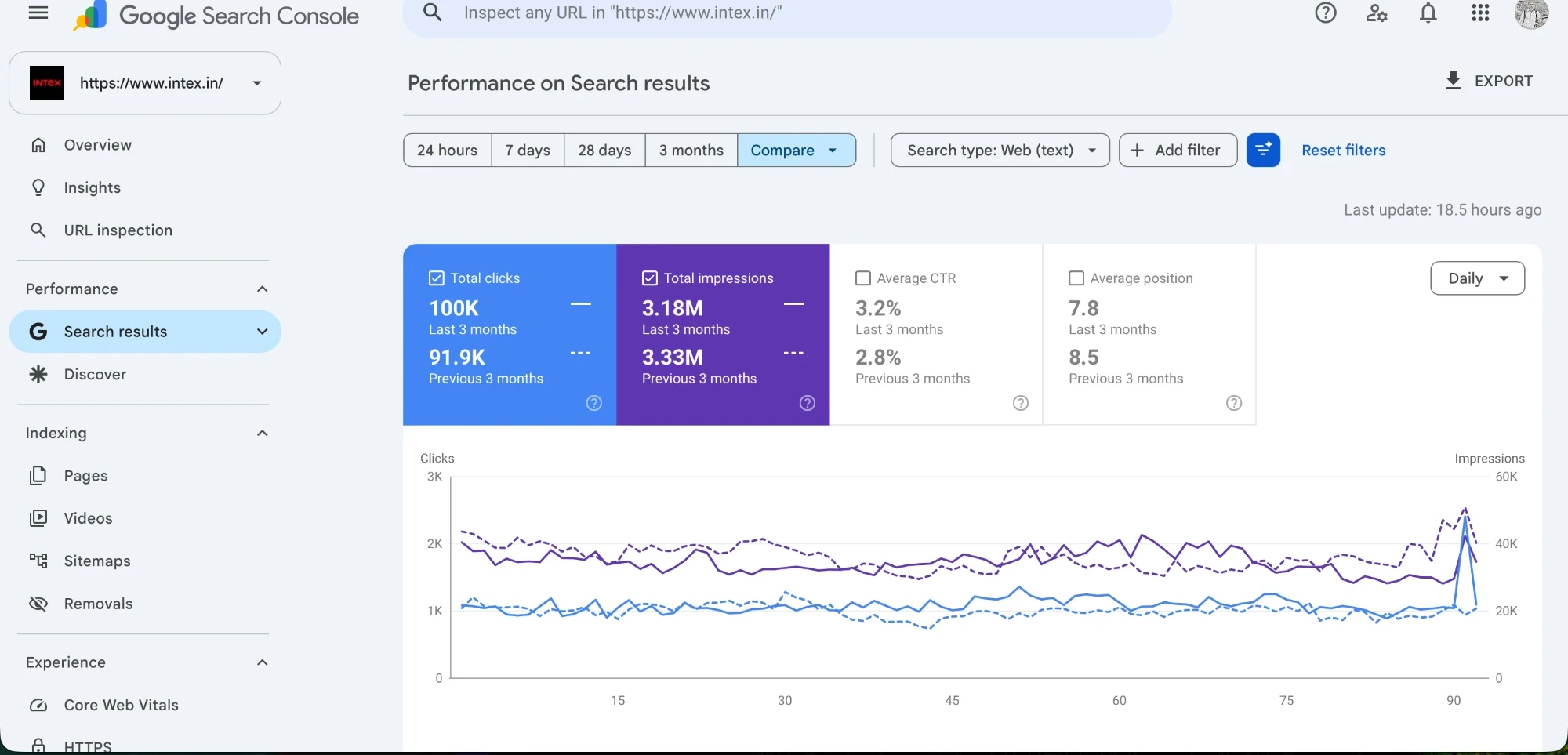
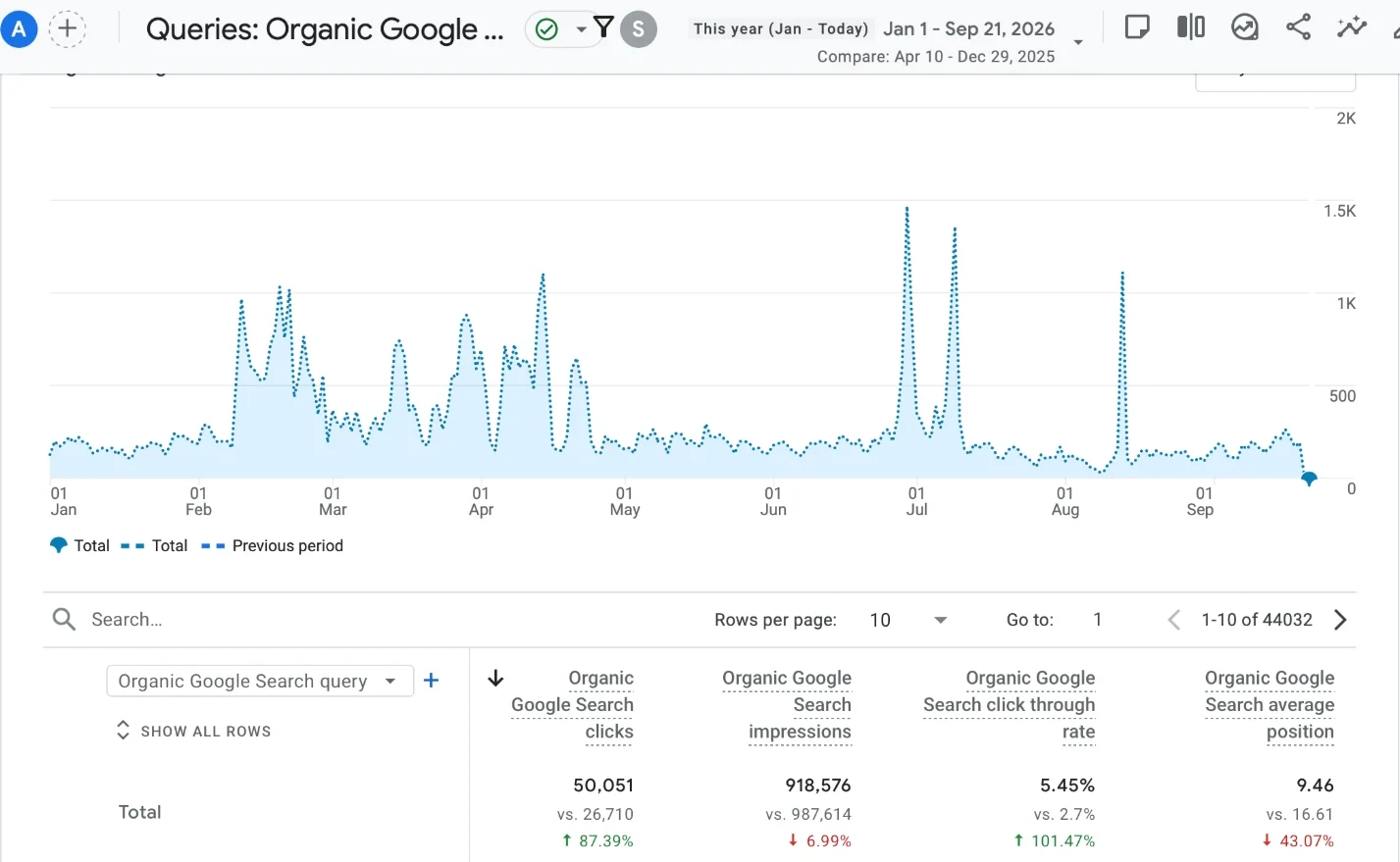
Check the date range, source, filters and whether the view covers the full property or a section. Separate clicks and impressions. Compare brand and non-brand queries when the data allows. Mark major site releases, migrations or campaign events. Then connect the change to pages and queries instead of assigning it to one tactic.
The Intex chart provides a current Search Console view on its case page. SKF evidence is presented through its published case study, and the Sirca Paints chart adds another site and market context. Read each case on its own terms. Together they show why an SEO report should keep source labels, time ranges and the work record next to the result.
What the client should be able to inspect
| Every month | Every quarter | At twelve months |
|---|---|---|
| Technical actions and release dates | Coverage by page group and search intent | Year-on-year and baseline page-group comparison |
| Clicks, impressions and useful query movement | Accepted lead or action evidence where available | Pages to expand, consolidate or retire |
| New and updated pages with source owners | Speed and template checks after releases | Next-year priority map and resource choice |
| AEO and GEO visibility observations | Case and proof gaps for key offers | Measurement changes needed for better decisions |
The record should make the next decision easier. It names the pages changed, the reason, the date and the evidence observed later. That is more useful than a report that lists activity without connecting it to the website or the business.
The client team shapes the speed of the year
SEO needs access to product knowledge, developers, analytics and sales evidence. Name a client owner who can settle priority and gather approvals. Give technical issues a route into the development backlog. Give writers access to subject experts and current source material. Set review windows before the editorial calendar becomes full.
A monthly working meeting should decide pages, blockers and evidence. A quarterly review should compare page groups and commercial fit. This split keeps daily production moving without losing the larger direction. It also makes capacity visible. If approvals or development are slow, the plan can favour work that is ready instead of filling a report with waiting items.
Use the annual review to improve the brief
At the end of the year, ask which product and market pages gained useful discovery, which remained weak and which created accepted enquiries. Compare new pages with refreshed pages. Review the time spent on technical work, content, proof and internal coordination. This shows whether the next programme needs more publishing capacity, development help or subject access.
Check the measurement base as well. Confirm that Search Console properties, analytics events, CRM fields and release notes still match the current site. Remove reports that no longer change a decision. Add page-group views where the business has expanded. The next twelve-month plan should begin with this evidence, not with a copied keyword list.
Three client references make the twelve-month discussion concrete

Questions about the first SEO year
What happens in the first 90 days of SEO?
The team establishes measurement, checks crawl and index controls, maps search intent, repairs priority blockers and improves pages already close to demand.
When should new content begin?
Publishing can start early when the intent and evidence are clear, but the page map should prevent duplicate or competing URLs.
How much does DigiStreet SEO cost?
Monthly tiers are ₹50,000, ₹75,000, ₹1,25,000 and ₹2,00,000 plus GST, with published scope differences.
Are AEO and GEO separate fees?
AEO and GEO visibility monitoring is included at every published SEO tier.
Which SEO chart matters most?
No single chart is enough. Read clicks, impressions, queries, pages and commercial actions with the date range and releases.
What should month twelve produce?
It should produce a clear year record, stronger page groups, known gaps and a priority map for the next cycle.
Plan the first year around evidence
Share the markets, offers, current site and measurement setup. DigiStreet can recommend the right SEO tier and first-quarter priorities.