


Published 27 November 2026.
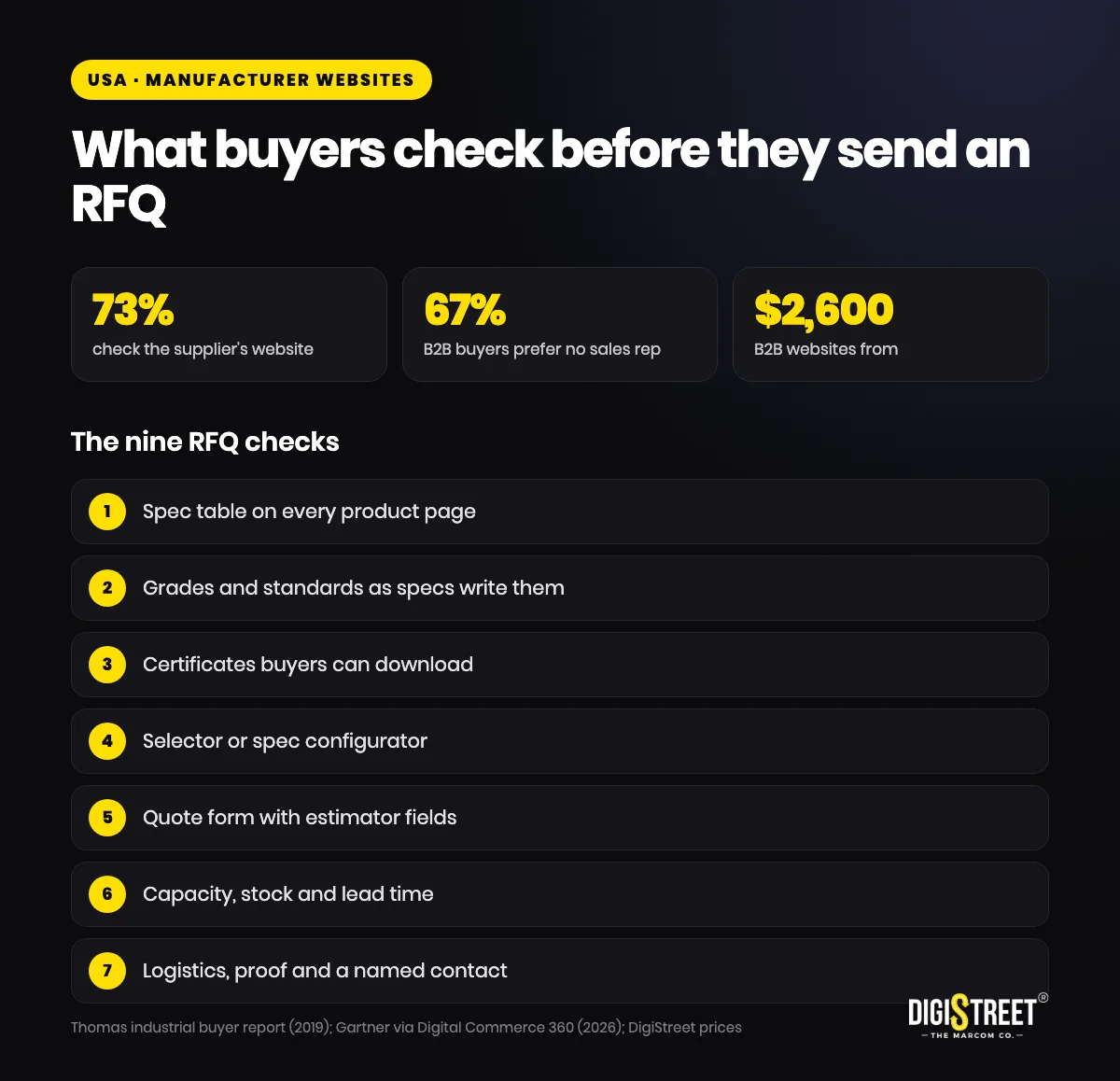
A US industrial buyer decides whether to send you an RFQ by checking nine things on your website: product spec tables, grades and standards, certifications, a way to narrow the spec, a quote form that asks the right questions, stock and lead time, logistics, proof from real jobs, and a named person to talk to. If your B2B manufacturer website design misses three or four of these, the RFQ goes to the supplier whose site answered them.
We are designing new websites for two US steel pipe makers right now, Jindal Tubular USA in Mississippi and Tube Technologies in Minneapolis, and this checklist is what both projects keep coming back to. It is written for plant owners, sales heads and marketing managers who are about to brief a manufacturing website design company and want to know what the engineer on the other side actually looks for.
Why the website now does the first sales call
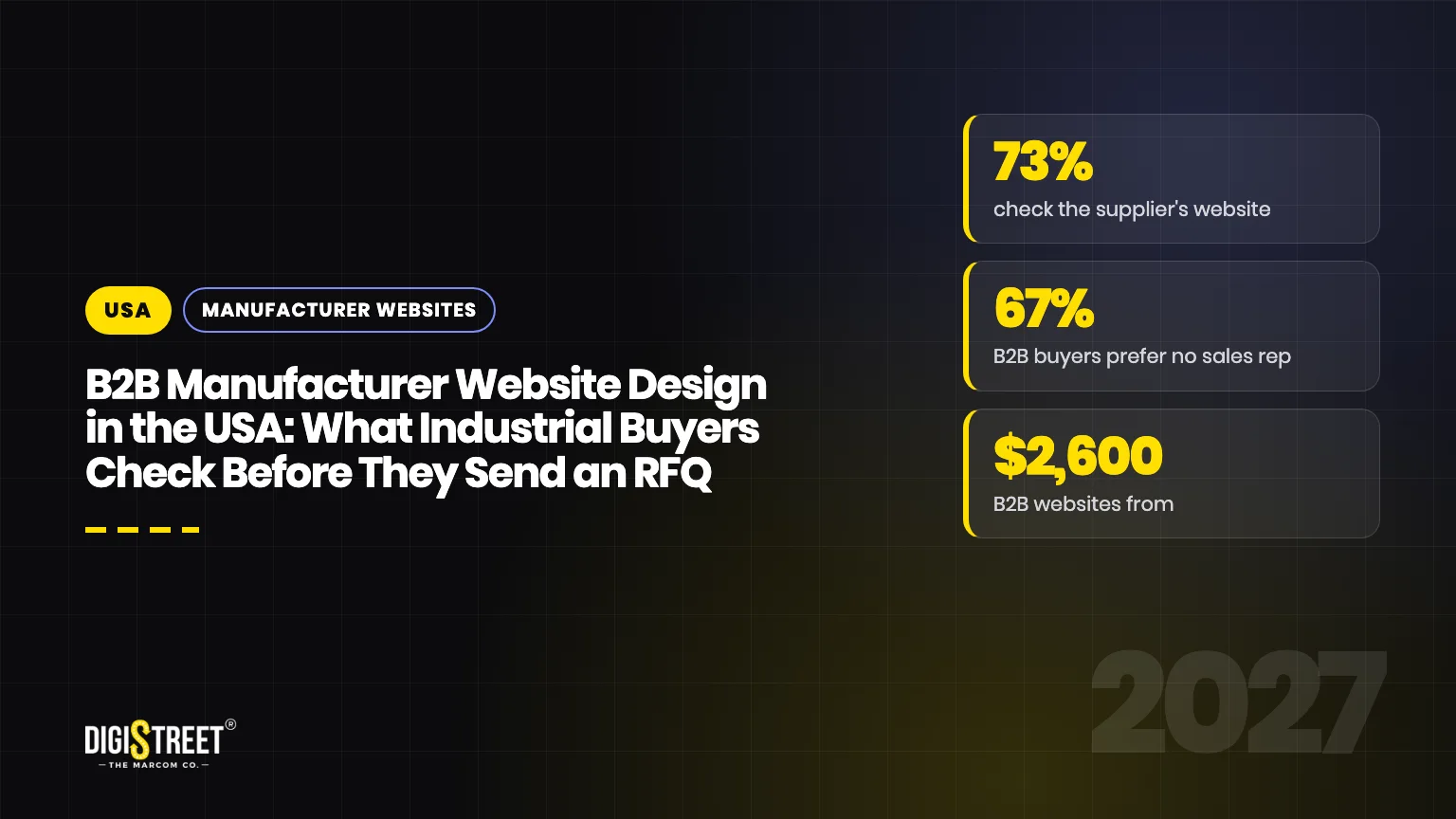
Buyers make up their minds before they speak to you. Gartner surveyed 646 B2B buyers in August and September 2025 and found that 67% prefer a buying experience with no sales rep involved, and 45% had used AI tools during a recent purchase [1]. An older but very industrial number points the same way: in a Thomas survey of 266 industrial buyers, 73% said they pay close attention to a supplier’s website when evaluating them, and 71% check fewer than five suppliers before deciding [2].
Put those together and the maths is harsh. If a buyer shortlists four suppliers and your site is the one that hides the wall thickness range behind a “contact us” button, you are the one dropped. Nobody calls to ask. They just do not send the RFQ.
So the job of an industrial website design is narrow and practical. Answer the engineer’s questions in the order they ask them, then make sending a complete RFQ easier than closing the tab.
The nine checks at a glance
| What the buyer checks | Where it belongs on the site | What happens if it is missing |
|---|---|---|
| Size and wall range per product | Spec table on each product page | Buyer cannot tell if you make their size |
| Grades and standards | Product page, plus a standards page | Specifying engineer cannot approve you |
| Certifications and test documents | Quality page with downloadable certificates | Procurement asks for them later, or skips you |
| A way to narrow the spec | Filter, selector or configurator | Buyer emails a vague question or nothing |
| Quote form with the right fields | Every product page and the header | Sales spends two days chasing missing details |
| Stock, capacity and lead time | Product pages and a capacity section | Buyer assumes you are slow |
| Logistics and delivery | Plant or locations page | Freight cost becomes an unknown risk |
| Proof from real projects | Project pages with photos and specs | Claims read as brochure copy |
| A named contact and response time | Contact page and footer | RFQ feels like it goes into a void |
1. A spec table on every product page, in the units buyers use
The first thing an engineer looks for is whether you make their size. That answer has to sit on the product page as a table, in inches and feet for US buyers, with metric beside it if you also sell to Canada.
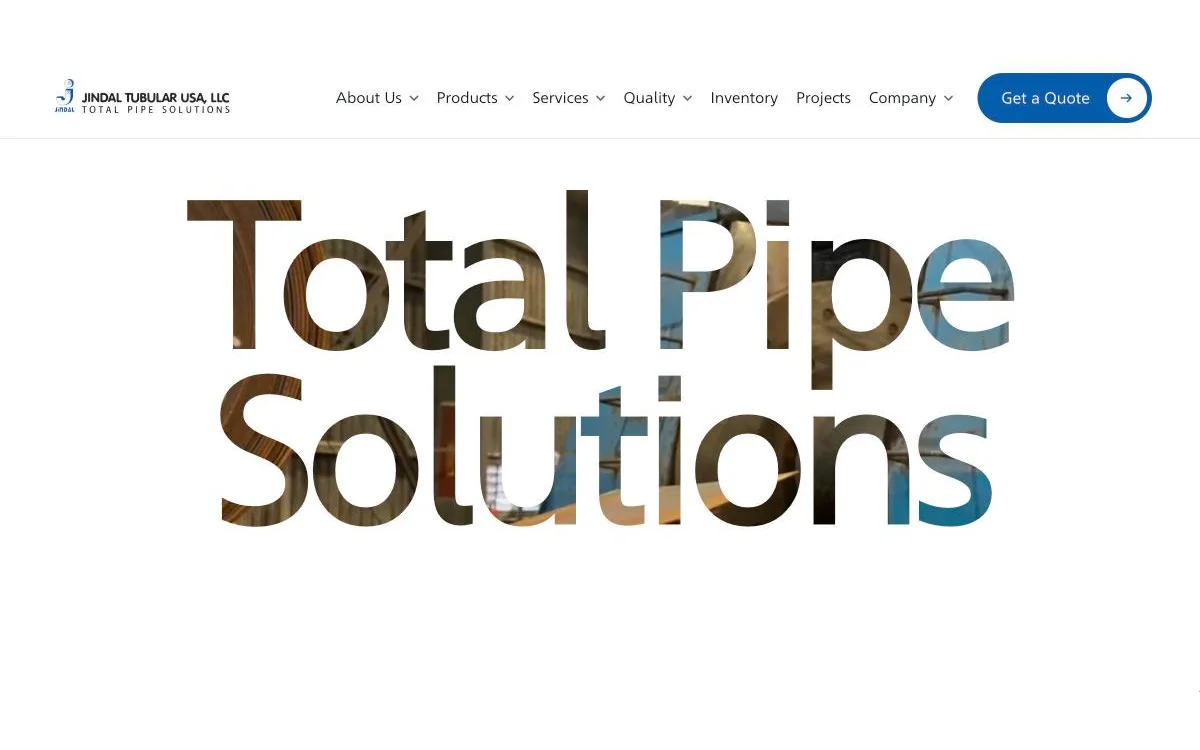
Jindal Tubular USA’s current products page shows how much a single table can carry: helical seam SAW pipe from 24 to 60 inches outside diameter, wall thickness from 0.312 to 1.00 inch, and lengths of 40, 60 and 80 feet plus custom lengths [6]. Those four lines answer the first question for a water utility, a pile driving contractor and a pipeline buyer alike. On the new site we are designing, that table sits above the fold on the pipe page, not three clicks down in a PDF.
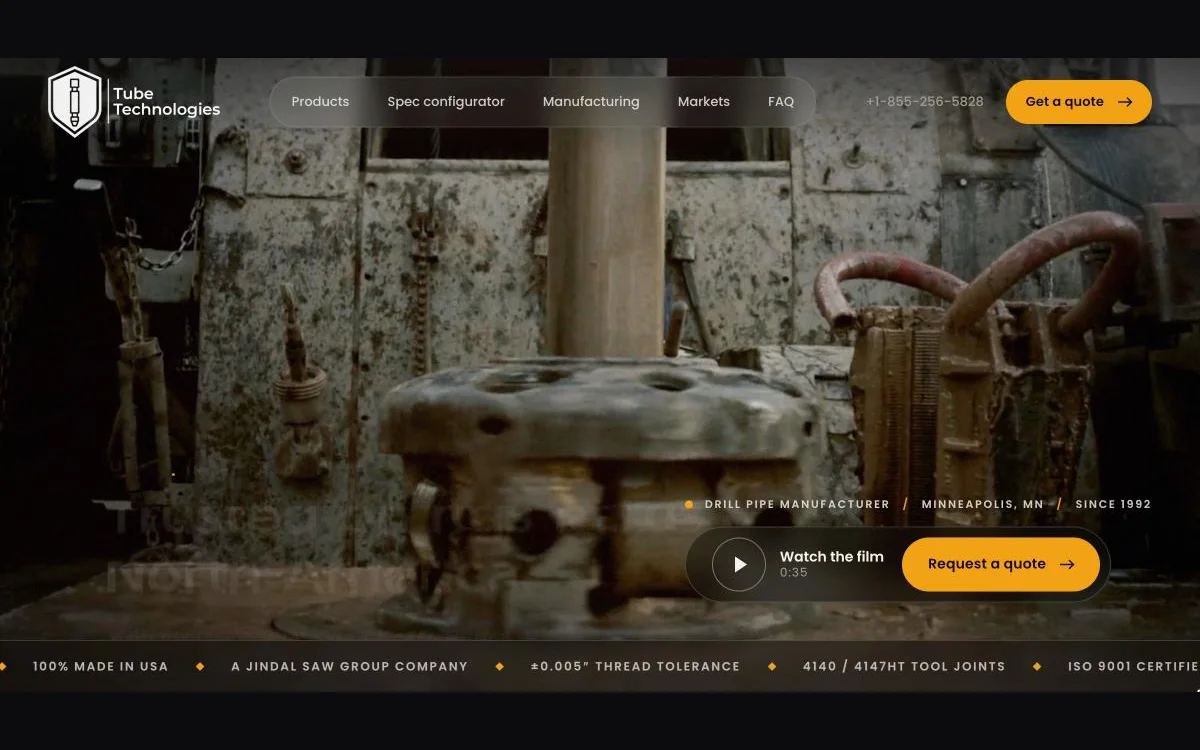
Tube Technologies has the opposite problem. It sells 50+ product lines (drill rods, mining rods, subs, casings, stabilizers, augers) to water well, mining, construction, geothermal and sonic drilling crews [7]. One giant table would be useless there. Each product family needs its own page with its own table, and the table columns change by family: OD and thread for rods, length and flighting for augers.
2. Grades and standards written exactly as specs are written
Buyers copy grades from a project specification, so your site has to use the same words. “API 5L Grade B to X80”, “CSA Z245 to L550”, “AWWA” and “sour service” are what Jindal Tubular USA lists [6], and each of those strings is something an engineer might paste into a search box.
Standards also change, and buyers notice when your site is behind. The American Petroleum Institute published the 47th edition of API Specification 5L on 2 June 2026, with new requirements in more than 15 topic areas, including sour-service requirements, high-frequency weld line quality and pipe for CO2 transmission pipelines [3]. A pipe maker’s standards page should say which edition it works to and get updated when that changes. It is a small page that tells a specifying engineer you pay attention.
For drilling tools the language is different. Tube Technologies states that its sonic tooling is built to DCDMA standards and that tool joints use 4140/4147HT alloy [7]. That is the level of detail a driller reads before trusting a thread.
3. Certifications a buyer can download, not just a logo strip
A row of badges in the footer does very little. Procurement teams want the certificate itself, with a scope and an expiry date, and they want it without emailing anyone.
Tube Technologies is ISO 9001 certified and an NGWA member [7], so its quality page carries both, with the certificate as a file and a short line on what each means for a driller ordering rods. Jindal Tubular USA already has a certifications link on its products page [6], and the new design moves that next to each product so the documents sit beside the spec they support.
PDFs are fine for certificates and mill test report samples. Google indexes PDF files [4], so a well-named certificate file can even turn up in search. What should never be PDF-only is the spec table itself.
4. A selector or configurator that narrows the spec
When a catalogue gets past a few dozen variants, a buyer needs a way to filter it. For a plain range that can be a filter by OD, wall and grade. For drilling tools it needs more than that.
The new Tube Technologies site includes a spec configurator for drillers. The driller picks the rig type and application, then the rod or tool family, then the size and connection, and the configurator carries those choices straight into the quote form. The point is not the gadget. The point is that the RFQ arrives with a usable spec instead of “need rods for a geothermal job, please call”.
5. A quote form that asks what your estimator needs
Most manufacturer RFQ forms ask for name, email and a message box. Then the estimator spends two days emailing back for the size, the grade and the delivery point. Every one of those emails is a chance for the buyer to go quiet.
Build the form from your estimator’s checklist instead. The fields differ by product, so the form should change with the product page it sits on.
| Field | Spiral welded pipe RFQ | Drill pipe and tools RFQ |
|---|---|---|
| Size | OD and wall thickness | OD, length and connection or thread |
| Grade or material | API 5L grade, CSA, AWWA or ASTM | Alloy or standard (for example DCDMA) |
| Quantity | Tons or linear feet | Pieces or sets |
| Coating or finish | External and internal coating | Hardbanding or special finish |
| Application | Water, piling, pipeline, structural | Water well, mining, geothermal, sonic |
| Delivery | Site location and required date | Shipping address and rig start date |
| Attachments | Project spec or drawing | Rig model or drawing |
Keep the required fields short (name, company, email, product, size, quantity) and make the rest optional. A buyer with a full spec fills everything. A buyer at the early stage still gets through.
6. Capacity, stock and lead time stated as plain numbers
Buyers on a project schedule want to know you can deliver the tonnage on time. Jindal Tubular USA states an HSAW capacity of 300,000 tons per annum on its products page [6]. That one number answers a question a large buyer would otherwise ask on a call.
If you hold stock, say which sizes. If lead time depends on the mill schedule, give the usual range and say what changes it. A lead time that is honest and specific beats a promise of “fast turnaround” every time.
7. Logistics that remove the freight question
Large-diameter pipe is expensive to move, so where the plant sits and how pipe leaves it is part of the price. Jindal Tubular USA’s products page describes a private dock next to the plant, the Port Bienville Railroad connecting to CSX, and access to Interstate 10 and Interstate 59 [6]. For a buyer on the Gulf Coast or further inland, that tells them pipe can come by barge, rail or truck.
The new design gives logistics its own section with a simple map and the routes written out. Value-added services belong here too: Jindal lists splicing and double jointing, end plates and conical tips, lifting eyes and coating [6], all things that save a contractor a step on site.
8. Proof from named projects, with specs and photos
Engineers trust a project page with a size, a grade, a quantity and a photo far more than a paragraph of claims. Each project page should say what was supplied, for what use, and in what spec.
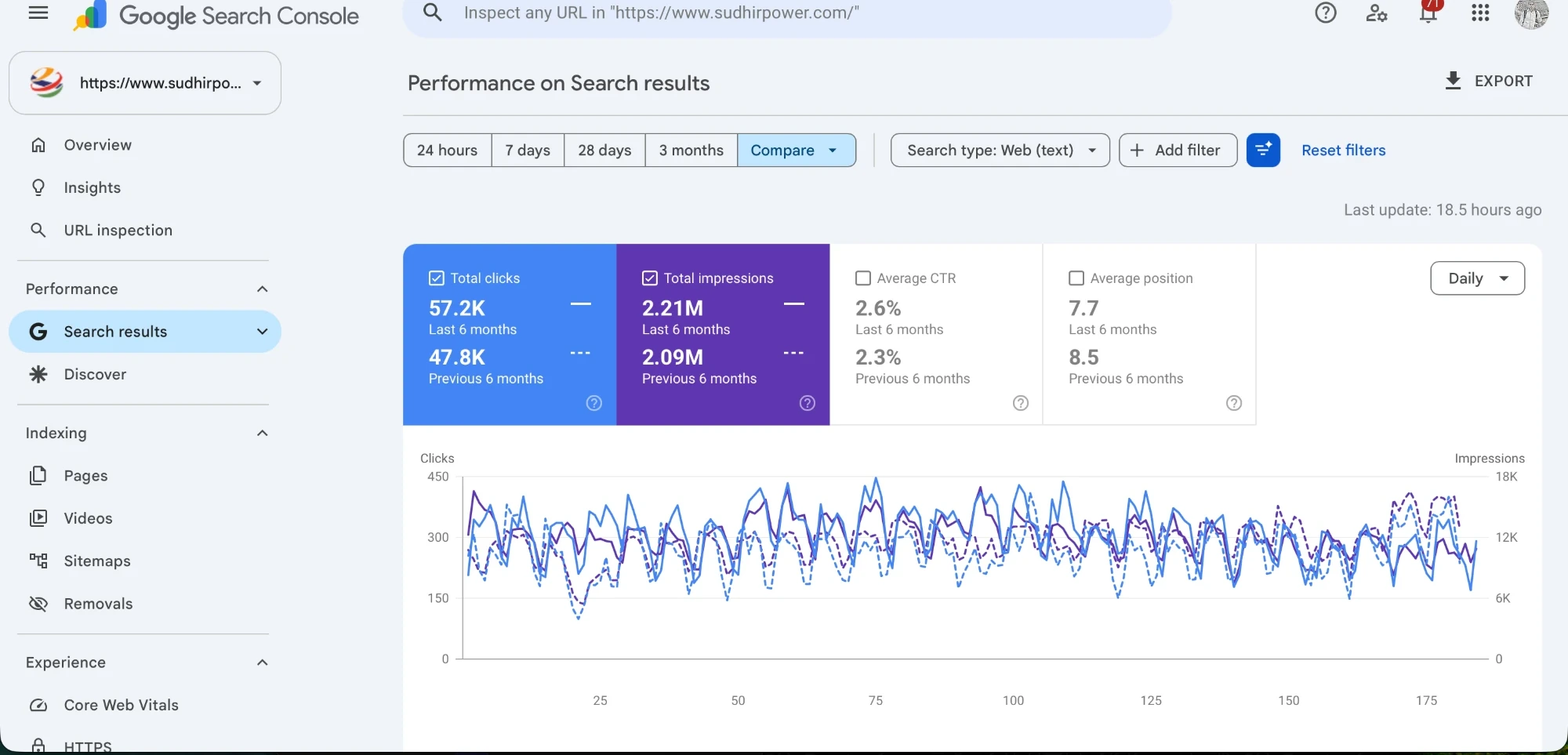
The same rule applies to us. For Sudhir Group, a power solutions company, we rebuilt the website and organic traffic went up 245% to 131,093 visitors, with 9,300 business queries a year (Sudhir Power case study). For G Kumar Electro we built a B2B ecommerce store for 10,000+ products, where the catalogue structure and filters mattered more than the home page (G Kumar Electro case study). And for SKF, the industrial bearings maker, organic traffic rose 565% in a year, from 937,815 to 6,238,985 visitors (SKF case study).
9. A named contact and a stated response time
The last check is about trust. An RFQ form that drops into a generic inbox with no stated reply time feels risky. Put a real department name, a phone number, office hours in the buyer’s time zone and a reply time you actually meet.
Gartner’s research still shows buyers want a person once the research is done; they just want to choose when [1]. A clear contact block is how you let them.
What a manufacturer website costs in the USA
IBISWorld puts the 2026 benchmark price for a US website design project at $8,175 [5]. Our B2B websites start at $2,600, which is 68% below that benchmark (8,175 minus 2,600, divided by 8,175). Prices for international clients are in US dollars, with no GST.
| Item | US benchmark | DigiStreet price |
|---|---|---|
| Website design project | $8,175 a project (IBISWorld 2026 benchmark) [5] | Websites from $1,450 |
| B2B manufacturer website with spec tables and RFQ forms | Same benchmark | From $2,600 |
| Corporate site with several divisions | Same benchmark | From $3,300 |
| B2B ecommerce catalogue | Same benchmark | From $3,700 |
| Hosting and maintenance | Not part of the benchmark | From $300 a month |
A configurator, a large catalogue import or several language versions add to the build, and we quote those after seeing the product range. You can see the full scope of what we build for factories on our manufacturer website design page, and US-specific details on our web design for US companies page.
How we run a US industrial website project from India
Our team is in Noida, Delhi NCR, and we take US calls from 8 am to noon US Eastern on weekdays. In practice that means you review work in your morning and we act on it in ours, so a round of changes rarely costs a full day.
The order we follow on a pipe or tooling project is simple. We collect the estimator’s checklist and the product data first, design the product page and RFQ form next, and only then design the home page. Most business and B2B sites go live in three to four weeks; complex projects, such as one with a spec configurator, take about 2 months. Jindal Tubular USA started this way in November 2026; you can read how the project began in our earlier post on website design for US pipe manufacturers. Once the site is built, the search side is a separate job, which we cover in our guide to manufacturer SEO in the USA.
We have 14+ years behind us, 450+ projects and clients in 15+ countries. For US companies wanting the wider picture of what we do, the USA agency page lists it.
Frequently Asked Questions
How much does a B2B manufacturer website cost in the USA?
Our B2B manufacturer websites start at $2,600, against an IBISWorld 2026 benchmark of $8,175 for a US website design project; configurators and large catalogue imports are quoted on top after we see the range.
What should a manufacturer put on a product page?
A spec table with size, wall or length, grades and standards, then certifications, capacity or lead time, and a quote form built for that product, in that order.
Should spec sheets be PDFs or web pages?
Both, with the web page first: put the spec table in HTML so buyers and search engines read it directly, and offer the PDF as a download for engineers who file it with the project.
What fields should an industrial RFQ form have?
Name, company, email, product, size, quantity, grade, application, delivery location and date, and a file upload for drawings, with only the first six required.
Do industrial buyers still want to talk to a sales rep?
Yes, but later: Gartner found 67% of B2B buyers prefer a rep-free buying experience, so the website has to carry the research and the rep comes in once the spec is clear.
Can an agency in India build a website for a US manufacturer?
Yes; we are building new websites for Jindal Tubular USA and Tube Technologies right now, with calls from 8 am to noon US Eastern on weekdays and prices in US dollars with no GST.
If you want us to look at your current site against these nine checks, ask for a quote at info@digistreetmedia.com and we will tell you which pages to fix first.
References
- Gartner: Two-thirds of B2B buyers prefer rep-free purchasing as AI reshapes sales, Digital Commerce 360 (Mark Brohan), 17 March 2026.
- New Thomas Report Reveals Industrial Buyer Habits, Thomas (Kristin Manganello), 31 January 2019.
- API Announces 47th Edition of Foundational Line Pipe Standard, American Petroleum Institute, 2 June 2026.
- File Types Indexable by Google, Google Search Central, accessed 27 November 2026.
- Website Design Services in the US (procurement), IBISWorld, accessed 27 November 2026.
- Products, Jindal Tubular USA, accessed 27 November 2026.
- Tube Technologies Inc home page, Tube Technologies Inc, accessed 27 November 2026.