



Published 27 November 2026.
Most business and B2B websites we build for US companies from our team in Noida go live in three to four weeks. A large B2B site with a product catalogue, a configurator or hundreds of product pages takes about eight weeks. If you are looking for a website development company in India for US clients, this post shows what happens in each phase from your side of the call, and what you should have in your hands at the end.
We are building two large US manufacturer websites this way right now, for Jindal Tubular USA in Bay St. Louis, Mississippi and Tube Technologies Inc in Minneapolis, Minnesota. Their projects are the examples below, along with sites we have already shipped.
The build timeline at a glance
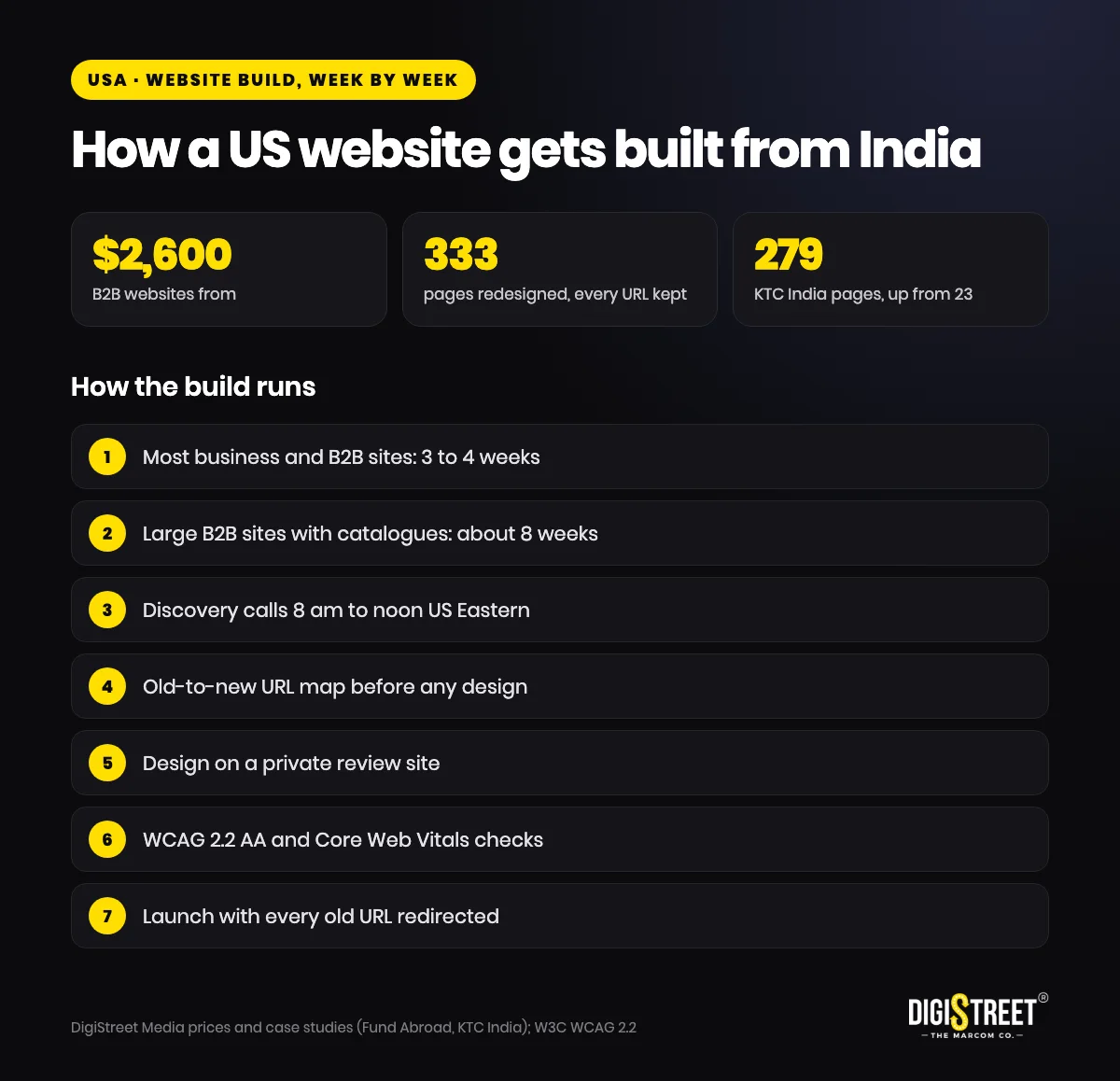
Phases overlap, so the weeks below are ranges. The order does not change: content and URLs come before design, design before build, and nothing launches until the redirect map is tested. This is the table we share on the first call.
| Phase | Business or B2B site | Large B2B site | What you do in the US | What you get |
|---|---|---|---|---|
| Discovery, crawl, sitemap and URL map | Week 1 | Weeks 1 to 2 | Two calls of about an hour, analytics and Search Console access, approve the sitemap | Scope, sitemap and a spreadsheet of old to new URLs |
| Design on a private review site | Weeks 1 to 2 | Weeks 2 to 4 | Comment directly on the pages | Approved designs for every template |
| Build, content entry, forms, tracking | Weeks 2 to 3 | Weeks 3 to 7 | Review pages as they are finished, sign off copy | A working site on the review link |
| WCAG 2.2 AA, Core Web Vitals and privacy checks | Weeks 3 to 4 | Weeks 6 to 8 | Test the forms, check the legal pages with your counsel | Test report and fix list closed |
| Launch with redirects, then handover | Week 4 | Week 8 | Approve the launch date, one handover call | Live site, every old URL redirected, logins and files |
For comparison, Clutch’s 2026 pricing guide for web design companies lists a typical project length of seven months [1]. Ours is shorter mostly because the overnight gap works in your favour: what you approve at noon Eastern is built while you sleep.
Discovery calls in your morning
We take US calls between 8 am and noon Eastern on weekdays. The team on the call is the team that builds the site. West Coast clients usually pick 11 am Eastern so it is not a dawn call for them.
The first call is about the business, not the website. Who buys from you, what they ask your sales team before they request a quote, which products bring margin, which pages your sales reps send to prospects. The second call goes through your current site page by page with your analytics open.
Before that second call we crawl the old site and pull a year of Search Console data. The pages that bring clicks are flagged in the URL map from day one. On a redesign, those are the pages you cannot afford to lose, and we would rather know about them on the first call than on launch day.
For Jindal Tubular USA, discovery meant learning how pipeline buyers search for large-diameter HSAW spiral welded pipe (24 to 60 inch outside diameter) and what an engineer needs on a product page before calling sales. For Tube Technologies, it meant sitting with how drillers order: by rig, by thread, by rod size. That second conversation turned into the most useful feature on their new site.
Sitemap, URL map and content plan
The sitemap is the list of pages the new site will have. The URL map is a spreadsheet with every old URL in one column and its new home in the next. Both get approved before any design starts.
Plenty of offshore web design companies leave the URL map until launch week. That is where rankings get lost. Google’s own guidance on site moves says to map each old URL to its new equivalent and to use permanent server-side redirects such as 301 [2]. We build that map first because it shapes the sitemap: if an old page has 400 clicks a year, it needs a real new home, not a redirect to the homepage.
The content plan says who writes what. We write service and product pages from your sheets and calls. You or your engineers check the technical facts. If you have a US copywriter, we work around them.
Design on a private review site
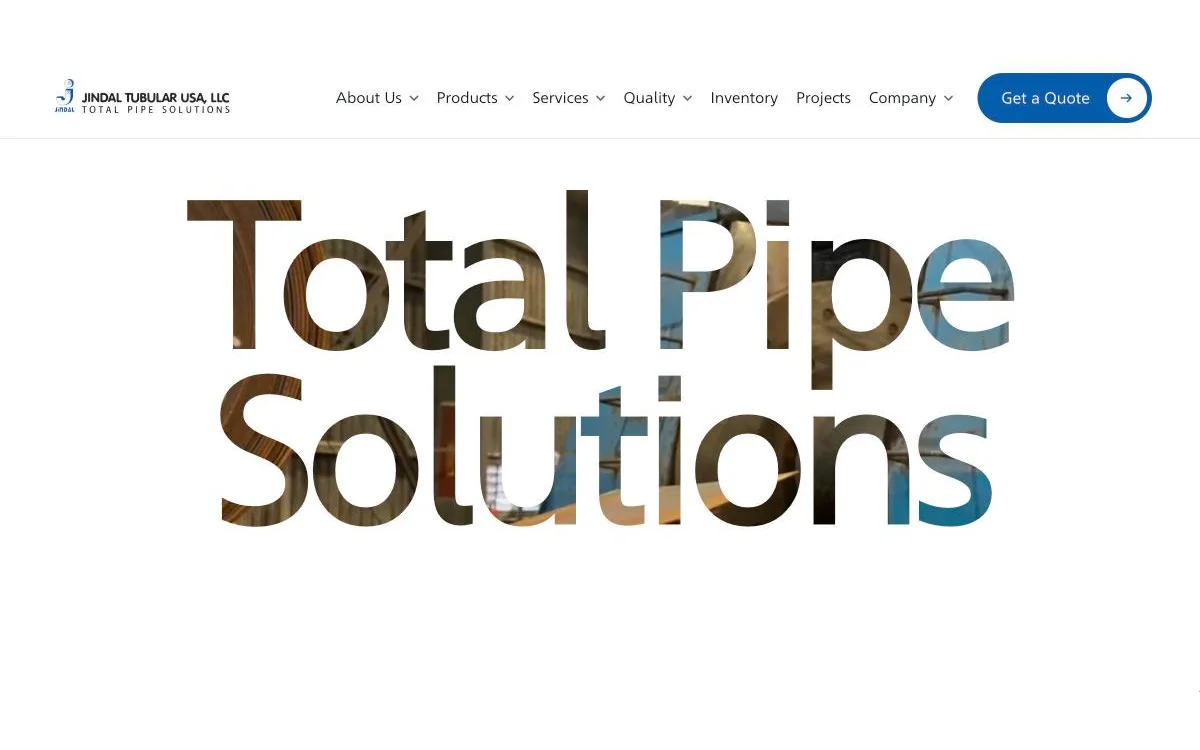
We design straight in the browser on a private, password-protected review site. You see real pages on your phone and laptop, not flat images that look different once built. It is not indexed and it is not linked anywhere.
We design the homepage first, then the templates that repeat: product, category, industry, case study, contact. A 40-page site usually needs six to eight templates, not 40 designs. You comment on the page itself and we fix overnight.
For US manufacturers we put the quote request in reach on every product page and show certifications and standards near the top, because that is what a procurement team checks first.
The build
Build is where the time zone helps most. You review a batch of pages in your afternoon, leave comments, and the fixes are waiting the next morning. We send a short written update at the end of each Indian day so nobody has to ask where things stand.
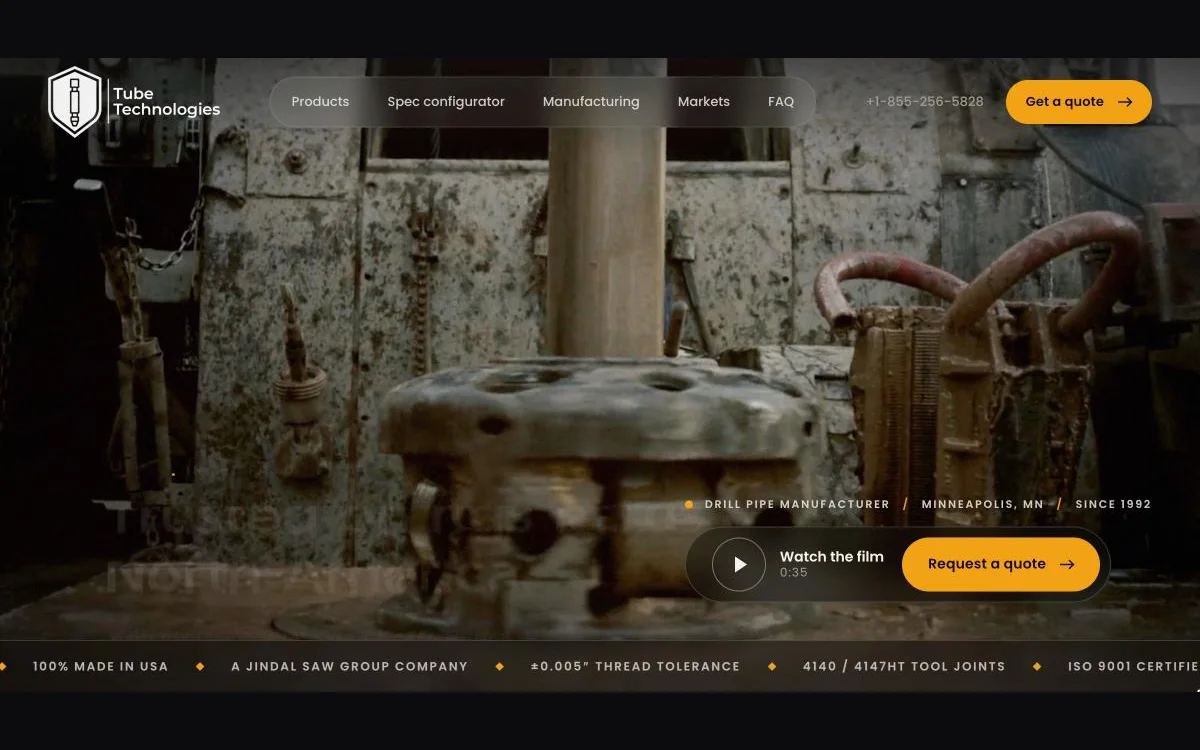
This is also when the custom pieces get built. Tube Technologies has made drill rods, mining rods, subs, casings, stabilizers and augers in Minneapolis since 1992, as part of the Jindal Saw Group, with ISO 9001 certification and NGWA membership [3]. Their buyers run water well, mining, construction, geothermal and sonic rigs, and each wants a different spec. So the new site we are building includes a spec configurator where a driller picks the rig type and gets the matching products, instead of reading a 60-page catalogue.
Forms, tracking and CRM connections go in during the build, not after launch. Every form is tested end to end into your inbox or CRM before we call the build finished.
Accessibility checks against WCAG 2.2
We build and test to WCAG 2.2 level AA. WCAG 2.2 became a W3C Recommendation on 12 December 2024 and adds nine success criteria to 2.1, including minimum target sizes for buttons and links, focus that is not hidden behind sticky headers, and accessible authentication [4].
The US Department of Justice says the ADA’s requirements apply to all the goods and services businesses open to the public offer, including those offered on the web, and points to WCAG as a helpful standard [5]. For a manufacturer selling to other businesses the exposure is lower than for a retailer, but an accessible site is also a faster, cleaner site, so we do it on every build.
The checks are part automated, part manual: keyboard-only use of every template, screen reader passes on forms and menus, colour contrast on every text block, alt text on every product image, captions on video.
Speed checks against Core Web Vitals
Google’s Core Web Vitals give three targets: Largest Contentful Paint within 2.5 seconds, Interaction to Next Paint under 200 milliseconds, and Cumulative Layout Shift below 0.1 [6]. We test the key templates on a mobile profile before launch and fix what fails, usually image sizes, font loading and third-party scripts.
US privacy basics on forms and tracking
We set up the privacy basics a US company expects, then your counsel signs off on the wording. California’s Attorney General summarises the CCPA thresholds: it covers for-profit businesses doing business in California with more than $25 million in annual gross revenue, or that buy, sell or share personal information of 100,000 or more California residents or households, or earn half their revenue from selling it [7].
The same page says covered businesses must give notice at collection, offer a “Do Not Sell or Share My Personal Information” link if they sell or share data, and honour the Global Privacy Control browser signal as an opt-out [7]. In practice that means we configure the cookie and tag settings so ad tags respect GPC, put a short notice on every form, and leave room in the footer for the links your lawyer decides you need.
Launch with every old URL redirected
Launch day is boring if the URL map was done first. We load the redirects, test every old URL against the map, submit the new XML sitemap in Search Console and watch crawl errors for the first days.
Google advises keeping redirects for as long as possible, generally at least a year [2]. We leave them in permanently.
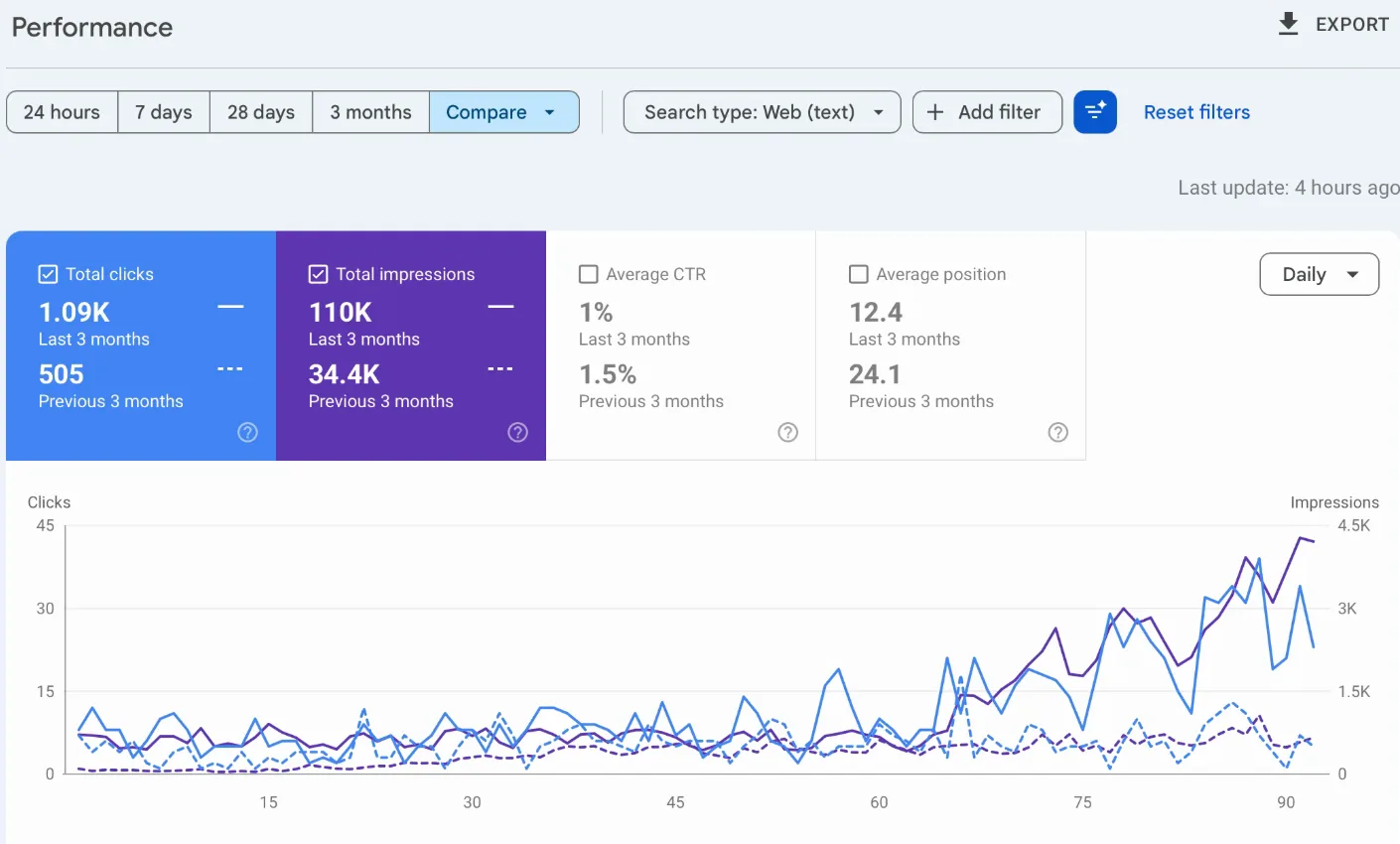
This is the step we are most careful with because we have seen what it protects. When we redesigned Fund Abroad’s 333-page site with every URL kept, Google clicks rose from 249 to 625 and impressions from 18,005 to 74,757 in the four weeks after the new site went live on 22 October 2026 (Fund Abroad SEO case study).
Growth projects need the same discipline. The KTC India car rental site went from 23 to 279 pages, and every one of the original 23 URLs still resolves. For G Kumar Electro we built a B2B ecommerce store for 10,000+ products, where the URL rules for categories and products had to be fixed before a single product was loaded.
Handover, and what you own
You own everything. The domain stays in your name, hosting is in your account or transferred to it, and the admin login with full rights is yours. We stay on as a user until you say otherwise.
The handover pack has the source files, design files, the URL map, a list of every plugin and licence with who pays for it, and a recorded walkthrough of how to edit pages, add products and read the forms.
US author Stan Popovich’s site, bookbystanley.com, was handed over this way. He edits his own pages now.
What a website from India costs a US company
Clutch’s 2026 guide puts the average web design project at $38,105 and shortlisted firms at about $100 to $149 an hour, and lists $100 to $149 for the United States [1]. That average covers firms in every country Clutch lists, so treat it as a reference point, not a US-only figure. Our project prices are below. Prices for international clients are in US dollars, with no GST.
| Project | Our price | Typical scope | Clutch reference (2026) |
|---|---|---|---|
| Business website | From $1,450 | Up to about 15 pages, one contact form | Average project $38,105; US firms about $100 to $149 an hour |
| B2B website | From $2,600 | Product and industry templates, quote forms, URL map | |
| Corporate website | From $3,300 | Larger page count, several divisions or locations | |
| Ecommerce website | From $3,700 | Catalogue, cart, payment and shipping setup | |
| Hosting and maintenance | From $300 a month | Hosting, updates, backups, small edits | Not listed |
Custom features such as a spec configurator, a dealer locator or a CRM connection are quoted on top once we have seen the requirement. The web design page for US companies has the full detail, and our manufacturer website design page covers industrial builds.
How to hire web developers in India without losing control of the project
If you are choosing between agencies, our post on hiring a digital marketing agency in India from the USA covers pricing and contract checks. For a website build specifically, settle these five things before you sign:
- Ask to see the URL map from a past redesign. If they do not make one, your rankings are at risk on launch day.
- Agree on the review method. A private review site you can click through beats PDFs of mockups every time.
- Get the call window in writing. Ours is 8 am to noon Eastern, weekdays.
- Name the accessibility level in the contract. WCAG 2.2 AA is the sensible default.
- List what you will own at handover. Domain, hosting, admin login, source and design files.
Our US agency page lists the rest of what we do for US companies, including SEO once a site is live.
Frequently Asked Questions
How long does it take to build a website for a US company from India?
Three to four weeks for most business and B2B sites, and about eight weeks for a large B2B site with a catalogue, a configurator or many product pages.
How much does it cost to outsource website development to India?
Our websites start at $1,450, B2B websites at $2,600, corporate sites at $3,300 and ecommerce at $3,700, in US dollars with no GST; hosting and maintenance start at $300 a month.
What hours does an Indian web design company work with US clients?
We take US calls from 8 am to noon Eastern on weekdays, and work you approve by noon is usually built by your next morning.
Will an offshore web design company make my site ADA compliant?
Yes, we build and test every site to WCAG 2.2 level AA, the standard the US Department of Justice points to as a helpful reference for web accessibility.
Will I lose my Google rankings when my website is rebuilt?
No, not if every old URL is mapped and redirected with a 301 at launch, which is how we kept every URL on Fund Abroad’s 333-page redesign.
Do I own the website code, domain and hosting?
Yes, the domain, hosting account, admin login, source files and design files are all yours, and we hand them over at launch.
If you want us to look at your current site and send back a page list, URL map and quote, email info@digistreetmedia.com or get a quote from this page.
References
- Web Design Company Pricing Guide 2026, Clutch, updated 21 September 2026.
- How to move a site (site moves with URL changes), Google Search Central, accessed 27 November 2026.
- Tube Technologies Inc, company website, Tube Technologies Inc, accessed 27 November 2026.
- Web Content Accessibility Guidelines (WCAG) 2.2, W3C Recommendation, 12 December 2024.
- Guidance on Web Accessibility and the ADA, U.S. Department of Justice, Civil Rights Division, 18 March 2022.
- Understanding Core Web Vitals and Google search results, Google Search Central, accessed 27 November 2026.
- California Consumer Privacy Act (CCPA), State of California Department of Justice, Office of the Attorney General, updated 28 August 2026.