

Updated 19 October 2026.
DigiStreet field guide
UGC Ad Brief Template
A usable UGC brief names one buyer, one claim, the proof on camera and the action after the video. Everything else should help the creator shoot those four things.
DigiStreet’s published UGC packs cost ₹75,000 plus GST for 5 videos, ₹90,000 for 10 and ₹1,60,000 for 20. That works out to ₹15,000, ₹9,000 and ₹8,000 per video. The price moves because a larger pack can share casting, planning, production and review across more usable outputs.
The brief decides whether those outputs are genuinely different. Ten scripts that swap only the opening sentence do not create ten useful tests. Vary the objection, proof, format, visual action or audience while keeping the product claim accurate.
Copy the fields below into your working document. Fill them with plain language. If a creator needs a meeting to decode the promise, the brief is not ready.
Use this guide as a working document: keep the URL, date, owner and source beside every decision.
The working view
| Brief field | Write this | Avoid this |
|---|---|---|
| Buyer | One recognisable person and moment | Everyone aged 18–45 |
| Claim | Exact benefit the product can support | Best, perfect or viral |
| Proof | Action, demonstration or detail on camera | A claim with no visual |
| Format | Length, aspect ratio, platform and safe zones | “Make a reel” |
| Rights | Channels, term, geography and paid use | Usage to be discussed later |
The fields that belong in the brief
Name the buyer and the moment
Write one person the creator can picture and the situation that makes the product relevant. “A renter cleaning a small kitchen after work” gives the scene a shape. A broad demographic label does not tell the performer what should happen on camera.
Choose one job for the video
Decide whether the asset introduces the problem, demonstrates the product, answers an objection, compares an option or asks for a sale. One short film can touch other points, but its main job should determine the opening and final action.
Write the claim exactly
Use the approved wording from the pack, product page or legal review. Add the qualifier beside it. Do not ask a creator to improvise performance, health or financial claims. A natural delivery still begins with a sentence the brand can support.
Turn proof into a shot
“Show texture after application” is shootable. “Make it feel premium” is not. List the hand movement, close-up, screen recording, before state or product detail that supports the line. Let the visual carry part of the explanation.
Give the hook a visual action
A hook is stronger when the first frame changes, reveals or demonstrates something. Write the first spoken line and the first action separately. That helps the editor test alternative openings without rebuilding the whole middle.
Specify the frame and safe area
State vertical or square, exact duration range, delivery resolution, captions and where platform controls cover the screen. Ask for clean masters when paid placements need several crops. Product labels and subtitles must remain readable on a phone.
List must-have shots sparingly
Keep the mandatory list to what proves the product and protects the brand. A brief with twenty required shots forces the performer into a rigid sequence. Put optional b-roll in a separate list so the shoot can breathe.
Define variants before the shoot
Name which hooks, calls to action, objections or demonstrations need alternates. Capturing them in the same setup is cheaper than calling the creator back. Give each variation an ID so media reports can trace the asset.
Set review and reshoot rules
Name the approver, review round, response window and what counts as a reshoot. A missed line, technical fault and change of brand opinion are different events. Clear rules protect the creator and keep the campaign moving.
Write usage rights as a media plan
State organic channels, paid advertising, geography, term, edits, whitelisting and raw-footage use. The creator fee and production pack do not automatically answer every rights question. Put the agreed scope in the contract before publishing.
A filled brief should survive handover
Give every asset a simple code that connects the audience, concept, hook and version. The file name, script row and media report should use the same code. This stops “video three” meaning different things to the brand manager, editor and buyer after several rounds.
Attach only references that explain a choice. Label what to notice: pace, framing, demonstration, caption treatment or tone. An unlabelled mood board can pull the creator in several directions. References are inputs, not permission to copy another person’s words or performance.
Add a product truth sheet behind the brief. Include approved names, pack details, pronunciations, claims, warnings and visual restrictions. Keep it separate from the spoken script so the creator can find a fact without reading every scene. Date the sheet when products change often.
Plan the review on a phone as well as a laptop. Check the opening frame without sound, subtitle size, product readability, safe areas and the final action. A technically correct master can still fail when platform controls cover the line or the product appears too small in the first seconds.
After launch, report by asset code and hypothesis. Record spend, hook hold, useful engagement and the business event chosen for the campaign. The production brief should become the index for what was tested, rather than disappearing once the files are delivered.
Briefing mistakes, vendor questions and a worked split of ten videos
How should ten videos be divided?
For example, a kitchenware brand buys the 10-video pack at 90,000 plus GST. It chooses two objections that stop people buying: the pan looks heavy, and the coating may peel. Each objection gets five different openings and one shared demonstration. That gives ten videos that are genuinely comparable, with two questions answered five ways. At 9,000 a video, the brand learns which objection matters and which opening carries it. Ten videos that repeat one script with a new first line teach nothing. Write the two objections at the top of the brief so the editor can label every cut against one of them.
What does a weak brief look like when it arrives?
It leans on adjectives such as premium, relatable and fun, which a creator cannot film. It carries three claims when the video can hold one. It names the brand in the first line, so the viewer scrolls past before the problem appears. It also leaves out the final action, so every creator ends differently. If you can delete half the sentences and the shoot would not change, the brief was padded. Replace each adjective with something a camera can see. For example: a hand lifting the pan, a fingernail scraping the surface, a plate sliding off without residue.
What should you ask a UGC vendor before paying?
Ask how many hooks are filmed per video concept and who owns the raw footage. Ask what happens if the product arrives damaged and whether a second take of a line is included. Ask for sample files in the aspect ratio you will run, and for the file naming convention. Ask who casts the creator and whether you can see two or three candidates first. Written answers to these seven or eight questions will tell you more about a vendor than a showreel, and they make later disagreements about scope much shorter.
When is five enough and when is twenty better?
Choose five at 75,000 when you need to prove one claim to one audience. The per-video price of 15,000 is higher, but the spend is small and the answer is clear. Choose ten at 90,000 when you have two audiences or two objections. Choose twenty at 1,60,000 when ads are already running and the same clips are wearing out. The 8,000 per video rate only makes sense if you will actually use all twenty in media. If you would run only eight, the ten-video pack at 9,000 a video is the better buy.
How do you brief a creator who has never sold anything?
Skip the marketing language. Tell them who they are talking to as if it were a friend, what the product fixed for you, and the one thing the viewer must see. Give three sentences and one reference clip. Ask for a first take on their phone before the proper shoot. A rough take shows quickly whether the creator has understood the idea, and it costs a few minutes rather than a shoot day. Then give one note, not five, and let the creator reshoot with that single correction in mind.
Evidence from DigiStreet work
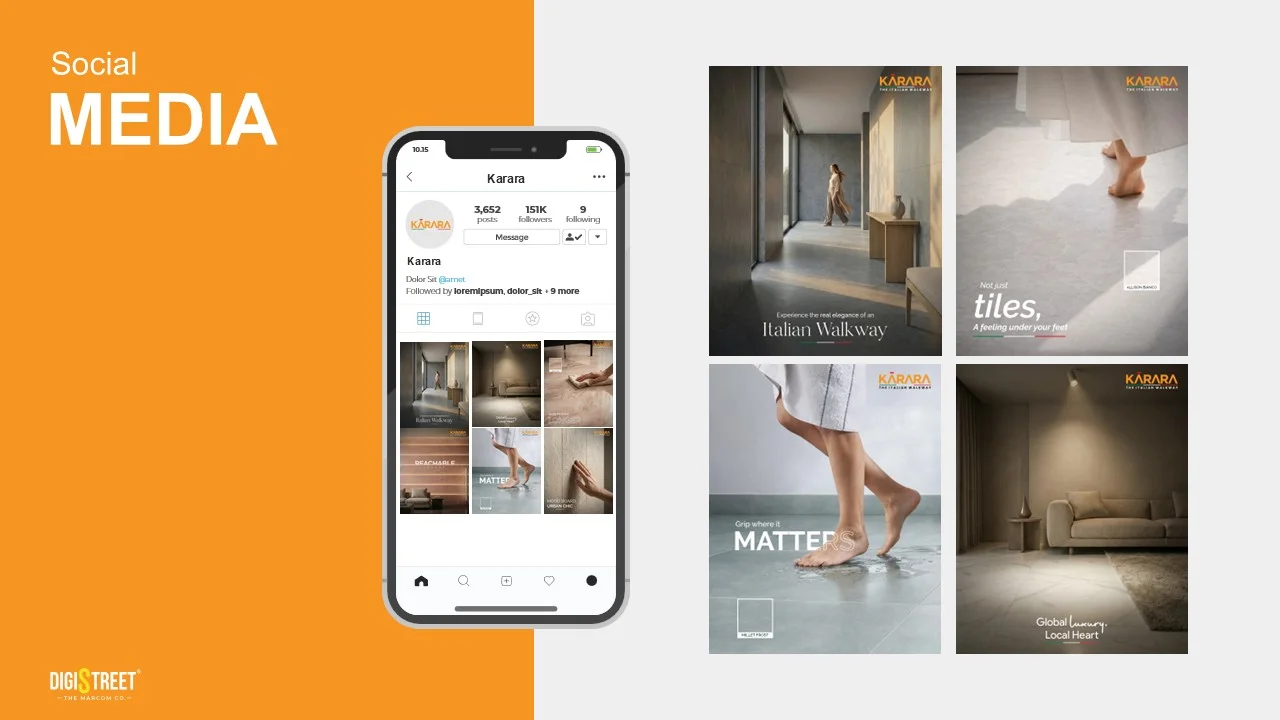
The Karara Ceramics work shows why the object and setting need to be planned together. A UGC brief should be just as concrete: what appears in frame, what the viewer learns from it, and which product truth the shot supports.
Before sending the brief, read only the spoken lines aloud and view only the shot list. Each should make sense on its own. Then check that they meet in the same order.
Questions people ask before using this guide
How long should a UGC brief be?
Keep the main brief to two or three pages, then attach product facts and references separately.
What does five UGC videos cost?
DigiStreet’s 5-video pack is ₹75,000 plus GST, or ₹15,000 per video.
What does ten UGC videos cost?
The 10-video pack is ₹90,000 plus GST, or ₹9,000 per video.
What does twenty UGC videos cost?
The 20-video pack is ₹1,60,000 plus GST, or ₹8,000 per video.
Should the creator write the script?
The creator can adapt delivery, but the brand should approve the claim, proof, required lines and rights.
Do usage rights belong in the brief?
Yes. State channels, paid use, term, geography, edits, whitelisting and raw-footage rights.
Put the next decision on one page
Bring the URL, the evidence you already have and the business action that matters. We will tell you what should be checked first.