





A drilling contractor needs a new supplier of high-pressure valves before the next project phase. The procurement lead does not start with a phone call. She opens a browser, searches for the valve type, pressure rating and “Houston,” and builds a shortlist of five or six companies from what she finds.
If your company is not in that first search, it rarely makes the shortlist. That is why B2B SEO for oil and gas suppliers in Houston has become part of winning business, not just a marketing extra. The buyers are technical, the deals are large and the search is precise. Suppliers who show up with clear, credible answers get the call.
DigiStreet builds that kind of visibility for industrial and B2B brands. Here is how the work comes together for suppliers in the energy capital of the world.
Why B2B SEO for oil and gas suppliers in Houston matters
Houston hosts a huge concentration of energy companies, from operators and EPC contractors to thousands of equipment makers, fabricators and service firms. Much of that activity clusters around the Energy Corridor in west Houston, the Ship Channel and the Port of Houston, and it stretches along the Gulf Coast.
That density cuts both ways. Buyers have plenty of choice, and they need a fast way to narrow it down. Search has become that filter. Engineers look up specifications, compare suppliers and download datasheets long before they speak to a sales rep.
Relationships and trade shows still matter. Many Houston deals start at the Offshore Technology Conference, held in the city each year. But even a warm introduction usually ends with the buyer checking your website. If that site is thin, slow or vague, you lose ground before the first meeting.
Pages built the way engineers search
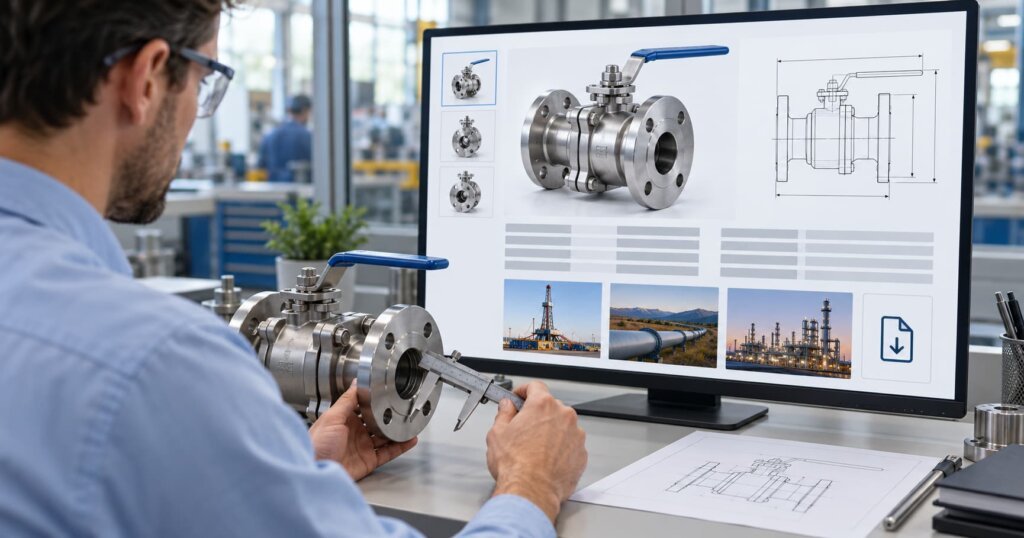
Oil and gas buyers do not search for “best valve company.” They search for exact things: a product type, a size, a pressure class, a material, an application or a standard.
That means your website needs pages that match those searches. A single “Products” page with a list of names and a contact form will not rank, and it will not convince an engineer.
Strong supplier sites usually include:
- Product line pages for each major category, with clear technical descriptions.
- Specification detail written as text: sizes, pressure ratings, temperature ranges, materials and end connections.
- Application pages that explain where each product fits, such as upstream drilling, midstream pipelines, or downstream refining and petrochemicals.
- Downloadable datasheets alongside on-page text, so search engines can read the key facts too.
DigiStreet has written about this approach in its piece on SEO for manufacturers and specification pages. The principle carries straight over to energy suppliers: detailed, specific pages beat brochure-style websites for both rankings and enquiries.
A technical foundation for heavy product catalogues
Industrial websites often carry hundreds of products, thousands of PDFs and years of old pages. Without care, that weight drags down search performance.
A solid technical base covers a few essentials. Pages should load quickly, even on a phone at a rig site or in a plant. Each product should have one clear URL, not three near-identical versions. Old product pages need proper redirects when lines are discontinued, so their search value is not lost. Filters and search tools on catalogue pages should not create endless duplicate URLs that confuse search engines.
Structured data also helps. Product and organisation markup tells search engines exactly what you make and who you are, which supports both traditional rankings and AI-assisted results.
DigiStreet runs detailed technical audits for large B2B sites and fixes these issues in a planned order, starting with the pages that matter most to your sales team.
Proof that earns a place on the shortlist
In oil and gas, trust decides who gets shortlisted. A procurement team will not risk a critical component on a supplier it cannot verify.
Your site should make proof easy to find:
Certifications and quality systems. Industry certifications, quality management standards and testing capabilities belong on clear, dedicated pages, not buried in a footer.
Project references. Short case studies describing the challenge, the solution and the result, even without naming the client, show real-world experience.
Manufacturing and service capability. Facility details, machining capacity, inspection equipment, lead times and field service coverage all help a buyer judge fit.
Safety record. In this industry, safety is part of a supplier’s reputation. If you publish safety performance, make it visible.
These pages also support search. They answer questions buyers type, they earn links from partners and associations, and they give search engines strong signals about what your company does.
Location signals for Houston and the Gulf Coast

Many buyers want suppliers who can deliver fast, respond on site and support equipment locally. Location still matters, even in a global industry.
Local search visibility for industrial suppliers includes:
- A verified business profile for each facility, warehouse or service base.
- Consistent company name, address and phone details across your site and industry directories.
- Service area pages for the regions you cover, such as the Houston area, the wider Gulf Coast or specific basins.
- Mentions of nearby landmarks and hubs where they add useful context for buyers.
DigiStreet’s B2B SEO services bring these technical and local signals together, so a buyer searching for a product “near Houston” finds a supplier who clearly serves that area.
Content that answers technical questions
Engineers research before they buy. They want to understand materials, compare options and avoid failures in the field. Content that answers those questions builds authority and draws in early-stage buyers.
Good topics for energy suppliers include:
- How to choose between material grades for sour service or high-temperature applications
- Maintenance intervals and inspection checklists for specific equipment
- Differences between product designs for particular well or pipeline conditions
- What to include in a request for quotation for a specific component
This kind of content works best when your own engineers help shape it. Their knowledge makes articles accurate and useful, which is exactly what buyers and search engines reward.
It also feeds AI-assisted search. Buyers increasingly ask AI tools to explain technical options or suggest suppliers. Clear, well-structured technical content improves the chance that your expertise gets picked up in those answers.
Industry links and mentions
Search engines judge authority partly by who links to you. In oil and gas, the most valuable links come from within the industry itself.
Natural link sources include trade associations, industry directories, distributor and partner websites, trade publications, conference exhibitor pages and technical papers your engineers present. A strong presence around events such as OTC, with a proper exhibitor listing and follow-up content, often creates useful links alongside new contacts.
DigiStreet focuses on relevant, industry-specific links rather than volume. A handful of respected sources does more for an energy supplier than hundreds of unrelated directory listings.
Measuring pipeline, not just traffic
Traffic alone means little in B2B. A thousand visits from students researching drilling does not help your sales team. What matters is whether the right people find you and take action.
Useful measures include:
- Rankings and visibility for product and application terms that buyers actually use
- Datasheet downloads and RFQ form submissions
- Enquiries by region, product line and company type
- Organic leads that move into your CRM and sales pipeline
DigiStreet sets up tracking so these numbers connect to real business outcomes. Its B2B digital marketing playbook explains how the team links search visibility to qualified leads for industrial brands, including one cable manufacturer whose website draws about 97% of its traffic from organic search.
Why energy suppliers choose DigiStreet

When your buyers are engineers, generic marketing does not work. You need a team that understands specification pages, technical content, industrial buyers and long sales cycles.
DigiStreet has spent more than a decade building search visibility for manufacturers, industrial brands and B2B companies across India and international markets. The team knows how to turn technical detail into pages that rank, and how to connect those rankings to real enquiries. Many US companies already work with Indian agencies for this mix of skill and value, a trend DigiStreet explores in its piece on why American companies outsource digital marketing to India.
If you want engineers and procurement teams in Houston to find your products first, DigiStreet is the partner to call. Talk to the team about your product lines, target buyers and regions, and get a clear plan for building search visibility that feeds your sales pipeline.
Explore more from DigiStreet
- Planning a US budget? See what marketing agency cost in the USA looks like before comparing proposals.
- Curious how SEO attracts global buyers? Read how DigiStreet’s SEO strategy attracted a global B2B lead.
- New to a technical term? The DigiStreet glossary explains B2B SEO, schema, lead scoring and more in plain language.
FAQs
What is B2B SEO for oil and gas suppliers?
It is search optimisation focused on helping engineers and procurement teams find a supplier’s products and services when they search for specific equipment, specifications or applications.
How long does SEO take for industrial suppliers?
Technical fixes and new product pages can show early movement within a few months, while strong rankings for competitive industrial terms usually build over six to twelve months.
Which pages matter most for oil and gas supplier SEO?
Product line pages with detailed specifications, application pages, certification and quality pages, and project case studies usually matter most.
Does local SEO matter for oil and gas suppliers in Houston?
Yes. Many buyers want suppliers who can deliver quickly and support equipment locally, so accurate business profiles and service area pages help.
Can technical blog content bring in qualified leads?
Yes. Articles that answer engineering questions attract buyers during research and build trust before they request a quote.
How do you measure SEO results for B2B suppliers?
Track rankings for buyer search terms, datasheet downloads, RFQ submissions and organic leads that enter your sales pipeline.
Can an agency in India handle SEO for a Houston supplier?
Yes. Many US companies work with Indian agencies for technical SEO and content, as long as the team understands the industry and the local market.