

Picture a skincare brand with one new serum and one week to launch. It needs ads for three audiences, in four languages, with ten different opening lines to test. A few years ago, that meant ten shoots. Today, a team can build most of it with AI in an afternoon.
That speed is why AI UGC ads now show up in almost every performance marketing conversation. It is also why so many of them feel slightly off. The same tools that let a brand test forty hooks in a day can also produce a smiling “customer” who never existed, praising a product she never tried.
Both outcomes are possible. The difference lies in how you use the tools, not whether you use them.
One ad, made four ways
To see where the line sits, take that serum ad and imagine it produced four different ways.
Version one: a real creator. A real person with real skin uses the serum for two weeks and films her honest take on her phone. The lighting is imperfect. She stumbles over one word. Viewers believe her, because she is clearly a person with an opinion.
Version two: real creator, AI-assisted. The same creator films once. The team then uses AI tools to clean up audio, add captions, cut ten shorter edits, translate the voice-over into Hindi and Tamil and test different first three seconds. The person and the opinion stay real. The editing gets faster.
Version three: brand-generated creator-style content. The brand hires talent to film a scripted, creator-style video in a studio or at home. Many teams call this BGC. It looks like UGC but follows a brand brief. No AI needs to be involved, and it gives the brand more control over claims and quality.
Version four: fully synthetic. An AI avatar with a synthetic voice delivers a script about the serum. No real person used the product. The face, the voice and the “experience” are all generated.
These four versions carry very different levels of risk. Most of the confusion around AI generated UGC comes from treating them as one thing.
Where AI genuinely earns its place
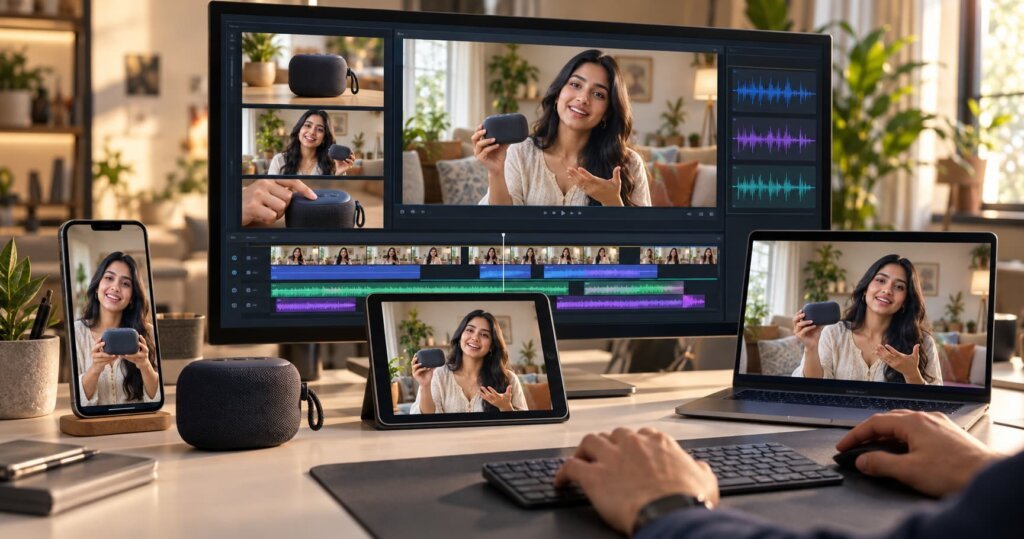
AI helps most when it speeds up the work around a real message, rather than replacing the message itself.
Testing hooks at scale. The first few seconds of a short video decide whether anyone keeps watching. AI tools let teams produce many opening variations from one core video and test them quickly. The winning hook then gets a real budget.
Localisation. India alone has audiences who respond better in Hindi, Tamil, Telugu, Bengali, Marathi and more. AI dubbing, subtitles and voice matching help one strong creator video reach many language audiences without reshooting everything. The same logic works for brands entering the Gulf, Europe or Southeast Asia.
Formatting and resizing. Turning one video into vertical, square and landscape cuts, with captions and product callouts, is slow manual work. AI handles much of it well.
Concept testing before a shoot. Some teams use synthetic videos internally to test which angle or script resonates, then hire real creators to film the winner. The AI version never runs publicly as a testimonial. It simply saves money on scripts that would have flopped.
Explainers and product walkthroughs. For how-to content, such as setting up a device or using an app, a clearly AI-presented guide can work fine. Nobody expects a personal story there. They want clear steps.
In each of these cases, AI ad variants support a real product truth. They do not invent one.
Where it starts costing you trust
Problems begin when AI replaces the one thing that makes UGC work: a believable human experience.
Fake testimonials. An AI avatar saying “this serum cleared my skin in a week” is not a review. It is a made-up claim wearing a human face. If viewers find out, and many now look for signs, the damage spreads beyond that one ad to the brand itself. In many markets, fake endorsements may also create legal exposure, so check with your legal team before running any testimonial-style content.
The uncanny moment. Synthetic creator videos have improved, but viewers still notice odd blinking, lips that drift from the audio, hands that behave strangely or a voice that sounds too smooth. Once someone notices, they stop listening to the message and start inspecting the video.
Categories where trust is everything. Skincare results, health and wellness, finance, education and anything aimed at children need real experience and careful claims. A synthetic “customer” in these categories risks both credibility and compliance trouble.
Comment sections. Real creator content often builds a conversation below the post. Synthetic content can attract the opposite: viewers calling it fake, which then becomes the conversation.
Using real people without consent. Cloning a creator’s face or voice, or making them “say” lines they never said, crosses into deepfake territory. It can break contracts and trust in one move.
Disclosure and rights: the quiet essentials

Rules around AI content keep changing, and they differ by platform and by country. Most major social and video platforms now ask creators and advertisers to label realistic content made or heavily altered with AI, and some apply labels automatically. Check each platform’s current advertising and content guidelines before launch, because they update often.
A few habits keep brands on safe ground:
- Label realistic AI-made people and voices clearly, even where a rule does not yet demand it.
- Never present a synthetic person as a real customer.
- Get written consent before using any real person’s likeness or voice in AI-edited work, and spell out usage rights, duration and territories in the contract.
- Keep claims honest. AI does not change what you can truthfully say about a product.
- Ask your legal advisers to review testimonial-style and regulated-category ads.
Disclosure rarely hurts a good ad. Getting caught without it can hurt a brand for much longer.
Deciding when AI UGC ads make sense
When your team debates whether to use AI for a creator-style ad, this split helps:
| Lean on AI for | Keep real creators for |
| Hook and opening-line testing | Testimonials and “my experience” stories |
| Translation, dubbing and subtitles | Before-and-after results |
| Resizing, captions and edit variations | Health, beauty, finance and child-focused categories |
| Internal concept tests before a shoot | Launch hero content that sets the brand tone |
| Clearly labelled explainers and walkthroughs | Community-building content where comments matter |
Then measure honestly. Do not assume AI UGC ads will convert better just because you can make more of them. Compare them against real creator content on cost per result, watch time, comments and, most importantly, what happens after the click. A cheap ad that brings in customers who return the product is not cheap.
What a hybrid workflow looks like in practice
Most brands that use AI well follow a similar rhythm, even if they never write it down.
It starts with a real creator’s shoot. One or two creators film honest, unscripted takes on the product, plus a few extra lines the team may want later, such as alternate openings and short product callouts. That raw footage becomes the foundation.
Next, the editing team uses AI to multiply that footage. They cut ten or fifteen short versions, test different hooks, add subtitles in several languages and resize everything for each placement. The creator’s face, voice and opinion stay untouched.
The ads then go live with small budgets. After a few days, the data shows which hooks, languages and edits hold attention and drive action. The team moves the budget to the winners and retires the rest.
Finally, the learnings feed the next brief. If a certain opening line keeps winning, the next creator shoot builds around it. Over time, the brand gets faster and smarter without ever putting a fake face in front of its customers.
How DigiStreet blends human and AI creative
DigiStreet’s approach starts with a simple rule: real people carry the trust, and AI helps the work move faster.
The team’s UGC video agency works with real creators to produce social-first videos for brands across categories. For brands that need more control over scripts and claims, DigiStreet’s brand video production service creates BGC and Reels, starting from ₹15,000 per video, as published on the service page. AI then supports editing, variations and localisation so strong creative reaches more audiences without a new shoot every time.
If you are still working out what UGC should cost your brand, DigiStreet’s guide to what UGC videos are and what they cost in India covers the basics. For brands exploring fully AI-produced films, the AI ad film cost guide explains where that format fits and what budgets look like.
Build a creative mix that people believe
AI can make your ad engine faster. It cannot make an audience trust a person who does not exist. The brands that win use both: real creators for credibility, and AI for speed, scale and testing.
If you want help planning that mix, talk to the DigiStreet team about your product, audiences and testing goals. You will get a clear view of where real creators should lead and where AI can save time and budget.
Reference Link Table
| Resource | Why It Is Relevant | URL |
| DigiStreet UGC Video Agency | DigiStreet’s creator-led UGC video service | https://digistreetmedia.com/services/ugc-video-agency/ |
| DigiStreet Brand Video Production | Published BGC and Reels pricing from ₹15,000 per video | https://digistreetmedia.com/services/brand-video-production-agency/ |
| UGC Video Production for Skincare Brands Entering the UK Market | A related DigiStreet guide on creator video for beauty brands | https://digistreetmedia.com/blog/ugc-video-production-for-skincare-brands-entering-the-uk-market/ |
| DigiStreet Media on Instagram | Examples of DigiStreet’s short-form video and social work | https://www.instagram.com/digistreetmedia/ |
FAQs
What are AI UGC ads?
They are creator-style ads made fully or partly with AI tools. They range from real creator videos edited with AI to fully synthetic videos with AI avatars and voices.
Do AI UGC ads convert better than real UGC?
Not automatically. AI helps brands test more variations faster, but results depend on the message, the audience and whether viewers find the content believable.
Is AI generated UGC safe for brands to use?
It can be, when used for editing, translation, variations and clearly labelled explainers. It becomes risky when a synthetic person presents a fake product experience or testimonial.
Do I need to label AI-generated ads?
Most major platforms now ask advertisers to label realistic AI-made or AI-altered content. Check each platform’s current guidelines before launch, since they change often.
What is the difference between UGC and BGC?
UGC comes from real users or creators sharing their own take. BGC is brand-generated, creator-style content filmed to a brand brief, which gives more control over claims and quality.
When should brands avoid synthetic creator videos?
Avoid them for testimonials, before-and-after results and sensitive categories such as health, beauty, finance and products for children, where real experience matters most.
How much does UGC video production cost in India?
Costs vary by creator, format and volume. DigiStreet publishes BGC and Reels pricing starting from ₹15,000 per video on its brand video production page.