


An Indian exporter translates their homepage into German, waits a few months, and wonders why nothing changed in their inquiry volume from Europe. This happens constantly, and the reason is simple. Multilingual SEO for the German market is a completely different discipline from translation, involving technical structure, genuine keyword research, and cultural nuance that a translation plugin never touches.
Germany’s Search Behavior Rewards Precision
German buyers tend to research more thoroughly before contacting a supplier or making a purchase than shoppers in many other markets, and this shows up directly in how they search. Where an English-speaking buyer might type a short, broad query, German searchers often favor longer, more specific phrases, reflecting a preference for finding exactly the right answer rather than browsing loosely through several options.
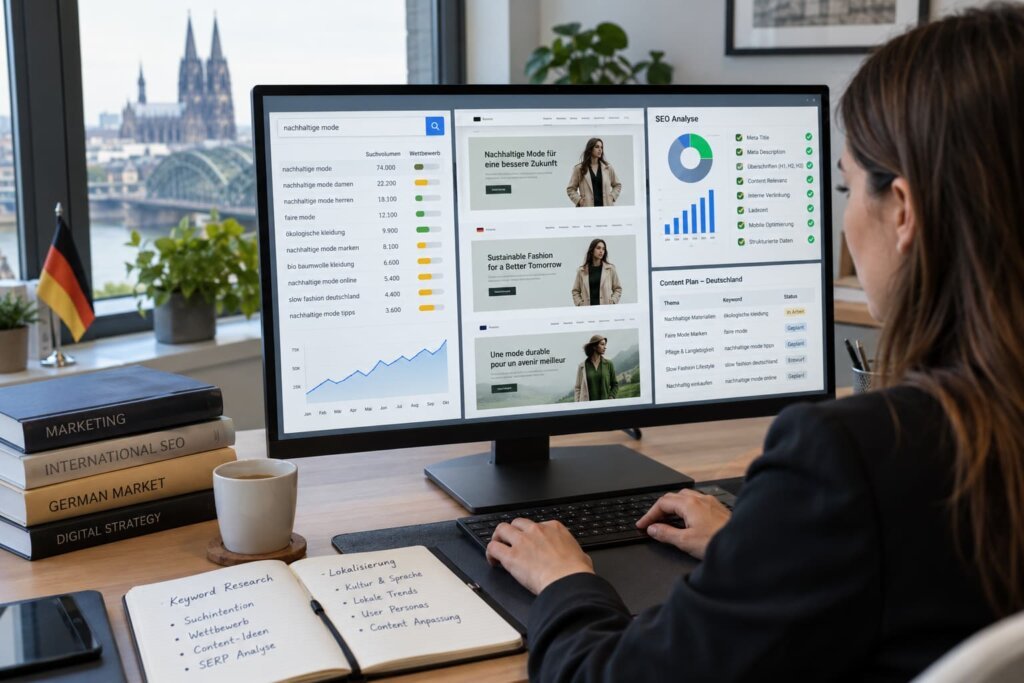
This has real consequences for keyword strategy. A brand that simply translates its English keyword list into German usually ends up targeting phrases actual German buyers rarely type, missing the more specific terms that carry genuine search demand. Effective keyword research for this market starts fresh in German, rather than working backward from an existing English list.
Why a German SEO Agency India Partnership Outperforms Pure Translation
A German SEO agency in India partnership brings something a standalone translation vendor cannot offer, an understanding of how German search engines and buyers actually behave, not just linguistic accuracy on the page. Translation makes the words correct. SEO strategy makes those words connect with real search demand and compete against established German and European players already occupying page one.
DigiStreet’s dedicated German practice reflects this distinction directly, treating the German market as its own project with independent keyword research, content planning, and technical setup, rather than a secondary layer bolted onto an existing English-first site. Brands can see this approach reflected in the German-language site, built specifically for this market instead of machine-translated from the English version.
Getting Hreflang Implementation Right From the Start
A hreflang implementation guide becomes essential the moment a brand runs multiple language versions of its site, since hreflang tags tell search engines which version to show which audience. Getting this wrong creates real problems, German visitors landing on the English page by mistake, or search engines treating both versions as competing duplicate content instead of complementary pages.
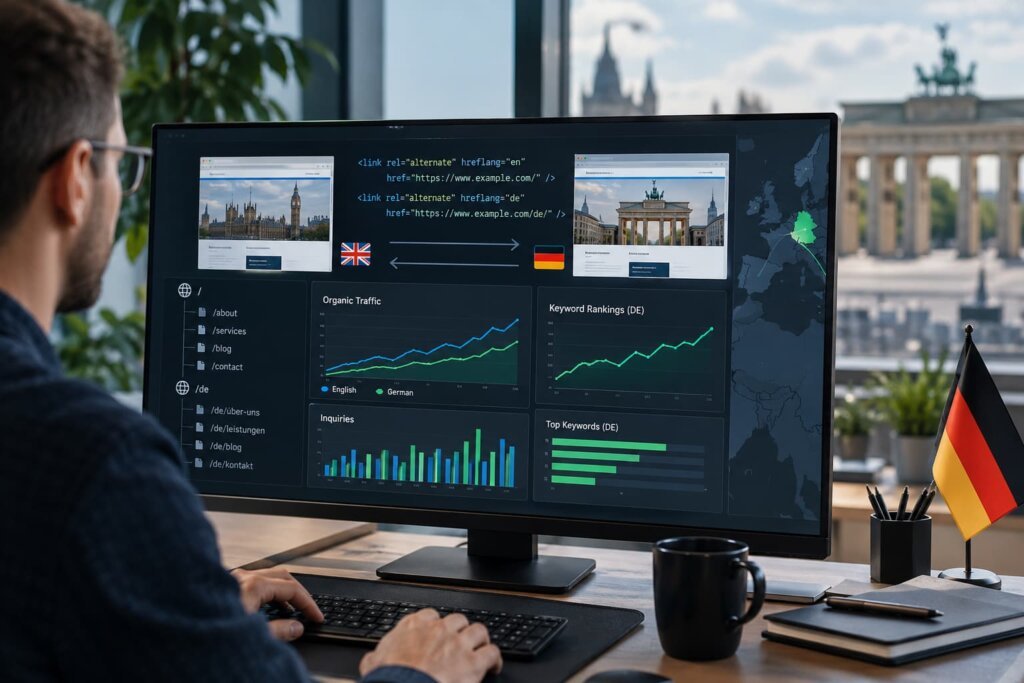
A few mistakes quietly undermine this setup more often than founders expect:
- Missing self-referencing tags, where a page fails to reference itself alongside its other language versions
- Inconsistent URL patterns between language versions that confuse crawlers
- Forgetting to update hreflang tags after content gets restructured or moved
- Treating hreflang as a one-time task rather than ongoing technical upkeep
Curious whether your current setup is even configured correctly? Speak with the team about auditing your existing hreflang and language structure.
International SEO for Exporters Carries a Trust Requirement Domestic Competitors Skip
International SEO for exporters targeting Germany specifically has to close a trust gap that local German competitors simply do not face. A German buyer evaluating an unfamiliar overseas supplier naturally looks for reassurance first, certifications, export track record, verifiable client references, before ever picking up the phone. Content that fails to address this early loses buyers who might otherwise have converted.
This means German-facing pages for exporters need a different structure than a general marketing page, one that front-loads credibility rather than assuming trust builds naturally over a longer site visit. Digistreet’s broader B2B Digital Marketing work with exporters informs this directly, since the same trust principles that matter to any international B2B buyer carry particular weight in the German market.
Multilingual SEO for the German Market Depends on the Right Technical Foundation
Multilingual SEO for the German market performs best once a brand makes a clear structural decision early, whether German content lives in a subdirectory, on a subdomain, or on an entirely separate domain. Each choice carries different implications for how search engines evaluate authority, and switching structures after content is already indexed creates unnecessary complications later.
A subdirectory, a dedicated German section within the main domain, often works well for brands wanting the German pages to benefit from the domain’s existing authority. Whichever structure gets chosen, consistency matters more than which specific option wins out, since search engines need a stable, predictable pattern to crawl and index correctly over time.
What Multilingual Website SEO Should Prioritize First
Multilingual Website SEO benefits from a staged rollout rather than an attempt to translate everything at once. Early priority should go toward pages most likely to generate genuine business inquiries, product or service pages directly relevant to what German buyers are actually searching for, rather than translating an entire site indiscriminately from the first week.
A focused early plan typically covers four things:
- Core product or service pages translated and optimized around genuine German keyword research
- Trust and credibility pages, including certifications and documented export experience
- A contact process that feels accessible and familiar to a German business audience
- Technical hreflang setup correctly connecting German content to the existing English pages
Deeper content, blog articles, detailed FAQs, case studies, can follow once this core foundation proves it can generate real inquiries from the German market.
Cultural Nuance Runs Deeper Than Vocabulary
German business communication tends to favor directness and detailed specification over the more promotional tone common in English-language marketing. A page that reads as confident and persuasive in English can land as vague or overstated once translated too literally, since German buyers often respond better to precise technical detail than broad claims about quality or excellence.
This is exactly where a translation service working without SEO or market context tends to fall short. The German output is grammatically correct, yet it still fails to resonate the way a credible German business page is expected to read.
Tracking Whether the Investment Is Actually Working
Brands pursuing SEO for Europe market entry through Germany specifically should track performance separately from their existing English results, since combining the two hides whether the German effort is genuinely gaining traction. Organic traffic to German pages, keyword rankings within German search results, and inquiry volume from German visitors all deserve their own reporting line rather than folding into one blended number that obscures the real picture.
Founders who skip this separate tracking often misjudge whether the German investment is working, either abandoning it too early because the blended metrics still look dominated by English traffic, or continuing to invest without realizing the German-specific results are actually underperforming.
Getting Started Without Overcommitting Early
A brand does not need to translate its entire site or build extensive German content before testing whether this market is worth pursuing seriously. A focused set of well-researched, properly optimized pages, paired with correct hreflang setup, gives a realistic early signal of demand before committing to a larger, ongoing German content investment.
DigiStreet’s dedicated German practice supports Indian brands and exporters through exactly this kind of staged approach, building the technical and content foundation needed to genuinely compete for visibility in German search results without asking a brand to commit its entire content budget upfront.
Ready to find out what it would actually take to rank in German search results? Get in touch to talk through your expansion plans.
FAQs
Is machine translation enough for multilingual SEO for the German market?
No, machine translation alone misses genuine German keyword research and often produces content that reads awkwardly to native buyers.
How long does hreflang implementation typically take to set up correctly?
Proper hreflang setup usually takes one to two weeks, depending on how many pages and language versions the site already has.
Does an Indian exporter need a separate German website or just a German section?
Either can work well, and DigiStreet advises based on the brand’s existing site structure and long-term expansion plans.
How is German keyword research different from simply translating English keywords?
German keyword research starts fresh in the language itself, since direct translations often miss how German buyers actually phrase searches.
Does DigiStreet handle both the SEO strategy and the German translation together?
Yes, DigiStreet’s dedicated German practice combines translation, keyword research, and technical SEO into one coordinated process.
How long before multilingual SEO for the German market starts showing measurable results?
Most brands see initial ranking movement within three to four months, with stronger results building over six months or more.
Can existing English-language SEO authority help the new German pages rank faster?
Yes, a well-structured subdirectory approach can let German content benefit from the domain’s existing overall authority.
Is multilingual SEO only relevant for large exporters, or does it help smaller brands too?
Smaller brands benefit as well, since even a focused set of well-optimized German pages can generate genuine inquiries from the market.
Reference Links
| Resource | Link |
| Multilingual SEO Services | digistreetmedia.com/services/search-engine-marketing/multilingual-seo |
| German-Language Practice | digistreetmedia.com/de |
| B2B Digital Marketing | digistreetmedia.com/digital-marketing-agency-for-business-to-business |
| Contact DigiStreet | digistreetmedia.com/contact |