



Updated 3 October 2026.
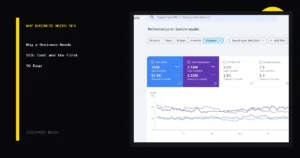
Grab Guidance, an education brand we work with, went from 1,406 visitors to 15,467 in a year, 11 times more, starting from almost no organic presence at all. A school or a college cannot bank that number. It admits students, not visitors, and the gap between the two is where most education marketing budgets disappear.
This guide is for schools, colleges and edtech brands in India. It covers how the admission calendar should set your timing, how to use local search and your Google Business Profile, what paid media is for, how parents and students decide, and how to measure by enquiry and admission instead of by clicks. We are an agency, so weigh our views accordingly, and where we have no proof, we say so.
The admission calendar sets your timing
Marketing for a school or college is seasonal in a way few categories are. CBSE has told affiliated schools to begin their academic session on 1 April and end it on 31 March, and asked them not to start before 1 April[1]. For a CBSE school, that fixes the year, and parents start looking well before the session opens. Colleges and entrance-linked courses follow their own exam, result and counselling dates, and state boards and universities differ. Check the published calendar for your board or university and plan backwards from it.
The principle we use is that search and local visibility take months to build, while paid media can be switched on in weeks. So the slow work starts early and the fast work goes live when the season does.
| Who you are | The calendar that sets your timing | Start building early | Switch paid on |
|---|---|---|---|
| CBSE school | The 1 April session start, and your own registration dates | Google Business Profile, fee and admission pages, campus videos | Before registration opens, with a landing page for each class intake |
| School on a state board or other board | Your board and state admission schedule | The same list, written against your own dates | When your registration window opens |
| College or university | Entrance exams, results and counselling for each programme | Programme pages, placement and faculty content, local search | Around results and counselling, one campaign per programme |
| Coaching centre or edtech | The exam or batch start the course serves | Search content on course and exam terms | Before each batch, with spend shaped by the batch date |
Three months of lead time for search is our rule of thumb, not a guarantee. SEO usually takes three to six months to build, so a brand that starts in the season will miss the first one.
SEO for educational institutions
Search for education breaks into two kinds of query. Course and programme terms, such as an MBA, an engineering course or a coaching batch, usually carry a city or an exam. Questions come earlier, such as how to choose a college, what the fees are and when applications close. A page that answers a real question, with the fee and the dates written in plain text, will often do better than a brochure page.
The basics are the same as everywhere. One page per programme with its own fee, eligibility, duration and enquiry form. Fast on a phone. Clear site structure. Content that links the question pages to the programme pages. Our SEO services start at ₹50,000 plus GST a month and cover SEO, AEO and GEO together, so your pages are also written to be quoted by AI answers.
Be realistic about proof. Grab Guidance is the education brand on our SEO page. We do not publish admissions figures for it, or for the schools and institutions listed on our education marketing page, which include Cyboard School, IMTG and iNurture. So we cannot tell you what an SEO programme did to admissions for those clients. We can tell you what it did to visitors for one of them.
Google Business Profile and local search
Most families choose a school close to home, and most colleges are compared by city. Local search is where the profile earns its place. Google says local results are ranked on relevance, distance and prominence, that prominence draws on reviews and links, and that businesses with complete and accurate information are more likely to show up[2].
For a school, one profile per campus, with the right category, address, phone number and hours, current photographs and a link to the admission page. Ask satisfied parents and alumni for reviews, reply to every one, and answer the negative ones calmly and in public. Do not buy reviews or offer a fee discount for one. A profile is free and a single unanswered complaint is read by every parent who looks you up.
For a multi-campus group, the problem is consistency, so use one set of details everywhere. Our local SEO page covers how that works across locations.
Paid media for admissions
Paid search catches people who are ready to act, with queries like a course name plus a city. Meta reaches parents and students who are still comparing, and YouTube suits campus tours, faculty and student stories. Each should send people to a page built for that intake, not to the homepage.
We suggest ₹50,000 to ₹1,00,000 a month of media as a floor. Our performance marketing management is 15% of monthly media spend, with a minimum of ₹50,000 plus GST a month, falling to 10% from ₹20,00,000, 8% from ₹50,00,000 and 4% from ₹1,00,00,000. Media runs through your own ad accounts. If your seasonal budget is smaller than the floor, put it into the profile, the admission pages and a single intake campaign, and skip the retainer. See performance marketing for what the fee covers.
One rule needs care. Under India’s Digital Personal Data Protection Act, 2023, a child is anyone under 18. Section 9 asks for verifiable consent from a parent or guardian before processing a child’s data, and says a data fiduciary shall not undertake tracking or behavioural monitoring of children or targeted advertising directed at children. There are limited exemptions[3]. Most Class 11 students are under 18. That is our reading as marketers and not legal advice, so ask your counsel before you build audiences from student data, and aim school ads at parents.
How parents and students decide
The buyer and the user are different people for a school and often for a college. A parent asks about safety, fees, teachers, results and travel time. A student asks about the course, the campus, the people and what comes after. One film or page cannot answer both, so build one for each.
For parents, proof is a fee page that says the fee, a named principal, real photographs of classrooms and a parent willing to talk on the record. For students, short videos of campus life, labs and clubs from the students themselves do more than a voiceover. Parents’ and students’ testimonials are strongest when named, and you need their consent, and a guardian’s for anyone under 18. Our social media marketing plans start at ₹1,00,000 plus GST a month, and UGC video starts at ₹8,000 a video on the 20-video package.
Measure by enquiry and admission
Track the whole path, not the first step. An enquiry, a qualified enquiry, a campus visit or counselling call, an application, an admission and a fee paid. Clicks, impressions and likes are useful for diagnosing a problem and useless as a result.
The first thing to agree is what a qualified enquiry is. For a school it might be a parent of a child in an intake class, within travel distance, who can afford the fee. For a college it might be a student who meets the eligibility for the programme. Send that status back to the ad platforms so they find more people like those who qualified.
The Fund Abroad case is a lead-quality example. It is an education loan platform, not a school or college. Over the campaign the average cost per lead was ₹170.75, on ₹3,13,838 of media and 1,838 leads. The qualified-lead ratio rose from 5% to 15% and the cost per qualified lead fell 67%. The change came from speaking to the real pain, the fee deadline and the bank queue, so fewer unusable leads came through. Read the Fund Abroad case study. An institution would define a qualified lead differently, and we would expect the same lesson to apply, though we cannot show you an admissions result of our own.
Our performance page has an illustration, not a client report. ₹3,00,000 of media produces 1,200 leads at ₹250 each, of which 216 qualify, so ₹1,389 per qualified lead. Cost per lead looked fine. Cost per qualified lead told the true story. For admissions, the figure to track is spend divided by students admitted. We will not quote an industry benchmark for it, because we do not have a verified one.
What to do first
Fix the Google Business Profile and the fee and admission pages before you spend on ads. Those cost almost nothing and everything else sends people to them. Then agree a definition of a qualified enquiry with your admissions team, switch on tracking that shows it, and run one intake campaign through a full season. The first season will teach you more than a year of planning.
Frequently Asked Questions
What is the best digital marketing channel for schools in India?
For most schools, local search comes first, meaning a complete Google Business Profile with reviews and an admission page that states fees and dates. Paid search and Meta then add volume in the admission season. Social proof from parents helps trust. The right mix depends on your city and board.
When should a school start its admission marketing?
Start the slow work, the profile, the pages and the content, about three months before the season, because SEO takes three to six months to build. Switch paid campaigns on when your registration opens, since paid data comes in two to four weeks. CBSE schools run their session from 1 April to 31 March.
How much should a school or college spend on digital marketing?
We suggest ₹50,000 to ₹1,00,000 a month of media as a floor, plus a management fee that is 15% of media, with a minimum of ₹50,000 plus GST a month with us. SEO plans start at ₹50,000 plus GST a month. A smaller budget is better spent on the profile and the admission pages.
How do you measure whether education marketing is working?
By enquiries, qualified enquiries, campus visits or counselling calls, applications and admissions, and the spend per admission. Clicks and followers are supporting numbers. Agree what counts as a qualified enquiry with your admissions team before the campaign starts.
Can we run ads targeted at students under 18?
Be careful. The Digital Personal Data Protection Act, 2023 treats anyone under 18 as a child, requires a parent’s verifiable consent to process a child’s data, and bars tracking, behavioural monitoring and targeted advertising directed at children, with limited exemptions. Aim school ads at parents and get legal advice before you build audiences from student data.
Do you have admissions results for schools or colleges?
No. We have published search results for an education brand, Grab Guidance, and lead-quality results for Fund Abroad, an education loan platform. We do not publish admissions figures for schools or colleges, so we will not quote any. Our education page shows the work we can show.
References
- Careers360, CBSE academic session to start from April 1; board asks schools to follow, 17 March 2023.
- Google Business Profile Help, Tips to improve your local ranking on Google.
- Digital Personal Data Protection Act, 2023, Section 9: processing of personal data of children, as reproduced at dpdpa.com.
- DigiStreet Media case study: Fund Abroad performance marketing, figures from Meta Ads Manager.