


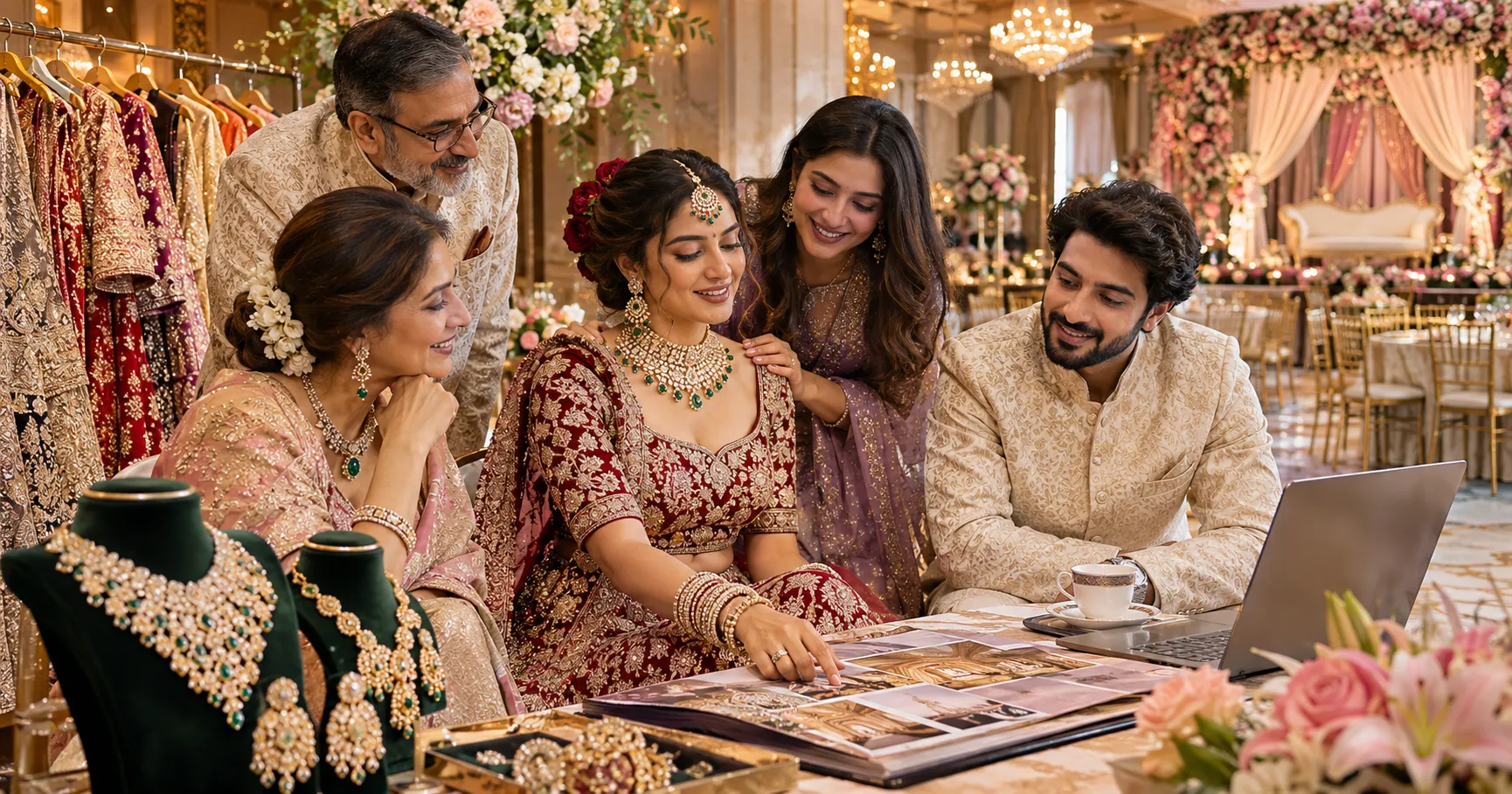
A jeweller in Jaipur, a lehenga label in Delhi and a banquet owner in Lucknow all want the same thing this winter: families who are ready to book. Yet their customers behave very differently. Wedding season marketing campaigns fail when all three brands post the same festive creative and hope for enquiries. Each category sells a different decision, on a different timeline, to a different part of the family.
Why Wedding Season Marketing Campaigns Need Category Plans
Wedding season is not one nationwide date range. Auspicious dates follow the Hindu Panchang, and they vary by region, community and the couple’s own charts. Wedding Focus lists four auspicious days in November 2026 (21, 24, 25 and 26) and seven in December 2026 (1 to 4 and 11 to 13), though that page is published by a photography business and carries promotional content. WedMeGood’s list of popular 2027 dates starts in January. Treat both as planning aids and confirm dates for your own market.
That uncertainty is useful. It tells you to build campaigns around booking windows, not around one calendar peak. A venue may close its best dates months before the wedding. A jeweller may see traffic spike after the date is fixed. A fashion brand may see orders arrive in waves, tied to functions such as mehendi, sangeet and the reception.
How the Three Categories Differ
| Category | Typical decision | Lead time (planning view) | Main conversion goal |
| Jewellery | High-trust, high-value, often family-led | Weeks to months before the wedding | Store visit, video consultation, advance booking |
| Apparel | Multiple outfits across several functions | Weeks before the wedding, with fitting time | Purchase, trial request, custom order enquiry |
| Venues | Date and budget first, then décor and menu | Often several months ahead | Site visit, quote request, date hold |
The lead times above are planning assumptions, not measured industry averages. Check your own enquiry data to see how far ahead your customers actually book.
Jewellery Brands: Sell Trust Before You Sell Design
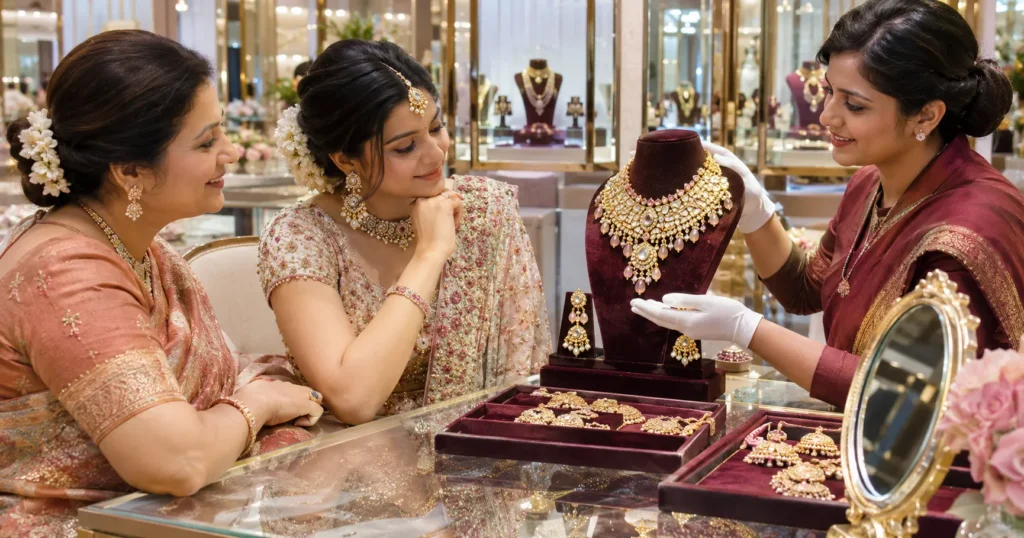
Jewellery buyers want proof of purity, fair making charges and a family-friendly buying experience. Lead with those signals. Show hallmark information, buyback or exchange terms and clear price breakdowns on landing pages. Then back them with short videos of designs in natural light, because glossy catalogue shots hide scale.
Use search and social for different jobs. Search captures intent such as “bridal necklace set near me,” while Instagram and YouTube create desire months earlier. Retarget people who viewed collection pages with consultation offers instead of generic discounts. A video consultation can also help families who live in different cities, which is common in weddings.
Apparel Brands: Plan for Functions, Not Just One Outfit
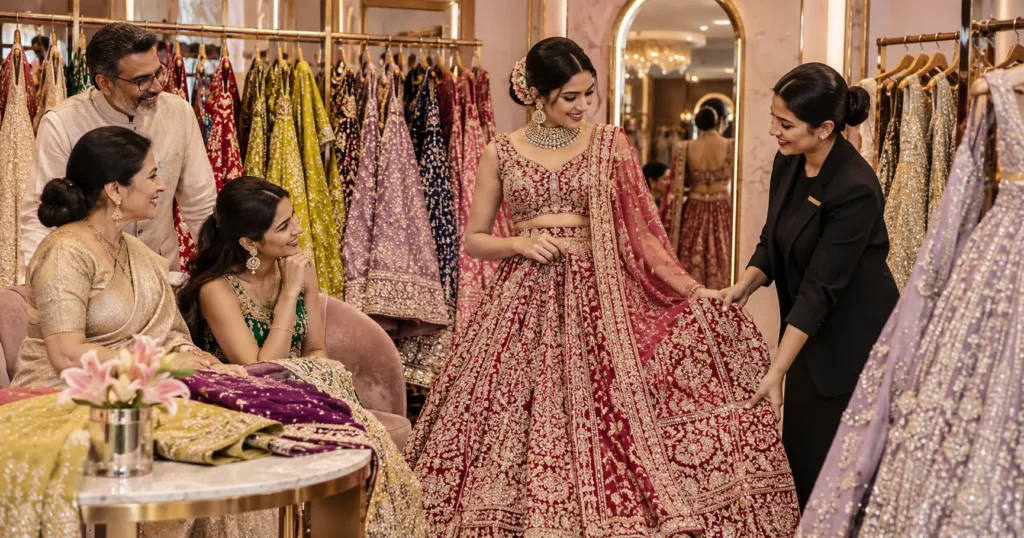
A bride, a groom and their families may buy for four or five events. Build content around that reality. Create guides such as “outfits for a daytime mehendi” or “what a groom’s family can wear to the reception,” and link each to a shoppable page.
Fit and delivery drive anxiety. Publish size guides, alteration policies and delivery cut-off dates clearly. Creators who show real try-ons and fabric details lower the risk families feel when buying heavy outfits online. Under the Advertising Standards Council of India’s influencer guidelines, paid or gifted collaborations need clear disclosure, so brief creators accordingly.
If you want help organising creative, creators and paid media around one booking calendar, DigiStreet Media runs social media and performance marketing together, which keeps content and conversion tracking connected.
Venue Brands: Win the Site Visit
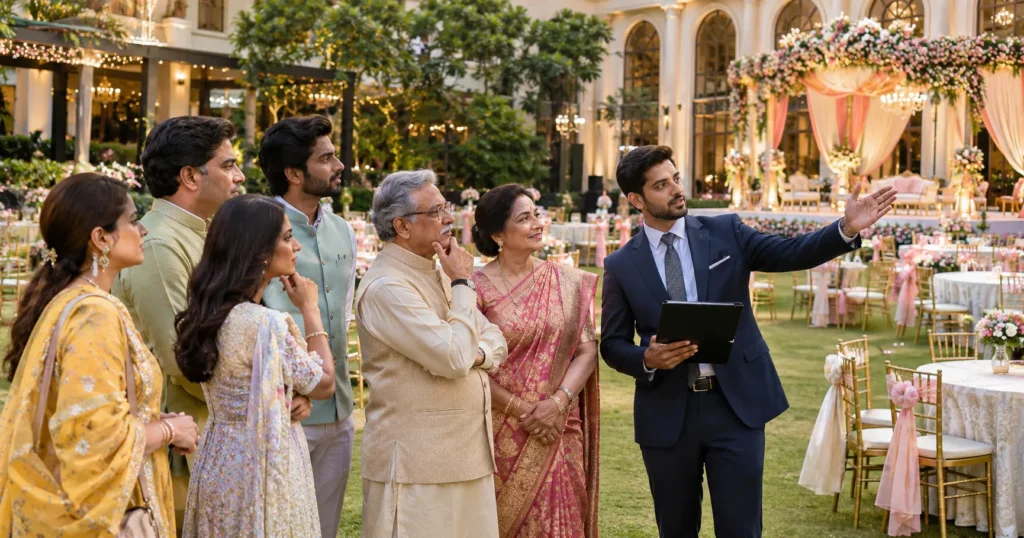
Venues sell certainty. Families want to see the space, check capacity and understand costs before they commit. Your website should answer those questions fast, with photo and video walk-throughs, guest capacity by hall, catering options and a clear enquiry form.
Run local search and map listings carefully. Keep your business profile photos fresh, answer reviews and add attributes such as parking and accommodation. Then use lead campaigns on Meta and Google with a short form, followed by a call within the hour. Venue leads cool quickly because families contact several places in one weekend.
Build a Timeline That Matches Buying Journeys
Work backwards from the dates your target families care about. A simple structure helps:
- Early discovery (now to mid-December): Content, lookbooks, venue tours and creator seeding.
- Active consideration (December to January): Consultation offers, site visits, retargeting and review-led ads.
- Booking and urgency (date-linked): Date-hold offers, delivery cut-offs and limited slots.
- After the event: Photo features, referrals and review requests.
Stagger spend across these stages rather than stacking it all before the first major date. Prospecting audiences grow your retargeting pool, and a larger pool lowers the cost of reaching ready buyers.
Channels and Budget Considerations
Match the channel to the job. Instagram and YouTube build desire, Google Search captures intent, WhatsApp supports consented follow-ups and local listings drive venue visits. Do not assume one channel suits every category.
As a hypothetical example, a mid-sized apparel label with ₹6 lakh to spend might hold ₹1.5 lakh for discovery content, ₹3 lakh for retargeting and search, and ₹1.5 lakh for creators and festive follow-ups. That is an illustration, not a benchmark. Test small, read your own conversion data and move budget towards the stage that produces booked orders, not just clicks.
What Should You Measure?
Count business actions, not applause. Jewellers should track store-visit bookings and consultation completions. Apparel brands should track purchases, return rates and repeat orders from the same family. Venues should track site visits booked, quotes sent and dates confirmed.
Be careful with attribution. A family may see an Instagram reel, search your name and visit in person. Ask every lead how they found you, and compare that answer with platform reports. This simple habit reveals which channels start journeys and which ones only collect credit.
Mistakes That Waste Wedding Season Budgets
Brands often copy last year’s creative, ignore regional customs and send every lead to the same landing page. Others slow down follow-ups after a weekend of enquiries. A wedding campaign works best when messaging respects the family’s role, the community’s traditions and the practical details of dates, fitting and delivery.
Regional and Community Differences
Do not run one creative in every state. A Punjabi wedding, a Tamil wedding and a Bengali wedding follow different rituals, outfits, jewellery styles and guest expectations. Language also changes trust. A jeweller in Coimbatore will usually connect better in Tamil, while a Delhi bridal label may use Hindi and English together.
Work with local creators and staff who understand these details. Ask them to review captions, ritual references and colour choices before you publish. A small error, such as using the wrong festival term, can make a campaign feel careless.
A Pre-Launch Checklist for Wedding Campaigns
Before you spend, check the basics. Confirm your collection or hall availability, delivery and fitting timelines, and the team that will answer enquiries on weekends. Test your enquiry forms on mobile, because many family members browse on phones. Set up call tracking and WhatsApp click tracking so you can see which ads create real conversations.
Finally, write short reply scripts for common questions about price range, customisation, advance payment and cancellation. Fast, clear answers often decide who wins a wedding booking.
Remember the second-order buyers too. Relatives often decide gifts, outfits and venue upgrades, so create shareable pages that a family member can forward in one tap.
Plan Your Wedding Season Marketing With a Clear Calendar
The strongest wedding season marketing campaigns start with the customer’s decision, not the brand’s offer. Map each category’s journey, build trust early and measure the actions that lead to bookings. If you want help turning that plan into creative, creator content and paid media, you can speak with DigiStreet Media about a campaign plan for your category. Teams that need creators can also explore influencer marketing support.
Reference Links
| Relevant Topic or Resource | Why It Is Relevant | Verified Link |
|---|---|---|
| DigiStreet Media social media and performance marketing | Supports joined-up creative, paid media and tracking | https://digistreetmedia.com/services/social-media-and-performance-marketing/ |
| DigiStreet Media influencer marketing | Supports creator-led wedding content | https://digistreetmedia.com/services/influencer-marketing-agency/ |
| Wedding Focus: Auspicious wedding dates 2026 | Source for the listed November and December 2026 dates | https://theweddingfocus.com/blog/wedding-dates-2026/ |
| WedMeGood: Best Hindu wedding dates in 2027 | Source for popular 2027 dates and the regional-variation caveat | https://www.wedmegood.com/blog/best-hindu-wedding-dates-in-2027-auspicious-marriage-dates-for-your-big-day/ |
Frequently Asked Questions
When is the 2026 wedding season in India?
There is no single nationwide calendar. Auspicious dates follow the Hindu Panchang and differ by region and community, so confirm dates for your target market. Wedding Focus lists dates in November and December 2026.
How early should brands start wedding season campaigns?
Start discovery content two to three months ahead and add consideration offers as booking windows open. Venues may need to start earlier than jewellery or apparel brands.
How should jewellery brands market for weddings?
Lead with trust signals such as hallmark details, price breakdowns and exchange terms. Then use video consultations, local search and retargeting to move families towards a store visit or booking.
What works best for wedding apparel marketing?
Content built around each function, such as mehendi or reception, works well. Add size guides, alteration policies and creator try-ons to reduce buying anxiety.
How can wedding venues get more qualified leads?
Show walk-throughs, capacity and costs clearly, keep map listings updated and follow up on enquiries within the hour. Short lead forms and fast calls help most.
Which channels suit wedding season marketing?
Instagram and YouTube build desire, Google Search captures intent, and WhatsApp suits consented follow-ups. The right mix depends on your category and booking cycle.
Do influencers need to disclose wedding collaborations?
Yes. ASCI’s influencer guidelines require clear disclosure when a material connection exists, including payment or free products. Both the brand and the creator share responsibility.
How do you measure wedding campaign success?
Track booked store visits, consultations, purchases or confirmed dates, not just clicks. Also ask each lead how they found you and compare it with platform reports.