



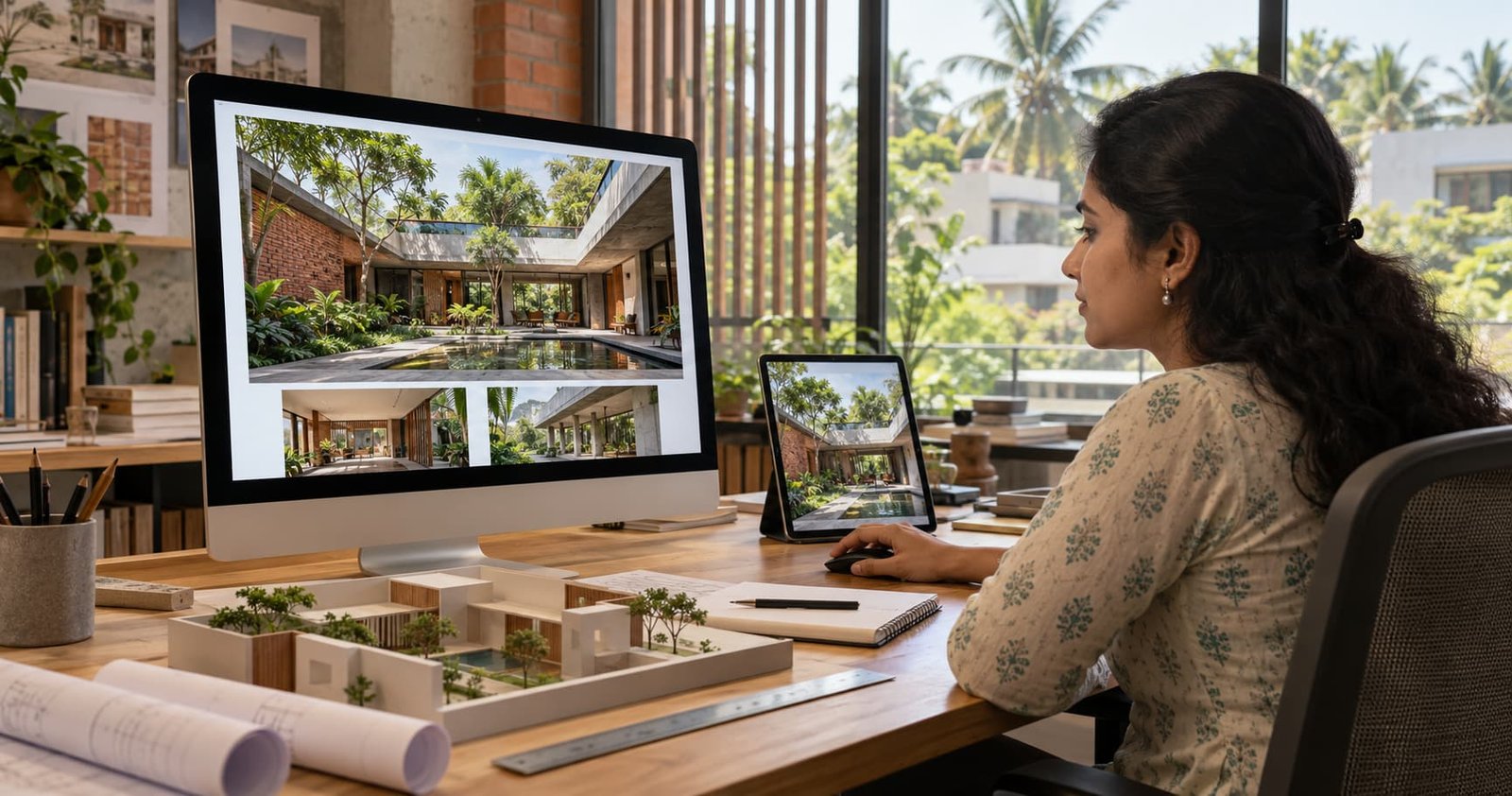
An NRI family in Singapore wants to build a home on the East Coast Road. They have shortlisted three Chennai architects from a friend’s recommendation. Before they book a call, they open each firm’s website on their phones.
The first site takes eight seconds to load. The second shows a slider that breaks on mobile. The third opens instantly, with full-screen project photos, a clean list of work and a simple way to get in touch. Guess which firm gets the call.
That is the case for static website development for architecture firms in Chennai. Architects sell with images and reputation, not long pages of text. A static site, built with clean HTML, CSS and JavaScript, loads fast, stays secure and puts your projects front and centre. DigiStreet builds these sites as part of its wider web development services, and here is how the approach works for architecture practices.
What a static website actually is
A static website is made of fixed files that the server delivers exactly as they are built. There is no database pulling content together each time someone visits, and no admin panel running in the background.
That simplicity brings real advantages:
- Speed. Pages load almost instantly because the server has nothing to assemble.
- Security. With no database or plugins to attack, there are far fewer weak points.
- Low running costs. Hosting is inexpensive, and maintenance needs stay small.
- Stability. No plugin updates, no version conflicts, no surprise breakdowns.
The trade-off is that updates usually need a developer. For many architecture firms, that suits the way they work. A portfolio changes a few times a year, when a project completes or a new award arrives, not every day.
Why static website development for architecture firms in Chennai makes sense
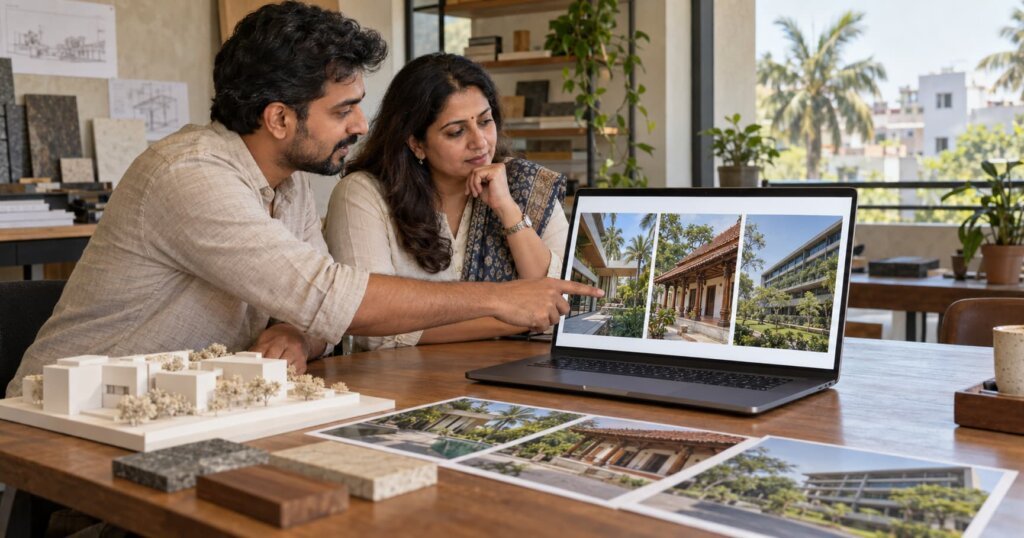
Architecture clients buy with their eyes first. Homeowners, developers, hospitality groups and corporate clients all want to see the quality of your thinking and the finish of your projects before they talk to you.
A static site suits this perfectly. It gives you full control over layout, typography and image presentation, without the limits of a template. Every page can feel as considered as your buildings.
Chennai’s own architectural range makes this even more important. A firm might work on a contemporary villa along the ECR one month, a restoration project near heritage streets in Mylapore the next and an office campus along the OMR IT corridor after that. Your website needs the flexibility to present each of these properly, with its own story and visuals.
The foundation: speed and security
Think of performance as the foundation of your site. Everything else rests on it.
Architecture websites are image-heavy by nature, which can make them painfully slow. A well-built static site handles this with careful image optimisation: modern image formats, correct sizing for each screen and lazy loading so photos appear as visitors scroll. The result is a site that feels rich but still loads quickly, even on a mobile connection.
Security comes built in. Because a static site has no login page or database, common attacks aimed at content management systems simply do not apply. For a small practice without an IT team, that peace of mind matters.
The floor plan: a clear site structure
Good architecture guides people through space. A good website guides visitors through your work.
A clear structure for an architecture firm often looks like this:
- Home. A strong visual introduction and a short statement of what your practice stands for.
- Projects. A filterable portfolio by type, such as residential, commercial, hospitality, institutional or interiors.
- Individual project pages. Large images, drawings where appropriate, the brief, the site, the design approach and the outcome.
- Practice. Your story, philosophy, principals, team and recognition.
- Process. How you work with clients, from brief to handover.
- Contact. Office address, a map, phone, email and a short enquiry form.
This layout helps visitors find what they care about in seconds. It also gives search engines clear, well-organised pages to index.
The facade: design that reflects your practice
Your website is often the first facade a client sees. It should feel like your work.
A minimalist practice might want generous white space, quiet typography and full-bleed photos. A firm known for bold, climate-responsive tropical design might lean into texture, colour and material close-ups. Static development gives your designer and developer full freedom to shape this, without fighting a theme.
DigiStreet’s website design services start with your practice’s identity and body of work, then shape the site around it, rather than squeezing your projects into a generic layout.
The materials: photography and project stories
The best architecture websites combine strong photography with short, thoughtful writing.
For each project, aim for a small set of your best images rather than every photo from the shoot. Add a few paragraphs that explain the brief, the site conditions and the key design decisions. Chennai clients often care about how a building handles heat, heavy monsoon rain and humidity, so notes on ventilation, shading and materials add real value.
These short project stories also help search visibility. A page titled “Courtyard house in Adyar designed for natural ventilation” tells both people and search engines exactly what you do and where you do it.
Services built in: enquiries and local visibility
A static site can still handle everything a practice needs to win new clients.
Enquiry forms can connect to your email or a simple form service, so every request reaches you instantly. You can add click-to-call buttons, WhatsApp links for clients who prefer chat and a map to your studio. Many Chennai practices work with NRI clients across the Gulf, Singapore, the UK and the US, so a form that captures time zone and project location helps you respond at the right time.
For local visibility, pair your website with a complete Google Business Profile, consistent contact details across directories and project pages that mention real Chennai neighbourhoods. DigiStreet’s local SEO services handle this side, so people searching for architects in Chennai find your practice alongside your portfolio.
When a static site is not enough
Static development suits most portfolio websites, but not every situation.
If you plan to publish articles every week, run a large team of editors or offer client logins for project tracking, you may need something more. Options include a content management system for regular publishing or a custom web application for client portals and project dashboards. DigiStreet builds all of these, including web application development for firms that need more than a portfolio.
The good news is that you do not have to decide forever. Many firms start with a fast static portfolio and add a blog or client portal later as the practice grows.
Maintenance that stays simple
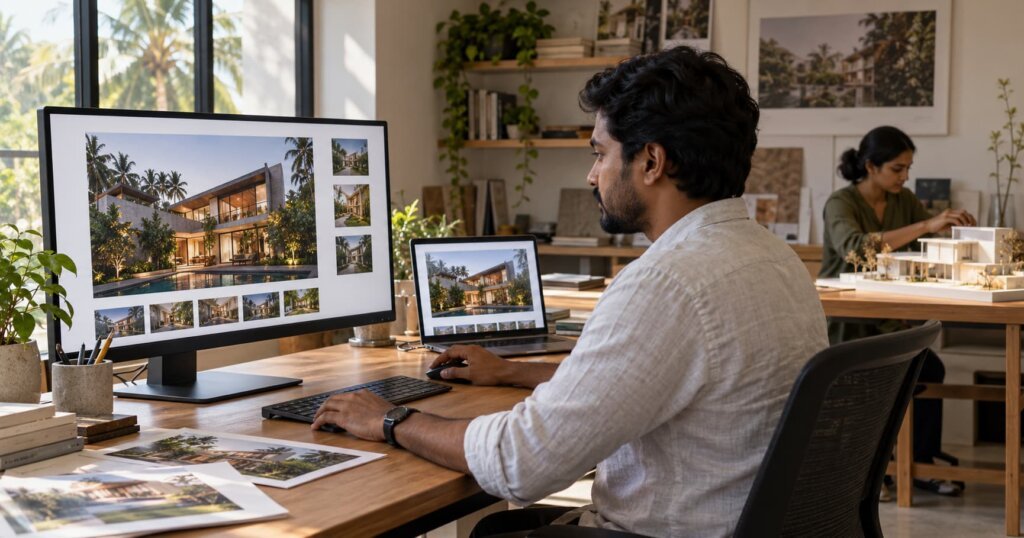
Once your static site is live, day-to-day upkeep is minimal. There are no plugins to update and no database to back up. When you complete a new project or win an award, your developer adds the page, and the site stays as fast as the day it launched.
Many firms choose a small maintenance arrangement for these updates, so new work appears online within days of completion rather than months later.
Hosting stays simple too. Static files can sit on fast, low-cost hosting or a content delivery network that serves pages from locations close to each visitor. That helps when a client in Dubai, London or Chicago opens your portfolio late at night according to their time. Add an SSL certificate, a custom domain email and basic analytics, and your practice has a professional online base that asks very little of your time.
Why architecture firms choose DigiStreet
Architects expect precision and craft. So does DigiStreet. The team has spent more than a decade building websites and digital platforms for brands across industries, from product companies to professional services and manufacturers.
For architecture practices, DigiStreet brings design sensitivity, clean development, strong image performance and search visibility together in one place. You get a fast, secure portfolio that feels like your work, plus the option to grow into a CMS, a web app or a full marketing programme whenever you are ready.
If you have been looking for a team that can build your practice a website as thoughtful as your buildings, you can stop looking now. Talk to DigiStreet about your practice, your best projects and the clients you want to attract.
Explore more
- Designing interiors too? See how DigiStreet approaches digital marketing for home decor brands.
- Planning to publish regularly later? Read about WordPress website design for small businesses.
- Want lead-focused ideas for design businesses? Check out lead-based campaigns for interior design studios.
FAQs
What is a static website?
A static website is built from fixed HTML, CSS and JavaScript files that load exactly as designed, without a database or content management system running behind them.
Is a static website good for an architecture firm?
Yes, for most portfolio sites. It loads fast, stays secure and gives full design control, which suits image-led architecture portfolios.
Can I update a static website myself?
Usually a developer makes updates, but portfolio sites change only a few times a year, so many firms find this simple and affordable.
Are static websites good for SEO?
Yes. Fast loading, clean code and well-structured pages help search engines read and rank your site.
Can a static website have a contact form?
Yes. Forms can connect to email or a form service, and you can add click-to-call and chat links too.
What is the difference between a static and a dynamic website?
A static website serves fixed files, while a dynamic website builds pages from a database or CMS, which suits sites with frequent content changes.
Can I move from a static site to a CMS later?
Yes. Many firms start with a static portfolio and add a CMS, blog or client portal as their needs grow.