

Property marketing
Real estate media works only when the project, location and sales team agree
Real estate marketing should turn a location and product into qualified site visits, not a spreadsheet of cheap form fills. Start by separating brand demand, project demand, location research and investor or end-user questions. Then set the working media budget with the performance marketing cost in India guide. DigiStreet charges the higher of 15% of monthly media spend or ₹50,000 plus GST a month, with lower percentage bands at larger budgets.
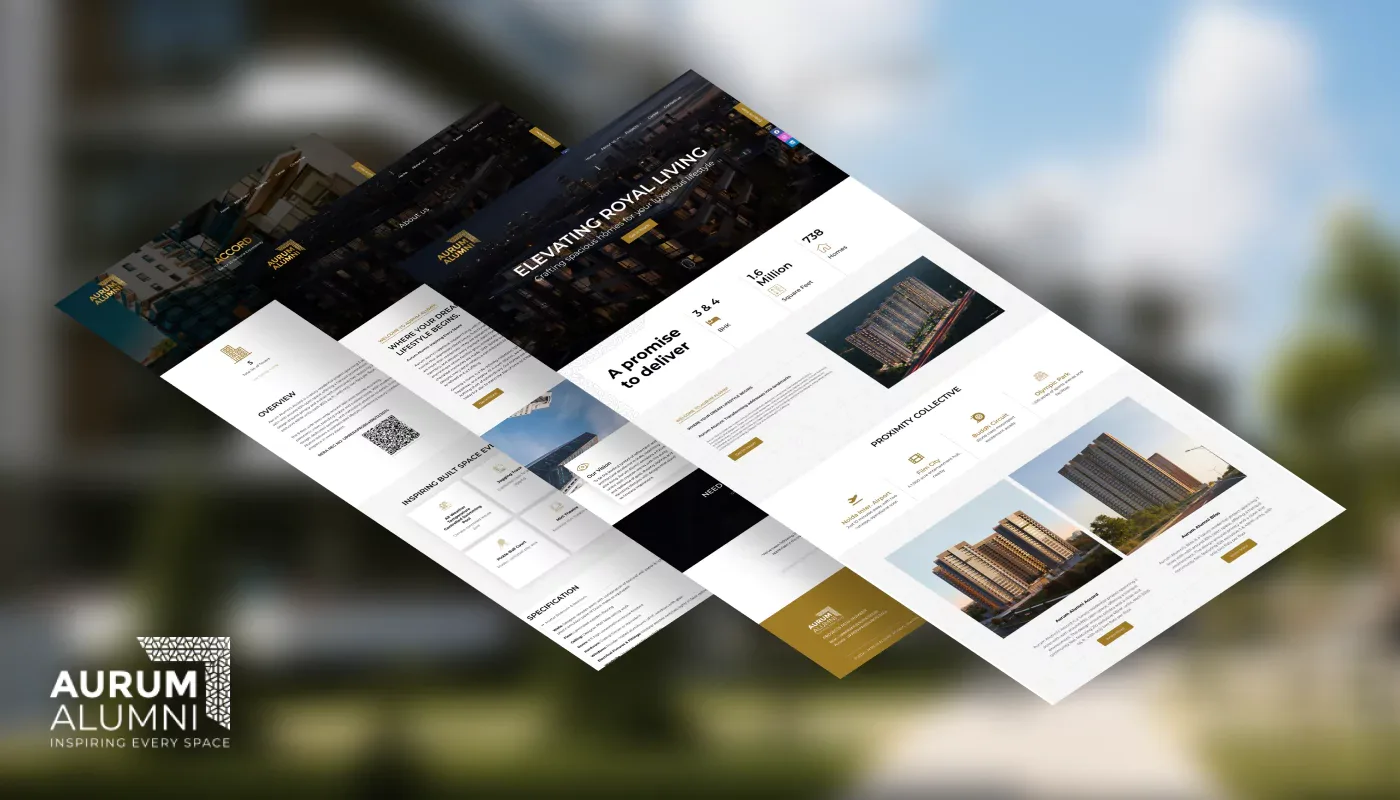
This guide covers search, social, video, portals, landing pages, remarketing and lead operations for residential and commercial projects. It uses Aurum Alumni website work as the real reference. The cost examples use only DigiStreet’s published fee structure. Media, production, portal listings and property-specific material remain separate working lines.
Buyer intent
Separate project demand from location research
A buyer can begin with a developer name, a project, a micro-market, a property type, a budget or a possession preference. Those are different signals. Brand and project searches often need direct pages with current approved information. Location searches need useful context about access, surrounding use and the product fit. Comparison searches need evidence that can be checked.
Create campaign groups and landing pages around these differences. A generic “luxury homes” page cannot answer every location, unit and availability query. Commercial property also needs a different conversation from a home purchase. Investors may focus on rental or future use; occupiers focus on the space and daily fit. The page should make the intended audience clear before it asks for contact details.
Channel mix
Use each channel for a defined stage
Search captures people who express a need. Social and video can show the product and build recognition before someone searches the project. Portals add category discovery but should use consistent inventory and approved facts. Maps and local presence help with sales offices and site directions. Email and messaging can support consented follow-up when the content is useful and the frequency is controlled.
Do not measure every channel by last-click forms. A video view may lead to a branded search. A portal visit may lead to a direct call. Use campaign parameters, phone routing, CRM source fields and post-enquiry feedback to read the sequence. Keep one definition for qualified, duplicate, unreachable and out-of-scope leads across media and sales reports.
Cost model
Keep fees, media and production visible
DigiStreet’s performance marketing fee is the higher of 15% of monthly media spend or ₹50,000 plus GST. The minimum applies up to ₹3,33,333 of media. The rate is 15% below ₹20,00,000, 10% from ₹20,00,000, 8% from ₹50,00,000 and 4% from ₹1,00,00,000, applied to the whole budget. A sensible media floor is ₹50,000 to ₹1,00,000 a month, though property campaigns often require more to cover locations and formats.
| Monthly media | Agency fee before GST | What the budget can support |
|---|---|---|
| ₹1,00,000 | ₹50,000 minimum | A narrow project and location test |
| ₹5,00,000 | ₹75,000 at 15% | Search, social tests and remarketing with clear splits |
| ₹10,00,000 | ₹1,50,000 at 15% | Broader location coverage and more creative testing |
| ₹20,00,000 | ₹2,00,000 at 10% | Large release or multi-project media with deeper reporting |
List photography, films, walkthroughs, landing pages, portal packages and call systems separately. This makes the plan easier to approve and later explains whether a weak result came from reach, content, product fit or response handling.
Landing pages
Answer the serious questions before the form
A property page should establish project identity, approved location information, product choices, status, useful visuals and the next action. Legal and regulatory details must follow the applicable authority and the developer’s approved material. The Real Estate (Regulation and Development) Act, 2016 created the national framework, while project advertising also needs the relevant state authority’s requirements.
Keep layouts readable on mobile because many campaign visits begin there. Compress images without making plans or labels unreadable. Reserve space for media so the page does not shift. Give tables their own horizontal scroll on narrow screens. Use a short form for the first contact and preserve the page, campaign and unit context. A user who asks about one project should not receive a generic reply covering every property.
Creative
Show the place and the decision clearly
Real estate creative needs more than a building render and price line. Build concepts around the product, daily use, location or a specific buyer concern. Use only approved representations and state conditions clearly. Create distinct openings for prospecting and remarketing. A return visitor may need unit information or a site-visit prompt, while a new audience first needs orientation.
Plan the asset list before the campaign. It may include master films, short vertical cuts, location diagrams, unit views, construction updates and sales-office material. Every adaptation should retain the approved facts and required disclosure. Store source approvals with the final files. That protects speed when a media team needs a new size and keeps regional or broker versions consistent.
Lead operations
Design the response before buying the lead
Define who receives each project and territory, the response window, call attempts and status names. Pass the project, campaign, location and requested action into the CRM. Sales teams should record reasons when a lead is invalid or unsuitable. Media teams need this evidence weekly, not only at the end of a quarter.
Use appointment and site-visit stages to judge quality. One source may deliver fewer leads but more visits. Another may look cheap while producing duplicates or distant locations. Review calls where lawful and consented, then improve the ad promise, form or script. The campaign and sales desk are one system from the buyer’s point of view.
Launch control
A practical first ninety days
| Period | Work | Commercial check |
|---|---|---|
| Days 1–15 | Approve facts, audience groups, tracking, lead routing and creative list | Can sales identify every source and requested project |
| Days 16–30 | Launch focused search and social tests with matched pages | Do queries, ads and page headings agree |
| Days 31–60 | Compare accepted leads, appointments and creative response | Which channel creates real sales conversations |
| Days 61–90 | Scale stronger combinations and refresh weak concepts | Where should the next rupee of media go |
Keep the first release narrow enough to learn. Expanding into more locations, audiences and projects before lead quality is visible makes the report harder to read. A disciplined ninety days produces a reusable campaign structure and a shared sales vocabulary.
Sales material
Give prospects something useful after the first call
Property decisions continue after the form. Prepare current project pages, unit information, location material, visit directions and approved answers that a sales adviser can send. The material should use the same naming, facts and visual identity as the campaign. Broken document links or conflicting dates quickly weaken trust.
Map common questions from search terms, calls and site visits. Add stable answers to the page when they help every prospect. Keep availability and time-sensitive offers in systems that responsible teams can update quickly. A permanent guide should not depend on a short-lived claim.
Use the confirmation page to set expectations for contact and offer the next useful item. Record which resource was sent and whether it helped move the enquiry towards an appointment. This gives content teams evidence beyond page views and helps sales advisers spend less time rebuilding the same explanation.
Compliance and consent
Keep the advertising record beside the creative
Store the approved project facts, applicable registration information, offer period, required disclosures and the person who approved each version. Keep the landing page and lead form aligned with that record. When an offer or availability changes, update live ads, pages and sales material through one controlled request rather than relying on several teams to notice.
Consent language should match the intended contact. Limit access to lead data and keep exports under control. Review third-party tools, call systems and portal integrations before giving them information. Record the source and time of the enquiry so a prospect can receive a relevant response.
Audit a small sample of published ads and enquiry paths every week during a busy release. Check facts, links, phone routing, form delivery and the sales status. This routine catches operational faults before extra media makes them expensive.
Real work
Aurum Alumni work shows a premium property offer inside a usable website
Common questions
Real estate digital marketing questions
Which channel is best for real estate leads?
Search is strong for expressed demand, while social and video help introduce a project. The right mix depends on location, product and current demand.
What is a sensible starting media budget?
₹50,000 to ₹1,00,000 a month is a sensible floor for a narrow test, but multiple markets or projects need separate working room.
How does DigiStreet price campaign management?
The fee is the higher of 15% of monthly media spend or ₹50,000 plus GST, with the published 10%, 8% and 4% bands at larger budgets.
Should a project use its own landing page?
Yes when the product, location, approval details and lead owner are specific. The page should match the campaign promise.
What should count as a qualified property lead?
Define it with sales before launch using location, product fit, reachable contact and a relevant buying window.
How should remarketing be used?
Use consented audiences, controlled frequency and content that reflects the visitor’s known project interest without repeating the same ad.
References
Sources used for this guide
Next step
Build a property campaign sales can use
Share the project, location, approved material and lead process. DigiStreet can scope the media, creative, page and measurement work.