


Marketing for Miami hotels, restaurants and attractions
Updated 31 October 2026.
Miami-Dade took 28.3 million visitors and $22.7 billion of visitor spending in 2025, and 75.3% of residents aged five and over speak a language other than English at home. Those two numbers decide your calendar, your language and your ad spend. Here is how we work them, and what it costs.
The number that sets your budget
The Greater Miami Convention and Visitors Bureau reported on 3 June 2026 that 28.3 million visitors came to Greater Miami and Miami Beach in 2025 and spent $22.7 billion on lodging, dining, shopping, transportation and entertainment. Total economic impact was $32.2 billion, tourism supported more than 216,000 jobs, and hospitality wages passed $12 billion.
Work backwards from your own share. A 120-room property at $280 average daily rate and 72% occupancy is about $8.8 million of room revenue a year. If direct booking is 18% of that and you want it at 26%, you are arguing over roughly $700,000 of revenue that currently pays commission. That is the number that justifies the marketing budget, not the 28.3 million.
For a restaurant the equivalent sum is covers on a Tuesday, not a Saturday. Saturday sells itself in a destination with that much footfall. Everything we build is aimed at the four weakest sessions in your week and the six weakest weeks in your year.
Miami’s year is not flat
Winter and early spring carry the rate. The Atlantic hurricane season officially runs from 1 June to 30 November, with the peak on 10 September according to the National Hurricane Center, and that single fact shapes the second half of your calendar more than any campaign you run. September is when cancellations cluster and when your flexible-rate messaging earns its keep.
The city gives you demand generators in the slow months, and they are worth planning around rather than reacting to. The bureau’s Miami Spice restaurant months ran through 31 October in 2026, Miami Spa Months returned the same summer, and Fall for the Arts was announced on 1 October 2026. Each one is a reason for a resident or a drive-market visitor to come in when the airlift is thin.
So the ad calendar has three shapes. Rate defence from January to April. Offer-led local demand from June to September, with a weather clause written into the creative. Group and event chasing in the shoulder weeks. We put this on one page in the plan so your revenue manager and your marketing agency are reading the same sheet.
| Figure | Number | Source | What we do with it |
|---|---|---|---|
| Visitors to Greater Miami and Miami Beach, 2025 | 28.3 million | GMCVB, 3 June 2026 | Sets the ceiling, not the budget |
| Visitor spending, 2025 | $22.7 billion | GMCVB, 3 June 2026 | Work backwards to your direct booking share |
| Jobs supported by tourism | more than 216,000 | GMCVB, 3 June 2026 | Staff recruitment pages are worth building |
| Hospitality wages, 2025 | over $12 billion | GMCVB, 3 June 2026 | Local resident demand is real demand |
| Residents aged 5 and over speaking a language other than English at home | 75.3%, or 1,949,758 people | US Census Bureau, ACS 2020 to 2024 | Two languages from day one, separate URLs |
| Atlantic hurricane season | 1 June to 30 November, peak 10 September | NOAA National Hurricane Center | Flexible-rate messaging and a weather clause |
English and Spanish, not English then Spanish
US Census Bureau American Community Survey data for 2020 to 2024 shows 1,949,758 of Miami-Dade’s 2,589,522 residents aged five and over speak a language other than English at home. That is 75.3%. For a hotel the local market is staff, residents booking for family and the drive market from Broward and Palm Beach. For a restaurant it is most of your Tuesday.
Machine translated pages do not work here, and they are easy to spot. Spanish for a Miami audience is written by someone who knows which Spanish, because Cuban, Colombian, Venezuelan and Argentine readers do not use the same words for a menu, a deposit or a booking. Write the page once in each language and keep the two versions on separate URLs with hreflang declared.
Paid social is where this pays fastest. Two creative sets, two languages, same offer, and you will usually see a different cost per booking by a factor you would not have guessed. We run these splits from the start on our social media retainers rather than treating Spanish as a later phase.
Google Business Profile is your front desk
More people see your profile than your home page, and most of them are deciding in the next hour. Hours that are right on a holiday. Menu or room links that go to a page, not a PDF. Photographs added every month, because the ones from the shoot three years ago are the reason someone picks the place across the street.
Use the question and answer section as content, not as a complaints box. Ask and answer the twelve things the front desk is asked daily: parking price, pet policy, check-in time, whether the pool is heated, whether the kitchen is open after 10 pm. Each one in both languages.
Then measure it properly. Calls, direction requests and website clicks from the profile are the closest thing to a booking signal you can read daily. We wire these into the reporting described on our Miami page so a drop in direction requests triggers a check, not a quarterly surprise.
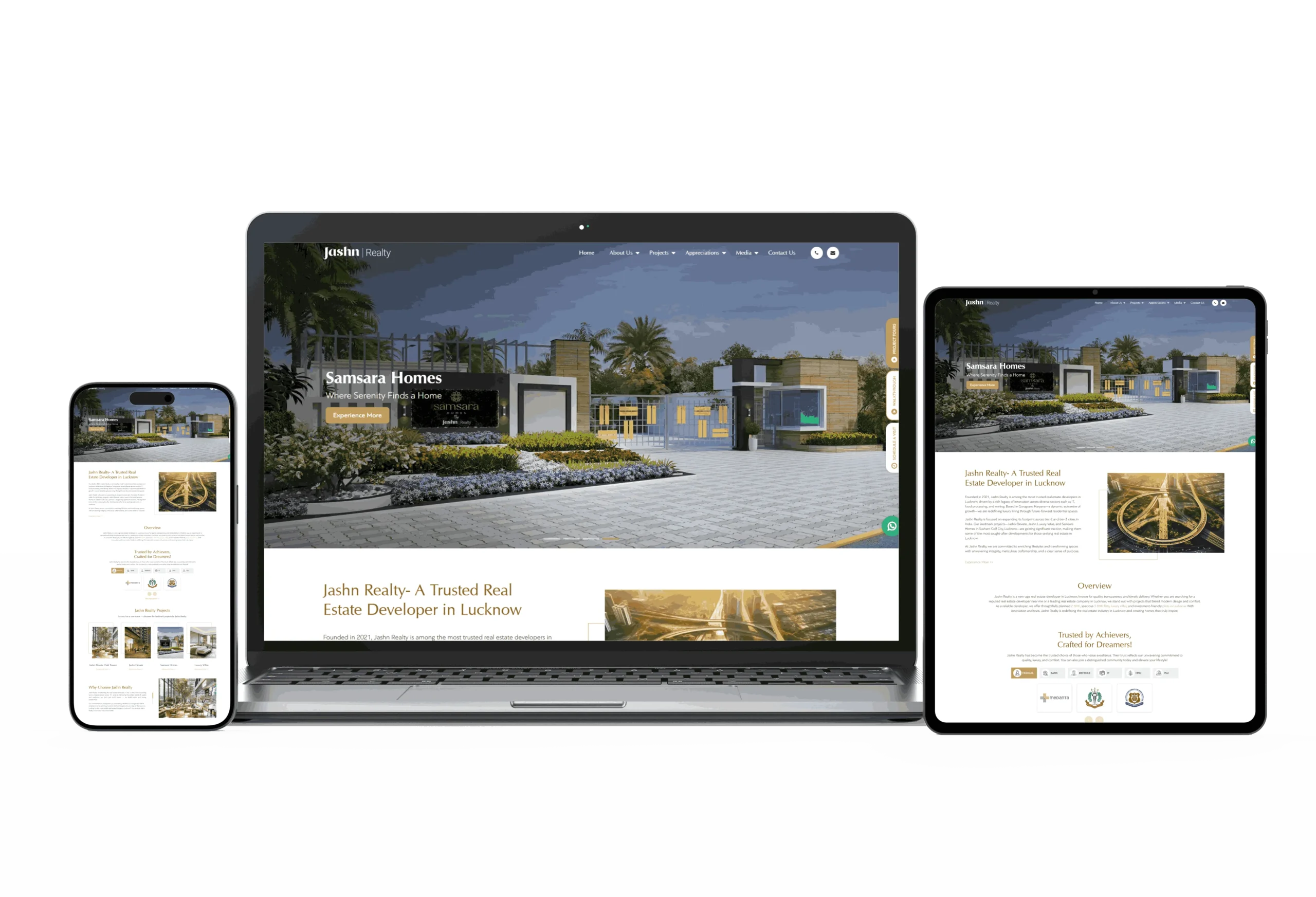
Jashn Realty
Jashn Realty needed bookings from paid social at a cost it could defend, not reach. We have run its campaigns since 2024, with 8,425 Meta leads in six reported months of 2024 at ₹209 a lead and more than 500 units booked. The same creative discipline, phone-shot and offer-led, is what fills weak sessions for a hospitality property.
Review flow, built into the shift
Reviews do not arrive because you want them. They arrive because someone asks at the right moment, which is at checkout for a hotel and at the table when the plates are cleared for a restaurant. A QR card on the folio and a line in the checkout email will produce more reviews in a month than a year of hoping.
Reply to every one inside 48 hours, and reply in the language the guest used. A reply in Spanish to a Spanish review is read by every future Spanish-speaking guest who scrolls past, and a wall of English replies to Spanish reviews says something you do not want said.
Negative reviews are worth money if you read them as a list. Three mentions of a slow lift and one of a cold breakfast is an operations task, not a reputation problem. We send the monthly theme count with the report so the general manager gets something actionable rather than a star rating.
Paid social for bookings, not for applause
The creative that books rooms in Miami is not the drone shot. It is a fifteen second phone video of the thing a guest is choosing between: the rooftop at 7 pm with the rate on screen, the corner table, the room with the view from the actual floor you are selling. Shot on a phone by a staff member, captioned, two versions, one per language.
Buy for the decision window. A hotel’s best audience is people who looked at your dates and did not book, and people in a 150 mile drive radius for a weekend offer. An attraction’s best audience is visitors in the destination now, which you can approximate with a tight geographic and recent-traveller setup.
Spend a floor that can be read. Below about $2,000 a month of media in a market this competitive, you get numbers that bounce and decisions made on noise. We would rather run one offer at $3,000 for 60 days than four offers at $750 for a fortnight each.
What to measure, and what to stop measuring
Four numbers. Cost per booking from paid, direct booking share of total room revenue, profile actions, and revenue per available room against the same week last year. A restaurant swaps the first two for cost per reservation and covers in the weakest four sessions.
Stop reporting reach, impressions and follower growth as outcomes. They are inputs. A Miami hotel with 40,000 followers and an 11% direct booking share has an expensive hobby, and the agency reporting on followers knows it.
Attribution will be imperfect because a guest sees you on Instagram, searches your name, reads reviews, then books through a meta-search. We handle that with a weekly table that puts paid spend, branded search volume and direct bookings side by side. The pattern is readable even when the last click is not. Our travel and tourism page shows the format.
What this costs with us
Search work for a US property is $750 a month for Starter with 30 keywords, $1,100 for Growth with 50, $1,850 for Scale with 80, and $2,950 for a resource-based team of two specialists. Every plan includes answer engine and generative engine monitoring, which matters when a visitor asks an assistant for a hotel near Brickell. No GST on a US invoice.
Paid media management is the higher of 15% of monthly media or $750 a month, falling to 10% of the whole budget from $20,000 of media, 8% from $50,000 and 4% from $100,000. Media is paid separately to Meta or Google. A new site is $2,600 for a B2B build or $3,300 for a corporate build, with hosting and maintenance from $300 a month.
A single property with one restaurant usually starts with Growth plus $3,000 of media and nothing else. A group with four properties across the state needs the shared work done once and the local work done four times, which is the split on our Florida page. Tell us which of your six weakest weeks you want back first.
References
- Greater Miami Convention and Visitors Bureau, Reports Strong Tourism Performance, published 3 June 2026
- US Census Bureau, American Community Survey 2020 to 2024 five-year estimates, table S1601, Miami-Dade County
- NOAA National Hurricane Center, Tropical Cyclone Climatology, accessed 11 October 2026
- Greater Miami Convention and Visitors Bureau, press releases including Miami Spice through 31 October and Fall for the Arts, 1 October 2026
Frequently asked questions
How many visitors does Miami actually get?
28.3 million in 2025, who spent $22.7 billion, according to the Greater Miami Convention and Visitors Bureau’s report of 3 June 2026. Tourism supported more than 216,000 jobs in the county.
Do we need our website in Spanish?
Yes. 75.3% of Miami-Dade residents aged five and over speak a language other than English at home, on US Census Bureau data for 2020 to 2024. Write each language separately, keep them on separate URLs and declare hreflang.
What should we spend on paid social a month?
At least $2,000 of media in Miami, plus management. Below that the numbers bounce too much to decide anything. One offer at $3,000 for 60 days beats four offers at $750 for a fortnight.
When is the slow season we should be advertising into?
June to September, with September the hardest. The Atlantic hurricane season runs 1 June to 30 November and peaks on 10 September, so that is when flexible-rate messaging and resident offers do the most work.
What does marketing cost with you?
$750 a month for Starter search with 30 keywords, up to $2,950 for a resource-based team of two specialists. Paid media management is the higher of 15% of media or $750 a month, with media paid separately.
Which numbers should a general manager look at every week?
Four. Cost per booking from paid, direct booking share of room revenue, Google Business Profile actions, and revenue per available room against the same week last year. Not reach, not followers.