
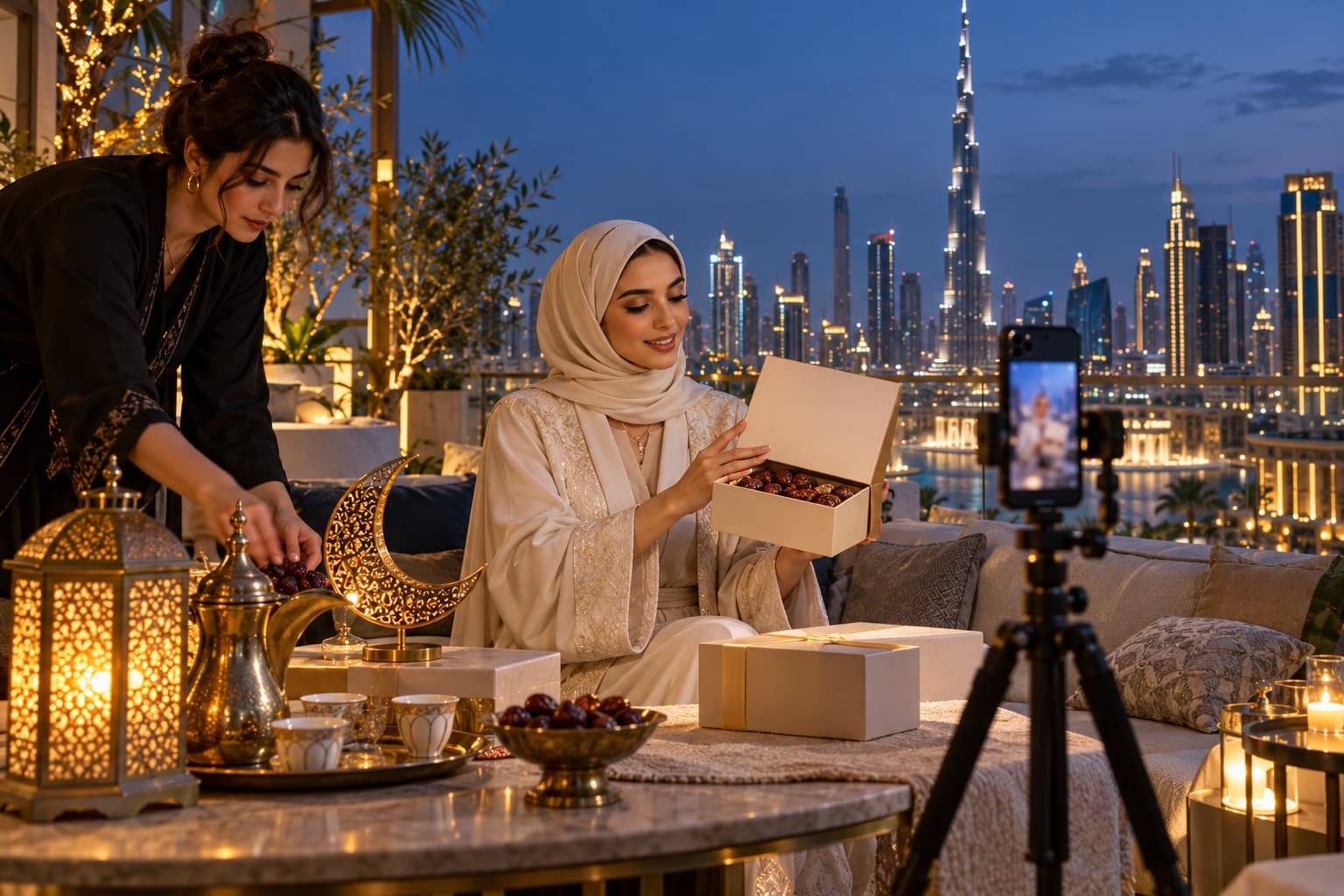
Ramadan 2027 is projected to begin on or around 8 February. Counting back from today, that leaves roughly nineteen weeks, and for anyone planning influencer marketing in Dubai, nineteen weeks is not a lot. The creators your audience actually trusts get booked early, Arabic scripts need time to be written properly rather than translated, and every paid partnership in the UAE now sits inside a licensing framework that did not have teeth two years ago.
This guide is written for brands deciding right now whether Ramadan 2027 is worth a dedicated creator campaign, and what it takes to do it well.
A note on dates before anything else: every Ramadan and Eid date in this article is an astronomical projection. The UAE confirms the start of Ramadan and Eid only after the official moon sighting, so build a few days of flexibility into any launch plan.
What the Calendar Looks Like From Here
Regional outlets including The National, Gulf News and Khaleej Times have published the same projected window for 2027:
| Occasion | Projected date (subject to moon sighting) | What it means for creators |
|---|---|---|
| Ramadan begins | Around 8 February 2027 | Content tone shifts overnight; launch assets must be approved before this |
| Last ten nights | Around late February to early March 2027 | Peak gifting and charity messaging |
| Eid al-Fitr | Around 9 to 10 March 2027 | Celebration, family, fashion and gifting spikes |
| Eid al-Adha | Around 16 to 17 May 2027 | A second window for brands that miss Ramadan |
Working backwards from 8 February, a realistic plan looks like this:
| Window | Milestone |
|---|---|
| October 2026 | Objectives, budget split and audience definition agreed |
| November 2026 | Creator discovery, vetting and permit checks |
| Early December 2026 | Contracts signed, briefs issued, product shipped |
| Late December to mid-January | Scripts, shoots and first-round approvals |
| Late January 2027 | Final approvals, paid media set up, whitelisting permissions granted |
| 8 February onward | Live content, daily monitoring, creative swaps |
| Mid-March 2027 | Eid wrap-up and reporting |
The brands that struggle during Ramadan are usually the ones who start briefing in January. By then, the most in-demand creators in fashion, food and family content often have their Ramadan calendars filled.
Ramadan Changes the Day, So the Brief Has to Change Too
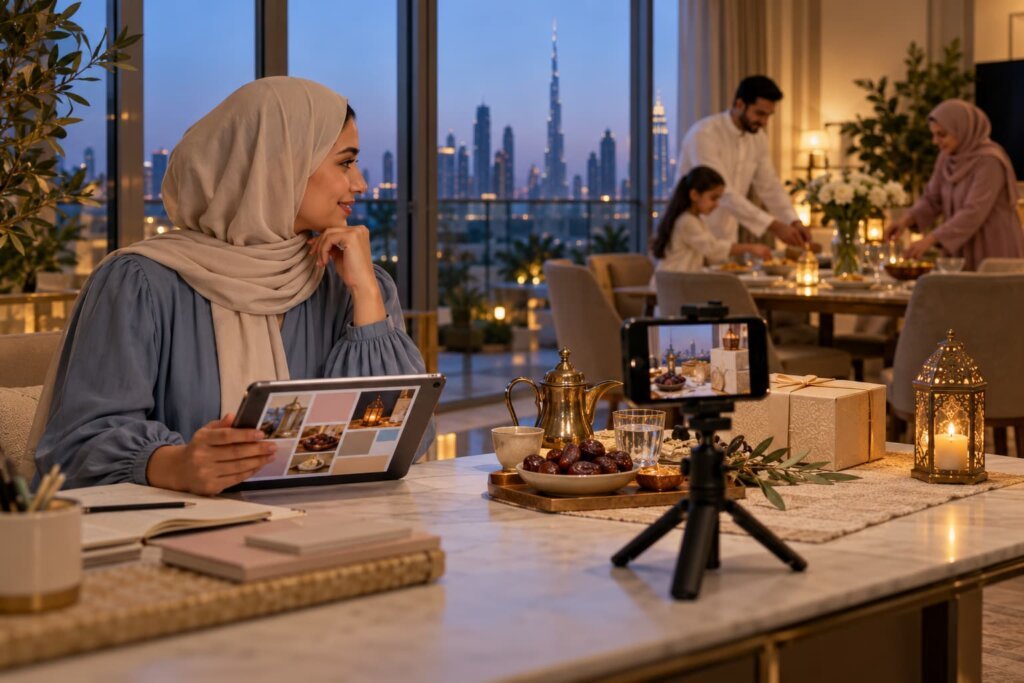
Most creator briefs are written for a normal week. Ramadan is not a normal week. Daily routines move around suhoor and iftar, screen time shifts later into the evening, and the emotional register of content changes from aspiration to reflection, generosity and family.
DigiStreet has written about this directly in its guide to digital marketing in the GCC:
“Ramadan and Eid move everything… We plan the Ramadan window as its own campaign with its own creative rather than pausing and hoping.”
In practice, that means a Ramadan brief should answer questions a regular brief never asks:
- What time of day should this content go live, given when your audience is actually scrolling?
- Does the product have a genuine role in iftar, gifting, hosting or Eid preparation, or is it being forced into the season?
- What should the creator avoid showing, saying or implying during fasting hours?
- Is there a charitable or community element, and is it authentic to the brand rather than bolted on?
A food delivery brand, a fragrance house and a fintech app will answer these very differently. That is the point. A Ramadan campaign that could run for any brand usually performs like one.
Choosing Creators: Arabic and English Are Two Audiences
Dubai’s population is overwhelmingly expatriate, which tempts brands into running a single English-language creator roster and calling it done. That misses a large part of the market.
The same DigiStreet GCC guide puts it plainly: “Arabic and English are two audiences, not one audience in two languages.” An Emirati family audience watching an Arabic-speaking creator during Ramadan is not the same audience as an Indian or British expatriate following an English lifestyle creator in Dubai Marina, even if both live in the same city.
When shortlisting, look at:
- Audience location, not creator location. Many Dubai-based creators have audiences concentrated in India, Pakistan, Egypt or Europe. Ask for audience geography screenshots from the platform itself, not a media kit summary.
- Language fit for the product. A premium oud brand may need Khaleeji Arabic voices. A tech gadget targeting expatriate professionals may do better with English or bilingual creators.
- Tier mix. Macro creators give reach and a launch moment. Micro and nano creators, often with tighter community trust, tend to sustain conversation through the month. A mix usually works better than a single big name.
- Past Ramadan content. Scroll back to their previous Ramadan posts. You will learn more about how they handle the season from twelve months ago than from any pitch deck.
- Brand safety history. Check comments, not just posts. Audience reactions tell you how a creator’s community actually perceives them.
The Compliance Step Brands Still Underestimate
The UAE’s approach to influencer advertising has tightened considerably. Under Federal Decree-Law No. 55 of 2023 on media regulation, anyone promoting products or services on social media in exchange for payment or benefit needs to be properly licensed. Reports from legal firms including Pinsent Masons and regional outlets indicate that an advertiser permit regime took full effect on 1 February 2026, after a grace period that ended on 31 January 2026.
What this means for your campaign:
- Ask every UAE-based creator for their current permit details before contracts are signed, not after content is shot.
- Build the permit check into your vetting sheet alongside audience data and rates.
- Confirm current requirements, fees and penalties directly with the UAE Media Council, because secondary sources report differing figures and the rules have been updated more than once.
- If you are working with creators based outside the UAE who are targeting UAE audiences, get specific advice on whether and how the rules apply.
We are deliberately not quoting fee amounts or fine ranges here. The figures circulating online vary widely, and a planning guide that gives you the wrong number is worse than one that tells you to check.
Platform rules apply on top of local law. On Instagram, paid content should use the Paid Partnership label: the creator tags the brand as a partner, the brand approves the tag, and both sides gain access to performance insights. If the brand wants to put paid media behind the post as a partnership ad, the creator also needs to grant permission for the brand to boost it. Build that permission into the contract.
Where Paid Media Fits in a Creator Campaign

Organic creator reach during Ramadan is valuable but unpredictable. Algorithms shift, posting times compete with prayer times and family gatherings, and a strong video can still underperform on day one.
Putting paid budget behind the best-performing creator content solves much of that. Partnership ads on Meta let you run a creator’s post through your ad account while it still appears under their handle, which usually reads as more authentic than a standard brand ad. TikTok offers a similar route through its creator content tools.
A sensible structure for a Ramadan creator campaign often looks like this:
- Seed with organic creator content in the first week of Ramadan.
- Identify the two or three pieces with the strongest early engagement and watch-through.
- Amplify those with paid budget, targeting lookalike and interest audiences in the UAE.
- Refresh creative mid-month so ads do not fatigue before the last ten nights.
- Pivot messaging toward Eid gifting and celebration in the final week.
This is where DigiStreet’s performance marketing work connects with creator campaigns. The creator produces the content; the paid team decides which pieces earn budget based on real data rather than gut feel.
Deciding What Success Looks Like Before Launch
Ramadan campaigns often get judged on vanity metrics because nobody agreed on the real goal in October. Decide upfront which of these matters most:
| Objective | Useful metrics | Metrics to treat with caution |
|---|---|---|
| Awareness for a new brand | Reach in the UAE, video completion rate, branded search lift | Follower counts |
| Consideration for a product | Saves, shares, link clicks, profile visits | Likes alone |
| Sales during the season | Tracked conversions, promo code usage, cost per acquisition | Impressions |
| Eid gifting | Add-to-cart rate, basket value, repeat purchases after Eid | Comment volume |
Use unique promo codes and tracked links per creator so you can see which voices actually drove results. That data becomes the foundation for your Eid al-Adha plan in May and for Ramadan 2028.
How DigiStreet Approaches Creator-Led Influencer Marketing in Dubai
DigiStreet runs influencer marketing as part of an integrated plan rather than as a standalone activity. Past creator work includes campaigns for brands such as Garnier, Vega and Morris Garages, including a Vega festive campaign that ran across Navratri, Diwali and the wedding season with seven pieces of content timed to each moment. The lesson from festive work in India carries over well to Ramadan: seasons have phases, and content should move with them rather than repeat one message for a month.
For brands looking at the Gulf, DigiStreet’s digital marketing agency in Dubai page sets out how the team supports UAE market campaigns across search, social and creator partnerships. That combination matters during Ramadan, when a creator video, a search ad and a landing page all need to tell the same story in the same language.
Starting the Conversation Now
If Ramadan 2027 is on your calendar, October and November are when the useful work happens: agreeing objectives, building a bilingual creator shortlist, checking permits and deciding how much of the budget will sit behind paid amplification.
If you would like help shaping that plan, share your objectives, target audience and rough budget with the DigiStreet team. A planning conversation now is far easier than a scramble in late January.
Reference Link Table
| Resource | Why It Is Relevant | URL |
|---|---|---|
| The National: Ramadan 2027 projected dates | Regional reporting on the astronomical projection for Ramadan and Eid 2027 | thenationalnews.com |
| UAE Media Council | Official regulator for media and advertiser licensing in the UAE | uaemc.gov.ae |
| Instagram Help: Branded content and Paid Partnership label | Platform rules for tagging brand partners and enabling partnership ads | help.instagram.com |
| Meta Business Help: Partnership ads | How brands run creator content as paid ads | facebook.com/business/help |
| DigiStreet Media on Instagram | Examples of DigiStreet’s creative and campaign work | instagram.com/digistreet.media |
FAQs
When does Ramadan 2027 start in Dubai?
Ramadan 2027 is projected to begin on or around 8 February 2027. The exact date is confirmed only after the official UAE moon sighting, so plan a few days of flexibility.
How early should brands plan influencer marketing in Dubai for Ramadan?
Start in October or November for a February Ramadan. That gives time for creator vetting, permit checks, bilingual scripting and approvals before content goes live.
Do influencers in the UAE need a permit for paid posts?
Yes. Under Federal Decree-Law No. 55 of 2023, paid social media promotion requires appropriate licensing, with enforcement reported from 1 February 2026. Confirm current requirements directly with the UAE Media Council.
Should a Ramadan campaign use Arabic or English creators?
Often both. Arabic-speaking and English-speaking audiences in the UAE behave differently, so treat them as separate audiences with separate creative rather than translating one script.
What type of content works best during Ramadan?
Content that fits naturally into iftar, gifting, hosting, family time or Eid preparation tends to perform better than standard product promotion. Tone usually shifts toward reflection and generosity.
Can brands run paid ads using an influencer’s post?
Yes. On Instagram, the creator uses the Paid Partnership label and grants the brand permission to boost the post, which lets it run as a partnership ad from the brand’s ad account.
How should a Ramadan influencer campaign be measured?
Agree the objective first, then track matching metrics such as video completion for awareness or tracked conversions and promo code usage for sales. Unique codes per creator show which voices drove results.
What if a brand misses the Ramadan window?
Eid al-Adha, projected around 16 to 17 May 2027, offers a second seasonal window, and learnings from any Ramadan activity can shape that campaign.