


Updated 4 October 2026.
How to Choose a Web Design Company in India
Choose a web design company by comparing its real work, written scope, mobile decisions, content responsibility, CMS handoff, testing method and ownership terms. A web design company in India should be able to show the finished work and explain the choices behind it without hiding behind a long feature list.
Start with the site’s job
Write the main visitor tasks before speaking to a supplier. A manufacturing site may need buyers to find capabilities, applications and proof. A store needs product discovery and reliable checkout. A school needs programme decisions, admissions information and enquiry routes. The company should turn those tasks into a page and template plan, not begin with colours.
List the internal jobs too. Who publishes, changes products, creates landing pages and checks enquiries? A design can look polished while making routine updates hard. Ask the team to show how a real editor completes the changes your staff will make each month.
Inspect real work with a fixed set of questions
Open three published projects on desktop and mobile. Find the client name, service or product, evidence, contact route and a detail page. Check whether the design makes those tasks obvious. Then ask which parts the company designed and built, which materials the client supplied, and what changed after launch.
A screenshot gallery is not enough. Request live links or named case material where available. Check image quality, type size, spacing, forms, error states and page speed with normal browsing. The case-study hub hub provides an example of published work organised around named clients.
Make mobile review part of selection
Ask to see one proposed page at 390 pixels during the selection exercise. The response shows whether mobile is a design input or a late resize. Navigation, table handling, form fields, tap targets, image order and sticky elements should be discussed before the desktop design is repeated across templates.
Test the portfolio sites yourself. Rotate the device, increase text size and complete a form. Watch for clipped headings, tiny controls, unexpected sideways scrolling and content covered by fixed bars. These are visible quality signals that do not require a technical audit.
Use one scorecard for every web design company
| Selection area | Evidence to request | Warning sign |
|---|---|---|
| Real work | Named live sites and an explanation of the team’s role | Only unconnected screenshots or themes |
| Scope | Template list, content owners and review rounds | A page total with no template detail |
| Mobile | 390-pixel design and working portfolio checks | Mobile discussed only after desktop approval |
| CMS | Live editing demonstration and licence list | No view of routine publishing work |
| Testing | Devices, routes, acceptance and support rules | Launch described without a test record |
Ask for a template and content inventory
A proposal should name unique templates and the content needed for each one. Home, service, product, category, case, article, contact, search and error pages are common examples, but the real list comes from the site job. A page count alone can hide several complex templates or many repeated ones.
Content responsibility needs names and dates. Decide who writes, edits, approves, photographs, migrates and enters metadata. Ask how missing material affects schedule and price. A clear team will use sample content early rather than filling the design with text that bears no relation to the final page.
Understand the CMS before signing
Request a short editing demonstration using a page similar to yours. Watch how headings, images, links, forms and reusable blocks are changed. Ask what permissions exist, how drafts are reviewed, and how a mistake is reversed. The CMS should suit the people who will own the site after launch.
Also ask which functions depend on paid plugins or third-party services. Record renewal fees, licence ownership and what happens if a tool is replaced. The website cost guide explains the broader website cost picture, including recurring charges that can sit outside the build fee.
Testing needs named devices and acceptance rules
The proposal should state which browsers, screen sizes, forms and user routes will be checked. For stores, add payment, shipping, discount and order email cases. For lead sites, test field validation, delivery, thank-you states and spam handling. Accessibility checks should cover keyboard use, focus, labels, contrast and meaningful image text.
Agree how issues are logged and what counts as accepted. Separate a defect from a new request and a personal design preference. This keeps the final stage factual. Ask for a pre-launch checklist and a short post-launch support window with response rules.
Ownership and access should be plain
The contract should name ownership of design files, custom code, copy, photography and paid assets after final payment. Domains, hosting, analytics and search accounts should sit in client-controlled access with the supplier added at the right permission level. That arrangement prevents one password from becoming the whole handoff.
Ask for a launch pack containing account list, backup method, licence notes, source files covered by the agreement and basic editing guidance. Check the maintenance offer separately. A build proposal and an ongoing support plan answer different questions and should be compared on their own terms.
Use the sales process as a small working test
Notice who asks questions and who only presents. A useful discovery conversation should cover visitor tasks, content readiness, publishing team, systems, risk and launch constraints. The team does not need every answer on the first call, but it should identify the decisions that control scope and show how they will be resolved.
Ask for the proposed project roles by name or role title. Design, development, content, project management and testing may be handled by different people. Understand who joins reviews and who has final technical responsibility. A clear team map also helps your staff send questions to the right place instead of routing everything through sales.
Review the schedule for dependencies, not only dates. Content approval, access, integrations and stakeholder availability should appear beside design and development. Ask what happens when a dependency is late and which work can continue. A realistic schedule contains decision points and client tasks, not a straight line of agency activity.
Test how change is priced. Request an example involving one new template, a changed integration and extra content migration. The company should explain the difference between a correction, a refinement inside an included round and a new request. This tells you how the commercial relationship will behave after the initial scope meets reality.
Invite the people who will run the site into the final selection. Editors, marketing staff, sales operations and IT may spot different concerns. Give them the same scorecard and ask for evidence-based notes. The decision becomes stronger when the future owners understand the CMS, access plan and support route before the contract is signed.
Turn the brief into decisions you can verify
Give the same brief
Compare teams against one set of visitor tasks.
Test at 390 pixels
Use a real page, form and navigation route.
Watch an edit
Ask the team to change content in the proposed CMS.
Read ownership terms
Confirm accounts, licences, files and final access.
Karara Ceramics gives the portfolio review a real subject
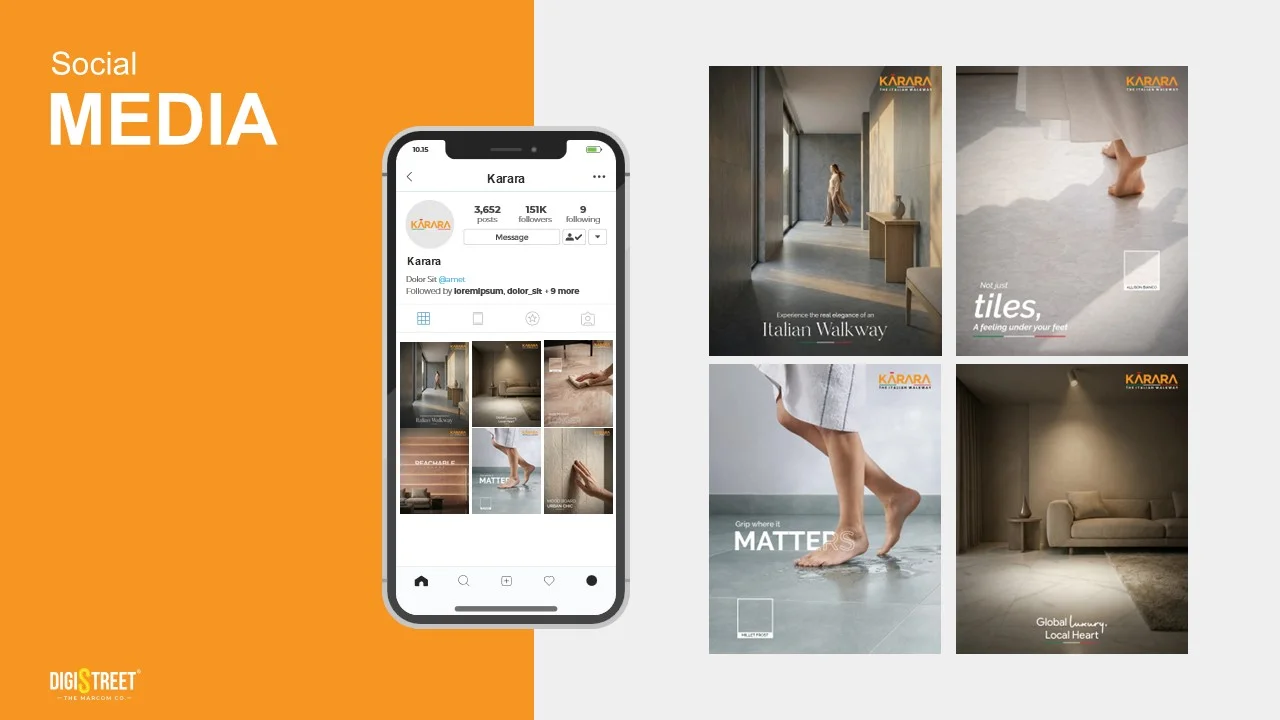
This Karara Ceramics browser image comes from a published DigiStreet creative showcase. It lets a buyer discuss material presentation, visual hierarchy, image treatment and responsive layout around a named client rather than an anonymous design exercise.
Use the same review method with every shortlisted company. Open the work, complete a task, ask what the team delivered and connect the visible result to the proposed scope.
Check the service, cost and evidence pages
References
- DigiStreet Media web design service page, accessed 4 October 2026.
- Karara Ceramics creative showcase, accessed 4 October 2026.
- DigiStreet Media website design cost guide, accessed 4 October 2026.
Frequently Asked Questions
What should I check before hiring a web design company?
Check named work, written scope, mobile design, content responsibility, CMS editing, testing, ownership and support terms.
How many portfolio sites should I inspect?
Three relevant live projects are enough for a serious first review when you test the same visitor tasks on each one.
Should I ask for a design sample before hiring?
Ask for a paid discovery or a focused approach discussion; judge complete published work and thinking rather than free speculative screens.
Who should own the domain and hosting?
The client should control the main accounts and give the web company the permissions needed for its work.
What should a website proposal include?
It should name templates, functions, content owners, review rounds, testing, licences, schedule, acceptance and post-launch support.
How do I compare two website quotes?
Put both against the same template, content, CMS, testing and ownership checklist before comparing totals.
Bring the visitor tasks and page inventory
Share the current site, required templates, publishing team and launch constraints. We can return a written scope that is easy to compare.