

Updated 4 October 2026.
How to Choose a Social Media Marketing Agency
Choose a social media marketing agency by checking real published work, the role assigned to each channel, the content production system, approval speed, community handling, paid-media boundaries and the reports used to make decisions. Good social media management services should make these operating details clear before asking for a monthly commitment.
Decide what social media is meant to change
Write the business task for each channel. One may support product education, another recruitment, another retailer demand, and another paid lead generation. A team should be able to explain why a format and publishing pace suit that task. Posting frequency without a channel role turns the proposal into an output count.
Also decide which actions are realistic. A complex B2B product may use social media to build familiarity and support sales conversations. A consumer offer may move directly to a store or enquiry. The agency should connect content to the buyer’s next useful step instead of attaching the same call to every post.
Review work by client and format
Ask for named work that matches the formats you need: static creative, carousel, short video, event coverage, thought leadership or community responses. Inspect the writing, visual clarity and consistency across several posts. One strong campaign frame does not show how the account is maintained over time.
Request the team’s role in each example. Did it plan, shoot, design, write, publish, buy media or report? This prevents a portfolio from taking credit for work supplied by the client or another partner. The creative showcase contains published named work that can be reviewed this way.
The content engine needs real inputs
Social teams need access to products, people, events, customer questions and business updates. Ask how material will be collected each month. A calendar built without those inputs usually repeats generic themes. The proposal should state who interviews experts, who attends shoots and how far ahead the agency needs information.
For video, define whether the team shoots, edits supplied footage or commissions creators. Name the number of shoot days, locations and finished edits. The UGC video production service covers creator-style ad production, while the influencer marketing service service covers creator partnerships. These are distinct scopes from routine account management.
A practical social agency selection scorecard
| Selection area | Evidence to request | Decision to record |
|---|---|---|
| Channel role | Plan linking each channel to a business task | Which channels are in scope and why |
| Real work | Named examples in the required formats | What the agency produced itself |
| Content inputs | Monthly source and shoot plan | Who supplies products, people and approvals |
| Community | Hours, response rules and escalation map | Which messages move to sales or support |
| Reporting | Sample report and decision log | What changes after each review |
Approvals determine the publishing pace
Ask to see the approval flow. It should show when the calendar arrives, where comments live, who combines client feedback and how urgent changes are handled. A two-day post can take two weeks when five people reply separately. One client owner should release final decisions.
The team should also have a clear route for sensitive topics, factual corrections and scheduled posts affected by events. Escalation is an operating decision, not a line buried in the contract. Agree who can pause publishing and who answers outside normal review meetings.
Community management must have boundaries
Comments and direct messages can contain product questions, complaints, job requests, spam and private information. The proposal should state monitored hours, response types, escalation contacts and the records kept. Approved answer guidance helps routine questions move quickly without forcing the social team to invent policy.
Ask how the agency handles messages that need customer service, sales or legal input. A tagged handoff is better than copying a screenshot into a chat group. The monthly review should show repeated questions because those questions can inform product pages and future content.
Separate organic work from paid media
Organic planning, content production, community work and paid campaign management use different time and tools. Put them on separate lines. If the agency manages media, ask which platforms, audiences, creative versions, tracking and reporting are included. Media spend should remain visible outside the management fee.
DigiStreet’s paid-media management rule is the higher of 15% of monthly spend or ₹50,000 plus GST, with the published rate bands for larger budgets. The performance marketing service page explains that service. Use the rule only for a paid-media scope, not as a substitute for a social management quote.
Reports should end in decisions
A useful report links posts, audience response and business actions. It shows which formats were saved, shared, watched or clicked where those measures fit the channel. It also records content delayed by missing inputs and common questions found in comments. Raw reach totals alone do not guide the next calendar.
Ask the team to show a sample decision log. Each review should lead to a change in topic, format, opening frame, publishing time, community answer or paid distribution. The social media marketing cost guide gives a separate view of social media management cost, which helps keep selection criteria and budget questions in their proper places.
Use the proposal stage to test the working relationship
Give each shortlisted team the same recent month of inputs: product news, event dates, available people, approved images and two business priorities. Ask how it would turn those inputs into a calendar. You are testing selection and reasoning, not requesting free finished creative. The response should show choices and missing information.
Ask who will attend the monthly meeting and who works on the account each week. Strategy, writing, design, video, publishing, community and media may be split across people. Understand how they share context and who owns the final calendar. The account lead should be able to explain the work without waiting for every specialist.
Set a small urgent-change scenario. A product date moves after a post is approved, or a comment raises a customer issue. Ask how the team pauses, edits, re-approves and records the change. The answer reveals the communication route and whether urgent work depends on informal messages that are easy to miss.
Inspect the asset library and naming approach. A busy account quickly collects product images, approvals, raw footage, captions and exports. The agency should keep files searchable and preserve the approved version. Confirm where the library sits, who owns access and what is transferred at the end of the engagement.
Agree how experiments enter the calendar. A new format should have a reason, a defined audience signal and a review date. The team should be able to try ideas without turning every post into a test. Recording the question behind an experiment makes weak work easier to stop and useful work easier to repeat.
Ask how holidays, launches and events change capacity. A busy month may need shoots, live coverage, rapid edits and longer monitoring hours. The agency should identify that extra work while the calendar is being agreed. Seasonal demand should appear in staffing and approval dates rather than arriving as an emergency request inside a fixed monthly output count.
Turn the brief into decisions you can verify
Give each channel a job
Remove channels with no clear audience or task.
Trace portfolio ownership
Ask what the agency planned, produced and managed.
Time the approval route
Name the client owner and response window.
Read a sample report
Look for decisions, not a page of totals.
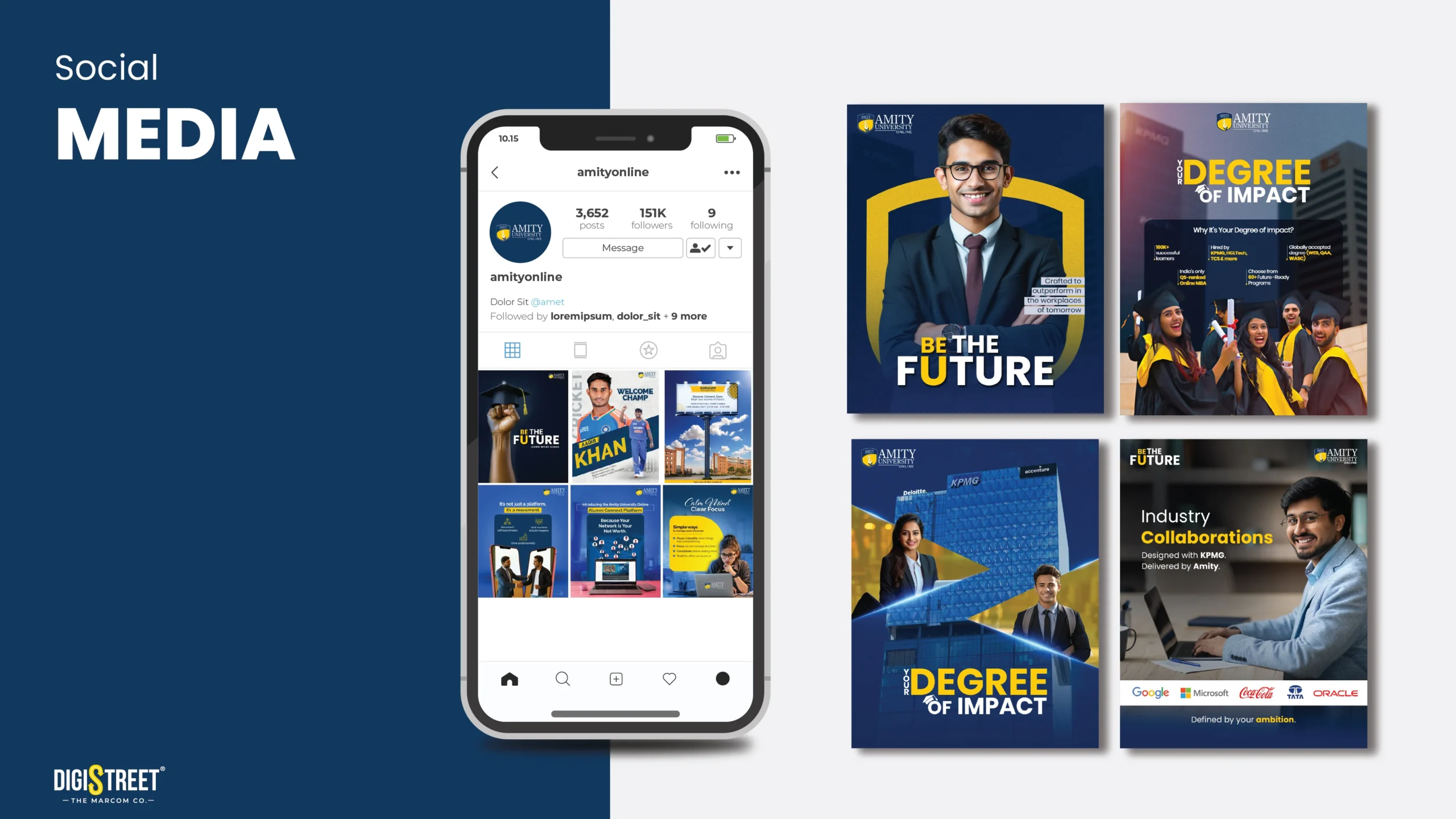
Amity work makes production quality visible
This Amity creative comes from a published DigiStreet showcase. It gives the selection discussion a named piece of client work, with visible type, image treatment and feed presentation. No campaign result is invented beside it.
Ask the agency to show several connected pieces and explain the source material, approval route and format choices. That conversation reveals how the monthly content system works beyond one polished frame.
Check the service, cost and evidence pages
References
- DigiStreet Media social media management page, accessed 4 October 2026.
- Amity creative showcase, accessed 4 October 2026.
- DigiStreet Media social media cost guide, accessed 4 October 2026.
Frequently Asked Questions
What should I look for in a social media marketing agency?
Look for named work, clear channel roles, a content production plan, workable approvals, community rules and decision-led reports.
Should one agency handle organic and paid social?
It can, but organic management, production, media spend and paid campaign management should have separate scopes and costs.
How do I verify an agency portfolio?
Ask for named published work and the exact role the team played in planning, production, publishing, media and reporting.
Who should approve social media posts?
One client owner should combine internal feedback and release a final decision within the agreed review window.
Does social media management include replying to messages?
Only when monitored hours, response types, escalation rules and responsible contacts are written into the scope.
What should a social media report contain?
It should connect published work and audience response to the content and operating decisions for the next period.
Put the channels and approvals in writing
Share the business task, current accounts, required formats, content inputs and approval team. We can turn them into a clear monthly scope.