

Updated 4 October 2026.
Practical buying guide
Choose on technical SEO competence, source quality, entity clarity, answer design, monitoring and evidence from real search surfaces. Use this guide when briefing an AEO and GEO agency.
AEO and GEO sit on top of search fundamentals. An agency should be able to explain crawl access, indexing, page intent and internal linking before it discusses answer formats or AI visibility.
The proposal should separate work the team controls from observations it measures. Content structure, source attribution and technical fixes are controllable. The wording selected by a search system is observed through repeatable checks.
Look for a method that records queries, surfaces, dates and cited domains. A screenshot without that context is decoration, not a monitoring system.
The aim is clearer, source-backed pages that can earn visibility across classic and AI-assisted search. That outcome gives the buying team a firmer basis than presentation style or an isolated headline metric.
Six tests for serious AI-search work
For an AEO and GEO partner review, ask every supplier for the same evidence and record the answer beside the scope.
SEO fundamentals are explicit
The plan should cover crawlability, indexability, canonical signals, page purpose, internal links and content quality before adding answer-layer work. Request a technical baseline, a priority list and the owner of each change.
Ask, “Which search foundation issues can block this page from being eligible?” The answer should be specific enough to enter the scope, not left as a promise for later.
This anchors the scope in systems the site can improve. Give full credit only when the proposal identifies the owner, deliverable and review point.
Entities are defined with evidence
Products, companies, people and places need consistent names, relationships and source-backed facts across the site. Request an entity inventory, source list, naming rules and pages where each fact belongs.
Ask, “Which facts help a system understand this company and its offer?” The answer should be specific enough to enter the scope, not left as a promise for later.
This prevents vague copy from being mistaken for entity work.
Answers match real questions
The content plan should connect customer questions to concise answers, supporting detail and a useful next action. Request query evidence, answer outlines, source requirements and page mapping.
Ask, “Why does this question belong on this page, and what evidence supports the answer?” The answer should be specific enough to enter the scope, not left as a promise for later.
This keeps the work useful to readers as well as machines.
Sources are named and dated
Claims should link to primary or authoritative material, with dates that let an editor judge freshness. Request a claim ledger showing source, date, page and review owner.
Ask, “Which statements require an external source or an internal record?” The answer should be specific enough to enter the scope, not left as a promise for later.
This creates an editorial control that survives staff changes.
Monitoring is repeatable
Checks should use the same query set, locations, signed-in state and recording format at stated intervals. Request query groups, baseline captures, dates, cited sources and change notes.
Ask, “How will next month’s observation be comparable with this month’s?” The answer should be specific enough to enter the scope, not left as a promise for later.
This gives changes a stable frame.
Reporting connects to page work
The report should link visibility observations to pages changed, sources added and technical issues resolved. Request page-level change logs, classic-search data and recorded AI-search observations.
Ask, “What edit or investigation follows each reported change?” The answer should be specific enough to enter the scope, not left as a promise for later.
This keeps the report connected to work the team can act on.
Score evidence, not terminology
Use the same questions for every proposal, even when agencies use different names for AI-search services.
| Area | Evidence to request | What it tells you |
|---|---|---|
| Technical base | Crawl, index and page baseline | Eligibility issues are visible |
| Entity work | Fact and source inventory | Names and relationships stay consistent |
| Answer planning | Question-to-page map | Content has a clear job |
| Monitoring | Repeatable query and date record | Changes can be compared |
| Reporting | Page changes linked to observations | Actions follow evidence |
Score the evidence on a simple zero-to-two scale: absent, partly defined or ready to place in the agreement. Discuss the lowest-scoring operating areas before reopening the price conversation.
Use a page-level working test
Choose one commercial page
Give each agency the same service or product page and the questions customers ask before buying.
A narrow test makes it easier to compare technical thinking, answer structure and sourcing without rewarding slide volume.
Ask for the baseline
Request the crawl, index, intent, internal-link and entity checks that would happen before content changes.
The response should identify page-level evidence and priorities rather than use AI-search labels as the explanation.
Inspect one answer outline
Ask for a proposed answer, the detail beneath it, the source and the internal path to a commercial next step.
Check whether the answer is direct, readable and genuinely supported. Formatting alone is not a content strategy.
Review the monitoring sheet
Have the agency show how it records classic-search data and observations from AI-assisted surfaces over time.
The sheet should preserve query, date, location and citation context so a later check can be compared.
What the written recommendation should contain
A recommendation for an AEO and GEO partner review should begin with the business problem, the evidence reviewed and the constraint selected for action. It should explain how SEO fundamentals are explicit and Entities are defined with evidence affect the proposed scope, with a named owner for every material handoff.
The document should repeat the central direction in plain language: Choose on technical SEO competence, source quality, entity clarity, answer design, monitoring and evidence from real search surfaces. It should then state the deliverables, review dates, approval route and commercial assumptions that make the direction workable. This is also the place to define what counts as completed work and which record will be used at the review meeting.
Evidence should sit beside each recommendation rather than in an appendix that nobody can trace. Connect Monitoring is repeatable with the agreed measurement view, and connect Reporting connects to page work with the person who will use the finding. The final document should create clearer, source-backed pages that can earn visibility across classic and AI-assisted search, while leaving the team with a clear reason for the next allocation of time and money.
Use published SEO pricing as the commercial baseline
DigiStreet includes AEO and GEO visibility monitoring in every SEO tier. Starter is ₹50,000 plus GST a month for up to 30 keywords, and Growth is ₹75,000 for up to 50.
Scale is ₹1,25,000 plus GST a month for up to 80 keywords. Resource-based delivery is ₹2,00,000 a month for two dedicated specialists when keyword counts are the wrong planning unit.
Compare proposals by the pages, technical work, content work, monitoring set and reporting responsibility included. A separate AI-search label does not reveal how much usable work will reach the site.
Put the selected commercial model beside the deliverables, approval responsibilities and reporting period. A price is ready for approval when the team can explain exactly what changes if volume, rights, markets or channel responsibility changes.
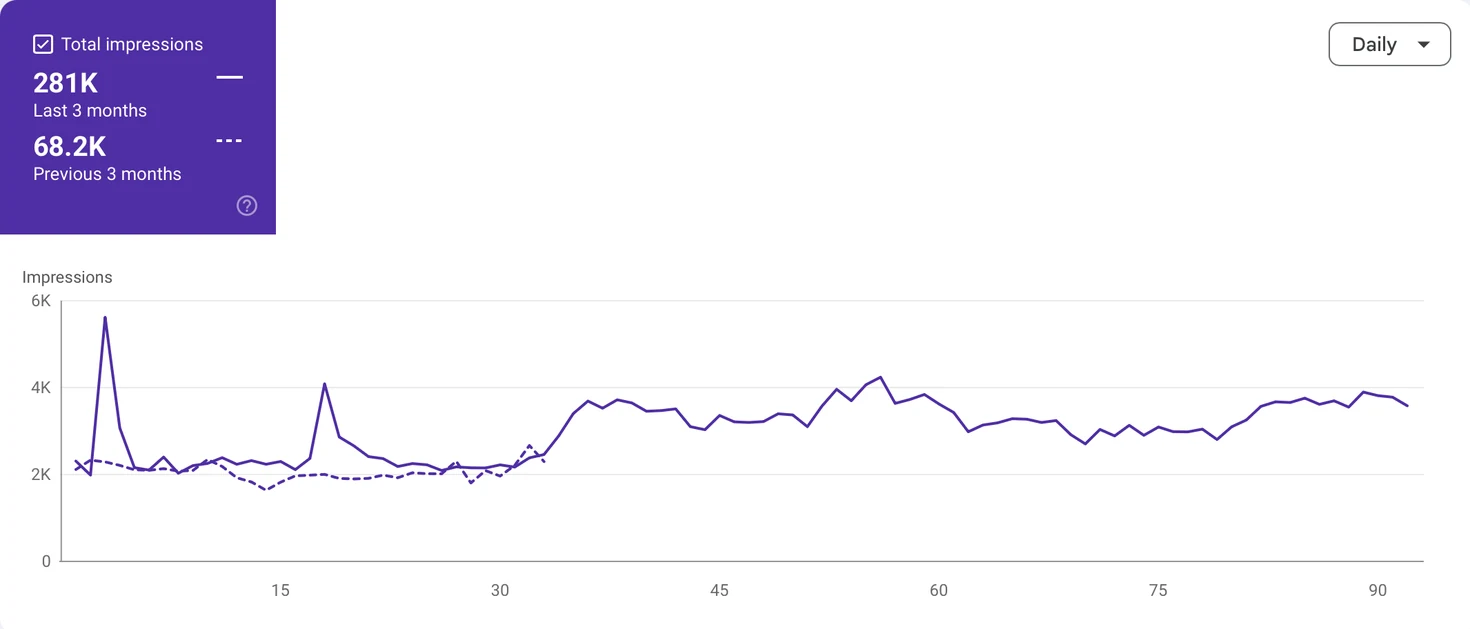
Ask for dated search-surface evidence
The Intex chart above is a real case-study asset with a defined measure and date context. Evidence like this is more useful than a logo wall because a reviewer can ask how it was collected and what page work sat beside it.
A credible review also includes classic-search data. AI-assisted visibility and ordinary search performance belong in the same operating picture because both depend on accessible, useful pages.
Continue with the source material
Use the linked service, cost and case pages to verify scope details and inspect the work behind the examples.
Frequently Asked Questions
What is the first thing to check in an AEO and GEO agency?
Check whether its plan begins with technical SEO, page purpose and useful source-backed content. Those foundations support every search surface.
Should AEO and GEO be separate from SEO?
They can be separate reporting views, but the page work should stay connected to crawl, index, content and authority fundamentals.
What should AI visibility reporting contain?
It should contain the query, surface, date, location, cited domains, observed answer and the related page work.
How can I check an agency’s GEO case study?
Ask for the dated chart, collection method, relevant pages and the changes made during the reported period.
Does schema alone create AEO visibility?
No. Structured data can clarify supported page information, while eligibility still depends on accessible and useful content that follows search policies.
How much do AEO and GEO services cost at DigiStreet?
They are included with SEO plans from ₹50,000 plus GST a month, with scope increasing across Starter, Growth, Scale and resource-based tiers.
Put the decision into a clear brief
Share the objective, market, current evidence and the decision date. We will answer with a defined scope and the published commercial model.