
India’s wedding industry has reported roughly forty-eight lakh marriages happening within a single sixty-day window during peak season, and a significant share of that spending flows through Delhi NCR, home to some of the country’s biggest wedding budgets and its most fashion-conscious buyers. Fashion brand marketing in Delhi during this period is really two campaigns stitched together, one built around Diwali gifting and festive dressing, and a much bigger one that starts the moment Diwali ends and the wedding season proper begins.
Premium labels that treat this as one generic “festive sale” campaign leave real money on the table, because a bride’s mother shopping for a sangeet lehenga and a young professional buying a Diwali kurta set are not the same customer, don’t share a budget, and definitely don’t respond to the same creative.
Separate the Festive Shopper From the Wedding Shopper Early
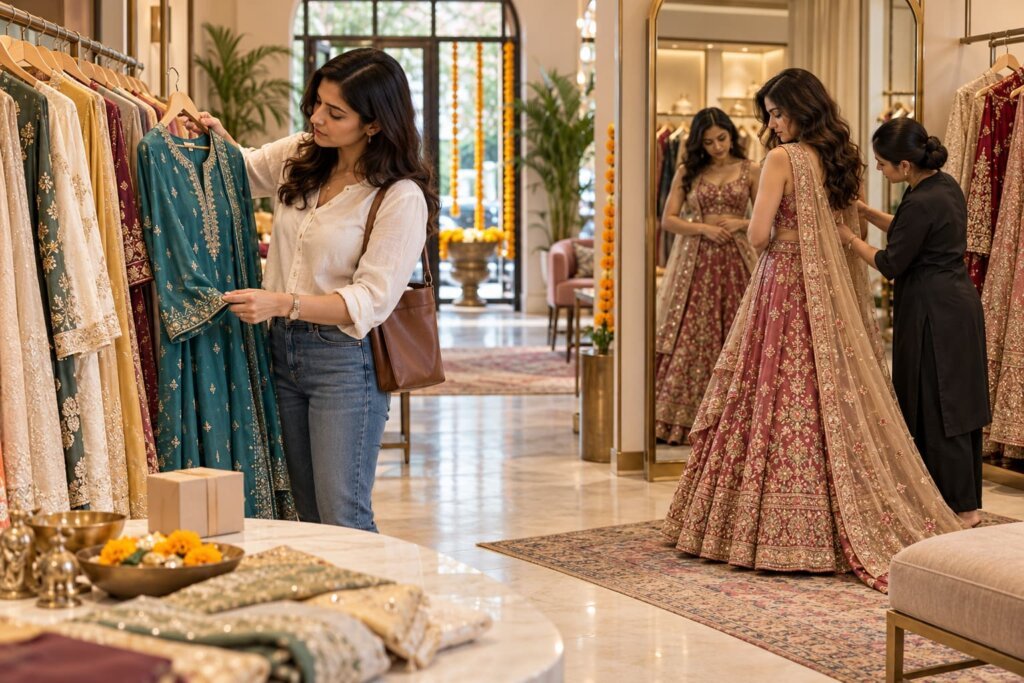
Diwali-season shopping and wedding-season shopping overlap on the calendar but rarely overlap in intent. A Diwali buyer is usually working with a defined, moderate budget and a shorter decision cycle, while a wedding shopper, buying for a sangeet, reception, or the wedding itself, spends significantly more per piece and takes considerably longer to decide, often trying multiple options before committing.
Running one undifferentiated campaign across both audiences means either underselling to wedding shoppers who would have spent more, or overwhelming Diwali gift buyers with bridal pricing that scares them off entirely. Digistreet builds these as genuinely separate campaigns, different creative, different messaging, different landing experiences, rather than one banner trying to speak to both.
Delhi’s Premium Buyer Still Shops Both Ends of the Market
A Delhi customer buying from a premium label at DLF Emporio or Select Citywalk is frequently the same person who also browses Chandni Chowk for certain pieces, and understanding this dual behaviour matters for how a premium brand positions itself during festive season. The label competing purely on price against Chandni Chowk’s wholesale rates loses that fight badly. The label competing on craftsmanship, exclusivity, and a shopping experience Chandni Chowk simply can’t offer wins the same customer on a different piece entirely.
Festive campaigns for premium labels should lean hard into this distinction, positioning around limited runs, designer collaborations, and genuine craftsmanship detail, rather than discount-led messaging that puts the brand in a race it was never built to win.
Start the Wedding-Season Campaign Before Diwali Even Ends
The biggest mistake premium fashion labels make in Delhi is waiting until after Diwali to shift focus toward wedding-season content, right when the actual booking and shopping decisions for October and November weddings are already well underway. Serious wedding shoppers start researching outfits weeks, sometimes months, before the event, which means a campaign launched only after Diwali reaches a customer who has often already decided.
Teaser content, early-access previews, and behind-the-scenes collection reveals running alongside the Diwali campaign, rather than after it, capture this earlier decision window. This overlap period, roughly the two to three weeks around Diwali itself, is where premium labels either build a genuine head start or hand it to a competitor who moved earlier.
Influencer Content Needs a Different Budget for Occasion Wear
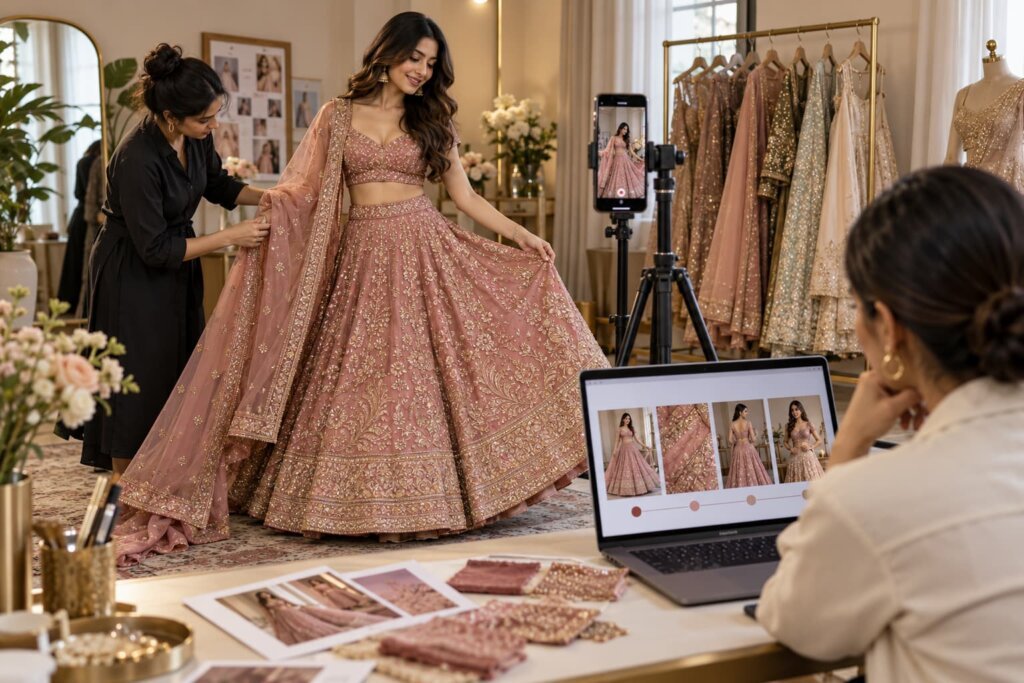
Daily wear and occasion wear behave completely differently in how they convert through influencer and social content, and premium labels often apply one influencer strategy across both. A kurta set influencer post can convert relatively quickly on a modest budget. A bridal lehenga, often priced many times higher, needs sustained visibility across several influencer touchpoints before a buyer commits, since nobody purchases a wedding outfit off a single Instagram post.
Digistreet’s approach to this kind of high-consideration, high-AOV fashion category treats influencer content as a nurture sequence rather than a one-off push, pairing initial discovery content with retargeting and follow-up touchpoints that stay visible through a wedding shopper’s genuinely longer decision cycle.
Paid Campaigns Need Different Targets for Different Price Points
A festive campaign judged purely on cost per click or cost per follower misses what actually matters for a premium label: return on ad spend against genuinely different price points. Daily festive wear typically returns steady, predictable performance at moderate spend, while occasion and bridal wear, priced considerably higher per piece, needs a longer attribution window and different success benchmarks entirely, since a single bridal sale can be worth dozens of daily-wear transactions.
Retargeting deserves particular attention for the wedding segment specifically, since almost nobody buys a bridal outfit on a first visit. A shopper who viewed a lehenga collection two weeks ago and never returned is still a live prospect, not a lost one, and a proper remarketing sequence built around this longer window recovers sales a campaign optimised only for immediate conversion simply never sees.
Building Fashion Brand Marketing in Delhi as One Connected System
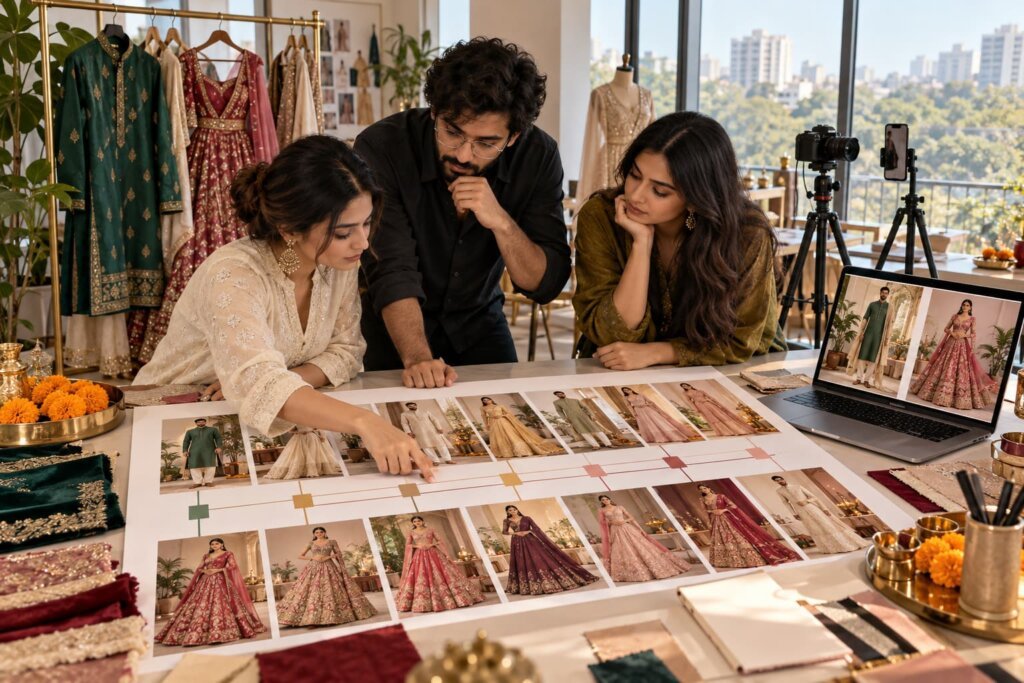
Fashion brand marketing in Delhi during this stretch works best when Diwali and wedding-season campaigns run as one connected calendar rather than two disconnected pushes handled separately. The audience segmentation, the premium positioning against Delhi’s mixed retail landscape, the early wedding-season head start, and the different paid and influencer treatment for daily versus occasion wear all need planning together, not bolted on as the season progresses.
Digistreet builds this kind of connected festive and wedding-season campaign for fashion labels navigating exactly this Delhi market, and starting the conversation now leaves enough time to launch the wedding-season content before competitors even begin.
Where to Look Next
| Resource | What’s There |
|---|---|
| Creative Communication Services | The brand identity and campaign creative work behind festive fashion launches |
| Social Media and Performance Marketing | Combined content and paid retainer for occasion-wear retargeting |
| Brand Video Production | Collection reveal and bridal content, ₹15,000 + GST per video |
| DigiStreet Instagram | Recent fashion and festive creative work |
For how we plan a fashion season end to end, from the store to creator films and Shopping ads, see digital marketing for fashion brands.
FAQs
Should fashion brand marketing in Delhi treat Diwali and wedding season as one campaign?
No, the two audiences have different budgets and decision cycles, and separating the campaigns with distinct creative and messaging usually performs better than one combined push.
When should a premium label start its wedding-season campaign in Delhi?
Before Diwali ends. Serious wedding shoppers begin researching outfits weeks ahead of their event, and a campaign launched only after the festival reaches many buyers too late.
How should a premium label position itself against Chandni Chowk’s wholesale pricing?
By leaning into craftsmanship, exclusivity, and shopping experience rather than competing on price, since Delhi’s premium buyers shop at both ends of the market for different reasons.
Does influencer marketing work the same way for daily wear and bridal wear?
No, bridal and occasion wear typically need sustained, multi-touchpoint influencer content given the much longer decision cycle, while daily wear converts faster on lighter exposure.
Why does retargeting matter more for bridal fashion than everyday festive wear?
Bridal purchases rarely happen on a first visit, so a shopper who viewed a collection weeks earlier is often still a genuine prospect, and proper remarketing recovers sales that a same-visit-only strategy misses.