


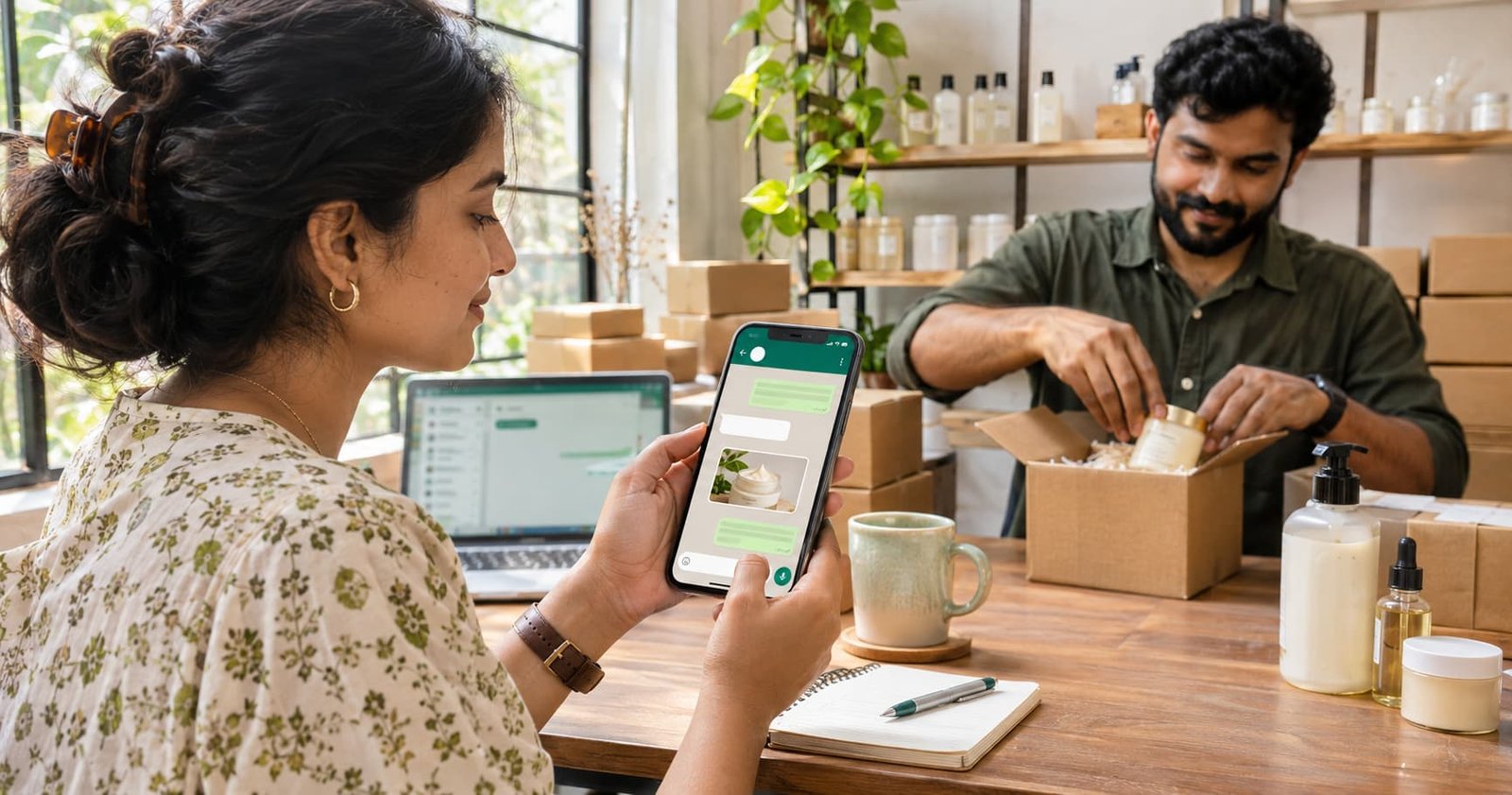
A D2C founder sees a thousand abandoned carts in a week and wonders whether a WhatsApp message could win some back. It might, but only if the customer agreed to receive it, the template fits Meta’s rules and the cost per message makes sense. WhatsApp marketing for D2C brands works best as a set of well-timed journeys, not as a broadcast tool.
How WhatsApp Marketing for D2C Brands Works
Brands send business messages through the WhatsApp Business Platform, usually with a Business Solution Provider (BSP) that supplies the dashboard, automation and support. Messages fall into categories such as marketing, utility, authentication and service. Marketing messages promote products or offers, utility messages support an existing transaction such as an order update, and service messages reply to a customer within an open window.
Messages that start a conversation outside the open window must use a pre-approved template. That is why template design and consent both matter.
Start With Opt-In
Get clear permission before you send marketing messages. Add an opt-in checkbox at checkout, offer WhatsApp updates on product pages and collect consent in post-purchase flows. State what people will receive, such as order updates or offers. Record the date, source and consent text, and honour opt-outs immediately.
A smaller, willing list usually serves the brand better than a large unwilling one. Complaints and blocks can hurt quality ratings and message limits.
Understand the Costs

Check the latest rates before you budget, because pricing changes. One vendor article, which cites Meta’s documentation and notes that rates change quarterly, lists India rates effective 1 July 2026 as about ₹0.8631 for a marketing message and ₹0.1150 for utility and authentication messages. The same article says free-form service replies inside an open 24-hour window are not charged until 30 September 2026, with service messages becoming chargeable from 1 October 2026 after 1,000 free service messages per month, and that utility templates sent in reply to a user will become chargeable again. It says India is not among the markets whose rates change on that date.
These figures come from a vendor source and I could not open Meta’s own pricing page, so confirm them on Meta’s rate card before you plan. Meta charges per message, billed on the WhatsApp Business account. BSP subscription or platform fees are separate commercial terms, so ask your provider for a full quote that includes taxes such as GST.
| Cost item | Who sets it | Note |
|---|---|---|
| Per-message fee | Meta | Depends on category and country |
| BSP or platform fee | Your provider | Varies by plan and features |
| Creative and copy | Your team or agency | Templates need clear wording |
| Staff time | Your team | Replies need quick handling |
As a hypothetical example, at the vendor-cited ₹0.8631 per marketing message, sending one marketing template to 10,000 opted-in customers would cost roughly ₹8,631 in Meta fees before taxes and BSP charges. Use current rates before relying on that maths.
Five Flows Worth Building First
- Order updates: Confirmation, dispatch, out for delivery and delivered. These are utility messages and build trust.
- Abandoned cart recovery: One reminder, sent a few hours after abandonment, with the product name and a link back to checkout. Avoid sending three reminders.
- Back-in-stock alerts: Message people who asked to be notified.
- Post-purchase care: Usage tips, review requests and replenishment reminders.
- Re-engagement: A gentle offer for lapsed buyers who opted in.
Start with order updates because they deliver value without feeling pushy. Add marketing flows once customers expect to hear from you.
Write Templates People Will Read
Keep templates short and clear. Use the customer’s first name, the product they viewed and a single next step. Avoid misleading claims and respect Meta’s template policies, since rejected templates cost time.
Here is a sample abandoned-cart template: “Hi {{1}}, your {{2}} is still in your cart. We have kept it ready for you. Complete your order here: {{3}}.” The wording is plain, personal and useful. Test two or three variants, and change only one element at a time, such as the first line or the button label.
Map the Customer Journey
Do not treat WhatsApp as a separate channel. Connect it to email, ads and your website. A customer who abandons a cart might receive a WhatsApp message first, an email later and a retargeting ad if neither works. Set frequency rules so one person does not receive the same reminder everywhere at once.
DigiStreet Media provides digital marketing strategy and conversion rate optimization services that can help plan these customer journeys.
Measure More Than Clicks
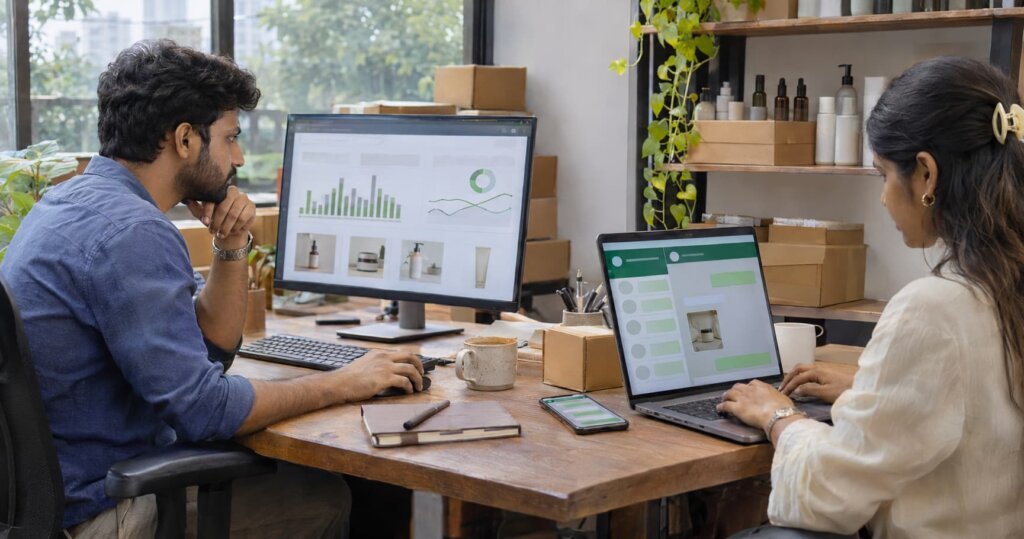
Track delivery rate, read rate, click rate, recovered orders, revenue per message and opt-out rate. Compare recovered orders with a holdout group of similar customers who did not receive the message. Otherwise you may credit WhatsApp for orders that would have happened anyway.
Also watch quality signals. If blocks or reports rise, reduce frequency and improve relevance. Measure profit as well, because discounts and shipping can eat into recovered revenue.
Common Setup Problems
Many brands buy tools before they plan flows. Others upload purchased lists, ignore opt-outs or send long promotional text. Some forget to staff the inbox, so customers reply and nobody answers. Treat WhatsApp as a conversation, and assign someone to respond.
Segment Your Audience Before You Send
Not every opted-in customer should receive every message. Segment by behaviour, such as new buyers, repeat buyers, cart abandoners and customers who viewed a product but did not buy. Add product category and language preference where you have them.
Segmentation reduces annoyance and improves relevance. A first-time buyer may want a usage guide, while a repeat customer may prefer early access to new launches. Start with three or four segments, and add more only when you can manage them.
Handle Replies and Support
Many customers reply to WhatsApp messages with questions. Decide who answers, how fast and with what tone. Set working hours, use quick replies for common questions and hand over complex cases to a person. Auto-replies should say clearly when a human will respond.
An unanswered chat does more damage than a missing campaign. If your team cannot support replies, reduce the volume of marketing messages until it can.
Protect Your Quality Rating
Meta monitors how recipients respond to your messages, and poor signals can limit what you can send. Keep your lists clean, send only relevant content and give people an easy way to opt out. Watch block and report rates after each campaign, and pause a template that performs badly.
A careful rollout works best. Send to a small segment first, review results and then scale.
A Sample 30-Day Journey
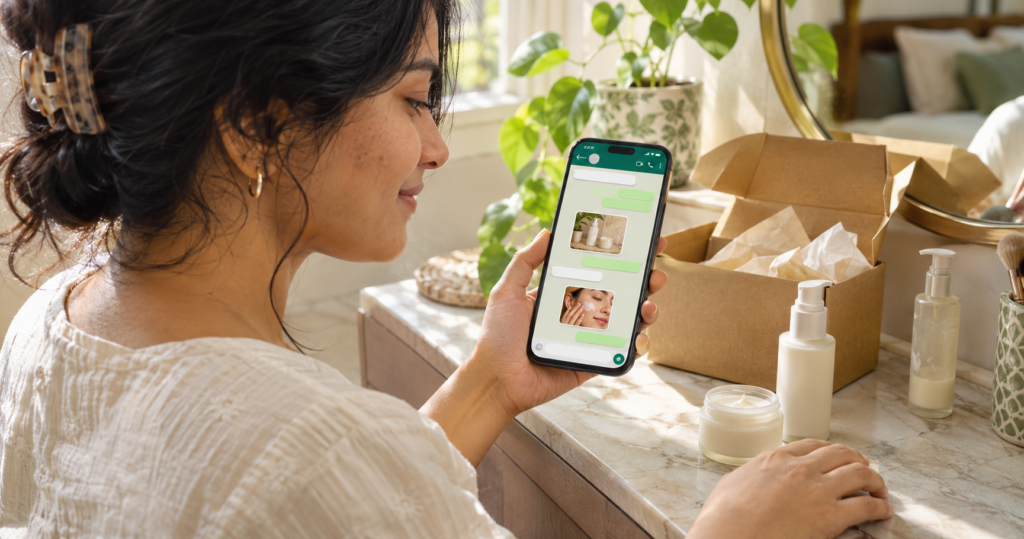
This is a hypothetical example for a skincare brand. On day zero, the customer buys and receives an order confirmation. On day two, a dispatch message shares tracking. On day five, a delivery message arrives with a short usage guide. On day twelve, a review request goes out after the customer has used the product. On day twenty-five, a replenishment reminder offers an easy reorder link.
Only the first three messages are transactional. The review and reorder messages need appropriate consent and category selection, so check the template category and your opt-in records before launch.
Document your rules in one shared page: who can create templates, how often a customer can hear from you, which events trigger messages and how consent is recorded. New team members then follow the same standard from day one.
Build a WhatsApp Plan You Can Defend
Good WhatsApp marketing for D2C brands rests on consent, useful flows and honest cost tracking. Begin with order updates, add one recovery flow and test before scaling. If you want help connecting messaging with ads, email and conversion work, you can reach out to DigiStreet Media to discuss a customer journey plan.
Reference Links
| Relevant Topic or Resource | Why It Is Relevant | Verified Link |
|---|---|---|
| DigiStreet Media digital marketing services | Supports integrated customer journey planning | https://digistreetmedia.com/services/digital-marketing/ |
| DigiStreet Media conversion rate optimization | Supports checkout and landing page improvement | https://digistreetmedia.com/services/digital-marketing/conversion-rate-optimization/ |
| DEV Community: WhatsApp Business Platform pricing in rupees (vendor article, cites Meta’s rate card) | Source for the India rates quoted; confirm on Meta’s page | https://dev.to/preciousky_45d956626d31c3/whatsapp-business-platform-pricing-in-rupees-and-the-two-things-that-change-on-1-october-2026-4ko0 |
| Meta: WhatsApp pricing documentation | Official source to confirm current rates | https://developers.facebook.com/docs/whatsapp/pricing |
Frequently Asked Questions
How much does WhatsApp marketing cost in India?
Meta charges per message by category, and a BSP may add platform fees. One vendor article cites about ₹0.8631 per marketing message from 1 July 2026, so check Meta’s current rate card.
Do I need opt-in for WhatsApp marketing?
Yes. Get clear permission before sending marketing messages, record consent and honour opt-outs.
What are the WhatsApp message categories?
Marketing, utility, authentication and service. The category affects both template rules and cost.
What is a WhatsApp message template?
It is a pre-approved message format used to start conversations outside an open customer service window. Meta reviews templates before use.
Which WhatsApp flows should D2C brands build first?
Start with order updates, then add abandoned-cart recovery, back-in-stock alerts, post-purchase care and re-engagement.
Does WhatsApp abandoned cart recovery work?
It can, but results vary. Use a holdout group to check whether recovered orders were incremental.
Are BSP fees separate from Meta charges?
Yes. Meta bills per-message fees, while BSP subscription or platform fees follow your provider’s commercial terms.
How do I measure WhatsApp marketing results?
Track delivery, read and click rates, recovered orders, revenue per message and opt-outs, and compare against a holdout group.