



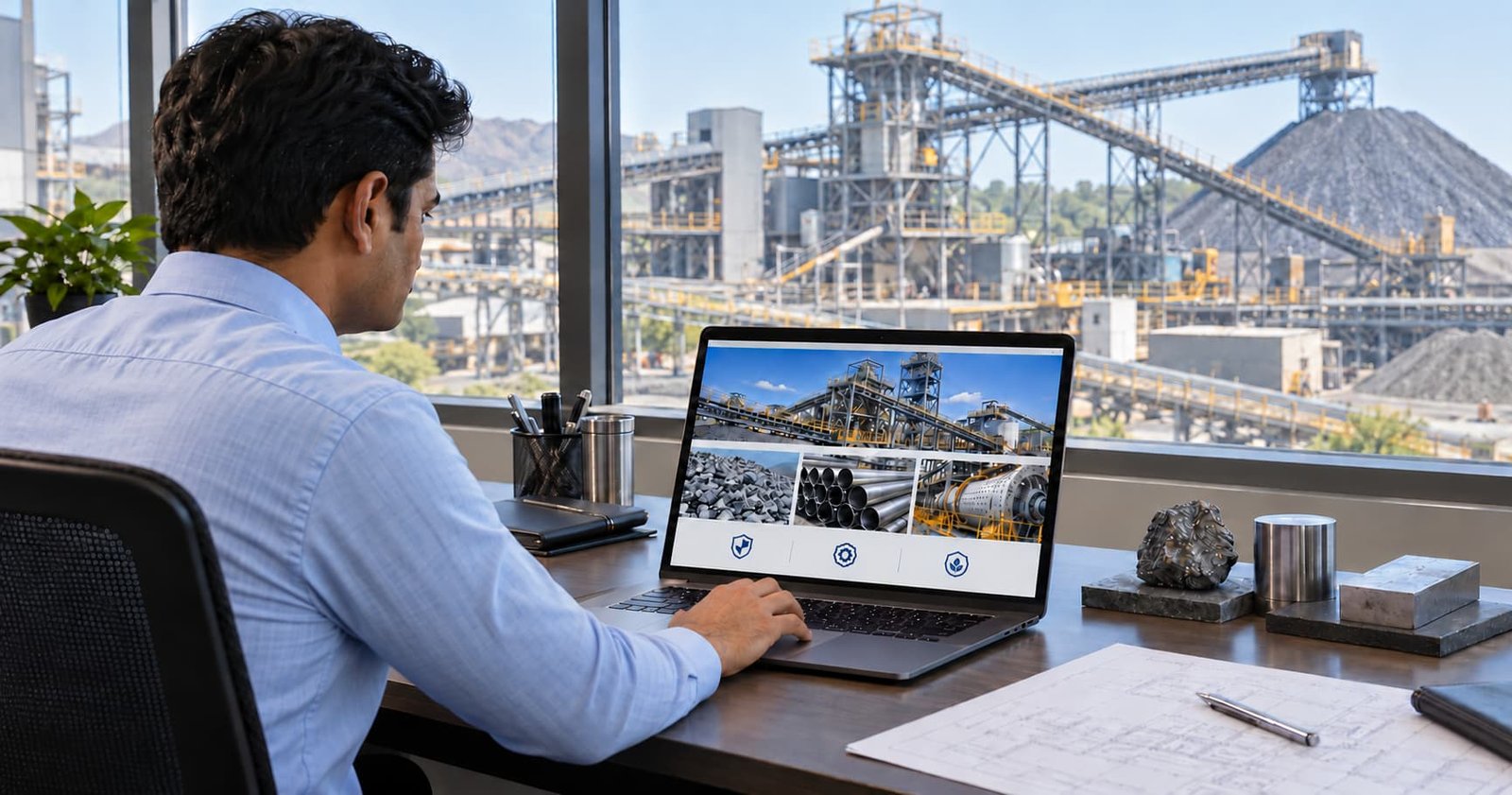
A buyer needs a specific grade, a delivery window and a supplier who will not surprise him. He searches, scans three websites and finds only “quality products at best prices” on each. None of them gets a call. Digital marketing for mining and metals starts with a simple idea: show the buyer the details he needs to feel safe.
The sector offers plenty of room for that. DigiStreet’s mining and metals page, citing the Indian Bureau of Mines, reports mineral production of ₹1.89 lakh crore in 2025-26, up 26.2%, across 1,789 reporting mines. The same page, citing the Ministry of Steel, reports 170 million tonnes of crude steel in 2025-26.
First, Decide What You Actually Sell
Mining and metals is not one market. A miner selling ore, a mill selling processed steel and a firm selling mining equipment all face different buyers.
Raw material sellers talk to traders and plant buyers. They compete on consistency and logistics. Processed metal sellers talk to fabricators and project teams, who care about grades and tolerances. Equipment and service firms talk to mine managers, who care about uptime and support.
Write down your buyer before you write a single page. Each type needs different keywords, proof and calls to action. A site that tries to speak to all three often persuades none.
Build Grade and Specification Pages
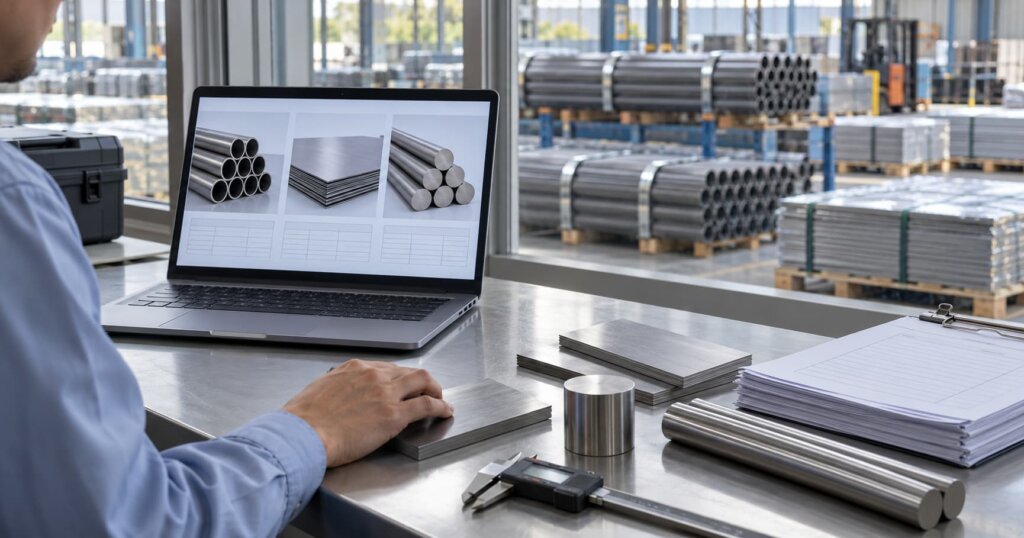
Mining and metals SEO works best when each page answers a buyer’s technical question. Create pages by product, grade or form, and state what you supply.
List only details you can document. Use your own lab reports, mill test certificates or approved datasheets. Never copy material properties, capacities or reserves from a generic source, and never round up a number to look bigger. A buyer who finds one wrong figure doubts the rest.
Add a plain section on delivery. Cover the regions you serve, typical lead times and how you handle packing and documents. If you export, state the markets you serve only when you hold the permissions to do so.
Show Certifications Carefully
Buyers in this sector ask for proof early. Display only the certifications your company holds, and name the certifying body and the scope. For Indian standards, the Bureau of Indian Standards product certification overview explains how its certification schemes work. Check which scheme applies to your product before you write the claim.
Keep documents current. An expired certificate on a live page costs more trust than an empty space.
Make Sustainability Claims You Can Back
Buyers and investors now ask about environmental practice. That makes vague claims risky. “Eco-friendly mining” tells a buyer nothing, and a regulator or journalist may challenge it.
Use a simple rule. Every sustainability statement should point to a document, a measure or a named programme. Say what you did, in which year and at which site. If you have no data for a claim, leave it out.
Avoid comparing yourself with competitors on green grounds unless an independent source supports the comparison. It is better to publish one honest paragraph than a page of slogans.
Reach Dealers and Local Buyers Through Listings
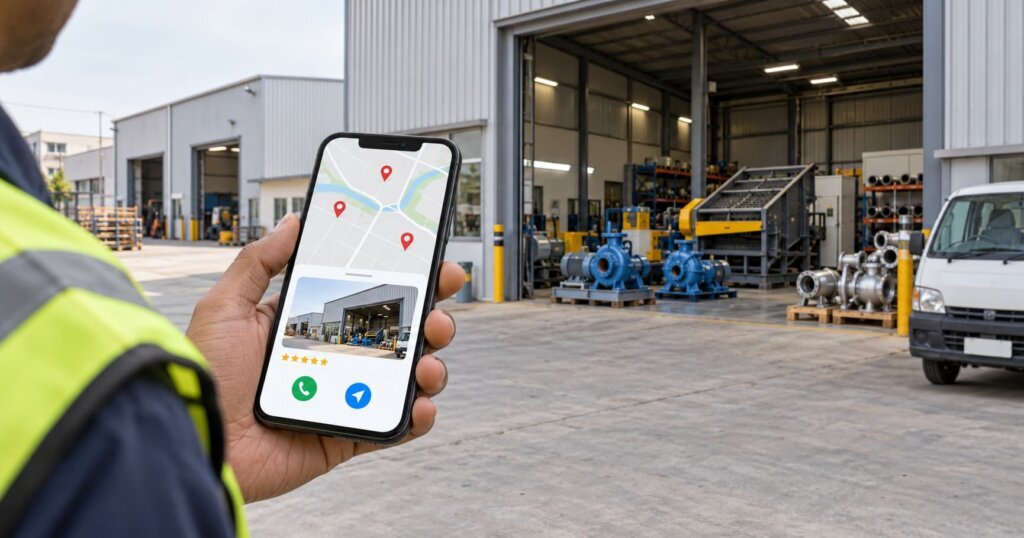
Many mining and metals firms sell through dealers or channel partners. Those partners need to appear in local search when a site manager looks for “authorised dealer near me”.
DigiStreet’s mining and metals page describes work for a global mining technology brand, which it does not name. Across the brand’s channel-partner network, Google Business Profile interactions rose 27% month on month, with Maharashtra up 110% and Karnataka up 76%. DigiStreet describes that as a client-specific result. You can read the mining technology brand case study for the full account.
Local listings need steady care. Keep names, addresses, phone numbers and opening hours consistent across every partner. DigiStreet offers local SEO services for multi-location networks like these.
Design Procurement-Friendly Forms
Procurement teams do not want a “Contact us” box. They want to send a requirement and get a clear reply.
Ask for the product or grade, quantity, delivery location, required date and company name. Add a field for specification documents. Tell the buyer who will respond and how soon. Do not promise a reply time you cannot meet.
Route each enquiry to the right person. A dealer enquiry, a bulk order and a job application should never land in the same inbox.
Write Content That Buyers Actually Search For
Mining and metals SEO is not about stuffing pages with industry words. It is about matching the questions buyers type. A procurement lead might search for a grade by name, a stockist in a city or a comparison between two forms of the same metal. A mine manager might search for a spare part, a service centre or a training programme.
List those questions with your sales and technical teams. Group them into themes, such as product families, applications, standards and logistics. Write one clear page for each theme, and link the pages to each other so a buyer can move from a general page to a specific one.
Add short explainers where buyers often feel unsure. A plain guide to choosing between two product forms, or to reading a test certificate, shows expertise and earns return visits. Have a qualified engineer review each guide before it goes live, and put the reviewer’s name on the page if they agree.
Be Open About Logistics and Support
Metal and mineral buyers care about movement as much as material. A delay at a port or a mix-up in paperwork can cost more than a small price difference.
Explain how orders move. Describe your packing, loading, documents and dispatch process in simple steps. Name the regions you serve, and add a contact for urgent queries. If you offer after-sales support, say what it covers and how a buyer can reach your team.
This openness lowers risk in the buyer’s mind. It also cuts the number of repetitive calls your sales team handles.
Avoid Three Common Mistakes
First, some firms copy supplier brochures word for word. That creates duplicate content and may repeat claims you cannot support. Write your own pages from your own documents.
Second, teams hide prices and specifications behind a form. A buyer who cannot compare options will try the next supplier. You can keep exact prices private, but still show ranges, forms and sizes.
Third, firms treat the website as a one-time project. Grades, certificates, dealers and contacts change. Set a quarterly review to update them, and your mining and metals SEO will stay accurate and useful.
A Hypothetical Example (Not a Client Result)
Picture a mid-sized firm that processes and sells metal bars. Its website has one “Products” page and a generic enquiry form.
The team builds separate pages for each product family and adds a downloadable datasheet that its quality team has approved. It rewrites the form to ask for grade, quantity and location. It also lists its authorised dealers in Google Business Profile and tracks calls and direction requests.
This example is illustrative. It does not describe a real company, and it does not promise any result.
Show Real Projects
Case studies persuade this audience because they show real conditions. DigiStreet’s Kobelco Construction Equipment India case study covers a website project for a heavy-equipment brand. It shows how a technical catalogue can become a clearer online experience.
If you have client permission, publish your own project stories. Describe the problem, the product used, the conditions and the outcome. Avoid numbers you cannot verify.
Measure What Matters
Track enquiry quality, not only volume. Record the product, region and source for every enquiry. Mark each one as qualified, quoted or won in your CRM.
Compare organic search, paid search, LinkedIn and dealer listings by quotes and orders. Sales cycles in this sector can run long, so review results over quarters rather than weeks.
Why Digital Marketing for Mining and Metals Rewards Honest Detail
Digital marketing for mining and metals rewards firms that are specific, documented and honest. Define what you sell, publish grade-level detail, show only certifications you hold and back every green claim with evidence.
Then give buyers an easy way to ask. DigiStreet’s page lists SEO from ₹50,000 plus GST per month. For wider support, explore its B2B SEO services. To discuss your buyers and your products, contact DigiStreet Media.
Reference Link Table
| Relevant topic/resource | Why it is relevant | Link |
|---|---|---|
| Mining technology brand case study | Shows a published dealer-network listings result | https://digistreetmedia.com/case-studies/mining-industrial-technology-brand/ |
| Kobelco Construction Equipment India case study | Shows a technical-catalogue website project | https://digistreetmedia.com/case-studies/kobelco-construction-equipment-india/ |
| Local SEO services | Supports dealer and channel-partner visibility | https://digistreetmedia.com/services/local-seo-company-in-india/ |
| B2B SEO services | Covers grade and specification page strategy | https://digistreetmedia.com/services/b2b-seo-company-in-india/ |
FAQs
What is digital marketing for mining and metals?
It uses SEO, local listings, LinkedIn and search ads to reach buyers of ore, processed metals, equipment and services. Detail and proof matter more than slogans.
What should a grade or product page include?
Include documented specifications, supported forms, delivery regions and approved datasheets. Use your own test reports and leave out figures you cannot verify.
How should I display certifications?
Show only certifications your company holds. Name the issuing body and scope, and remove expired documents promptly.
How can I make sustainability claims responsibly?
Tie each claim to a document, a measure or a named programme, with year and site. Skip vague phrases such as “eco-friendly mining”.
Do dealers need Google Business Profile listings?
If buyers search locally for authorised dealers, listings help them find each branch. Keep names, addresses and phone numbers consistent.
What should a procurement enquiry form ask?
Ask for product or grade, quantity, delivery location, date and company name. Add an upload field for specifications.
How much does mining and metals SEO cost?
DigiStreet’s mining and metals page lists SEO from ₹50,000 plus GST per month. The final price depends on scope and competition.
Can marketing guarantee leads or orders?
No. Results depend on demand, pricing, logistics and sales follow-up. Tracking helps you see what works.