





Someone in Pune opens Instagram and types “block print kurta.” She does not type a brand name. She types what she wants. The accounts and Reels that appear next will get her attention, her follow and, quite often, her order.
That small moment is what Instagram SEO for brands is about. More people now use Instagram like a search engine, especially for fashion, food, beauty, travel and local services. If your account does not use the words your buyers search for, you stay invisible to them, however good your content looks.
The good news is that you do not need to stuff captions with keywords. You need to put clear, honest words in the right places. This guide shows you where, and it separates what Instagram has actually confirmed from what marketers have only observed.
A quick note on evidence

Instagram does not publish a full list of ranking factors. A lot of advice online mixes official guidance with guesswork. So each section below uses two labels:
- What Instagram says: guidance Instagram or its leadership has shared publicly.
- What marketers observe: patterns practitioners report, which are useful but not confirmed.
Treat the second group as sensible bets, not rules.
Instagram SEO for brands starts with the words search can read
In 2021, Instagram explained how its search works. It said the text a person types is by far the most important signal. It also said search looks at information about accounts and posts, such as usernames, bios, captions, hashtags and places, along with a person’s own activity and how popular a result is.
That gives brands a simple starting point. Search can only match you to a query if the right words appear somewhere it reads.
Your name field
What Instagram says: search matches queries against account information, including names and usernames.
What marketers observe: adding a short descriptor to the name field often helps. “YourBrand | Block Print Kurtas” gives search a clear clue that the brand name alone cannot. Keep it short and readable. A name field crammed with five keywords looks spammy to people, even if search reads it.
Your username matters too, but changing it often confuses returning customers. Settle on one clear handle and keep it.
Your bio
What Instagram says: bios are part of the information search uses.
What marketers observe: bios that state what you sell, who it is for and where you operate tend to show up for more relevant searches. “Handmade block print kurtas from Jaipur. Pan India delivery.” works harder than a line of emojis and a slogan.
Your category
Professional accounts can pick a category, such as clothing brand, restaurant or skincare. Choose the most accurate one. It helps people understand you at a glance, and it keeps your account details consistent with what you actually do.
Captions: write for people, include the words they search

What Instagram says: captions are one of the text sources search uses. Instagram’s leadership has also said that keywords in captions help people find content, and that hashtags work as a topic signal rather than a way to boost reach. Since December 2025, Instagram limits each post to five hashtags.
What marketers observe: captions that open with a clear, natural description of the post tend to perform better in search than captions that start with a joke and never say what the post is about.
Compare these two openings for the same Reel:
- “Monday mood 😅✨”
- “How to style a block print kurta for office days, three easy looks”
The second one still reads naturally. It also contains the words a buyer might type. That is the balance you want.
A few habits help:
- Put the main topic in the first line or two.
- Use the words your customers use, not internal product names.
- Write in the language your audience searches in. Many Indian brands do well with a mix of English and Hindi, or with regional-language captions for local audiences.
- Skip long keyword lists at the end. They read badly and add little.
Reels: what happens inside the video
Reels now drive a large share of discovery on Instagram, so the words inside them matter too.
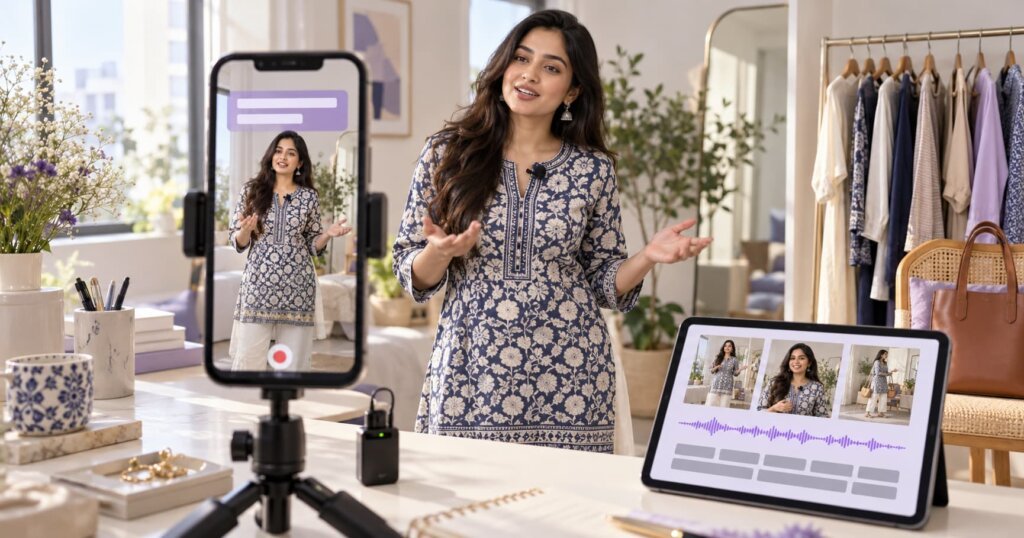
On-screen text
What marketers observe: many practitioners believe Instagram can read text shown on screen in Reels, and that clear on-screen titles help both viewers and discovery. Instagram has not confirmed on-screen text as a search signal, but a clear title such as “3 office looks with one kurta” helps viewers who watch with the sound off either way.
Spoken words
What marketers observe: Instagram can generate automatic captions for videos, which suggests the platform processes speech. Some marketers believe spoken keywords help discovery. Treat this as likely but unconfirmed. Saying the topic out loud early in the Reel costs nothing and helps viewers stay oriented.
Reels keywords in practice
Pick one clear topic per Reel. Name it in the on-screen title, say it in the first few seconds and repeat it naturally in the caption. That keeps the video, the text and the audio all pointing at the same idea.
Hashtags: fewer, sharper, more relevant
What Instagram says: hashtags help categorise content, and posts now carry a maximum of five.
What marketers observe: a small set of specific hashtags tends to work better than broad ones. #blockprintkurta says more about your post than #fashion, which millions of unrelated posts share. Mix one or two broad category tags with a few precise ones, and keep them relevant to that exact post.
Alt text and location
Alt text: Instagram lets you write custom alt text for images, mainly to describe them for people who use screen readers. Write it for accessibility first. A clear description such as “Indigo block print cotton kurta on a hanger” helps those users, and it also gives the platform more accurate information about your image.
Location: tagging a real location on posts makes sense for local businesses. Instagram lists places among the information search uses. A café in Koramangala, a salon in Bandra or a boutique in Jaipur’s C-Scheme should tag its actual location, not a random famous landmark.
Engagement and topic consistency
What Instagram says: search considers how popular a result is, including signals such as clicks, likes, shares and follows.
What marketers observe: accounts that stick to a few clear topics tend to get discovered more consistently. If your brand sells kurtas, a feed that jumps between memes, travel photos and unrelated trends sends mixed signals to people and, likely, to recommendation systems.
A simple content architecture helps. Choose three to five content pillars that match what people search for around your product. For a fashion brand, that might be styling tips, fabric and craft stories, new arrivals and customer looks. Build most posts around those pillars, and your account becomes easier to understand.
Your Instagram posts now show up on Google too
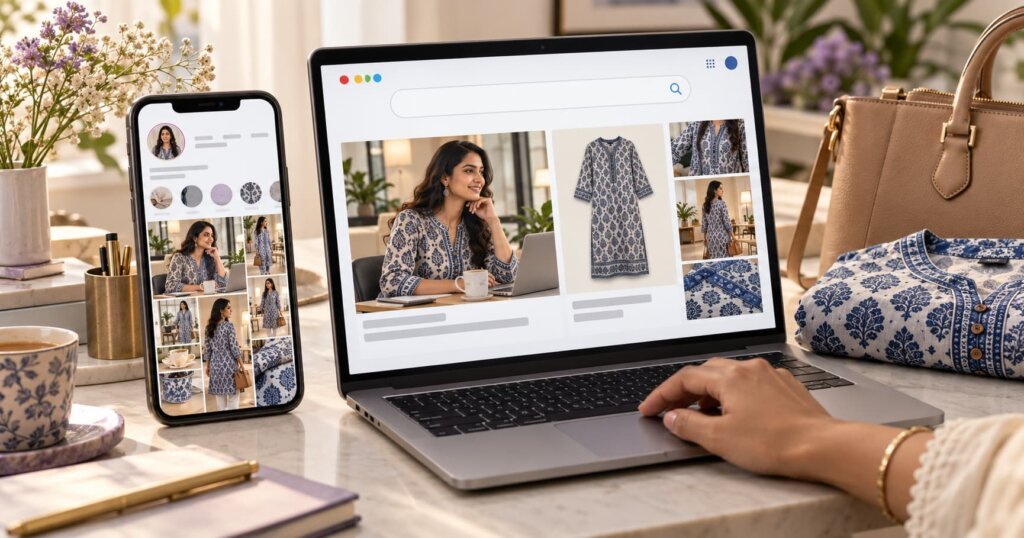
Instagram SEO no longer stops at Instagram. Since July 2025, public posts from professional accounts can appear in Google search results unless the account opts out in its privacy settings.
That makes social search and web search overlap. A clear caption that describes a Reel well can help someone find it inside Instagram and on Google. It also makes your profile a second front door to your brand, alongside your website.
How DigiStreet approaches Instagram search
DigiStreet treats Instagram as a search channel as well as a content channel. Its Instagram marketing work covers profile set-up, content pillars, captions, Reels and reporting, with search-friendly wording built in from the start rather than added later.
For brands that want reach as well as discovery, DigiStreet’s social media and performance marketing team connects organic content with paid campaigns, so the posts that people search for and save can also be amplified. Creator content from DigiStreet’s UGC video agency often becomes the Reels that carry these keywords naturally, because real people describe products in the words customers actually use.
If you want a wider view of social planning, DigiStreet’s 7-step social media marketing blueprint walks through the bigger strategy.
Make your brand easier to find
Start small this week. Rewrite your name field and bio so they say what you sell and where. Pick your content pillars. Open your next three captions with a clear description, and use five focused hashtags.
If you would like a full review of your Instagram search visibility, contact DigiStreet. The team can audit your profile, captions and Reels and suggest changes that help the right buyers find you.
FAQs
What is Instagram SEO?
Instagram SEO means using clear, relevant words in your name, bio, captions, hashtags and Reels so Instagram search can match your account and posts to what people type.
Do hashtags still matter on Instagram?
Yes, but less as a reach tool and more as a topic signal. Instagram now allows up to five hashtags per post, so choose specific, relevant ones.
Where should keywords go on Instagram?
Place them naturally in your name field, bio and the first lines of your captions. For Reels, also use them in on-screen titles and say them early in the video.
Does Instagram read text in Reels?
Instagram has not confirmed on-screen text as a search signal. Many marketers believe it helps, and clear on-screen titles help viewers watching without sound anyway.
Can Instagram posts appear on Google?
Yes. Since July 2025, public posts from professional accounts can appear in Google search results unless the account opts out in its privacy settings.
How long does Instagram SEO take to work?
Profile and caption changes can help quickly, but steady discovery usually builds over weeks of consistent, topic-focused posting.
Should I change my Instagram username for SEO?
Usually not. A stable, recognisable handle matters more for returning customers. Add a short descriptor to your name field instead.