



How a US company runs a marketing team in India, a working checklist
Updated 2 November 2026.
You get four usable hours a day with an Indian marketing team, 8:00 am to 12:00 noon Miami time. Everything that works about the arrangement is built on those four hours, and everything that fails is built on pretending you have eight. Here is the checklist, and the prices in dollars.
Start with the four hours you share
Our overlap with the US east coast is 8:00 am to 12:00 noon Miami time, which is 5:30 pm to 9:30 pm in India during American summer and 6:30 pm to 10:30 pm in winter. The gap moves because the United States changes its clocks and India does not. In 2026 US daylight saving time ran from 8 March to 1 November, both changes at 2:00 am local time, under the Energy Policy Act of 2005.
Put every synchronous thing inside that window and nothing outside it. One weekly call, approvals, anything with a disagreement in it. Put every asynchronous thing outside it on purpose, which is the actual advantage: you leave comments at 4:00 pm Eastern and the work is done when you open the laptop.
The failure mode is a US manager who schedules a 3:00 pm Eastern call because it suits the calendar. That is 12:30 am in India. It will happen once and then people start missing it, and you will conclude that offshore teams are unreliable.
What to keep in-house
Keep the things that need the room. Pricing decisions, anything a lawyer has to clear, the relationship with your biggest ten customers, and the final yes on a claim about your product. Also keep crisis response, because a reply that has to go out in twenty minutes cannot wait for a time zone.
Send the work that improves with volume and repetition. Technical SEO, content production, landing pages, ad builds and reporting all get better when the same team does a hundred of them. Clutch’s own rate table puts India and the Philippines under $25 an hour against $100 to $149 in the United States, so the arithmetic on repeatable work is not subtle.
The boundary that works in practice is one in-house marketer who owns the brief and the approval, with the production team in India. One person, not a committee. If three US stakeholders each comment on the same page, the India team gets three contradictory briefs and ships the average of them.
| Miami time (Eastern) | India time, 8 March to 1 November 2026 | India time, rest of the year | What that hour is for |
|---|---|---|---|
| 8:00 am | 5:30 pm | 6:30 pm | Overnight work lands in your inbox, you read it |
| 9:00 am | 6:30 pm | 7:30 pm | Your comments go back, team is still at desks |
| 10:00 am | 7:30 pm | 8:30 pm | The weekly call, 30 minutes, agenda sent the day before |
| 11:00 am | 8:30 pm | 9:30 pm | Approvals and anything with a disagreement in it |
| 12:00 noon | 9:30 pm | 10:30 pm | Last call for a same-day answer from India |
How to brief so the work comes back right
Write the brief in one place and keep it to one page. The audience in a sentence, the one action you want, the claim you are allowed to make, two links to work you like, and the thing you must not say. Then the deadline in both time zones. A brief that takes ten minutes to write saves two rounds.
Give examples rather than adjectives. “Professional” means nothing across a time zone and a culture. A link to the page you wish was yours means everything. We ask for that link on every brief and we will chase you for it, because it is the difference between one round and four.
Record a three minute video instead of writing a long document when the thing is visual. A screen share with your voice over it carries more than a page of notes, and the team can watch it at 7:00 pm India time without needing you awake.
Approvals, and the two-pass rule
Two passes, then publish. First pass is for substance: facts, claims, offer, structure. Second pass is for line edits. If you mix them you will spend the first pass arguing about a comma and the second discovering the offer was wrong.
Set a response clock on yourself as well as on the team. Comments within one business day. Silence for three days does not mean the work paused, it means the team moved to another client’s queue and your slot went with it. The most common cause of a slow offshore team is a slow onshore approver.
Decide in advance what ships without you. Blog posts, meta descriptions, alt text and ad variants inside an approved template should ship on a standing approval. Pricing pages, home page copy and anything naming a customer should not.
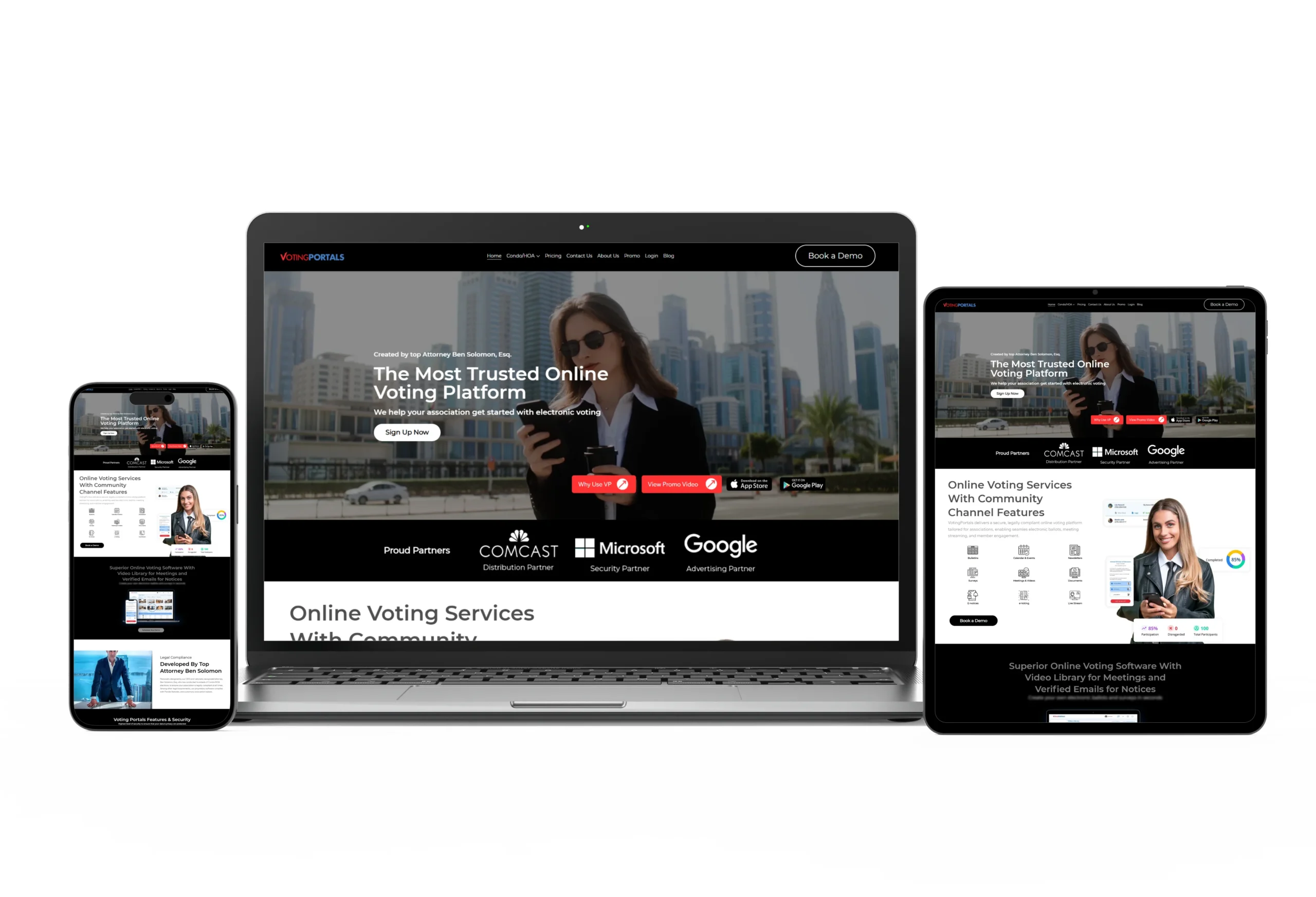
Voting Portals
Voting Portals is a US client we have worked with for five years, entirely across the time difference. The site runs on phone, laptop and tablet, and the working pattern is the one described above: one owner of the brief on their side, production and overnight turnaround on ours.
Quality control that is not a feelings check
Score the work against numbers, not impressions. A published blog post either hits its word count, carries a named dated source for every statistic, has the internal links in it and loads inside Google’s Core Web Vitals thresholds, or it does not. We run that check before anything goes live, and the result is a list, not an opinion.
Read three pieces a month yourself, picked at random. Not the ones the team sends you. If the voice has drifted, it drifted four weeks ago and the fix is a sample page, not a complaint.
Keep one hard rule about sources. Any statistic in anything published under your name needs a named publisher and a date, and the person who wrote it has to have opened the page. That single rule removes most of the risk that comes with content produced at volume, wherever it is produced.
Billing, contracts and the boring protections
Bill monthly in advance against a fixed scope, in dollars, with no tax added on a US invoice. Indian GST does not apply to a US client. Our US plans are $750 a month for Starter with 30 keywords, $1,100 for Growth with 50, $1,850 for Scale with 80 and $2,950 for a resource-based team of two specialists.
Media never flows through the agency if you can help it. Keep the Google Ads and Meta accounts in your own business manager, pay the platform with your own card, and pay the agency only its fee. Management is the higher of 15% of monthly media or $750 a month, dropping to 10% of the whole budget from $20,000 of media, 8% from $50,000 and 4% from $100,000.
Put four things in the contract: the notice period, who owns the work product, who owns the accounts and logins, and what happens to the work in progress if either side leaves. Thirty days notice and a written handover list is enough. We run this as described on our white label page, where the handover rules matter even more because our name is nowhere on the work.
What goes wrong
The calendar drifts twice a year and nobody notices. When the United States moves its clocks in March and November, the India end of the overlap moves by an hour. Put a note in both calendars for the second Sunday in March and the first Sunday in November and this stops being a problem forever.
Scope creeps through chat. A request made in a message thread is not in the scope, is not in the brief and will be done by someone being helpful at 10:00 pm India time instead of the work you are paying for. Every request goes through the one person who owns the brief.
And the voice goes flat if nobody feeds it. A team writing about your product from 8,000 miles away needs your customer calls, your sales objections and your lost-deal reasons. Send them one real objection a week and the copy changes within a month. Hold them back and you will get competent writing about nothing.
Why the arrangement exists at all
India’s technology industry was a $282.6 billion business in FY2025 with exports of $224.4 billion and 5.8 million people, and it held more than 1,750 global capability centres in 2024, on Nasscom’s figures published on 24 February 2025. The talent pool your marketing team draws from is the same one those centres hire from.
The pay gap is the other half of it. The US Bureau of Labor Statistics put the median wage for web developers and digital designers at $99,520 a year as of May 2025. That is the number that makes a four hour overlap and a written brief worth the effort for a US company with a $40,000 marketing budget rather than a $400,000 one.
We have run this arrangement for US clients for years, including one for five years without a single in-person meeting. The work that holds up is the work with a tight brief, one approver and a weekly call that nobody cancels. Our USA page and our SEO services page set out the scope, and the Miami page covers the east coast cadence. Pick the four hours before you pick the agency.
References
- National Institute of Standards and Technology, Daylight Saving Time, US dates for 2026 and the Energy Policy Act of 2005
- Nasscom, Annual Strategic Review 2025 press release, 24 February 2025
- Clutch, Web Design Company Pricing Guide, hourly rates by country, updated 21 September 2026
- US Bureau of Labor Statistics, Occupational Outlook Handbook, Web Developers and Digital Designers, median pay as of May 2025
- Google, Web Vitals, web.dev, last updated 31 October 2024
Frequently asked questions
How many hours a day do we actually overlap with India?
Four. 8:00 am to 12:00 noon Miami time, which is 5:30 pm to 9:30 pm in India in American summer and 6:30 pm to 10:30 pm in winter. In 2026 US daylight saving time ran from 8 March to 1 November.
What should we never send offshore?
Pricing decisions, anything a lawyer must clear, the relationship with your top ten customers, the final yes on a product claim, and crisis response that has to go out in twenty minutes.
What does an India marketing team cost in dollars?
$750 a month for Starter with 30 keywords, $1,100 for Growth with 50, $1,850 for Scale with 80, and $2,950 for a resource-based team of two specialists. No GST on a US invoice.
Who should pay for the ad media?
You should, directly to the platform, from accounts in your own business manager. We take management only, the higher of 15% of monthly media or $750 a month, falling to 10% of the whole budget from $20,000 of media.
How do we keep quality from slipping?
Check against numbers, not impressions. Word count, a named dated source for every statistic, the internal links in place, and Core Web Vitals thresholds met. Then read three random pieces a month yourself.
What is the most common reason this arrangement fails?
A slow approver on the US side. Comments within one business day keeps the queue moving. Three days of silence and your slot goes to another client’s work.