

Updated 4 October 2026.
DigiStreet field guide
AEO Checklist: Ten Page-Level Fixes
Answer engines need a page they can find, understand and quote. These ten fixes improve that page before anyone invents a separate “AI content” project.
Start with the page that should answer the question. Give it a descriptive title, a clear opening answer, visible evidence, crawlable links and one stable URL. AEO fails quickly when the useful fact lives only in an image, a PDF or a script that search cannot reliably read.
Google’s Search Essentials and SEO Starter Guide still provide the base: make pages accessible to Google, use words people search for in prominent places, and make links crawlable. The newer surface does not remove those requirements. It makes weak sourcing easier to notice.
Run the checklist on one commercial page at a time. Record the query or question, the exact URL and the evidence added. That creates a page-level backlog instead of a vague instruction to “do AEO” across the whole site.
Use this guide as a working document: keep the URL, date, owner and source beside every decision.
The working view
| Fix | Page check | Evidence to save |
|---|---|---|
| Title and main heading | Specific and aligned to the page answer | Before and after title |
| Opening answer | Direct response near the top | Rendered text capture |
| Source detail | Named figures, dates and publisher | Linked citation |
| Crawl path | HTML link from a relevant page | Source and destination URLs |
| Measurement | Search and answer-surface view | Dated export or screenshot |
Ten fixes you can apply to one page
Write a descriptive title
Google says title links can use the title element, the visible main title, headings and other prominent text. Make those signals agree. Use the subject and useful qualifier, then remove boilerplate that pushes the distinguishing words out of view.
Make the main heading say the page job
One visible main heading helps readers confirm they landed on the right answer. Keep it close to the title’s meaning. A clever slogan can sit elsewhere, but it should not replace the words a buyer and a retrieval system need.
Answer the core question early
Put the direct answer in visible text before the long explanation. A price page starts with the amount and qualifier. A technical page starts with the specification or rule. The surrounding detail can then explain cases, limits and next steps.
Name every source and date
A figure needs its publisher, document and period. Link to the page that actually states it. For your own data, name the property, report and capture date. This lets a reader check the statement and gives an answer system a clear attribution path.
Turn image-only facts into text
Charts and diagrams can stay, but their key fact needs a text explanation and useful alt text. A product specification locked inside artwork cannot be quoted reliably. Keep the visible wording consistent with the source shown in the image.
Use crawlable internal links
Google’s developer guide recommends links that can be crawled. Link from relevant service, category and guide pages with text that explains the destination. Avoid orphan pages and vague repeated anchors that hide why the page matters.
Clarify the entity behind the answer
State the company, product, location and relationship in plain sentences where relevant. Do not make a model infer that a logo, acronym and product family belong together. Consistent names across the page reduce ambiguity.
Structure comparisons as tables
When three or more options share fields, use a real HTML table with headers. Keep the same unit in each column and put qualifiers next to the number. Readers can scan it and machines can associate values with the right label.
Use FAQs for real follow-up questions
Add questions that buyers actually ask after reading the page. Start each answer with the answer, then explain it. Do not repeat the heading ten ways or add FAQ schema by hand; DigiStreet’s publishing workflow handles schema separately.
Measure the page after the fix
Save the change date, query group, clicks, impressions and answer-surface evidence available to you. A page-level record is more useful than a sitewide visibility score because it shows which edit and answer were being tested.
How to review the page after the ten fixes
Read the page without its design first. Copy the visible text into a plain document and ask whether the company, subject, answer and source still make sense. If meaning depends on a decorative label or image, add the missing words to the page. This also catches headings that sound clever but fail to identify the topic.
Then inspect the rendered page on a phone. The direct answer, evidence and useful next link should arrive before a long wall of supporting copy. Tables need their own scroll wrapper, and captions must stay attached to the correct image. AEO work that damages reading order is poor page work.
Open the source pages behind every external figure. Confirm that the publisher, date, unit and market match the sentence. Replace a homepage link with the exact report page where possible. A citation label should help a visitor understand the source before clicking it.
Follow each internal link in a fresh browser session. It should resolve to the intended final URL without a redirect chain. Check that the source sentence explains why the destination is useful. Links added only to increase a count are easy to spot and rarely help the reader.
Save the before and after state with the URL and date. Review Search Console at a sensible interval for the site’s crawl and demand. Keep answer-surface captures as supporting evidence, but use the page ledger to decide which edit deserves a wider rollout.
Applying the ten fixes to three real page types
A price page that answers in the first line
For example, a page titled "SEO pricing" opens with three paragraphs about why search matters. Rewrite the first line to give the amount: DigiStreet's SEO Starter plan is ₹50,000 plus GST a month for up to 30 keywords. Then put the other tiers in a table directly below, with the unit stated in each column header. The visitor who wanted the number has it in a second, and the visitor who wants the reasoning scrolls on. Check the result by copying only the first 60 words into a blank document and asking a colleague what the page sells and for how much. If they hesitate, the opening still has work to do.
A manufacturer's product page locked inside a PDF
For example, an industrial supplier keeps its specification sheet as a PDF download, with the page itself showing only a photograph and a Contact button. Buyers and answer engines see almost nothing to quote. Move the three most requested specifications, such as rating, material and dimensions, into an HTML table on the page. Keep the PDF as a download and give the file a descriptive name. Then add one sentence stating the product, the maker and the standard it meets, using only facts from the datasheet. The page now holds quotable facts, and the PDF still serves the engineer who wants the full document in hand.
A service page with the right answer in the wrong place
Some pages contain the answer but bury it under a long introduction. For example, a service page states in paragraph six that onboarding takes two weeks. Move that line up under the heading, because delivery time is one of the first things a buyer asks. Then look at the heading above it. A heading such as "Our approach" tells nobody anything, while "How long onboarding takes" matches the question. Rename headings after the questions the page answers. Read the headings alone, top to bottom, like a contents list. If a stranger could not guess what the page covers from them, rename them again.
Slips that quietly undo the fixes
Four slips cause most of the lost value. A new heading goes live but the page title still carries the old wording. A table is built from images, so the numbers vanish for crawlers. An internal link points through a redirect and adds a hop. A figure is updated in the body but not in the FAQ lower down, so two answers conflict. After each edit, open a text-only view of the page, search for every changed figure and confirm each occurrence agrees. Do this before you ask for re-indexing. One conflicting number is enough to make a buyer or a retrieval system trust neither answer.
Evidence from DigiStreet work
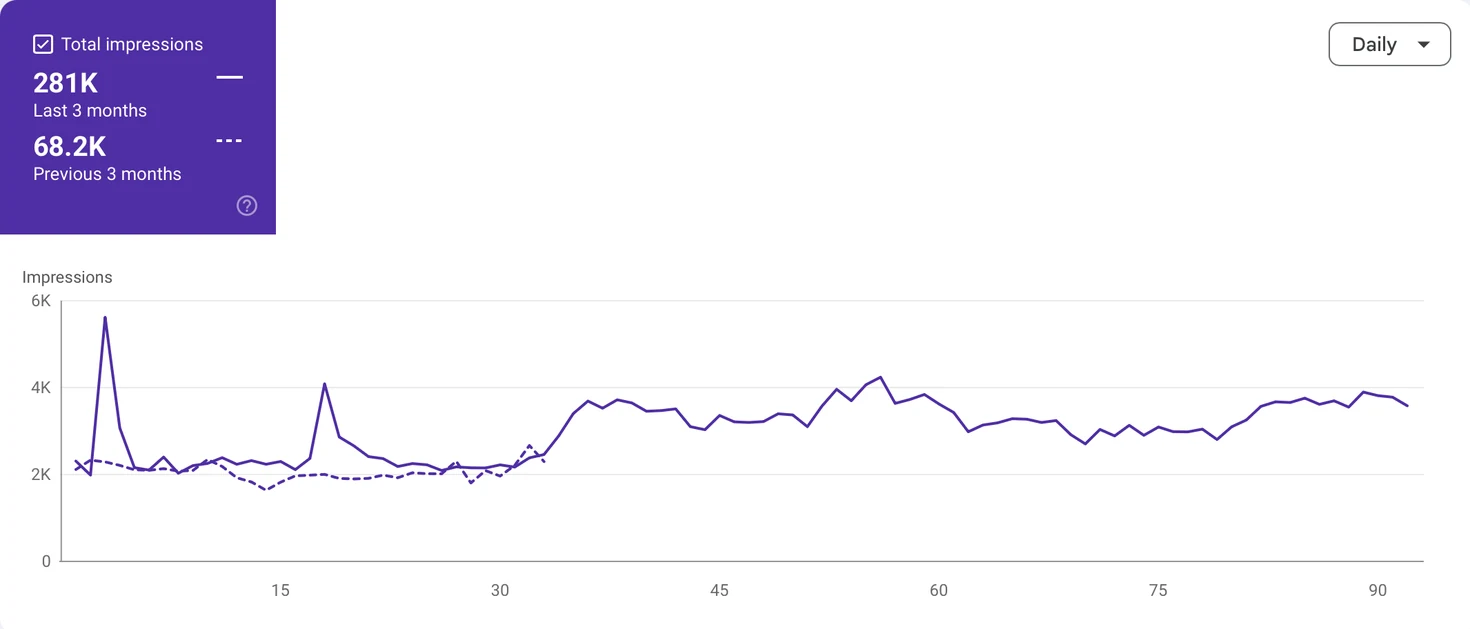
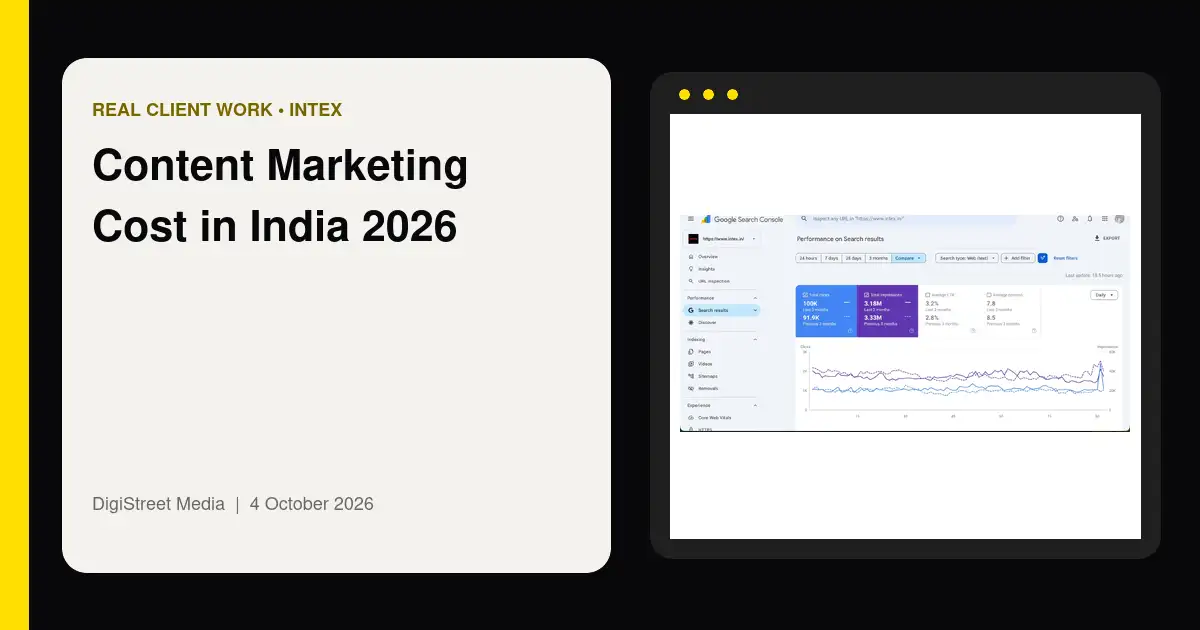
The Intex GEO case page states that Search Console recorded 281K impressions in generative-AI features over the three months to 21 September 2026. The case also labels the report and explains the period. That combination of visible fact, source and context is the standard this checklist asks for.
AEO work is strongest when it leaves the page clearer for a buyer. If a proposed edit makes the answer longer, vaguer or harder to verify, it has missed the point.
Questions people ask before using this guide
Does AEO replace SEO?
No. Crawlability, useful pages, links and clear titles remain the base for answer visibility.
Should every page have an FAQ?
No. Add FAQs only when real follow-up questions improve that page.
Do I need FAQ schema?
Do not add it inside DigiStreet page or post content. The publishing workflow handles schema separately.
Can a chart count as the answer?
Keep the chart, then state its key fact and source in visible text with useful alt text.
How many pages should I fix first?
Start with one commercial page and one evidence page, then measure the change before widening the backlog.
Is AEO priced separately by DigiStreet?
AEO and GEO visibility monitoring are included in every published SEO tier.
Put the next decision on one page
Bring the URL, the evidence you already have and the business action that matters. We will tell you what should be checked first.