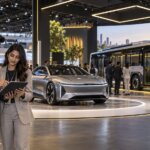


India’s electric vehicle market is growing at a pace that leaves most traditional industries behind. Two-wheeler EV sales crossed 10 lakh units in a single financial year. New EV brands enter the market every quarter. Government incentives like FAME-II and PLI schemes continue to drive both demand and competition.
Yet most EV brands, manufacturers, and charging infrastructure providers still run generic digital marketing playbooks built for conventional industries. The result: high ad spends, low qualified traffic, and brand messaging that fails to convert a curious visitor into a buyer or fleet partner.
This blog breaks down why the EV sector demands a specialized digital marketing approach and which specific services deliver the highest ROI for EV brands in today’s AI-driven search landscape.
The EV Buyer Is Not a Typical Online Consumer
Understanding the EV purchase journey is the starting point for any effective digital marketing strategy. EV buyers — whether individual consumers, fleet operators, or procurement teams for state transport undertakings — share a few distinct traits:
- They research extensively before purchasing, averaging 3–6 months of online research.
- They compare range, charging infrastructure, total cost of ownership (TCO), and after-sales support — not just price.
- They consult AI assistants like ChatGPT, Google AI Overviews, and Perplexity for technical queries.
- B2B buyers (fleet, logistics, government) rely heavily on detailed spec sheets, case studies, and ROI calculators.
Standard SEO that targets high-volume generic keywords like ‘electric scooter price’ misses the depth of intent behind EV searches. A fleet manager searching ‘electric bus TCO calculation India’ or ‘LFP vs NMC battery for commercial EVs’ has high commercial intent — and almost no relevant, authoritative content to find. That gap is your opportunity.
SEO for EV Brands: Going Beyond Basic Rankings
Search engine optimization for the EV industry requires technical depth, content expertise, and a structured keyword architecture that maps to the actual buying journey.
Technical SEO Foundations
EV brand websites often carry heavy product pages, configurators, and spec comparison tables. Poor Core Web Vitals scores on these pages directly suppress rankings. Technical SEO for EV brands must address:
- Page speed optimization for spec-heavy product pages
- Schema markup for vehicle listings, FAQs, and reviews
- Crawl budget management for large inventory or dealer locator pages
- Hreflang and geo-targeting for brands operating across Indian states
Keyword Strategy Built Around EV Intent
An effective EV keyword strategy separates informational, commercial, and transactional intent. A sample architecture might look like:
- Informational: ‘how does regenerative braking work’, ‘EV charging at home guide India’
- Commercial: ‘best electric two-wheeler under 1 lakh’, ‘electric bus manufacturer India’
- Transactional: ‘buy Ather 450X Delhi’, ‘Tata Nexon EV test drive Noida’
- B2B: ‘fleet EV management software’, ‘electric vehicle charging station tender’
Long-tail B2B keywords carry lower volume but far higher conversion rates. Ranking for them also positions your brand as a technical authority — which feeds directly into AEO and GEO performance.
AEO: Winning the AI Answer Layer
Answer Engine Optimization (AEO) is now non-negotiable for EV brands. When a fleet manager asks ChatGPT ‘which electric bus is best for hilly terrain in India’, the answer it provides is drawn from structured, authoritative web content — not paid ads.
AEO for the EV industry focuses on:
- Creating FAQ-rich content that directly answers technical questions buyers ask AI tools
- Structuring content with clear H2/H3 hierarchies, schema markup, and concise answer blocks
- Publishing comparison content: range comparisons, charging speed comparisons, battery chemistry breakdowns
- Building glossary and explainer pages that establish your brand as the go-to source for AI citations
- Ensuring your content appears in Google’s AI Overviews for high-intent EV queries
Brands that invest in AEO today build a compounding advantage. As AI search adoption grows, the brands already cited in AI-generated answers gain traffic without incremental ad spend.
GEO: Optimizing for Generative AI Discovery
Generative Engine Optimization (GEO) extends beyond traditional search engines. It covers how your brand appears when users query large language models, voice assistants, and AI-powered search platforms.
For EV brands, GEO matters because:
- Procurement teams at logistics companies increasingly use AI tools for vendor shortlisting
- Government officials researching EV fleet procurement query AI assistants for supplier lists
- Individual buyers use voice search on mobile for local queries like ‘EV charging station near me’
Effective GEO for EV companies involves optimizing your digital footprint across authoritative third-party platforms — industry directories, news coverage, government portals, and technical publications — so that AI systems consistently surface your brand in relevant queries.
Google Ads for EV: Precision Over Volume
The EV industry has a unique Google Ads challenge: high CPCs on broad keywords, combined with buyers who are still in research mode and unlikely to convert immediately. A poorly structured EV campaign burns budget fast.
Performance Max for EV Brands
Performance Max campaigns work well for EV brands when audience signals are precisely defined. Layering in-market audiences for ‘vehicle purchase’, ‘eco-friendly products’, and custom intent audiences based on EV-specific search queries dramatically improves conversion quality.
Search Campaigns Built for Intent Stages
Separate campaigns for each stage of the funnel prevent budget bleeding:
- Top-of-funnel: educational content promotion, video ads on EV topics
- Mid-funnel: comparison landing pages, spec sheet downloads, dealer locator
- Bottom-of-funnel: test drive booking, dealership visit, fleet inquiry forms
Negative Keyword Management
EV brands frequently get irrelevant clicks from searches about petrol vehicle accessories, traditional automotive parts, or EV content from competing markets. A robust negative keyword list is essential from day one.
Content Marketing: The Long Game for EV Brands
Content is the foundation of SEO, AEO, and GEO performance for EV companies. The EV industry is uniquely suited to content marketing because:
- The product requires significant buyer education
- Technical differentiation (battery chemistry, charging standards, motor types) needs explanation
- Policy and incentive changes create constant demand for updated guidance
- B2B buyers expect depth: white papers, case studies, ROI frameworks
Content Types That Work for EV Brands
- ‘How-to’ guides: home charging setup, understanding range in Indian conditions
- Comparison blogs: LFP vs NMC battery, DC fast charging vs AC charging
- Case studies: fleet electrification ROI for logistics companies
- Policy explainers: FAME subsidies, state EV policies, CESL tenders
- Technical glossaries: EV terminology for first-time buyers
Evergreen content — content not tied to specific years or events — compounds in search performance over time and requires less maintenance than trend-dependent pieces.
Google Business Profile (GMB) Optimization for EV Businesses
For EV dealerships, service centers, and charging infrastructure providers, Google Business Profile is often the highest-converting digital asset. Local search queries like ‘EV service center Gurugram’ or ‘electric scooter showroom Pune’ drive direct footfall and inquiry calls.
GMB optimization for EV businesses covers:
- Complete profile setup with EV-specific service categories
- Regular posts on new model arrivals, offers, and policy updates
- Photo uploads of charging stations, showroom, vehicles on display
- Q&A management with pre-loaded answers to common EV queries
- Review generation and response strategy
- Local keyword integration in business description and service listings
EV brands with multiple dealer or charging station locations benefit significantly from a structured multi-location GMB management approach, with consistent NAP (Name, Address, Phone) data and location-specific content.
Social Media Marketing for EV Brands
Social media plays a dual role for EV brands: community building and performance marketing. The EV audience is digitally active, environmentally conscious, and highly engaged with video content.
Platform Strategy
- LinkedIn: B2B outreach to fleet managers, logistics heads, procurement teams, and government stakeholders
- Instagram and YouTube: Consumer-facing content — range tests, charging guides, owner testimonials
- Twitter/X: Policy discussions, industry news, and real-time engagement with EV enthusiasts
UGC and Influencer Marketing
User-generated content from EV owners — real-world range tests, charging experience reviews, daily commute videos — builds credibility that no brand video can match. Partnering with automotive YouTubers and EV enthusiast communities generates authentic content that drives both SEO backlinks and social proof.
Analytics and Reporting: Measuring What Matters in EV Marketing
EV brands need to track metrics that reflect the complexity of their sales cycle, not just vanity metrics like impressions or clicks.
Key performance indicators for EV digital marketing:
- Qualified lead volume: test drive bookings, fleet inquiry forms, brochure downloads
- Cost per qualified lead by channel and campaign
- Assisted conversions across the multi-touch buyer journey
- Organic visibility for high-intent EV keywords (tracked via Google Search Console and Ahrefs)
- AI citation frequency: how often your brand appears in ChatGPT, Perplexity, or Google AI Overview answers
- Local search performance: map pack rankings, GMB call and direction clicks
Monthly GA4 and Search Console reporting, combined with regular Ahrefs keyword rank tracking, gives EV marketing teams the visibility needed to optimize spend and content investment continuously.
Conclusion: The EV Brands That Win Digital Will Win the Market
India’s EV transition is not a future event — it is happening now. The brands investing in digital marketing infrastructure today build the authority, visibility, and lead pipelines that will compound over the next decade.
A specialized digital marketing approach for the EV industry — combining technical SEO, AEO for AI search visibility, performance-driven Google Ads, localized GMB optimization, and deep content marketing — gives EV brands a decisive competitive edge.
Whether you manufacture electric buses, run a charging network, sell two-wheelers, or supply EV components, a purpose-built digital marketing strategy delivers measurable results: more qualified leads, lower cost per acquisition, and stronger brand authority in both traditional and AI-powered search.
Looking to grow your EV business online? DigiStreet Media specializes in digital marketing services for the electric vehicle industry, offering SEO, PPC, content marketing, social media management, and AI-powered optimization strategies to help EV brands generate qualified leads and achieve measurable business growth.