Updated 4 October 2026.
Choose an agency around the admission calendar and the student decision
An education institute should choose a marketing agency by examining how it handles programmes, admission periods, evidence, enquiries and student-facing communication. A generic channel list is not enough. Start with the budget questions: the performance marketing cost in India guide explains DigiStreet’s paid-media fees, while websites start at ₹1,00,000 and SEO starts at ₹50,000 plus GST a month.
This guide gives schools, universities, colleges and online education teams a practical selection method. It includes a channel plan for the admission cycle, a cost table and real DigiStreet work for Amity, Univo and Salvation Tree School. The examples are creative and identity references, not invented admission results.
Define the decision before asking for a proposal
Write down the programmes, locations, intake dates, approved capacity, intended audiences and enquiry routes. Separate school admissions, undergraduate choices, postgraduate courses, executive education and online learning. Each has different research behaviour, influence and timing. Give agencies the current website, analytics access plan, CRM process and approved claims they may use.
State the commercial problem in plain language. It may be weak programme discovery, poor lead qualification, an old website, incomplete search coverage or inconsistent creative. Ask the agency to show how it would diagnose that problem and what evidence it needs. A proposal that begins with a fixed bundle before understanding the intake has not answered the brief.
Can the team distinguish courses, learner types and intake dates?
Does the plan change before, during and after the main application window?
Can media and website data connect with counsellor feedback?
Is there a clear route for academic, legal and brand review?
Ask to see the working system behind the pitch
Request relevant pages, campaigns or creatives and ask why the work was structured that way. Look for clear writing, usable mobile pages, accurate claims and visible next steps. Ask who will research, write, design, buy media, build pages and read lead quality. Named roles matter because education marketing crosses several skills.
Check how the agency handles source material and approvals. Programme facts, recognition statements, dates, faculty information and placement language need owners. Ask how quickly a corrected fact can be changed across ads and pages. Review reporting examples for accepted enquiries, applications and channel context rather than a dashboard made only of clicks and form totals.
Finally, ask how the team works with admissions. Marketing needs a regular record of unreachable contacts, wrong programmes, out-of-area enquiries and active applicants. Without that feedback, a platform may learn to find cheap forms instead of suitable prospects.
Change the channel job as the intake gets closer
Early in the cycle, search content and programme pages should answer the questions families and learners are researching. Video, social and creator content can introduce the institution and show real campus, faculty or learning material where permissions allow. As applications open, paid search and focused social campaigns can direct defined audiences to the matching programme page.
Near deadlines, the message becomes more specific. Use approved dates, eligibility, event and application information. Remarketing should respect consent and frequency. After the main window, content can support late-intake queries, counselling, enrolled-student information and the next cycle’s search base. The website remains the source that every campaign should match.
| Admission phase | Primary channel work | Page requirement |
|---|---|---|
| Research period | SEO, useful content, video and social explanation | Programme, outcomes, eligibility and campus information |
| Applications open | Paid search, focused social and open-day promotion | Fast application or counselling route with source context |
| Deadline period | High-intent search and consented remarketing | Approved dates, remaining actions and clear response |
| Between intakes | Evergreen search, proof updates and next-cycle planning | Current content, working forms and editorial backlog |
Compare like-for-like costs
DigiStreet websites start at ₹1,00,000. SEO begins at ₹50,000 plus GST a month for Starter, ₹75,000 for Growth, ₹1,25,000 for Scale and ₹2,00,000 for the resource-based tier. Paid campaign management is the higher of 15% of monthly media spend or ₹50,000 plus GST. Media is separate.
| Work | Published DigiStreet cost | What to clarify |
|---|---|---|
| Website | From ₹1,00,000 | Templates, programme volume, integrations and content |
| SEO Starter | ₹50,000/month plus GST | Up to 30 keywords for one market or product line |
| SEO Growth | ₹75,000/month plus GST | Up to 50 keywords for multi-category or multi-city work |
| Paid media management | Higher of 15% of media or ₹50,000/month plus GST | Media level, channels, landing pages and tracking |
Compare scope, team and ownership rather than one total. Media, production, creators, software and third-party platforms should have separate lines. Ask which assets belong to the institute, where accounts are held and how the work can continue when an intake ends.
Review the student path on a phone
Open a programme page on a small screen. Can the reader identify the course, eligibility, duration, mode, location and next action without opening a brochure? Are dates current? Does the form ask for the programme? Is there a useful confirmation after submission? Check the same path on a slow connection.
The agency should plan pages around decisions, not internal departments. Course families need consistent patterns, while each course needs enough specific information to stand alone. Internal links should connect related programmes, admissions, scholarships, campus and support information. Search engines and answer systems also benefit from clear headings, named sources, current dates and consistent institutional details.
Make counsellor feedback part of the report
Agree the stages that matter: valid enquiry, contacted prospect, counselling, application and enrolment where the institute can lawfully record them. Keep privacy and access rules clear. The campaign source, programme and page should enter the CRM with the enquiry. Counsellors need simple status choices that marketing can read.
Review cost beside quality by programme and location. A source with a higher enquiry cost can still be better if it produces more suitable applicants. Track form, call and application issues as website work, not only as media problems. During a live intake, weekly decisions are usually more useful than waiting for a monthly slide deck.
Use a scored review before the final meeting
| Question | Evidence to request | Decision sign |
|---|---|---|
| Can the team understand our programmes? | A written audience and page map | Different courses are not treated as one offer |
| Can it show relevant work? | Live pages, approved creative and named client context | Proof relates to education or a similar decision |
| Can it measure admission quality? | CRM field plan and sample lead-quality view | Counsellor feedback changes campaign decisions |
| Can it protect factual accuracy? | Source and approval workflow | Dates and claims have named owners |
| Can it deliver the site and media together? | Roles, release plan and account ownership | Landing pages are ready when campaigns open |
Score each agency against the same brief. A strong presentation should not replace a clear team, relevant proof and a workable data route. Keep one final session for the people who will actually deliver the account.
Set ownership and response rules before work begins
The agreement should name account ownership, platform access, asset ownership, confidentiality, approval responsibilities and the route for factual corrections. Advertising accounts and analytics properties should sit in an arrangement the institute can inspect. The content archive should keep source files, approved copy, live URLs and current programme facts together.
Agree the meeting and reporting rhythm around the admission calendar. A busy intake may need short weekly decisions, while quieter periods can focus on website and content work. Set a named escalation contact for broken forms, incorrect dates or campaign policy issues. Confirm how quickly each side will review creative and pages.
End the selection with a ninety-day output list. It should state the audits, pages, campaign groups, creative, tracking and admission-team inputs expected in that period. This makes the first quarter testable and gives both teams a shared operating plan.
Ask each agency to solve one real programme problem
Give shortlisted teams one contained situation using approved information. It might be a programme page with poor enquiry quality, a missed search topic or an intake campaign with weak routing. Ask for the questions they would investigate, the first pages or campaign groups they would change and the evidence they would need from admissions.
This exercise reveals whether the team can read the problem, write clearly and connect channel work with the institute. It also shows whether the agency protects factual accuracy. Score the response for relevance, proof, measurement, delivery roles and budget clarity. The task should remain small and should not ask agencies for a free full campaign.
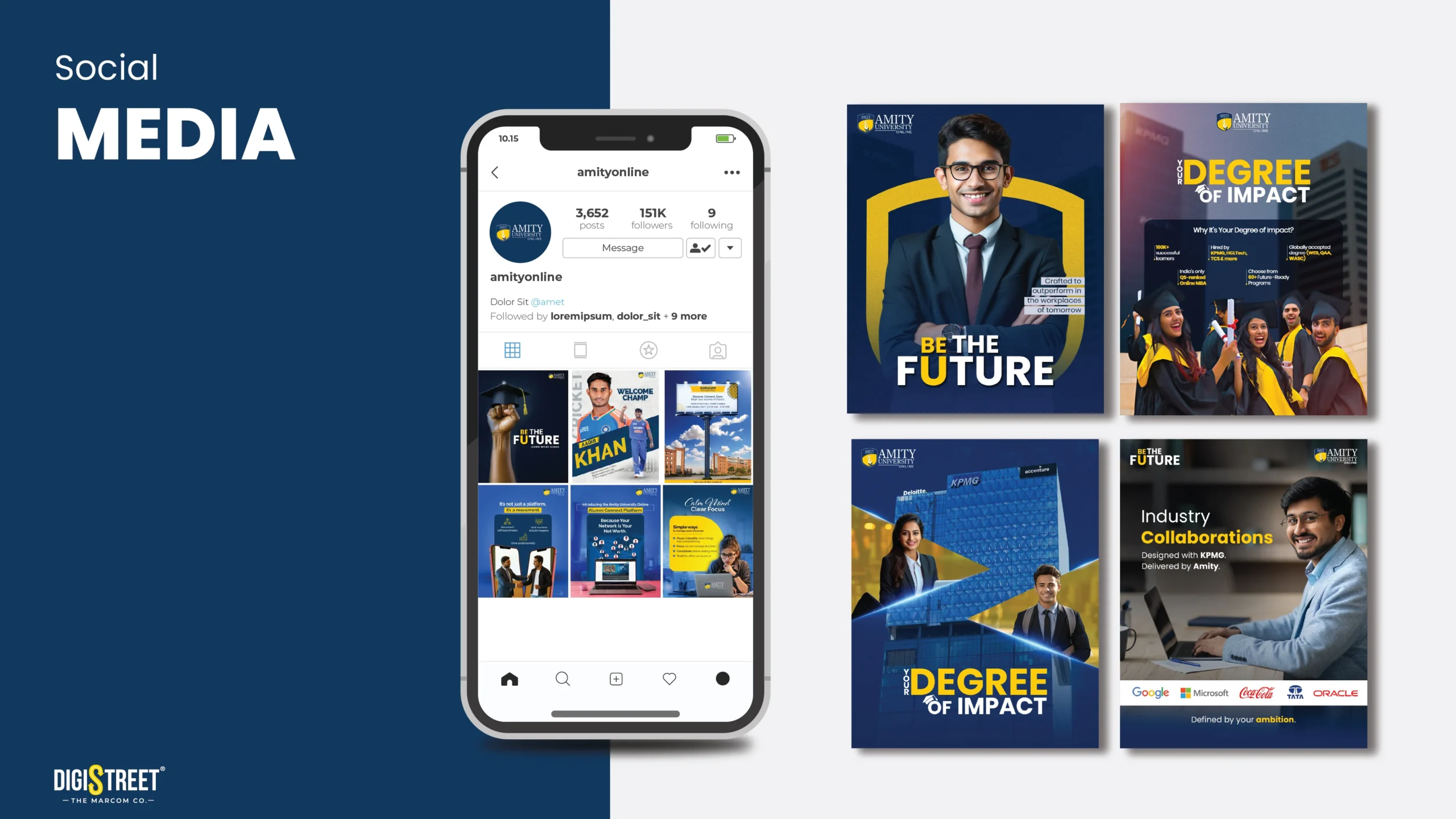
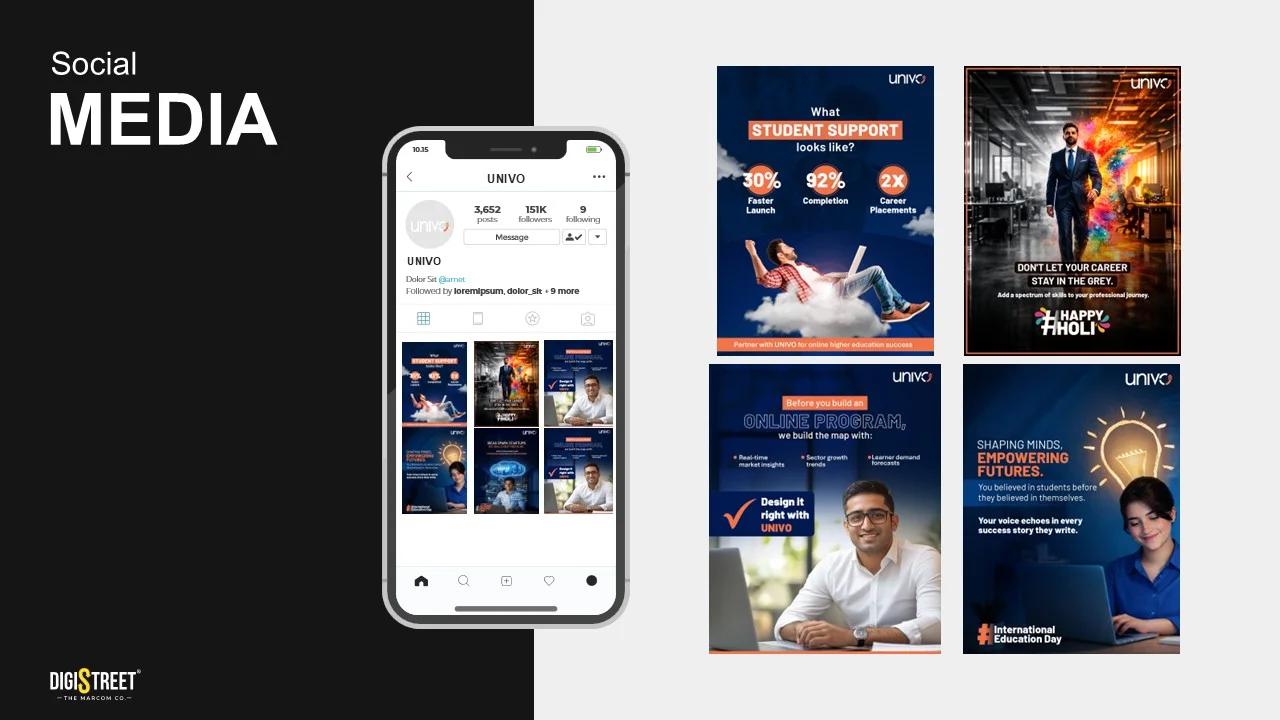
Education work should be examined as real creative, not a logo list

Questions education teams should ask
What should an education marketing agency understand first?
It should understand programmes, audiences, intake dates, approved facts, enquiry handling and the website path before proposing channels.
How much does education SEO cost?
DigiStreet SEO starts at ₹50,000 plus GST a month, with higher published tiers for larger market and keyword scope.
Is paid media spend included in the agency fee?
No. DigiStreet’s management fee is separate and is the higher of 15% of monthly media or ₹50,000 plus GST.
Which result should an institute report?
Report valid enquiries, counselling, applications and enrolment where lawful and available, with programme and source context.
Should each programme have its own page?
Distinct programmes usually need dedicated pages when their eligibility, audience, learning format or application route differs.
How should agencies present education proof?
They should show real pages or creative, identify the client and explain the work without inventing student or admission results.
Sources used for this guide
Choose against a real admission brief
Share the programmes, intake calendar, current website and lead process. DigiStreet can respond with a scoped plan and relevant work.