




A fashion brand runs a big sale and orders double. A month later, a third of the parcels come back, the discounts have trained customers to wait, and the margin has vanished. The revenue chart looks great and the bank balance does not. Digital marketing for fashion brands has to protect profit as carefully as it chases orders.
DigiStreet’s fashion page lists creator films for Van Heusen and Bonsoir, a Bonsoir Shopify menswear store and sneaker films for JQR Sports. Those projects show the mix a modern fashion brand needs: strong visuals, a working store and content that people trust.
Know Your Model First: D2C, Wholesale or Both
A direct-to-consumer (D2C) brand owns the customer relationship, the data and the margin. It also carries the cost of ads, shipping and returns.
A wholesale or manufacturing brand sells to retailers or other labels. Its marketing aims to win buyers, show range and prove quality. Catalogues, lookbooks and trade-focused search pages matter more than flash sales.
Many Indian brands run both. If you do, keep the stories apart. A shopper wants a style and a fit. A retail buyer wants minimum order quantities, lead times and consistency. One website can serve both if the paths are clear.
Build Collection Pages That Search Engines and Shoppers Understand
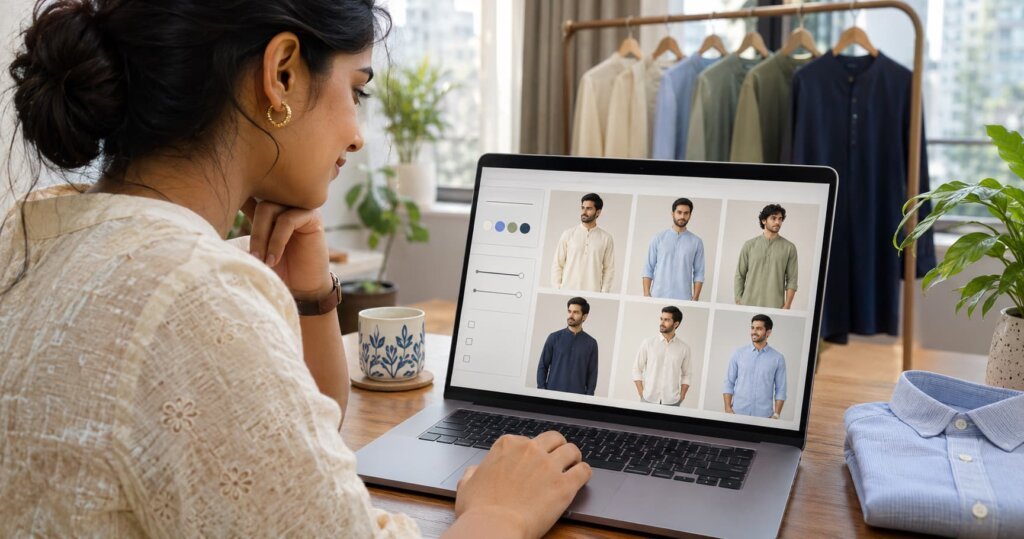
Shoppers rarely search for a single product. They search for “cotton kurta for men” or “formal shirts for summer”. Collection pages answer those searches, so they deserve real effort.
Write a short, useful introduction for each collection. Mention fabric, occasion and fit in plain words. Add filters for size, colour and price, and keep out-of-stock items visible only when that helps the shopper. Use clear page titles and headings that match how people speak.
DigiStreet offers ecommerce SEO services for stores that want collection and product pages to earn organic traffic.
Treat Size Guides as a Profit Tool
Poor fit drives many returns. A size guide that actually helps is one of the cheapest fixes available.
Show measurements in centimetres and inches, and say how to measure. Add model height and the size the model wears. Where fit differs by style, say so on the product page. Short customer notes such as “runs slightly small” help shoppers choose well.
Track return reasons in your order system. If “size too small” keeps appearing for one style, change the page or the pattern before you buy more ads for it.
Use Creators to Show Real Fit and Real Life
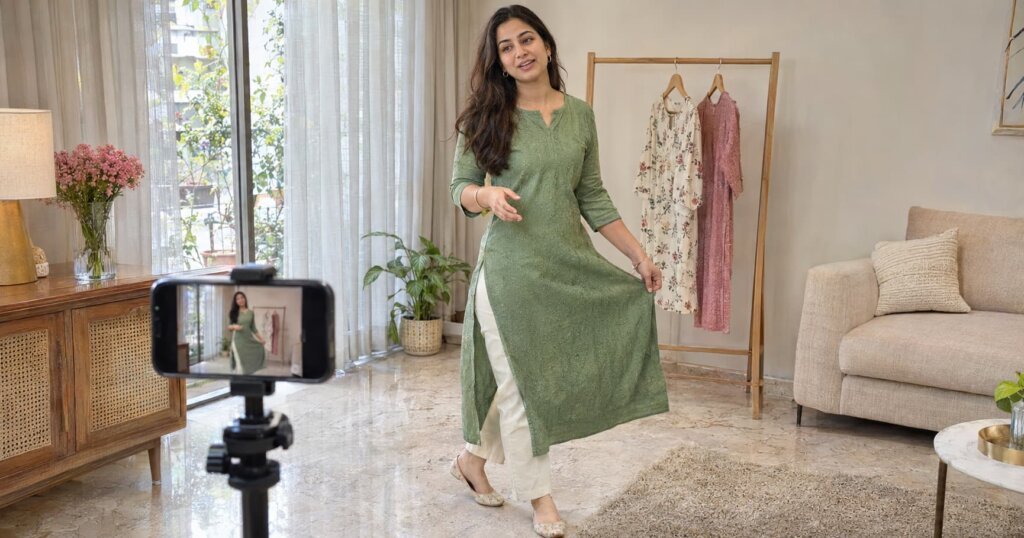
Fashion shoppers want to see clothes on people who look like them. Creator films and user-generated content (UGC) do that better than studio shots alone.
DigiStreet’s fashion page reports a network of 1,500+ creators and 100+ influencer campaigns. It lists UGC from ₹8,000 and offers packs of five, ten and twenty videos. Prices on that page may change, so confirm before you plan a budget.
Brief creators on fit, fabric and care, not only style. Ask them to show movement and different angles. DigiStreet has pages on its influencer marketing services and its UGC video service. Use creator content on product pages as well as in ads, because it can lift confidence at the moment of choice.
Get Your Shopping Ads and Feeds Right
Google Shopping ads draw on your product feed. If the feed is wrong, the ads are wrong. Titles, images, prices and stock status must match the product page.
Google’s Merchant Center help explains how to submit product availability. Treat that as a minimum standard. Include size, colour and gender attributes where they apply, and update the feed when stock changes.
Review product-level performance too. Some styles earn clicks and returns, others earn clicks and profit. Shift budget toward the second group.
Also state your returns policy clearly. Google’s guidance on product structured data covers return policy details that can appear with products in search. Check which fields apply to your store.
Look at Returns and Discounts Before You Look at ROAS
Return on ad spend (ROAS) counts revenue, but returns remove some of it. Discounts lower the margin on the rest. A campaign with a strong ROAS can still lose money.
Track contribution margin for each campaign. Start with order value, subtract the discount, the cost of goods, shipping, returns and payment fees, and then the ad spend. What remains is what the campaign gave your business.
Use discounts with a purpose. A clearance sale on old stock makes sense. A permanent 30% off banner teaches shoppers to wait. Test other offers, such as a gift with purchase or early access for loyal customers.
Plan the Year Around Seasons, Not Just Sales
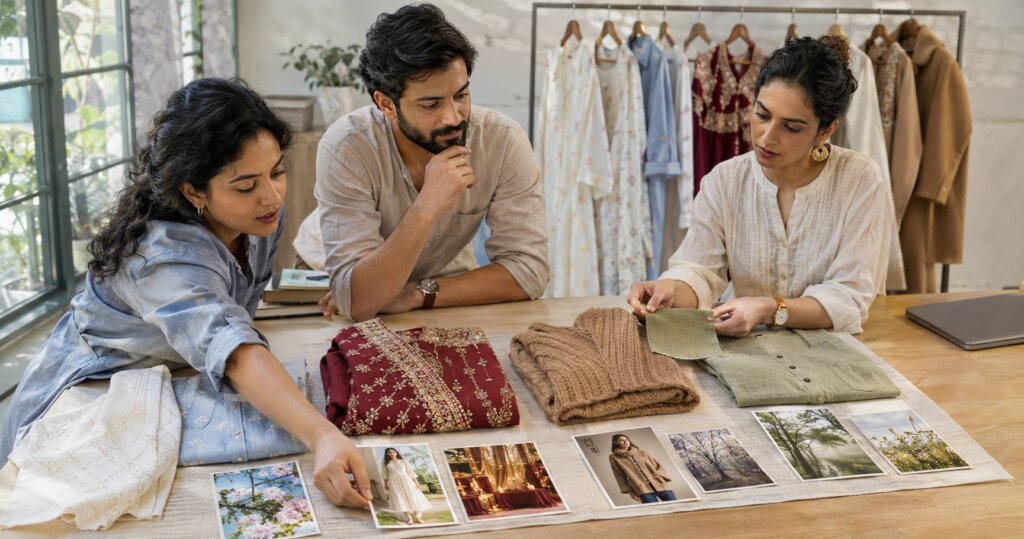
Fashion moves in cycles. Festive weeks, wedding months, summer and winter all change what people search for and buy. Plan your content and ads around these windows.
Start early. Search interest for seasonal styles builds before the season peaks, so publish and refresh collection pages ahead of time. Prepare creator briefs, feed updates and email flows weeks before launch. Late starts force heavy discounting to catch up.
After each season, review what sold at full price, what needed a markdown and what came back. Feed those lessons into the next buying and marketing plan. This habit helps design, merchandising and marketing work from the same facts.
Keep Email, WhatsApp and Loyalty in the Mix
Paid traffic costs more every time you buy it. Your existing customers cost less to reach, and and they often convert more readily than new shoppers.
Collect consent properly and send messages with a clear reason. Useful examples include back-in-stock alerts, restock notices for popular sizes and styling ideas based on a past purchase. Give loyal customers early access to a new drop instead of a blanket discount.
Track repeat purchase rate alongside first-order numbers. A brand with fewer first orders but more repeat buyers may earn more profit than one that relies on constant discounting.
Avoid Four Common Mistakes
First, some brands send all traffic to the home page. Shoppers then hunt for what they saw in the ad. Link each ad to the exact product or collection.
Second, teams skip product photography details. Show the back, the fabric close-up and a movement clip. Each view removes a doubt.
Third, brands use creators without a clear brief. Even strong UGC for fashion brands fails when the creator does not know the fit, the fabric or the key message.
Fourth, teams stop at the sale. Post-purchase emails, care tips and easy returns shape whether a customer comes back.
A Hypothetical Example (Not a Client Result)
Imagine a small womenswear label. It sees many returns on one dress and spends heavily on discount ads. The team adds measurements and a model-fit note to the page. It briefs two creators to show the dress in motion and updates the product feed with size and colour data.
Next, it compares contribution margin for the dress before and after the changes, not only orders. It also tests an early-access offer instead of a sitewide sale.
This example is illustrative only. It describes no real brand and promises no result.
Build the Store That Supports All of This
Marketing cannot fix a slow or confusing store. Check that the site loads fast on mobile, that checkout is simple and that product pages carry the size, fabric and returns details shoppers want.
DigiStreet’s fashion page lists ecommerce websites from ₹2,50,000 plus GST. For a broader view of why fashion needs its own plan, read DigiStreet’s article on tailored digital marketing for fashion brands.
Why Digital Marketing for Fashion Brands Must Keep Margin in View
Digital marketing for fashion brands pays off when each part of the funnel protects margin. Strong collection pages, honest size guides, creator proof and tidy feeds bring the right shoppers. Contribution margin shows whether those shoppers are worth winning.
Pick one collection and fix it end to end. Then track its returns, discounts and contribution margin for a full season. When you want a partner for creators, SEO and ads, contact DigiStreet Media.
Reference Link Table
| Relevant topic/resource | Why it is relevant | Link |
|---|---|---|
| Ecommerce SEO services | Supports collection and product page search growth | Ecommerce SEO services |
| Influencer marketing services | Covers creator campaigns for fashion | Influencer marketing services |
| UGC video service | Covers creator-style product videos | UGC video service |
| Tailored digital marketing for fashion brands | Gives wider strategy context for fashion | Why fashion brands need a tailored digital marketing strategy |
FAQs
What is digital marketing for fashion brands?
It combines SEO, creators, social ads, Shopping ads and email to sell apparel and keep customers. Good plans also track returns and margin.
How do collection pages help fashion SEO?
Shoppers often search by category and occasion, not product name. A clear collection page can match those searches and guide them to products.
What should a size guide include?
Include measurements in centimetres and inches, measuring steps, model height and the size worn. Add fit notes where styles differ.
Why use creators and UGC for fashion?
Shoppers want to see fit and movement on real people. Creator content adds that proof to ads and product pages.
Why does my product feed matter for Shopping ads?
Shopping ads draw on feed data such as title, price and stock. Wrong data creates wrong ads and can cause disapprovals.
Is ROAS enough to judge a fashion campaign?
No. Returns, discounts, shipping and product cost can erase a strong ROAS. Contribution margin gives a fuller picture.
How can fashion brands avoid discount dependence?
Reserve sales for clear goals like clearing old stock. Test other offers, such as gifts with purchase or early access.
How much does fashion marketing cost in India?
DigiStreet’s fashion page lists UGC from ₹8,000 and ecommerce websites from ₹2,50,000 plus GST. Final costs depend on scope.