



A brand runs the same English ad across the UAE and wonders why some audiences respond and others scroll past. The UAE is home to residents from many countries and language groups, and English is widely used in business and daily life alongside Arabic. The choice of Arabic vs English ad copy depends on who you want to reach and what you want them to do. This guide offers a practical framework and a testing plan.
Do Not Assume One Answer
No single language wins across the UAE. Audiences differ by product, price level, platform and context. A luxury property ad aimed at global buyers may suit English. A government-related service aimed at citizens may suit Arabic. A grocery delivery app may do well in both, plus other languages such as Hindi, Urdu or Tagalog.
Avoid guesses based on stereotypes. Use your own data, such as the language settings of your customers, search queries, support messages and past ad results.
Questions to Ask Before Choosing
Ask four questions. Who is the core audience, and what language do they use for this purchase? What is the product category, and does tradition or trust matter? Where will the ad appear, such as search, social or display? And what action do you want, such as a call, a visit or an online order?
Answers guide the choice. For example, a family-focused product with local cultural ties may benefit from Arabic. A technical B2B service for multinational firms may fit English.
When Arabic Often Makes Sense
Arabic copy can build closeness and trust, especially for products tied to family, culture, religion, local services and public-facing brands. It signals respect for the audience’s language. It can also help when you target Arabic search queries, because people often search in the language they think in.
Write Arabic natively. Literal translation from English often sounds stiff or odd. Decide whether to use Modern Standard Arabic, which is formal and widely understood, or a more conversational tone with Gulf expressions. Choose based on brand voice and audience, and ask a native speaker to review.
When English Often Makes Sense
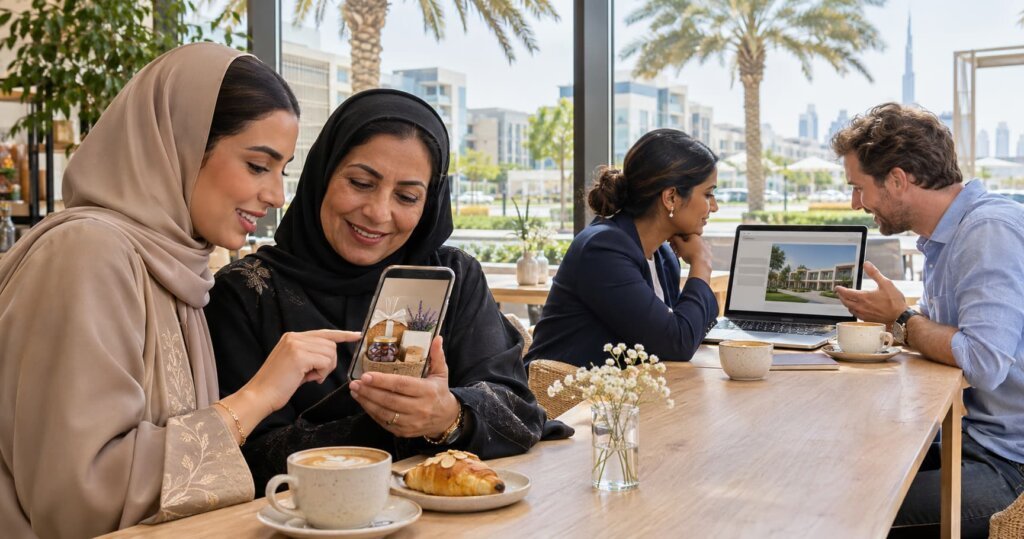
English suits international audiences, professional services, technology, real estate aimed at global buyers and brands whose identity is already English-first. Many UAE residents read English comfortably, and mixed-language households are common.
Even so, English copy should be simple and clear. Avoid idioms that confuse non-native readers.
When to Use Both
Many brands use both. You can run separate ad sets in each language, or use bilingual creative with a headline in one language and supporting text in the other. Separate campaigns make testing and reporting simpler. Bilingual creative can work for brand posts, but it can clutter small spaces.
Consider other languages too, if your audience includes large communities who prefer them. Check your own data before expanding.
Layout and Design Details
Arabic reads right to left. Check that your ad layouts, buttons and text alignment work correctly in both directions. Numbers, brand names and punctuation can display strangely in mixed text. Test ads on real phones and in each ad format before launch.
Choose fonts that support Arabic well, and keep type large enough to read on small screens. Review images and symbols for cultural fit, especially around dress, gestures and celebrations.
Respect Culture and Regulation
Be mindful of cultural and religious sensitivities, including during Ramadan and national holidays. Review tone, imagery and offers for suitability. Check advertising rules for your category and platform with your legal team, because regulated sectors have their own requirements. Do not assume that a practice acceptable elsewhere will pass in the UAE.
How to Test Fairly
Run the same offer, creative and audience in both languages, and change only the copy. Keep budgets equal and run long enough to gather enough results. Compare click-through rate, cost per result, conversion rate and lead or customer quality. Also read comments and messages for signals about tone.
If you see a clear winner for one audience, scale it there, and keep testing for others. Repeat tests when seasons or offers change.
Set Up Your Process for Quality
Create a glossary of approved terms in both languages. Brief writers on tone. Use native speakers for writing and review, not only translation tools. Keep a log of top-performing phrases and mistakes to avoid.
Support Ads With Local Search
Language choices also matter on your website and profiles. Our guide on setting up Google Business Profile for a UAE company explains how to present details for local customers. For search in several languages, see DigiStreet Media’s multilingual SEO service.
Arabic vs English Ad Copy: Examples of Message Differences
This is a hypothetical example. A fitness studio might run an English ad that says, “Join our 30-day challenge and feel the difference.” For Arabic, the writer would not translate word for word. Instead, they might ask what motivates the local audience, such as family time, health goals or community, and write a message that fits those values, in natural language. The two ads may share the offer but sound different.
The lesson is to adapt meaning, not only words. Tone, humour, idioms and examples often need to change.
Search Ads and Keywords in Two Languages
For search campaigns, research keywords in each language. Arabic search behaviour can include different spellings, dialect words and mixed Arabic-English phrases. Use the search terms report to find what people actually type, and add negatives to avoid waste. Write separate ad groups for each language, with matching landing pages.
Make sure the landing page matches the ad language. A mismatch confuses users and can lower conversions.

Social Ads, Video and Captions
On social platforms, check that captions, subtitles and on-screen text read well in Arabic. For video, consider voiceovers by native speakers and subtitles in the other language. Pick creators who speak naturally to the audience. If you use influencers, brief them in the language they will use, and check their drafts with a native reviewer.
Build a Review Process
Set up a simple review loop: writer, native reviewer, brand approver. Keep a glossary of approved terms and a list of phrases to avoid. A small amount of care here prevents embarrassing mistakes and protects your brand’s reputation.
When Bilingual Creative Works Best
Bilingual creative suits brands with a broad audience, such as retail, telecom, banking and food delivery. It also suits events and public campaigns where both language groups should feel included. Keep the layout clean: one primary language for the headline and a second for support text. Test it against single-language versions before rolling out widely.
Mistakes to Avoid With Mixed-Language Text
Do not place English words inside Arabic sentences without checking how they display. Do not mix number formats without testing them. Do not rely on automatic translation for ad headlines. Do not reuse images that carry English text when the ad language is Arabic. A careful pass on each ad before launch saves money and protects your brand image.
Involve Customer Service Early
Your customer service team hears how customers speak. Ask them which words and phrases customers use in each language, which questions come up and which complaints appear. Use these insights in ad copy and landing pages. Real language from real customers often beats polished slogans, and it helps your ads feel local rather than imported.
Track Language by Source
In your analytics, split results by ad language, audience and placement. Record which language drives enquiries, which drives purchases and which brings repeat customers. These details guide future budgets and keep decisions rooted in your own numbers.
Choose by Audience, Then Prove It
The right answer to Arabic vs English ad copy comes from knowing your audience and testing with care. Write natively, review with local experts and let data guide scale. For help with campaigns in the UAE, explore DigiStreet Media’s Dubai digital marketing agency services, or contact the team.
Reference Links
| Relevant Topic or Resource | Why It Is Relevant | Verified Link |
|---|---|---|
| DigiStreet Media Dubai digital marketing agency | Service page for UAE marketing | https://digistreetmedia.com/dubai-digital-marketing-agency/ |
| DigiStreet Media multilingual SEO | Supports multi-language search content | https://digistreetmedia.com/services/search-engine-marketing/multilingual-seo/ |
| DigiStreet Media contact page | Starting point to plan UAE campaigns | https://digistreetmedia.com/contact/ |
Frequently Asked Questions
Should UAE ads be in Arabic or English?
It depends on your audience, product and goal. Use your own data and test both.
Can I just translate my English ad into Arabic?
Literal translation often sounds stiff. Write natively or have a native speaker adapt and review the copy.
What type of Arabic should I use in ads?
Choose between Modern Standard Arabic and a conversational tone with Gulf expressions based on your brand voice and audience.
Can I run bilingual ads?
Yes. You can run separate ad sets per language or use bilingual creative, but test layouts on real devices.
How do I test Arabic vs English ad copy?
Run the same offer and audience in both languages, change only the copy, and compare cost per result and lead quality.
Do I need to check design for right-to-left text?
Yes. Check alignment, buttons, numbers and mixed text on each placement before launch.
Should I consider other languages in the UAE?
Possibly. If your data shows large audiences preferring languages such as Hindi, Urdu or Tagalog, test them too.