



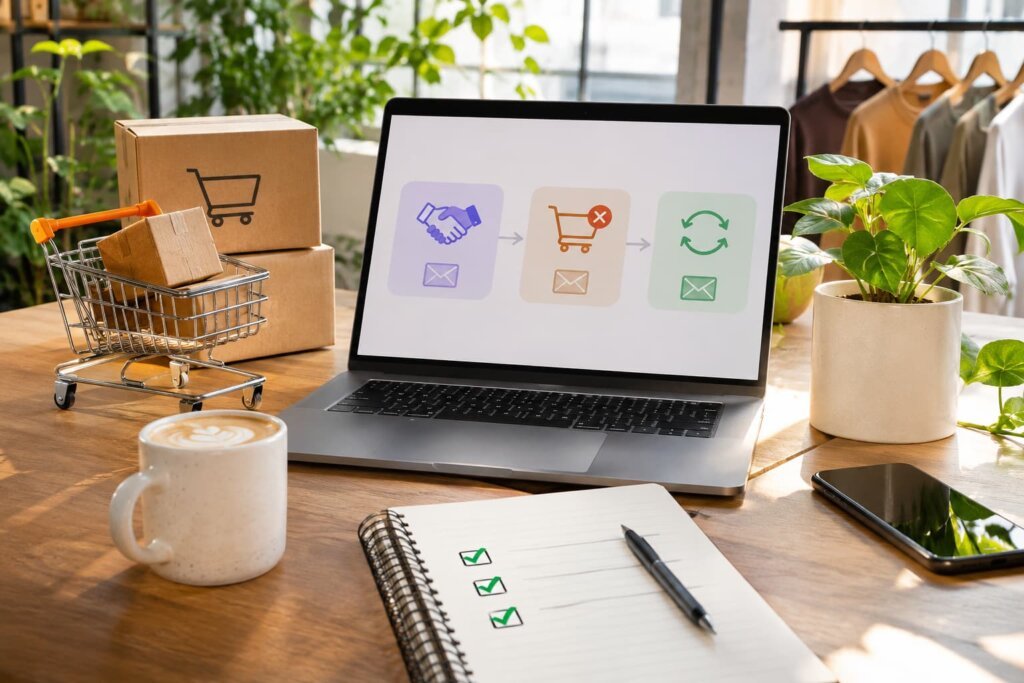
A D2C brand spends heavily on ads to bring a shopper to the site. The shopper browses, adds a product to the cart and leaves. The brand has paid once and gets nothing. Email flows for D2C brands fix this leak. A flow is a set of automatic emails that fires when a shopper does something, such as signing up, abandoning a cart or going quiet. Unlike a one-off newsletter, a flow runs all year without extra work.
This guide covers the three flows that matter most, with timing, content ideas and the numbers to watch. It suits brands on Shopify or similar platforms, and tools like Klaviyo, Mailchimp or Zoho Campaigns can run them.
Email Flows for D2C Brands vs Campaigns
| Flow | Campaign | |
|---|---|---|
| Trigger | A shopper’s action | A date you choose |
| Audience | One person at a time | A whole list or segment |
| Effort | Build once, tune often | Write each time |
| Best for | Relevance and timing | Sales, launches and news |
Most mature brands earn a large share of email revenue from flows, because the message arrives when the shopper is thinking about the brand. Do not rely on a figure from a blog, though. Check your own reports to see what your flows earn.
Before You Build: Fix the Basics
- Get consent. Collect email addresses with clear permission, and give an easy unsubscribe.
- Authenticate your domain with SPF, DKIM and DMARC, so your emails reach the inbox.
- Connect your store so the tool can see carts, orders and products.
- Use a clean list. Remove addresses that bounce.
- Match the brand voice across emails and the site.
Indian brands should also check data protection obligations, and take legal advice where unsure.
Segment Before You Send
Not every shopper wants the same message. Even a simple split improves relevance:
- New vs returning customers. A first-time buyer needs reassurance, while a repeat buyer wants new products.
- Product interest. Someone who browsed a face wash does not need a hair oil email.
- Order value. Offer helpful bundles to high-value buyers, not blanket discounts.
- Location. Delivery times and festivals differ by region.
Start with two or three segments, and add more only when you have the data and the time to write for them.
Flow 1: The Welcome Series
A new subscriber has the highest interest they will ever have. Use it.
Trigger: the shopper joins the list.
| When | Purpose | |
|---|---|---|
| 1 | Right away | Deliver the offer, if you have one, and say thanks |
| 2 | Day 2 | Tell the brand story and what makes you different |
| 3 | Day 4 | Show bestsellers or reviews |
| 4 | Day 7 | Answer common doubts, such as delivery, returns and sizing |
Keep each email focused on one job and one link. If the shopper buys, exit them from the flow and move them to a post-purchase flow.
Flow 2: The Abandoned Cart Series
This flow reaches shoppers who added products and left.
Trigger: the shopper adds to cart but does not buy.
| When | Content | |
|---|---|---|
| 1 | 1 hour after | A simple reminder with the product image and a button |
| 2 | 24 hours after | Reviews, delivery details and an answer to likely doubts |
| 3 | 48 to 72 hours after | A gentle final nudge, with an incentive only if your margins allow |
Tips that help:
- Show the exact items from the cart.
- Make the button return to the cart, not the homepage.
- Use plain language, and avoid false urgency.
- Test one change at a time, such as the subject line.
- For cash-on-delivery stores, add an option to confirm the order by WhatsApp. Our guide on WhatsApp marketing for D2C brands covers that channel.
Not every shopper shares an email at the cart stage. If your checkout asks for email early, you capture more of them.
Flow 3: The Win-Back Series
Some customers buy once and disappear. Reach them before they forget you.
Trigger: a customer has not bought in a set number of days. Pick the number from your product’s usual repurchase cycle, such as 45 days for a skincare product or 180 days for furniture care.
| When | Content | |
|---|---|---|
| 1 | At the trigger | “We miss you,” with news or a helpful reminder |
| 2 | Five days later | A product suggestion based on past purchases |
| 3 | Ten days later | A last offer or a survey asking why they left |
If a person still does not respond, stop emailing them. Constant sends to inactive addresses harm your sender reputation.
How Many Emails Is Too Many?
More emails do not mean more sales. Watch the unsubscribe and spam complaint rates for each flow. If they rise, shorten the flow, widen the gaps or improve the message. Respect people who ask to stop, and honour opt-outs at once. A smaller list of interested readers earns more than a large list that ignores you.
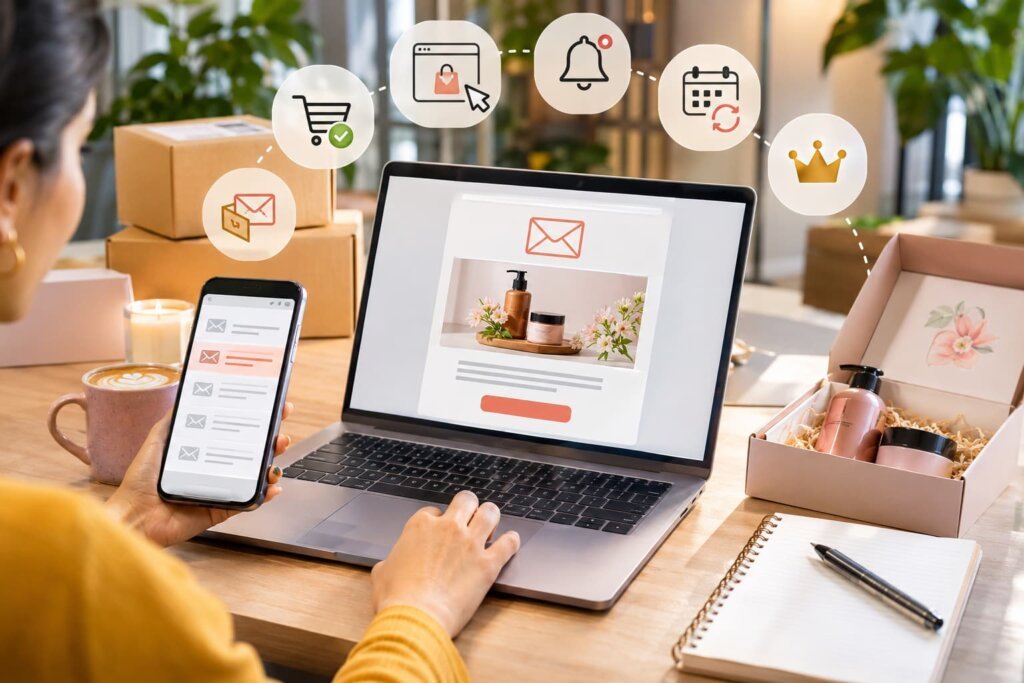
Other Flows Worth Adding Later
- Post-purchase: thank the customer, share care tips and ask for a review
- Browse abandonment: remind visitors who viewed products but did not add to cart
- Back in stock: alert people who asked for a notification
- Replenishment: remind buyers when a consumable may run out
- VIP: reward your best customers with early access
Writing Emails That Get Opened
- Use clear subject lines. Say what the email contains.
- Keep the preview text useful.
- Write for one reader in a conversational voice.
- Put the main action near the top.
- Design for mobile, since many readers open email on phones.
- Include a plain unsubscribe link.
A Simple Testing Routine
Run one test at a time, so you know what caused a change. Try this order:
- Subject line, because it decides whether the email gets opened
- Send time or delay between emails
- The main image or product shown
- The offer, or the lack of one
- The button text
Let each test run until you have enough sends to see a clear difference. Write down every result, even a failed one, so the next person does not repeat it.
Metrics That Matter
| Metric | What it tells you |
|---|---|
| Revenue per recipient | How much each send earns |
| Placed order rate | Share of recipients who buy |
| Click rate | Interest in the offer or content |
| Unsubscribe and spam rates | List health and relevance |
| Open rate | A rough guide only, since privacy features inflate it |
Judge flows by revenue and orders, not by opens. Our guide on ROAS vs blended CAC shows how to see whether email improves your overall return.
A Hypothetical Example
We made up this example for illustration. A tea brand in Darjeeling sells on its own website. It launches a four-email welcome series, a three-email cart flow and a two-email win-back flow set at 60 days. After a month, it checks revenue per recipient for each flow and rewrites the weakest subject line. The owner also sees that the cart flow’s second email, which answers delivery questions, earns more clicks than the first. The team moves the delivery details higher in the first email and tests again.
What to Do With Replies and Questions
Flows often bring replies. Shoppers ask about sizes, delivery, ingredients or returns. Send emails from a real address, not a no-reply one, and assign someone to answer within a day. These replies show you which doubts stop people from buying. Add the most common answers to your product pages and to the second email in the cart flow.
Common Mistakes
- Starting with ten flows. Launch three, then improve them.
- Discounting every email. Shoppers learn to wait for offers.
- Ignoring deliverability.
- Sending to everyone. Segment by behaviour.
- Never testing.
- Leaving flows untouched for years. Review them every quarter.
Put Your Email Revenue on Autopilot
If you want these flows built and tuned, our ecommerce marketing team can design them with your store data and brand voice. See how email fits into a wider plan in our performance marketing approach, or contact DigiStreet Media to discuss your store.
Reference Links
| Relevant Topic or Resource | Why It Is Relevant | Verified Link |
|---|---|---|
| Google guidance on email sender requirements | Explains authentication and unsubscribe rules for bulk senders | https://support.google.com/a/answer/81126 |
| Shopify Help Center: Shopify Email | Overview of email marketing tools for Shopify stores | https://help.shopify.com/en/manual/shopify-email |
| Klaviyo flows documentation | Official reference on triggers and flow building | https://help.klaviyo.com/hc/en-us/articles/115002779071 |
Frequently Asked Questions
What are email flows?
Email flows are automatic sequences triggered by a shopper’s action, such as signing up, abandoning a cart or going quiet, so each person gets a timely message.
Which email flows should a D2C brand build first?
Start with a welcome series, an abandoned cart series and a win-back series. They cover new subscribers, near-buyers and lapsed customers.
How many emails should an abandoned cart flow have?
Three is a common pattern: a reminder after about an hour, a reassurance email after a day and a final nudge after two or three days. Test what suits your audience.
When should I send a win-back email?
Base the timing on how often customers normally repurchase. Use a shorter gap for consumables and a longer one for durable goods.
Do I need a discount in every flow?
No. Use incentives only where your margins allow, and try reviews, delivery details and helpful content first.
Which tool should I use for email flows?
Klaviyo, Mailchimp, Zoho Campaigns and Shopify Email are common choices. Pick one that connects to your store and supports automation.
How do I measure email flow success?
Track revenue per recipient, placed order rate, click rate and unsubscribe rate. Treat open rate as a rough guide only.