




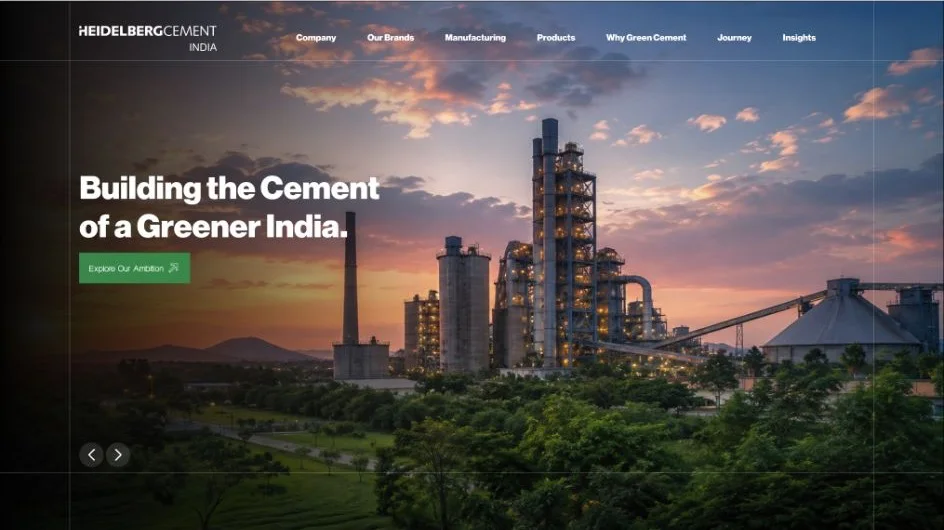
A cement manufacturer can serve home builders, contractors, dealers, institutional buyers, architects, investors, employees and communities. As content accumulates, product, corporate and sustainability journeys often begin competing for attention.
This guide explains seven practical UX, content and SEO decisions behind a modern manufacturing website, illustrated with the proposed Mycem experience for Heidelberg Materials India.
Why industrial websites become difficult to use
Every stakeholder adds information for a valid reason. Without a deliberate information model, however, the homepage becomes a rotating collection of announcements while products, plants, policies and corporate information compete for the same space.
The redesign question is not “How do we make it look modern?” It is “How do we help every priority audience reach credible information with less effort?”
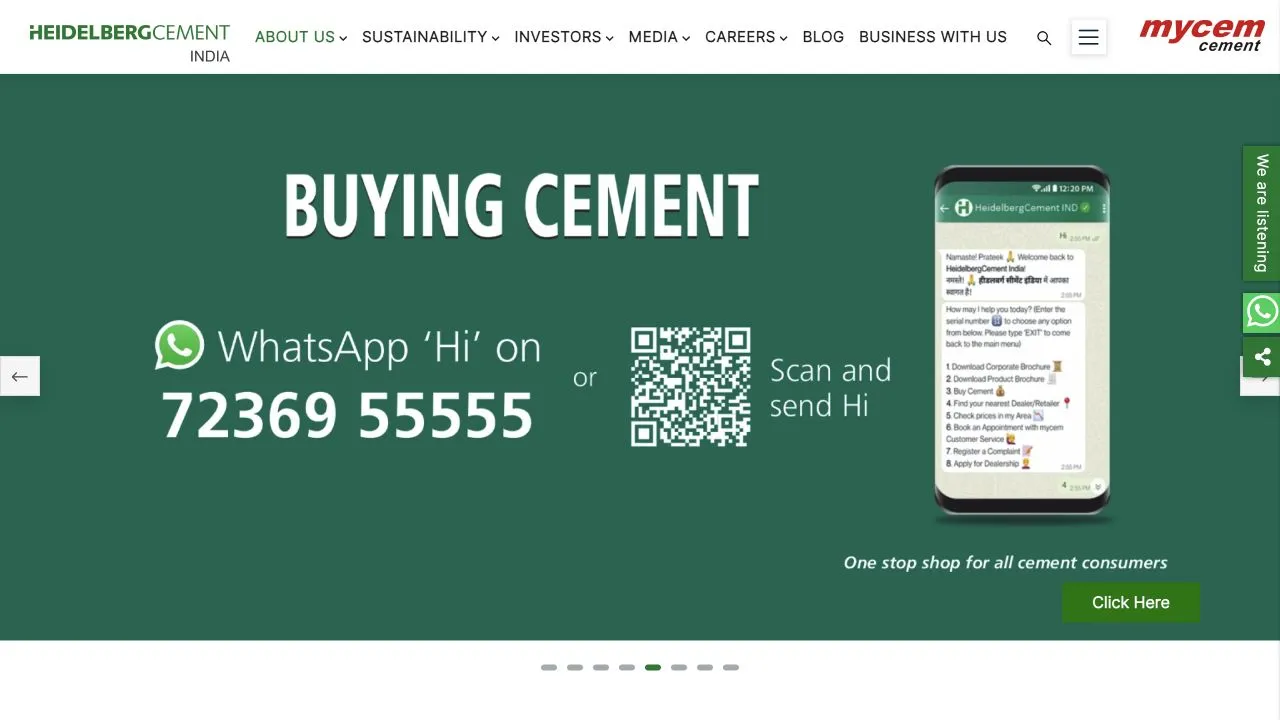
1. Map audience tasks before drawing screens
Start with what people need to complete: compare a cement product, find a dealer, understand manufacturing reach, review sustainability evidence, access investor information, explore careers or contact the company. These tasks become the foundation for navigation and page templates.
2. Give every major topic a clear home
A useful manufacturing architecture separates Company, Brands, Manufacturing, Products, Sustainability, Investor information, Careers and Insights. The goal is not a longer menu; it is a system where each page has a distinct purpose and internal links connect related questions.
Practical rule
One intent per landing page. If two pages answer the same search and user question, consolidate or redefine them before development.
3. Explain the relationship between company, brands and products
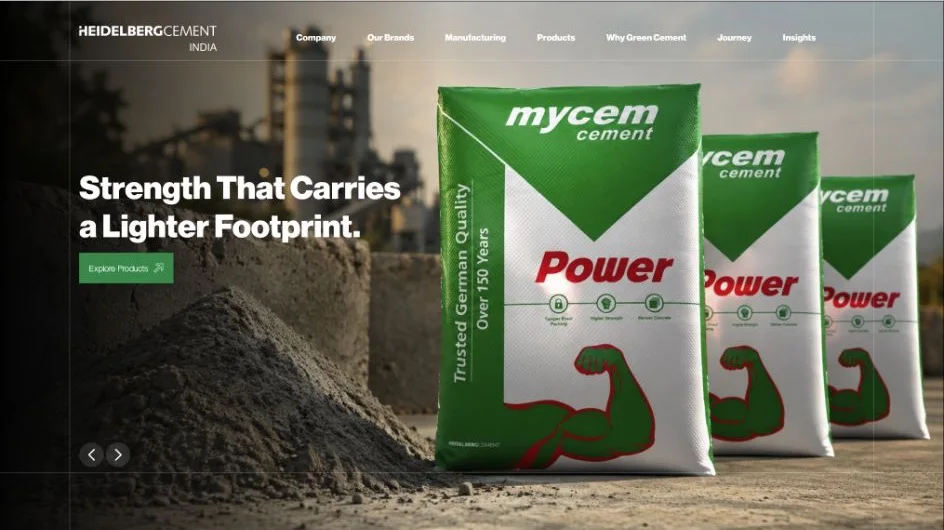
Corporate reputation helps a buyer trust the business, but buyers still need product clarity. The proposed experience gives Mycem and Zuari Cement a visible role inside the Heidelberg Materials India story, with space for product benefits, applications and technical support.
4. Turn sustainability language into evidence
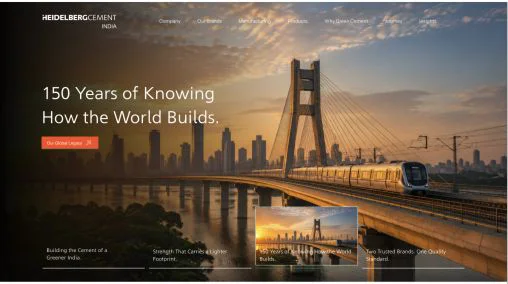
“Green” claims need context. A credible website connects ambition to materials, process improvements, operational programmes, policies, reports and measurable indicators. This strengthens both user trust and the quality of information available to search and answer engines.
5. Preserve meaning on mobile—not only layout
Responsive design is more than stacking desktop sections. Mobile users need shorter pathways, legible technical information, usable tables and prominent task actions. Visual hierarchy should survive the smaller screen without hiding essential product or contact information.
6. Plan technical SEO before templates are built
Define page titles, headings, canonicals, image names, alt text, breadcrumbs, schema and internal links while mapping the site. Product, plant, location and insight templates should support unique information rather than producing thin combinations of the same copy.
Useful structured data
- Organization and WebSite data at site level.
- BreadcrumbList on navigable content.
- Article or NewsArticle for editorial content.
- Product only when a page describes a genuine product and the required properties are available.
- FAQPage only when the same questions and answers are visible to visitors.
7. Separate design intent from measured results
Prototype screens demonstrate thinking; they do not prove business outcomes. After implementation, track product discovery, enquiry actions, dealer journeys, downloads, organic landing pages, Core Web Vitals and accessibility. Establish the baseline before launch and report changes with a clear timeframe.
See the project evidence
Explore the prototype screens, challenge and proposed solution in the Mycem website design case study.
Frequently asked questions
What should a cement manufacturing website include?
It should explain products and brands, manufacturing capability, plants and reach, sustainability, corporate governance, investor information, careers, insights and clear enquiry routes.
How should a manufacturing website organise multiple audiences?
Start with audience tasks, then create distinct navigation paths for customers, channel partners, investors, media, job seekers and communities without duplicating the same content.
Does a manufacturing website need SEO before development?
Yes. Search demand, page purpose, URL structure and internal linking should be planned before templates are built. Adding SEO after development often creates duplicate or missing pages.
How can sustainability claims be made credible online?
Connect claims to specific initiatives, locations, data, policies and reports. Avoid unsupported slogans and give users a route to the underlying evidence.
How long does a corporate website redesign take?
Timing depends on content volume, approvals, integrations and languages. A focused corporate website commonly moves through discovery, architecture, design, development, content migration, QA and launch measurement.
Planning a manufacturing website?
DigiStreet combines information architecture, UI/UX, website development, content and SEO for corporate and B2B teams.