A focused services or information site with a manageable page set and standard content-management needs.

DigiStreet designs and builds websites in India for businesses that need clear content, usable interfaces and a team that can carry the project through review. A Basic CMS website starts at ₹1,00,000 plus GST. B2B websites start at ₹1,75,000, corporate websites at ₹2,25,000 and ecommerce websites at ₹2,50,000 plus GST.
₹1,00,000 plus GST is the starting price for a complete CMS website. The B2B package starts at ₹1,75,000, the corporate package at ₹2,25,000 and the ecommerce package at ₹2,50,000 plus GST. No package engagement starts below ₹75,000. The final scope depends on the page system, content, integrations, catalogue and approval load.
A buyer outside India should ask who owns discovery, page architecture, copy, interface design, development, content entry, testing and launch. If six suppliers own six parts, the client becomes the project manager. We run the agreed website scope through one backlog and name the person responsible for every client decision.
The location of the team matters less than the working record. You should be able to see what is approved, what is being built, which content fact is missing and what has to happen before launch. Time-zone overlap, review windows and handover are written into the project plan before screens are designed.
The package identifies the type of website and the likely production load. The proposal lists the pages, templates, integrations, content responsibility and review rounds included for the chosen project.
A focused services or information site with a manageable page set and standard content-management needs.
A company with products, applications, industries, capabilities and long buying cycles.
A larger organisation with business units, governance, investor, employer and corporate communication needs.
A product business that needs catalogue, collection, product, cart and checkout planning.
₹1,00,000 plus GST is the starting price for a complete CMS website. The B2B package starts at ₹1,75,000, the corporate package at ₹2,25,000 and the ecommerce package at ₹2,50,000 plus GST. No package engagement starts below ₹75,000. The final scope depends on the page system, content, integrations, catalogue and approval load.
A buyer outside India should ask who owns discovery, page architecture, copy, interface design, development, content entry, testing and launch. If six suppliers own six parts, the client becomes the project manager. We run the agreed website scope through one backlog and name the person responsible for every client decision.
The location of the team matters less than the working record. You should be able to see what is approved, what is being built, which content fact is missing and what has to happen before launch. Time-zone overlap, review windows and handover are written into the project plan before screens are designed.
A focused services or information site with a manageable page set and standard content-management needs.
Discovery and page plan · Responsive interface design · CMS build, content entry, testing and handover within the agreed scopeA company with products, applications, industries, capabilities and long buying cycles.
Buyer and catalogue architecture · Product, capability and proof templates · Lead routes and CMS handover within the agreed scopeA larger organisation with business units, governance, investor, employer and corporate communication needs.
Multi-stakeholder discovery · Corporate page and content system · Responsive build, testing and handover within the agreed scopeA product business that needs catalogue, collection, product, cart and checkout planning.
Commerce discovery and catalogue structure · Storefront page system · Platform build, testing and handover within the agreed scopeA good-looking portfolio is only the first check. Ask the agency to explain how it learns the business and how that knowledge reaches a page. A B2B product page needs different evidence from a corporate governance page. An ecommerce collection needs different choices from a service landing page. The discovery method should make those differences visible.
Ask who writes the first draft, who checks technical facts and who decides the page is ready for design. If the client supplies all finished copy, that responsibility belongs in the schedule. If the agency writes, it needs access to product, sales and leadership reviewers. A missing content owner can hold up a build longer than code.
Ask to see the project record. You need a sitemap, content tracker, screen status, issue list and release checklist that both teams understand. Email can support the conversation, but it should not be the only place a decision lives.
Our main website-development service page explains the build offer and packages in more detail. The Delhi NCR website-design page covers buyers choosing a team for that market. This India page is for organisations comparing an India-based partner and planning how the work runs across locations.
B2B visitors often arrive with a technical problem, a product family, an application or an industry requirement in mind. The website needs to connect those entry points without forcing every person through the company home page. We map product, application, sector, capability and proof relationships before choosing the navigation.
The product family page should help a buyer choose. A model page can carry specifications, downloads and enquiry context. An application page explains where the product fits and links to relevant evidence. Capability pages show how the organisation makes, delivers or supports the offer. These pages work together when their roles are clear.
Proof belongs beside the claim it supports. A certification, plant image, case study, client name or measured result has more value near the relevant capability than in an isolated logo wall. We identify the evidence available during discovery and leave a clear content field for it in the page model.
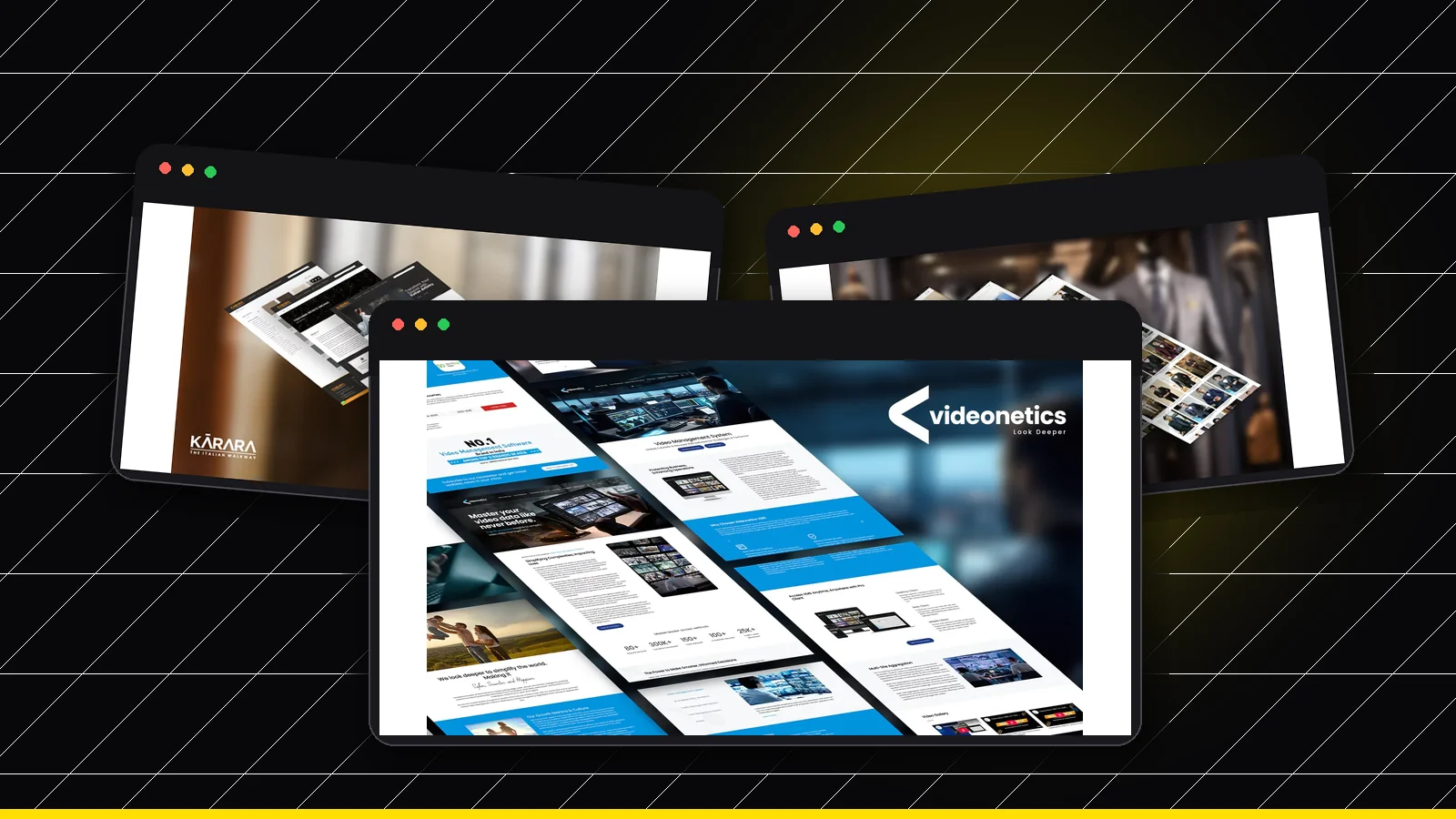
Roto Pumps and Videonetics appear in DigiStreet’s real showcase work. Their published website presentations bring actual B2B design into the proof band and hero composition.
Corporate websites often serve customers, prospective employees, partners, media, investors and regulators. The page plan must show which audience owns each route and who inside the organisation keeps it current. A newsroom, policy page and leadership profile have different review needs even when they share the same visual system.
We create reusable templates for recurring material and define the fields a content editor can change safely. The goal is controlled flexibility. Editors should be able to publish an approved update without rebuilding the design, while the organisation keeps important structure, accessibility and brand choices intact.
Governance includes file handling. Policies, reports and notices need clear names, dates and archive rules. Old documents should not outrank or contradict current information. Redirects and search controls are agreed when content moves, especially on a rebuild with years of indexed URLs.
The release plan names what happens on the day, who can approve a correction and who owns routine updates after handover. Training uses the actual content model rather than a generic tour of the CMS.
A client outside India needs a dependable overlap window and a written decision trail. We agree meeting times, review days, response owners and the route for urgent launch issues at the start. The schedule uses dates both teams can meet rather than assuming every reviewer is available on demand.
Design review is easier when each round has a job. The first core-page review tests hierarchy and direction. The template review checks repeatable states. Responsive review checks how content changes across widths. Final review deals with populated pages and release items. Mixing all four conversations in every call creates rework.
Recorded walkthroughs can help a distributed team review details outside the overlap window. The decision still returns to the shared record with a named approver. This keeps regional comments, leadership feedback and implementation questions from creating parallel versions of the same screen.
Handover should include the editor roles, content model, component rules, integration notes, asset locations and open maintenance items. The client team needs enough information to operate the site without guessing which change may break a template.
Custom design makes sense when the business structure, content and buying route cannot be expressed well by a lightly adjusted theme. The value sits in architecture, content hierarchy, component behaviour and the way proof is used. Decoration alone is a weak reason to increase the scope.
A suitable theme can be the right starting point for a focused CMS site. We still check its responsive behaviour, accessibility, content states and editing model. The proposal should state which parts use the theme, which parts are changed and how future updates affect those changes.
Performance starts with the design system. Image dimensions, font use, animation, embeds and third-party scripts all affect what the browser has to do. We set media rules, keep motion purposeful and use real content during testing. Every image should have known dimensions so the page does not jump while loading.
The visual system uses small hover movement and staged section reveals to help people follow the page. Reduced-motion support keeps the content clear for visitors who prefer less movement, and every section remains visible when scripts are delayed.
Before release, we check the agreed browsers and devices, navigation, forms, links, media, content states and editor roles. A rebuild also needs redirect mapping, metadata transfer, analytics requirements and a record of the old URLs. These items are assigned before the final day.
Forms are tested through to the receiving team. We check the route agreed in scope so the right person receives each enquiry, and give the client a small set of test cases for future checks.
The client reviews legal, policy and regulated content through its authorised owners. DigiStreet checks page placement, links and display. Launch approval names the person accepting the populated site and the known follow-up list.
After release, the first checks focus on availability, indexing controls, redirects, forms and major analytics signals. The handover record separates release fixes from new requests so the original project can close cleanly.
We identify the audiences, decisions, page owners, actions and current material before proposing the structure.
Products, services, sectors, proof, resources and corporate content are arranged around the questions buyers ask.
Each recurring page type receives a field and evidence model so content stays consistent after launch.
Page hierarchy, navigation, responsive layouts, states and reusable components are designed against real content.
Approved templates are built in the agreed CMS and populated with the content assigned to the project team.
The team checks supported devices, forms, links, content states and editor use before the release checklist is signed.
The package identifies the type of website and the likely production load. The proposal lists the pages, templates, integrations, content responsibility and review rounds included for the chosen project.
A focused services or information site with a manageable page set and standard content-management needs.
Get a quoteA company with products, applications, industries, capabilities and long buying cycles.
Get a quoteA larger organisation with business units, governance, investor, employer and corporate communication needs.
Get a quoteA product business that needs catalogue, collection, product, cart and checkout planning.
Get a quoteA remote website project stays controlled when the client knows exactly what it is approving. We use clear gates for structure, content, design and release rather than waiting for one large reveal near the end.
We review the business, audiences, current site, analytics available, competitors, content, integrations and internal owners.
The sitemap, navigation, page purposes, reusable content fields and conversion routes are agreed before detailed design.
Core desktop and mobile templates are designed with representative copy and media so hierarchy can be judged honestly.
The build follows the component and content model, with staged review of templates, forms, integrations and editor controls.
Final content, redirects, analytics requirements, accessibility checks, browser checks and editor training are completed against one release list.
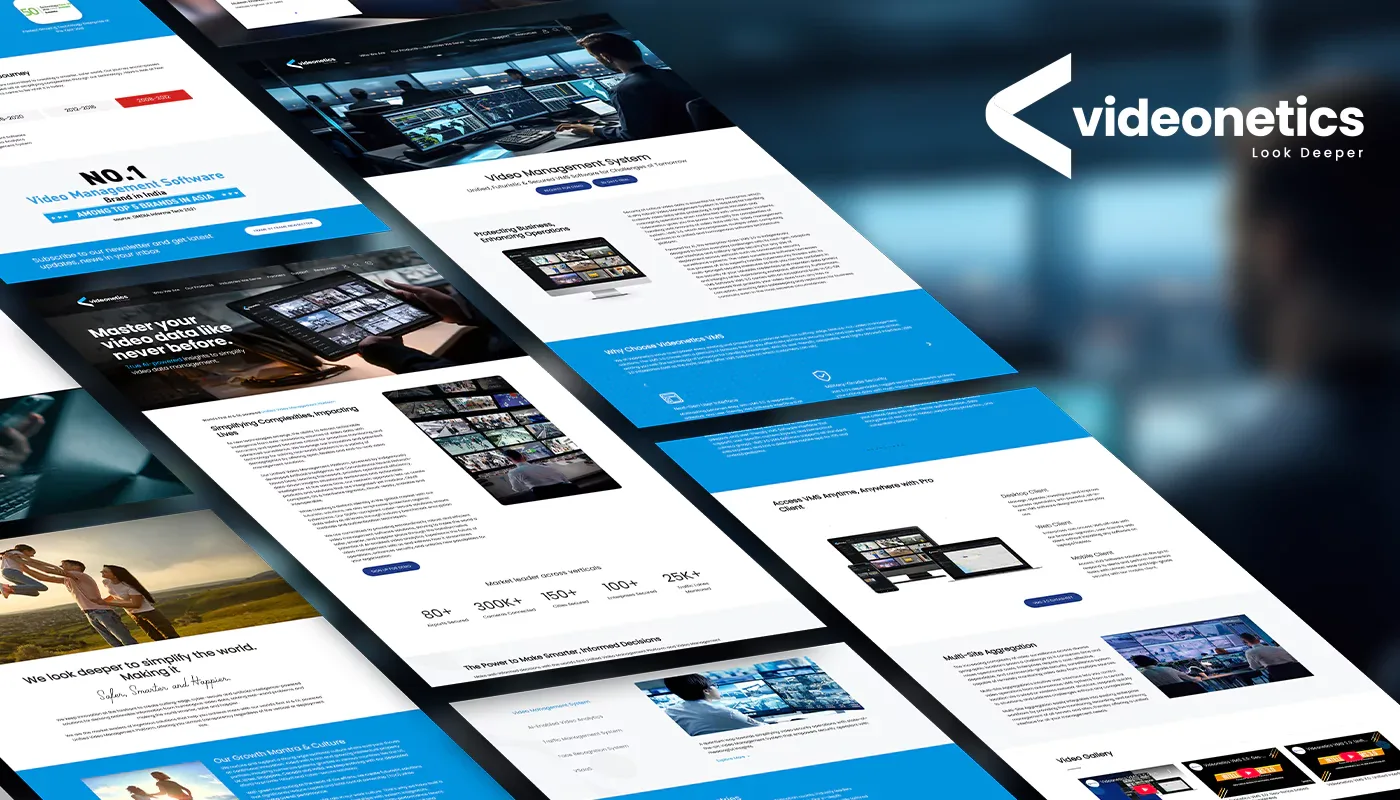 Videonetics · Technology website presentationReal work
The Videonetics showcase asset presents real website work for a video-technology business. It is a useful reference for B2B information hierarchy and a technical offer with several buyer routes.
Read the case study →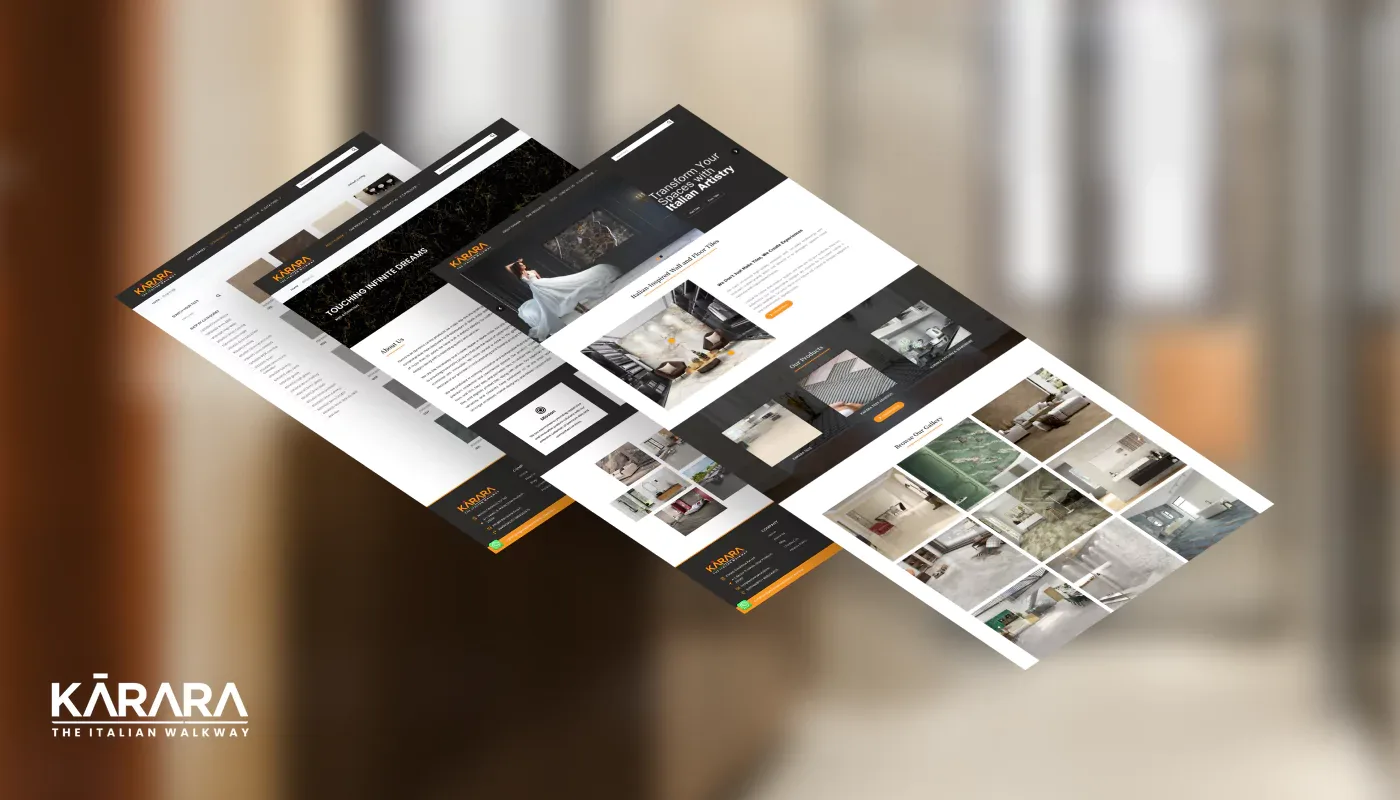 Karara Ceramics · Brand website presentationReal work
Karara’s published website presentation shows real brand and website design work. The asset can sit to demonstrate a more visual product category with the original client screen intact.
Read the case study →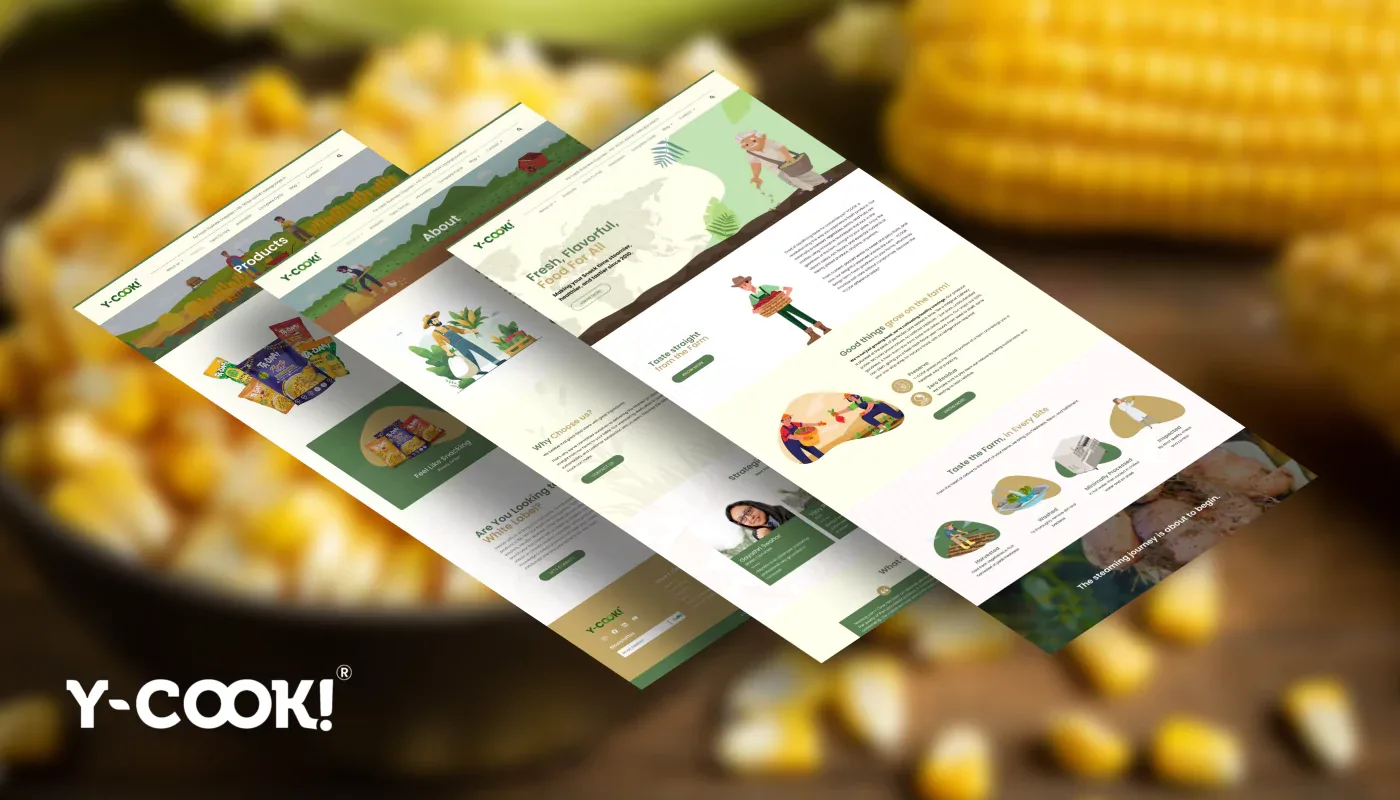 YCook · Food business websiteReal work
The YCook showcase image is real food-category website work. It gives the page a different content and product context while preserving the original design exactly as published.
Read the case study → Bonsoir · Menswear ecommerce websiteReal work
Bonsoir’s published ecommerce website asset shows real retail work and gives the website package section a direct visual link to product-led design.
Read the case study →4.9 / 5
“With our growing presence across diverse domains, an effective digital presence and communication strategy is imperative. We are sure that DigiStreet Media, with its creative skillset and proven digital expertise, will play a pivotal role in elevating JBM Group’s online brand experience, thereby, expanding global brand reach.”
Mr. Dushyant Sharma
Group Head, Marketing Communications & Branding, JBM Group
4.8 / 5
“In an era where digital presence is crucial, we are thrilled to entrust DigiStreet Media with our digital and creative mandate. Their proven track record and innovative approach align with our objectives, and we believe this partnership will elevate our brand in the digital realm.”
Ms. Charu Goswami
Head of Corporate Communications, SLCM
5.0 / 5
“We had this idea in our minds to associate Sirca with homes. This brand communication DigiStreet came up with has really stood strong from that point of view. I also think that this communication has enough scalability to play many stories and has the ability to connect it to both our consumers and key stakeholders.”
Mr. Apoorv Agarwal
Joint Managing Director, Sirca Paints
4.9 / 5
“An ever-energetic team with the true essence of timelines & technology as well as in-depth knowledge – this is what I can say for team DigiStreet. The swiftness and efficiency with which DigiStreet has completed the project well on time is truly commendable. Omaxe’s relation with DigiStreet has further strengthened with this project!”
Mr. Deepak Rawat
Product Head – Marketing, Omaxe Group
4.9 / 5
“We are happy that we are on the cutting edge with our new website and have synergised our entire web experience – social media handles, Amazon store etc. with the website.”
Mr. Amar Wadhwa
Marketing Consultant, Halonix
5.0 / 5
“What intrigued and excited me about DigiStreet is the amount of research and perspective the agency team provided us with. Along with brand communication and marketing outlook, the team has also stepped up with setting up online marketplaces, redesigning product packaging, web development, and social media.”
Mr. Samarth Gupta
Director, Farmer Fresh
5.0 / 5
“Over the last five years, Kavish Arora and the team at DigiStreet Media have become an extended part of our marketing team at Voting Portals. From a simple email design to SEO, website design, digital campaigns and video production, they have consistently stepped in and delivered.”
Don Gonzales
Marketing Head, Voting Portals, USA
4.9 / 5
“We met Kavish during the lockdown, when Cyboard School was still an idea: to build India's first online school. His team helped turn that idea into a market-ready brand through website design, SEO, social media, UGC content and the many day-to-day requirements of launching something new.”
Rajat
Founder & Managing Director, Cyboard School
4.9 / 5
“Kavish and his team worked with us for more than four years across social media, SEO and performance marketing. Their strategic and consistent support strengthened our brand presence and helped us reach international patients from Africa and the Middle East.”
Anupam Pandey
Owner & Marketing Director, Asian Hospital, Faridabad
Awarded Digital Marketing Agency
Over 100
 reviews


